Culture & dining
What Is Crab Rangoon? Crab Rangoon vs Fried Wonton, Explained
It's Friday night. You open the takeout app, scroll to Appetizers, and there they are: Crab Rangoon, Fried Wonton, Cheese Wonton. Three golden little parcels. Three nearly identical photos. So what is crab rangoon, and is it actually different from the other two? Short answer: crab rangoon is a crispy fried wonton wrapper stuffed with cream cheese and crab, very often imitation crab. It was born in the United States and became a signature appetizer of American Chinese takeout. A fried wonton usually holds pork or shrimp instead. Below you'll find what's inside, what it tastes like, a side-by-side table, where the dish really comes from, how to order it, and the allergen stuff you'll want to know before you share a box.
What Is Crab Rangoon?
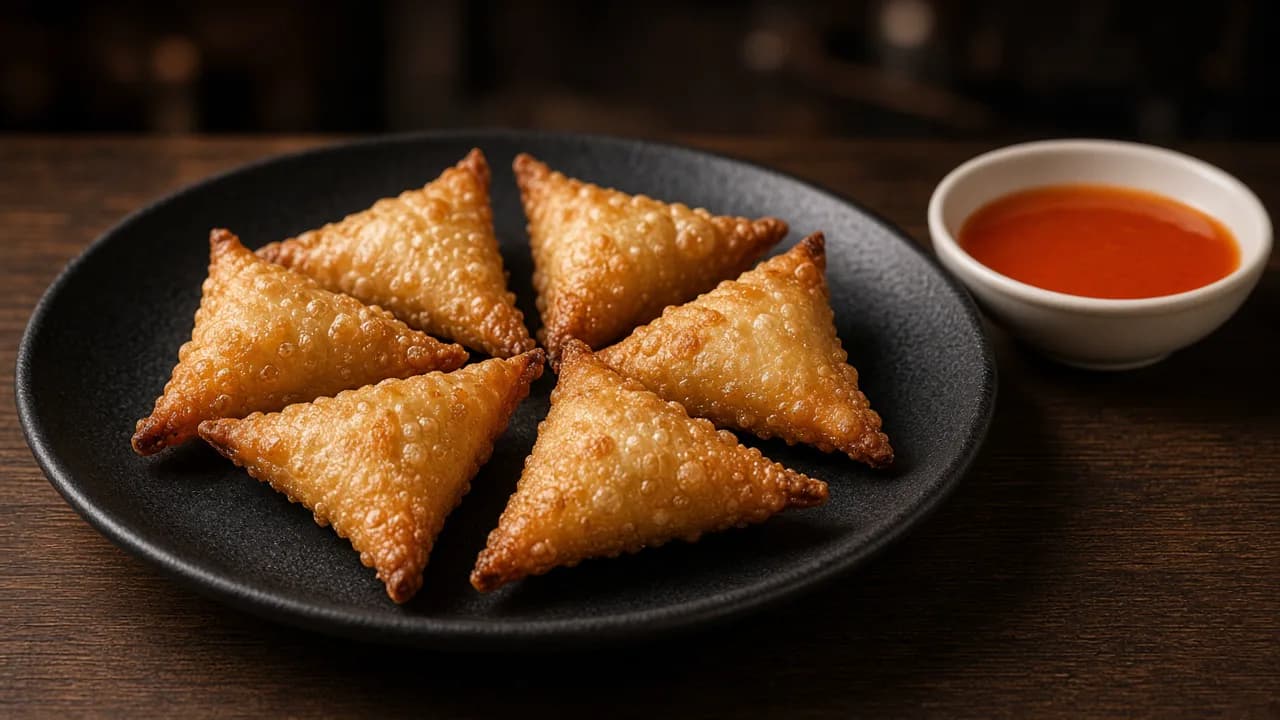
Crab rangoon is a small, crunchy, deep-fried dumpling you'll find on almost every American Chinese menu. It also goes by crab puffs, cheese wontons, cream cheese rangoons and crab pillows, depending on where you order.
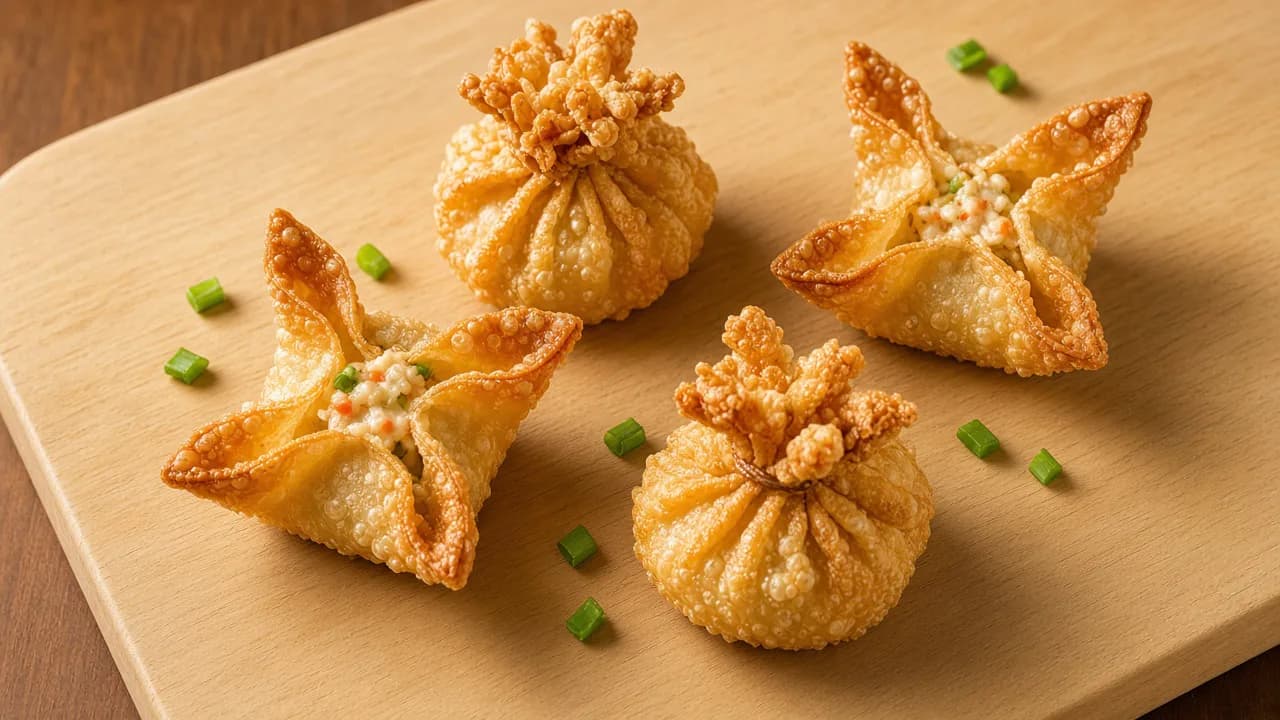
The shape changes from kitchen to kitchen. Some fold it into a triangle. Some pinch four corners up into a star. Others gather the wrapper into a little flower or money-bag shape, or use a classic wonton fold.
Most restaurants deep-fry it until the edges shatter. At home, plenty of people bake it or use an air fryer instead. You can eat it hot or cold, though hot is where it shines.
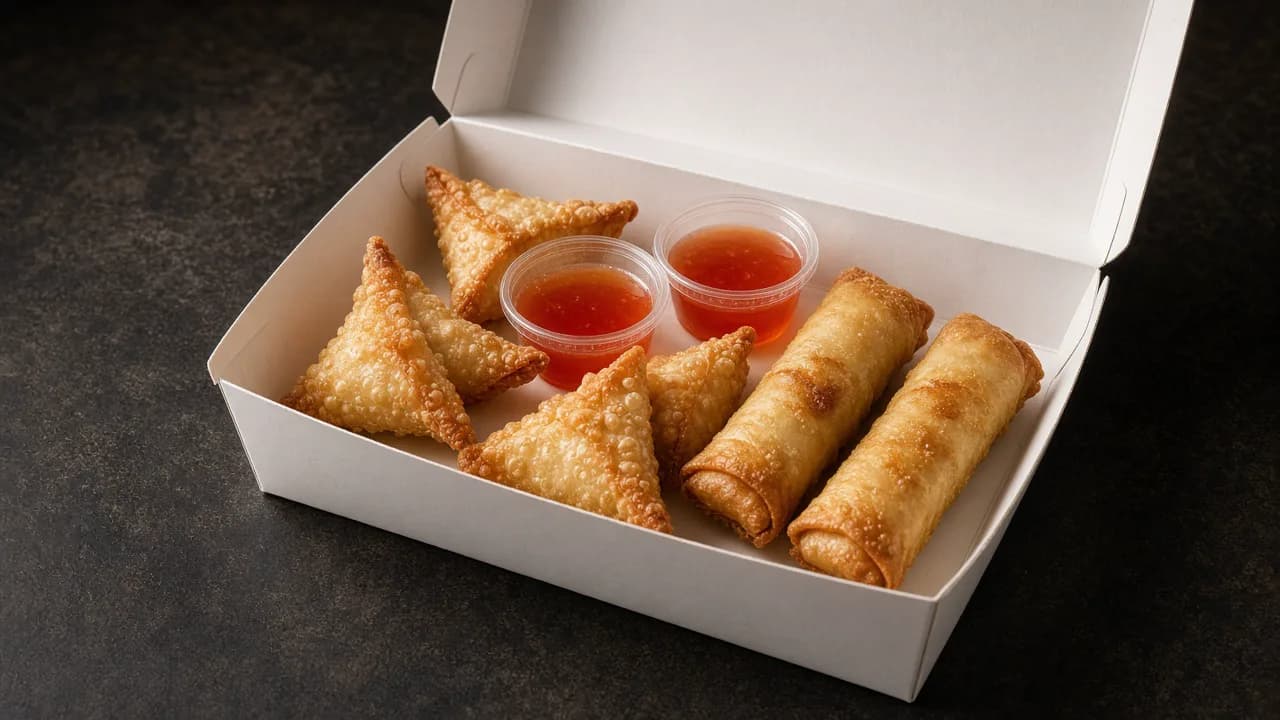
On a takeout menu it usually sits in the appetizer section next to egg rolls and wonton soup. It's the thing people order "for the table" and then fight over.
What Is Crab Rangoon Made Of?
If you've wondered what is crab rangoon made of, the list is short:
- Cream cheese. This is the base and the main event.
- Crab meat or imitation crab. Imitation crab is also sold as surimi or "krab."
- Scallions or onion. For a bit of bite.
- Garlic and other seasonings. Each kitchen does its own thing.
- A wonton wrapper. That's húntun pí (馄饨皮, wonton skin), a thin wheat-flour sheet.
The filling gets spooned into the middle, the wrapper gets folded and sealed, and the whole thing goes into the fryer.
Is There Real Crab in Crab Rangoon?
Sometimes. Some restaurants use real crab. Many use imitation crab. And some versions are basically all cream cheese with barely any seafood at all. There's no rule, so if it matters to you, just ask when you order.
What Does Crab Rangoon Taste Like?
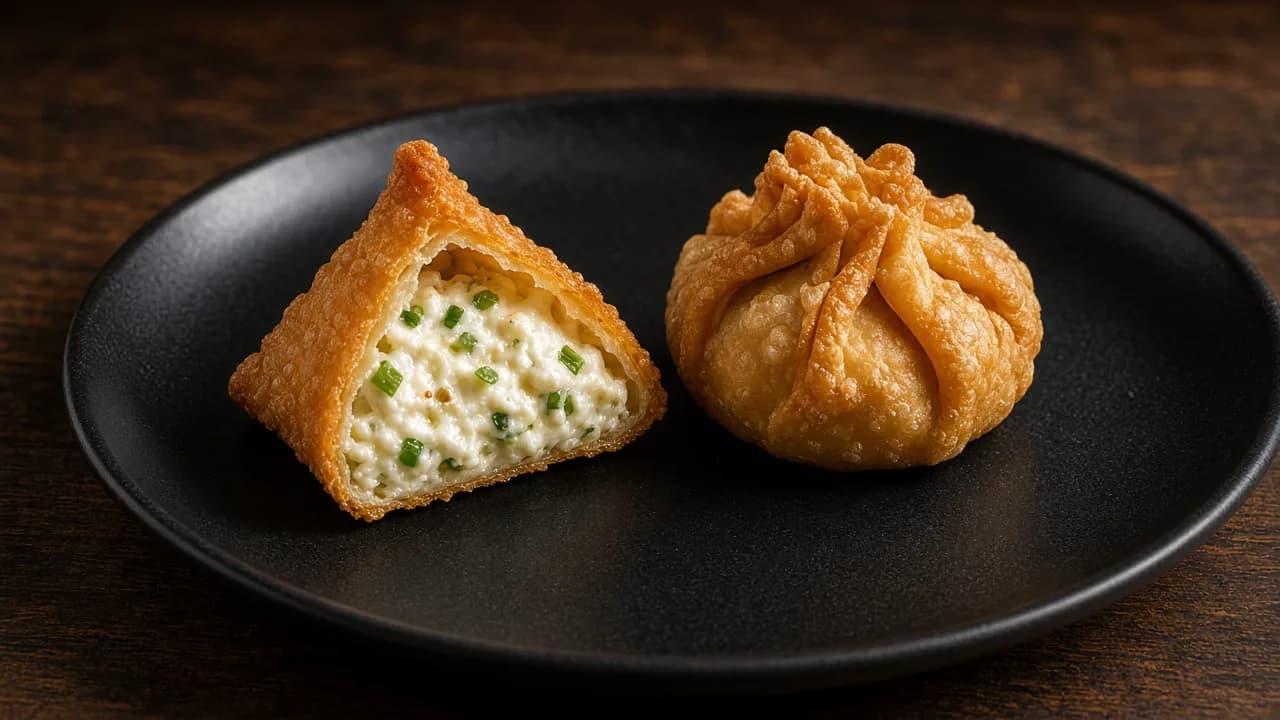
Think crunchy outside, soft and creamy inside. The wrapper fries up crisp and a little blistered. The filling turns warm, rich and slightly salty, with a mild sweetness from the cream cheese and a faint seafood note from the crab.
Then you dip it. A tangy, bright sweet and sour sauce cuts right through all that richness. That hot-creamy-plus-sweet-sharp combo is the whole reason people love it.
Crab Rangoon vs Fried Wonton vs Cheese Wonton
Here's crab rangoon vs fried wonton (and cheese wonton) side by side. The wrapper is the same. The filling is the difference.
| Comparison | Crab rangoon | Fried wonton | Cheese wonton |
|---|---|---|---|
| Filling | Cream cheese plus crab or imitation crab, scallions, garlic | Usually seasoned pork or shrimp | Mostly cream cheese, little or no crab |
| Wrapper | Wheat wonton wrapper | Wheat wonton wrapper | Wheat wonton wrapper |
| Cooking method | Deep-fried, sometimes baked or air-fried | Deep-fried (wontons can also be boiled in soup) | Deep-fried, sometimes baked |
| Texture | Crisp shell, soft creamy center | Crisp shell, firm meaty center | Crisp shell, soft creamy center |
| Usual dipping sauce | Sweet and sour, duck sauce, plum sauce | Sweet and sour, hot mustard, soy sauce | Sweet and sour, duck sauce |
| Where you'll usually see it | American Chinese takeout, party platters | Chinese restaurants, takeout, wonton soup (boiled) | American Chinese takeout |
So is a cheese wonton just crab rangoon without the crab? Pretty much. Menus aren't consistent, though. One place's "cheese wonton" is another place's "crab rangoon," so read the description.
A wonton itself is húntun (馄饨, wonton), also spelled wonton (云吞) from Cantonese. In China it's usually filled with pork or shrimp and often served in soup. If you're trying to place wontons in the wider dumpling family, our dim sum vs dumplings guide lays it out. And if your takeout debate is really about rolls, not parcels, see egg roll vs spring roll.
Is Crab Rangoon Chinese? Where It Really Comes From
So, is crab rangoon Chinese? Not in the traditional sense. It's an American creation, and that's fine.
Here's what's on record. Crab rangoon was on the menu at Trader Vic's, a "Polynesian-style" tiki restaurant, at its Beverly Hills location in 1955. The San Francisco location served it since at least 1956. As for who invented crab rangoon, it's generally credited to Joe Young, a chef who probably created it while working under Trader Vic's founder, Victor Bergeron. "Probably" is doing real work in that sentence. Food history from that era is fuzzy, and you'll see wilder origin stories online. We're sticking to what's documented.
What about the name? Rangoon is the old name of Yangon, a city in Myanmar. Cream cheese isn't a traditional ingredient in Chinese or Burmese cooking. So the name reads more like tiki-era menu flair than a recipe from any one place.
From tiki bars, the dish spread into American Chinese restaurants and stuck. American Chinese food is its own real cooking tradition, with its own classics. Crab rangoon is one of them, right alongside General Tso's and egg rolls.
Quick pronunciation note, since people ask: it's "crab rang-GOON."
How to Order and Eat Crab Rangoon
A few tips for your next order:
- Watch for name swaps. Crab puffs, cheese wontons and cream cheese rangoons may be the same thing, or close. Check the menu description.
- Pick your crab rangoon dipping sauce. Sweet and sour is the classic. Duck sauce and plum sauce are sweeter and fruitier. Hot mustard brings heat. Soy sauce works if you want salty over sweet.
- Pair it with a main that has some kick. Crab rangoon is rich and mild, so a spicy, savory main like kung pao chicken balances the table nicely. Torn between entrées? Try kung pao vs general tso, hunan chicken vs kung pao chicken, or kung pao vs szechuan.
- Eat them early. They're best hot, before steam in the box softens the shell.
- Handle leftovers right. Cream cheese and seafood fillings are perishable, so get leftovers into the fridge within 2 hours, per FoodSafety.gov. To bring back the crunch, reheat in an oven or air fryer rather than the microwave. More tips in our guide to storing and reheating takeout leftovers.
Crab Rangoon Everywhere: Pizza, Dips and Brat Rangoons
Lately, "rangoon" has become a flavor, not just an appetizer. You'll see crab rangoon pizza, crab rangoon dip, and rangoon-stuffed everything on short-form video. In October 2026, the Milwaukee Brewers' ballpark menu for the World Series even featured Brat Rangoons, swapping crab for bratwurst and serving them with a sweet-and-sour mustard sauce. Fun spins, all of them. But it helps to know the original first.
Allergens and Gluten Notes
Crab rangoon packs several common allergens into one bite. Always check with the restaurant, since recipes vary.
- Wheat and gluten. Wonton wrappers are made from wheat flour. Imitation crab often contains starch and may contain wheat, so read labels.
- Dairy. Cream cheese is the core of the filling.
- Shellfish and fish. Real crab is shellfish. Imitation crab is usually made from fish.
- Egg. Some wrappers contain egg, and some cooks seal them with egg wash.
- Soy. Soy sauce on the side contains soy and usually wheat.
So, is crab rangoon gluten free? Usually not. If you need gluten-free, your best bet is making it at home with a dedicated gluten-free wrapper.
Ordering for a group with allergies? Every dish in the bag is different. If someone's asking "does kung pao chicken have peanuts," the answer is in does kung pao chicken have peanuts, and our kung pao chicken allergens rundown goes deeper. And if you're wondering whether any of this counts as a light meal, the honest answer depends on cooking method and portion size. We dig into that for one takeout staple in is kung pao chicken healthy.
FAQ
What are crab rangoons made of?
Crab rangoons are made of a wheat wonton wrapper filled with cream cheese, crab meat or imitation crab, scallions or onion, and garlic or other seasonings. The parcel is folded, sealed and usually deep-fried until crisp. Some home cooks bake them or use an air fryer instead. The exact mix varies by restaurant.
What do crab rangoons taste like?
They taste crunchy on the outside and warm, creamy and slightly salty inside, with a mild sweetness from the cream cheese and a light seafood flavor. Most people dip them in sweet and sour sauce, which adds tang and cuts the richness. If you like cheese sticks or jalapeño poppers, you'll likely enjoy them.
What's the difference between a wonton and a crab rangoon?
They share the same wheat wrapper, but the filling is different. A Chinese wonton is usually filled with pork or shrimp and is often boiled in soup or fried. Crab rangoon is filled with cream cheese and crab, usually imitation crab, and is almost always fried. Think of crab rangoon as a cream cheese wonton.
Is crab rangoon just a cheese wonton?
Very close. A cheese wonton is often the same appetizer with little or no crab, mostly cream cheese. Menu names aren't standardized, though, so one restaurant's cheese wonton can be another's crab rangoon. If you want crab, or want to avoid it, read the menu description or ask when you order.
Is there real crab in crab rangoon?
It depends on the kitchen. Some restaurants use real crab meat. Many use imitation crab, which is usually made from fish. Some versions are almost all cream cheese with very little seafood. If it matters for taste or for allergies, ask the restaurant before you order. Either way, treat it as a seafood dish.
Is crab rangoon Chinese or Japanese?
Neither, traditionally. Crab rangoon was created in the United States and became a classic of American Chinese food. Cream cheese isn't a traditional ingredient in Chinese cooking, so you won't usually find it on menus in China. That doesn't make it less real. American Chinese cooking is its own tradition, and crab rangoon is one of its best-known dishes.
Who invented crab rangoon, and why is it called that?
Crab rangoon appeared on the menu at Trader Vic's in Beverly Hills in 1955 and in San Francisco since at least 1956. It's generally credited to chef Joe Young, who probably created it under founder Victor Bergeron. Rangoon is the former name of Yangon, a city in Myanmar. The name fits the exotic-sounding menu style of the tiki era.
Is crab rangoon gluten free?
Usually not. Wonton wrappers are made from wheat flour, and imitation crab often contains starch that may include wheat. The soy sauce served on the side usually contains wheat too. If you need gluten-free crab rangoon, the safest route is making it at home with dedicated gluten-free wrappers and checking every label.
The Bottom Line
So, what is crab rangoon? It's a crispy wonton wrapper filled with cream cheese and crab, born in America and now a takeout favorite. When it comes to crab rangoon vs fried wonton, remember this: same wrapper, different filling. Cream cheese means rangoon. Pork or shrimp means wonton. Grab the sweet and sour sauce and you're set.
Still decoding the menu? Check out kung pao chicken vs orange chicken or browse our Chinese food guide.