Direct Answer
Direct Answer
Order Kung Pao when you want savory heat and peanut crunch. Order Orange Chicken when you want sweet, sticky, crispy comfort. They're both chicken, but that's about where the overlap ends.
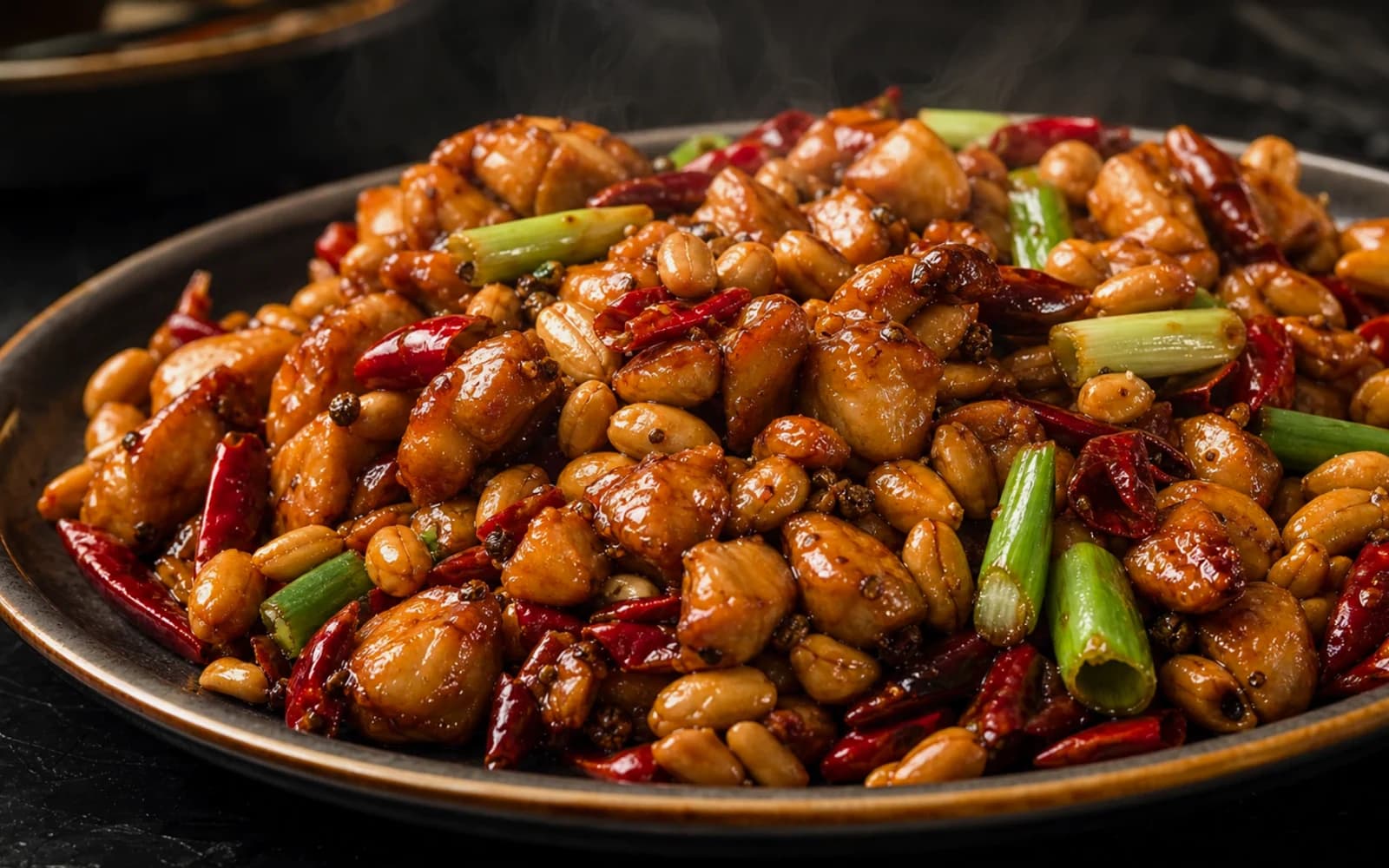
Kung Pao Chicken is a stir-fry: small diced chicken, roasted peanuts, dried chiles, garlic and ginger, all tossed fast in a hot wok with a sauce that's savory first, a little tangy, only lightly sweet. Nothing is battered. Nothing is deep-fried. The chicken stays lean, the peanuts stay crunchy, and the chile flavor builds slowly instead of hitting you all at once.
Orange Chicken is a completely different animal. Chunks of chicken get battered, deep-fried until crispy, then tossed in a thick, sticky, orange-citrus glaze that's heavy on sugar. There's no peanuts, no dried chiles doing the work, and the texture is all about crunch giving way to sauce. It's dessert-adjacent in a way Kung Pao never is.
If someone put both dishes in front of you with your eyes closed, you'd know almost immediately. Kung Pao smells like toasted chile and garlic. Orange Chicken smells like citrus and caramelized sugar. One is a stir-fry built around balance, the other is fried chicken built around a glaze. Different techniques, different flavor goals, different reasons to order them.
Why It Matters
Why people mix these two up
These two dishes end up next to each other on almost every Chinese American takeout menu, so it's an easy pair to confuse, especially if you've never had either one and you're just going off the picture on a delivery app. The names don't help either. 'Orange' tells you almost nothing about texture, and 'Kung Pao' doesn't tell a first-timer there are peanuts and whole dried chiles involved.
Knowing the real difference matters for more than just curiosity. If you're allergic to peanuts, Orange Chicken is usually the safer order, though you should still ask about shared fryers and prep surfaces. If you want something sweet and assume Kung Pao is a gentler option, it can genuinely catch you off guard with real chile heat. And if you're trying to eat a little lighter, the cooking method matters more than the name: one dish is a quick stir-fry, the other is battered and deep-fried, and that difference shows up in how you feel an hour later, not just in the flavor.
Practical Test
How to tell them apart in five seconds
- See small diced chicken, peanuts, and dried red chiles? That's Kung Pao.
- See bigger battered chunks under a thick, shiny orange sauce? That's Orange Chicken.
- Trying to decide what you're in the mood for: savory with heat, or sweet with crunch?
- Got a peanut allergy? Ask directly. Kung Pao almost always has peanuts, and cross-contact in a shared kitchen is a real risk even if your dish looks peanut-free.
None of this requires tasting anything first. Kung Pao gives itself away visually: small cubed chicken, whole peanuts, dried red chiles scattered through the dish, a sauce that clings thin instead of pooling. Orange Chicken gives itself away just as fast: bigger, irregular fried chunks, a glossy orange coating thick enough to see light reflect off it, and usually a sesame seed or scallion garnish on top instead of peanuts. If you're ordering delivery and only have a photo to go on, these are the details worth zooming in on before you commit.
Common Mistakes
Where people usually get this wrong
Assuming both are just 'sweet Chinese chicken.' They're not. Kung Pao is a savory, chile-forward stir-fry. Only Orange Chicken is built around sugar.
Overlooking the fried versus stir-fried difference. Orange Chicken's crispy batter and Kung Pao's quick wok-sear are two completely different cooking methods, and that changes texture, oil content, and how the dish holds up as leftovers.
Assuming Kung Pao is automatically the healthier choice just because it's stir-fried. It can be, but a Kung Pao drowning in oily sauce isn't necessarily lighter than a modest portion of Orange Chicken. Portion and sauce amount matter as much as cooking method.
Forgetting both dishes vary a lot by restaurant. Some places make a very mild, sweet Kung Pao. Some make an Orange Chicken with real chile kick. The names are a starting point, not a guarantee.
Ordering Orange Chicken expecting Kung Pao's texture. If you're after that peanut crunch and diced-chicken bite, a sweet fried dish is going to feel like a completely different meal, even if you were both just craving 'the orange-ish one' by mistake.
Assuming Orange Chicken is a dish you'd find in China. It's a Chinese American invention, first made at a Panda Express in Hawaii in 1987, not a dish with deep roots on the mainland. Kung Pao, by contrast, has real Sichuan lineage.
Source Notes