Direct Answer
Direct Answer
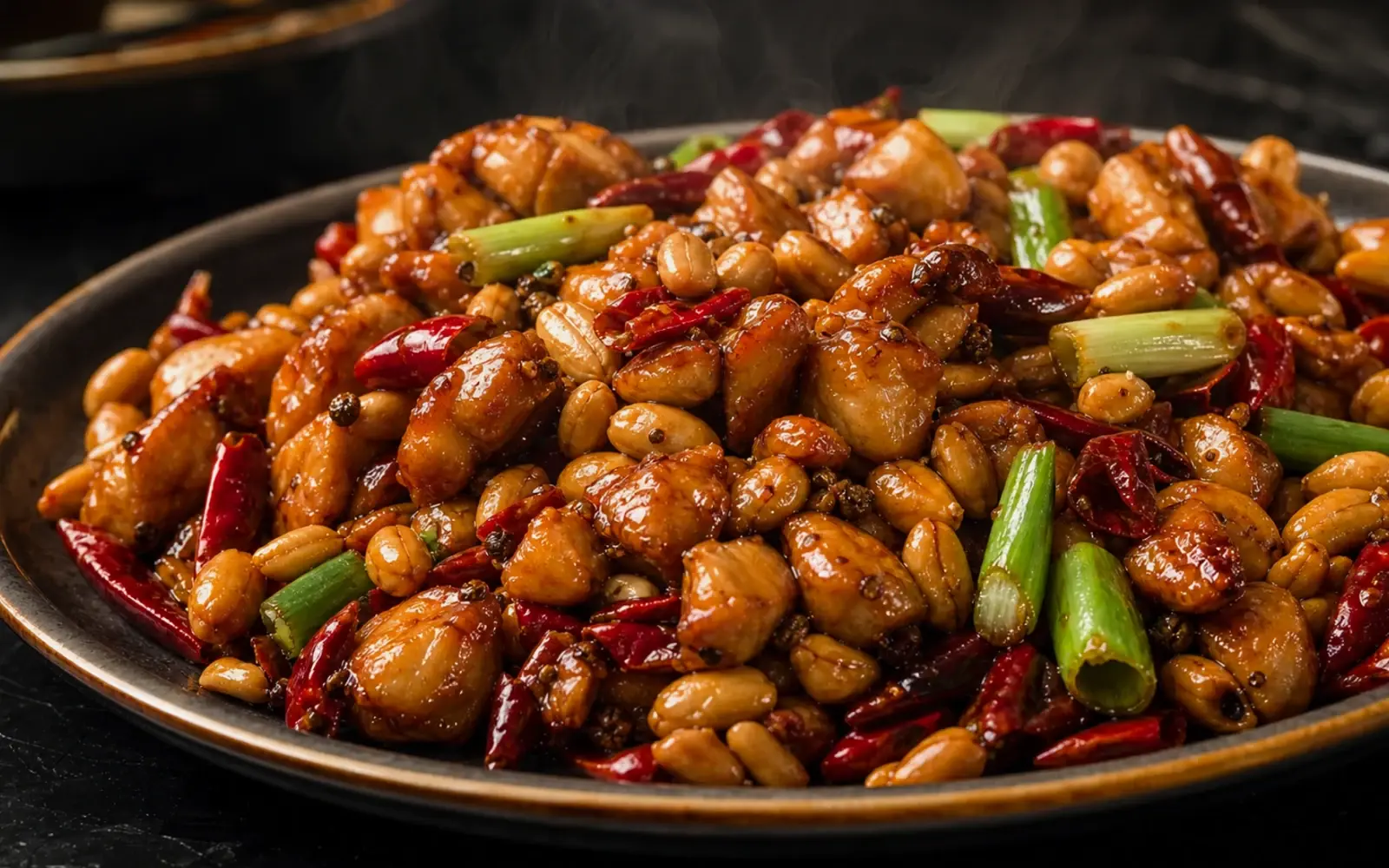
Kung Pao chicken tastes savory, lightly sweet and tangy, with roasted peanut crunch and dried-chile aroma.
Start with a bite that includes a peanut and a piece of chicken. The sauce should leave a thin coat on both. A Sichuan-style plate can finish with a citrusy tingle from Sichuan peppercorn. A sweeter takeout version may have very little tingle and more bell pepper or celery.
Why It Matters
Read the sauce and the crunch
A thick, sugary coating makes two dishes taste alike even when the chicken was prepared differently. If the sauce tastes refreshing between bites and the peanuts stay distinct, you can still pick out the vinegar, the roasted nuts and the chile. Compare the sauce before deciding how spicy the dish is.
Practical Test
What to check
- Try a piece of chicken and a peanut together.
- Look for small chicken pieces and a light coating of sauce.
- Ask whether the kitchen uses Sichuan peppercorn if you want the tingle.
Common Mistakes
Where people get tripped up
Dark sauce alone tells you very little about vinegar or heat.
Taste the glaze on the chicken
Start with a piece of chicken without a dried chile stuck to it. The first thing you can judge is the glaze: does it taste mainly of soy, does the vinegar come through, or does sweetness take over? Now try another piece with a peanut. The roasted flavor should make the bite fuller and the crunch should still be distinct. If you taste a spoonful of sauce straight from the container, you are getting far more of it than you would in a bite of chicken. Judge it on the food before deciding what to adjust.
A faint citrus aroma or prickling feeling can come from Sichuan peppercorn. The familiar burn from dried chiles is a separate sensation, and you can have one without much of the other. A lightly numbing plate can still be fairly mild. A takeout cook can also make a hot, sweet plate without using Sichuan peppercorn at all. If you want to explain the dish to someone who has never had it, those details help more than putting it at a point on a ten-number heat scale.
What happens when the food sits in a takeout box
The first bite at the restaurant and the first bite after a long delivery can give different impressions. Steam trapped in the box can soften the peanuts, and sauce dripping down the vegetables collects around the pieces at the bottom. If you are judging a takeout order, try one piece from the top and one from the bottom before deciding the kitchen used too much sauce. A bite from the bottom may tell you the seasoning is strong, while the upper pieces can tell you what the serving would taste like with a thinner coat.
Separate some plain rice onto your plate before adding the chicken. Taste the pieces as they are, then try them with the rice. A sauce that seems intense alone may make sense in a meal where each forkful includes a little rice. A sugary glaze that keeps dominating even when you eat it that way is a different situation. Put a little less on the next bite, and see whether you can pick out the dried chile and the vinegar.
What the first bite should tell you
A good place to start is the plainest-looking piece in the dish: a cube of chicken with glaze on its surface and nothing else attached. The soy should give it a savory base. Vinegar should come through quickly enough that the bite feels bright, and a little sweetness should take the sharp edge off that acidity. If you have only ever eaten a sweet Chinese-American takeout version, the vinegar in a Sichuan-style rendition may be the biggest surprise. It can make the dish feel almost brisk even though the chicken was fried in oil and the sauce contains sugar.
Now take the same bite with a peanut. The roasted note becomes deeper, and there should be a brief break in texture as the nut cracks between your teeth. That change is part of the dish's appeal. A sauce thick enough to make everything feel sticky can flatten the difference between the meat, scallion and nut. A light coating lets you taste each ingredient in turn. The goal is a bite that changes as you chew: glaze up front, chicken and scallion in the middle, and the toasted note as you finish.
Try a piece with scallion as well. The pale parts are substantial enough to contribute crunch and a mild onion sweetness. A little garlic or ginger may be obvious when you lift the food to your mouth, especially while it is hot. The aromatics should read as part of the dish rather than as a separate pile of strongly flavored vegetables. If the scallion is nearly raw and the sauce is aggressively sharp, give a different bite a chance before making a judgment. Stir-fries naturally vary a little from mouthful to mouthful.
Sweet and sour without a fruit flavor
The sweet-sour balance in Sichuan cooking is sometimes described as a lychee flavor. In this context, think about the sensation of ripe fruit: first soft sweetness, then a lift that keeps it from feeling heavy. You should not expect the sauce to smell like a fresh lychee or find pieces of the fruit in the bowl. The familiar effect comes from combining sugar and vinegar. Recipes differ in how pronounced it is, and the same measured proportions can produce a different result when the bottles of vinegar and soy change.
Chinkiang vinegar can give the sauce a dark, rounded acidity. When you smell it in the bottle it may seem strong enough to take over dinner. After a small amount goes into a hot pan, it becomes less blunt, especially with soy, aromatics and chicken in the same bite. The right test is whether you can still recognize some acidity when you eat the finished food. If all you can taste is sweetness, the dish may have little vinegar, too much glaze or both. If it tastes sour on its own yet works beautifully with rice, it may simply be seasoned for the table.
A sauce can be dark and lightly sweet or pale and quite sugary. The color of the glaze is a weak guide because dark soy can tint a dish with a small amount, and a light-colored ingredient can add substantial sweetness. Watch how the sauce behaves when you move the chicken to a fresh plate. A thin sheen that travels with the food is different from liquid left behind in the original bowl. Both can have plenty of flavor. The first tells you more about the concentrated coating associated with many Sichuan-style versions.
The difference between chile heat and peppercorn tingle
Dried chiles can lend a warm, toasted fragrance even in a plate that barely burns. The intensity depends on the kind of chile, how many pieces are cut open and how much contact they have with the oil. A whole dried pod may contribute more aroma than heat to the food surrounding it. Bite into it, though, and you are tasting the chile itself. Set any such pieces aside for your first taste if you want a fair idea of the heat carried by the chicken and sauce.
Sichuan peppercorn gives a separate impression, often starting as a citrusy fragrance and ending in a fine prickling around the lips or tongue. A strong dose can feel numbing. This is the má half of málà, with là referring to chile heat. A dish can be mild in chile heat and lively with peppercorn. That combination can catch you off guard if someone simply tells you it is mild. When ordering for a person who dislikes the sensation, ask about peppercorn independently of how many chiles the kitchen uses.
When neither effect is strong, the dish can still have recognizable roasted chile and peanut aromas. Ask yourself what is missing before dismissing it as bland. If there is enough soy, vinegar and aromatic flavor, you may just have a gently seasoned rendition. If the only strong flavor is salty sweetness, a tiny sample with a drop of plain chile oil tells you whether heat is the missing piece. Heat cannot repair an absent vinegar note or restore the crunch of damp peanuts, but tasting a small portion separately makes the distinction easier.
How restaurant versions can taste so different
A vegetable-heavy takeaway version may put chicken beside celery, bell pepper or onion in a larger quantity of sauce. Fresh bell pepper tastes sweeter and juicier than a dried chile, and celery contributes its own aromatic crunch. These vegetables take up space in the box and alter what a forkful tastes like. If you remember a bright, slightly sweet plate with a lot of vegetables, ordering the same English name from a different restaurant may give you a tighter, peppercorn-forward stir-fry. Both preparations exist, so the useful question is what you want for this particular meal.
Battered pieces change the experience in another way. A crunchy coating holds more glaze on its irregular surface, and it can go soft as the dish sits. With diced, unbattered chicken you can feel the texture of the meat directly. An uneven mix of breast and thigh pieces, or simply the use of one cut instead of the other, can also change whether the bite feels lean and firm or softer and richer. Ask whether the chicken is diced and stir-fried if the texture you are expecting matters more than the exact seasoning.
Compare it with General Tso’s and Orange Chicken as you would actually eat them: a small, sauced piece of each with plain rice. General Tso’s frequently leads with the texture of fried coating and a sweet-savory glaze. Orange Chicken often has an obvious orange note. A Sichuan-style Kung Pao should bring your attention back to dried chile, a roast-peanut finish and sharpness from vinegar. If you are ordering from a restaurant that uses similarly sweet sauces across several dishes, one visit may not tell you which style you prefer.
What temperature and sides do to the flavor
The first steam from an uncovered plate carries aromas that will be quieter by the time dinner is lukewarm. A cold mouthful can still be salty or sweet, but it is harder to use it to judge what the fresh stir-fry smelled like. When a meal is delivered, tip the chicken into a plate and smell it as you uncover it. If you want to compare two versions, try to taste them at similar temperatures. Otherwise you may be comparing the fresher dish with one that has had time to lose its fragrance and soften.
Plain, steamed rice provides a useful reference because it adds very little seasoning. Fried rice, a dressed cucumber salad or a strongly seasoned noodle dish can make the chicken seem milder or sweeter by changing what you taste immediately before it. Take a clean bite of rice, then try chicken on its own, then try both together. The same glaze can taste too intense from a spoon and just right when it is distributed over a few grains. A side also makes it possible to enjoy a more assertive version without asking the kitchen to dilute the sauce.
If you are choosing a second dish for the table, think about texture as well as spice. A tender green vegetable adds a different kind of bite next to roasted peanuts and diced chicken. A second dish with a sticky sauce might make the dinner feel sweeter overall even if the Kung Pao itself is well balanced. On a shared table, keeping the rice and sides separate lets each person adjust the balance on their own plate. It also gives you a clearer sense of what you would order differently next time.
How to use the flavor clues when ordering or cooking
One useful question for a restaurant is whether it uses Sichuan peppercorn and dried chiles in this particular preparation. A useful follow-up is whether the sauce leans sweet or vinegary. The restaurant may use a house preparation it cannot adjust, but the answers can still help you decide. Photographs are helpful for spotting peanuts, the size of the chicken pieces and the amount of visible sauce. They cannot convey vinegar, tingle or salt, and a gallery can mix pictures from different locations or from kitchens that have changed their preparation.
At home, the easiest tasting comparison uses two pieces of chicken from the same batch. Leave one unchanged. On the other, add a drop or two of vinegar to see whether a brighter finish reveals more of the peanuts and the roasted chile. If the first piece tastes too sharp already, try the second with plain rice instead and see whether the seasoning was simply stronger than you expected. Change one thing on a small serving at a time. If a test tastes worse, you have lost one bite rather than made a new problem for the whole pan.
Write down the thing you want more of in terms you can act on. “More spicy” leaves you deciding between chile burn and peppercorn tingle. “I want a roasted chile smell without lingering burn” tells you to start with a fragrant, gentler chile and judge the oil. “I want less syrup on each piece” tells you to start with less sauce and stop cooking when it first clings. “The flavor was good but the nuts went soft” tells you to hold the nuts back until serving. A specific description gives you a better second batch than an overall score.
A short tasting exercise for two styles
If you have two orders on the table, move a few pieces of each to separate small plates. Begin with the chicken alone and compare the bite size, texture and amount of coating. Next put one piece of each over a little rice and compare how long the sweetness or acidity lingers. Finally try a peanut or scallion with the meat, if those ingredients suit you. The result tells you whether you prefer the glaze itself or the combination of elements around it. A favorable first impression from a spoonful of sauce can change when you eat a whole serving.
A similar exercise works when there is only one plate and you know you will order again soon. Notice whether you are reaching for more rice to soften salt, waiting for the next roasted peanut, or looking for chicken pieces with less sauce on them. What you do as you eat is often more revealing than what you would call the dish. You may discover that the chile level suits you but the sugar does not, or that the salty, tangy sauce is exactly what you want as long as it comes in a smaller quantity. That is enough information to choose between two menus or adjust your own cooking.
Source Notes