Direct Answer
Direct Answer
Kung Pao chicken is usually mildly to moderately hot, but the heat varies by kitchen.
Dried chiles bring the burn. Sichuan peppercorn brings a separate, prickly sensation. A takeout version may use whole chiles mainly for aroma, while a Sichuan restaurant might fry cut chiles and peppercorns in the cooking oil. Both the sauce and the oil can carry heat.
Why It Matters
Burn and tingle are separate
Picking out the dried peppers after cooking removes the pieces you might bite into. The oil has already picked up their flavor and some heat. When you order, ask how the kitchen can adjust the batch before it goes into the wok.
Practical Test
What to check
- Ask for fewer dried chiles if you want less burn.
- Ask separately about Sichuan peppercorn if you dislike numbing spice.
- Check whether the sauce is premixed before requesting changes.
Common Mistakes
Where people get tripped up
Red color is a poor heat scale.
What the first bite can tell you
Start with a piece of chicken that has a little sauce on it and no visible chile segment stuck to it. You are tasting what the kitchen distributed through the dish, rather than the concentrated heat of biting into a pod. With a restrained version, you may notice the smell of toasted chile before you feel much burn. With a hotter version, the burn can build over a few bites. If the dish includes Sichuan peppercorn, there may also be a light prickling around the tongue or lips. Some people notice it immediately and others pick it up once the first impression of salt and vinegar has passed.
Take a second bite with a peanut and a bit of scallion. The nuts bring their own roasted smell and change the texture of the bite. Pulling apart those sensations is a better way to judge the dish than trying to place the whole plate on a scale from one to ten. Imagine telling a friend how to order it. Saying it has a little background burn and a noticeable tingle gives them more to work with than telling them it is a seven. A person who enjoys very hot Thai food may still find the prickly Sichuan sensation unfamiliar, while someone who likes the tingle may prefer a more modest amount of chile.
Why the same menu name can mean different heat
Kung Pao describes a family of preparations. In a Sichuan-style version, diced chicken, dried chiles and peanuts are recognizable parts of the dish. The kitchen may also use Sichuan peppercorn. In a takeout version, the vegetables, glaze and choice of chiles can look and taste different. Some restaurant cooks leave whole dried chiles in the finished dish after using them to flavor the oil. Others cut them into pieces or use a chile preparation that distributes heat more evenly. These choices can matter as much as how many peppers you see on the plate.
A restaurant can also serve a house sauce that is mixed ahead of service. The kitchen might be able to reduce the fresh chile added to the wok while using the same sauce for every order. A different kitchen might be able to leave the chile out of a fresh batch entirely. Ask what can be changed before using a menu's little pepper symbol as a prediction. If the restaurant says the sauce has chile in it already, that tells you something concrete about the floor of the heat level even when they agree to make the order mild.
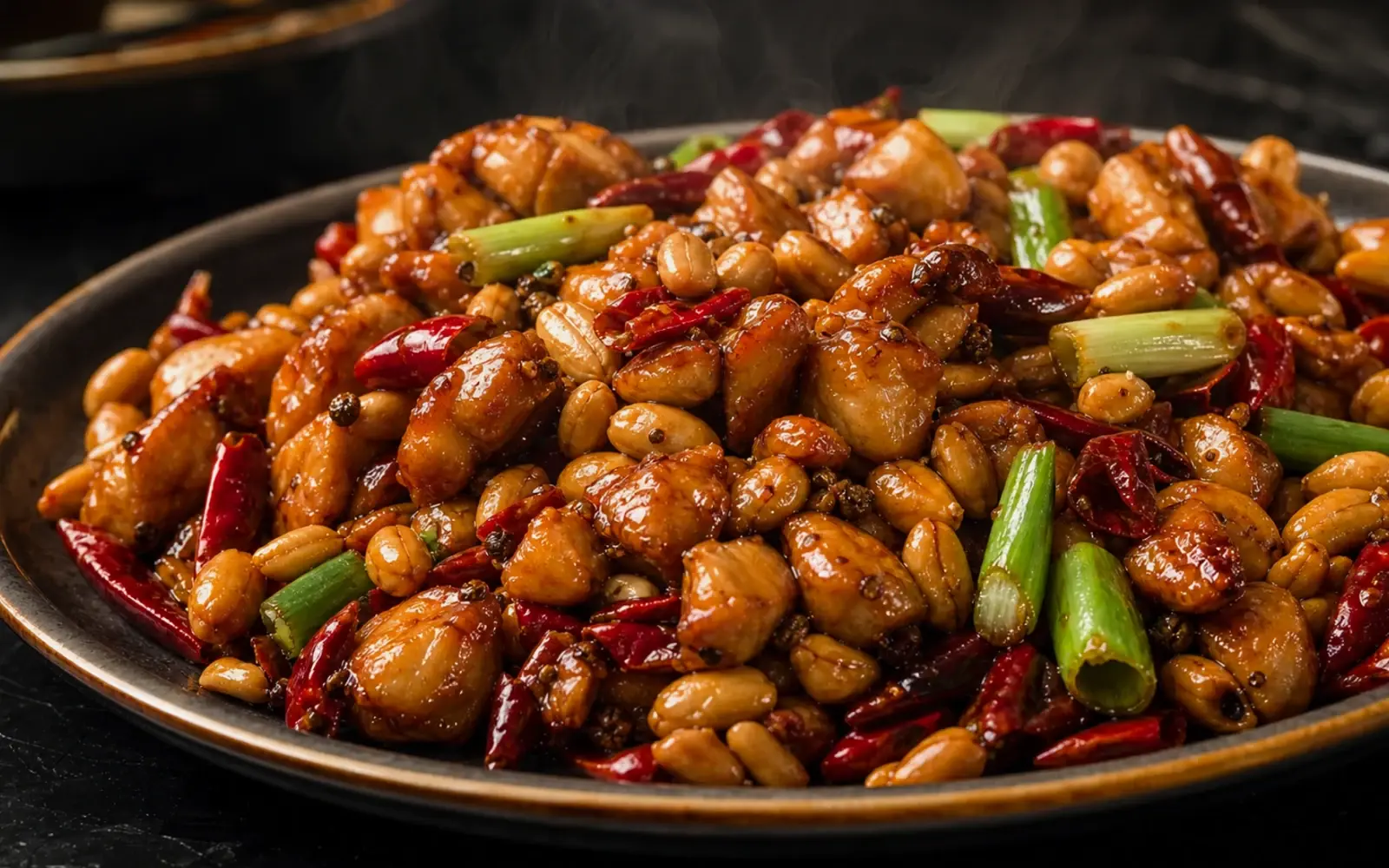
Photos are useful for spotting the style of the dish. Diced chicken with small amounts of scallion and a thin glaze looks different from a deep container with large pieces of bell pepper and a plentiful sauce. A photo cannot tell you how hot the chile is or whether the sauce contains ground peppercorn. A bright red piece might be a mild bell pepper. A dark sauce with no conspicuous red pieces could contain a hot chile paste. Use pictures to judge the cut, the amount of sauce and the ingredients you can see. Use the menu or the kitchen to answer the rest.
Whole pods, cut chiles and chile oil
When whole dried pods are fried in oil, they contribute aroma and can give the oil some heat. The dish does not necessarily taste as hot as the pods would if you ate them directly. Cutting or tearing the pods exposes more of the inside to the oil and gives you smaller pieces that are harder to avoid in a bite. If you are cooking for someone who wants just a little heat, choosing a mild dried chile and keeping it whole gives you a different starting point from snipping up the same quantity of a hot variety.
Removing the dried chiles from a finished restaurant order can make individual bites more comfortable. You may still find that the oil and sauce have plenty of heat. If it is a dish you plan to order again, ask about the oil and the sauce up front. The distinction is particularly useful at a restaurant that offers a choice of spice level. A kitchen that reduces the sliced chiles but keeps the same hot oil may deliver a version that looks mild while still tasting quite warm.
The chile oil you add at the table can also produce a surprisingly different result from the chile cooked into the dish. A few drops placed right on top of one piece of chicken make a concentrated bite. Stirred through a portion, the same amount may be harder to notice. If you are serving several people at home, pass the chile oil separately and let each diner try it on one bite first. You can learn whether the sauce itself needs more heat without making the mild servings harder to eat.
Sichuan peppercorn has its own setting
A useful way to understand Sichuan peppercorn is to distinguish the initial chile burn from the sensation that stays around the lips afterward. Peppercorn can smell citrusy and taste fragrant before it begins to tingle. The amount matters, and the same amount of whole husks and finely ground powder will show up differently in the dish. A dusting of powder can get into nearly every bite. Whole husks may be clustered in the oil or left where a diner can see them and avoid chewing them.
When you ask for less numbing spice, say Sichuan peppercorn. A request for mild might lead the kitchen to reduce dried chile while leaving peppercorn where it normally goes. The opposite can happen if a cook assumes you dislike the tingling sensation. At home, keep notes on both ingredients while testing a recipe. If a batch burns more than you wanted but has exactly the amount of tingle you like, reduce the chile next time and keep the peppercorn steady. If you want more of the peppercorn fragrance, increasing the amount of dried chile will take the dish in a different direction.
If you are tasting Sichuan peppercorn for the first time, a shared meal is a good setting. Try a bite of Kung Pao and a bite of plain rice, then see what remains as you go back for the next piece. This is about recognizing the sensation in food you can compare. You can enjoy the fragrance and still decide that a strong tingle is more than you want in an entire order. Individual preferences are enough reason to ask for a lighter hand.
How to order it the way you want
For mild heat, ask whether the cook can use fewer dried chiles and whether the finishing sauce or oil is already hot. You can also ask whether the restaurant uses Sichuan peppercorn if you want to avoid a strong tingle. A short request is easier to relay to the kitchen than an elaborate recipe. Ask about the ingredient that matters to you, listen to what they can change and choose based on their reply. If the dish is prepared from a premixed sauce, a different dish may suit the meal better.
If you like both burn and tingle, ask whether the kitchen uses dried chiles and Sichuan peppercorn in this dish. The answer can tell you more about how the plate is made than asking for the maximum spice level. More heat can be enjoyable when you can still taste the vinegar, the scallion and the roasted peanuts. If the waiter describes the house version as sweet and very mild, extra chile may give you a sweeter stir-fry with more burn. That is a reasonable order when it is what you want to eat.
When ordering for a table, consider a mild base and a hot condiment on the side. People can add heat to their own servings. You can also split an order of the house Kung Pao and choose another dish with a different flavor profile. That gives everyone a way to compare without forcing the person least comfortable with spice to make an entire meal out of it. Preferences are separate from an ingredient restriction. If an ingredient must be avoided, tell the restaurant that directly and get its answer before ordering.
Test a mild batch at home
Make one sauce and keep it the same across two small portions. In the first, use mild dried chiles without cutting them up. In the second, use the same chile and tear a piece open. Taste the cooked chicken at the same temperature, both with and without rice. The comparison will tell you whether the extra exposed surface makes a difference with the chile you actually bought. If the result is still too mild, try a hotter dried chile in another dinner instead of changing the type and the preparation at once.
Give the chiles a brief cook in oil until they smell fragrant. Reduce the heat or take the pan off the burner if they darken too quickly. A burned chile contributes bitterness that does not go away when you sweeten the sauce. Have the rest of your ingredients ready so you can move on once the chiles are aromatic. For a home stove, a small batch is easier to manage and taste than a full pan that is already producing steam.
Add your peppercorn separately so you can decide how much of it you want. If the fragrant oil is right but the tingle is weak, adjust the peppercorn in a later test. If the heat is too big, record which chile you used and whether you cut it. A note next to the recipe that says whole pods from this bag worked well is more useful than a general instruction to use three chiles. Packages differ, and a small test gives you a reference point you can use again.
What to change if the finished dish is too hot
Lift out any whole dried chiles if you keep running into them. Then set aside part of the chicken and try it with a spoonful of plain rice or a few pieces of unsauced vegetables. You are spreading the same sauce over more food, which can make the plate easier to eat. If there is a lot of glaze in the container, serve the pieces with a slotted spoon so you can control how much liquid comes along. These are changes you can try on one serving before deciding what to do with the rest.
If you are still at the stove and the sauce is too hot, setting some of it aside can help more than adding extra sugar. Sugar may change the flavor balance without giving you control over how much of the hot glaze lands on the chicken. If you have plain cooked chicken or vegetables available, toss them with a small portion of glaze and taste again. When it works, keep the remainder separate. You can serve the stronger glaze to people who want it and the smaller amount to everyone else.
For the next order or batch, ask where the heat came from. Was the sauce already spicy, did the kitchen use a chile oil, or was the problem a piece of dried chile in each bite? If the sensation you disliked was the lingering tingle, the question goes back to Sichuan peppercorn. The answer determines whether to choose a different restaurant, request a change to the pan or use a different bag of chiles. A bit of specificity beats labeling every version of Kung Pao too spicy.
Taste it with the sides you plan to serve
Rice changes the amount of glazed chicken you eat in each mouthful. A dry side such as plain steamed rice also keeps a very hot spoonful of sauce from being the whole bite. If you are comparing two orders for your own taste, serve them with the same sides and try the same amount of glaze. That makes it easier to tell whether one kitchen uses hotter oil or whether you simply picked up more sauce with the first forkful.
Source Notes