Direct Answer
What makes Kung Pao Chicken authentic?
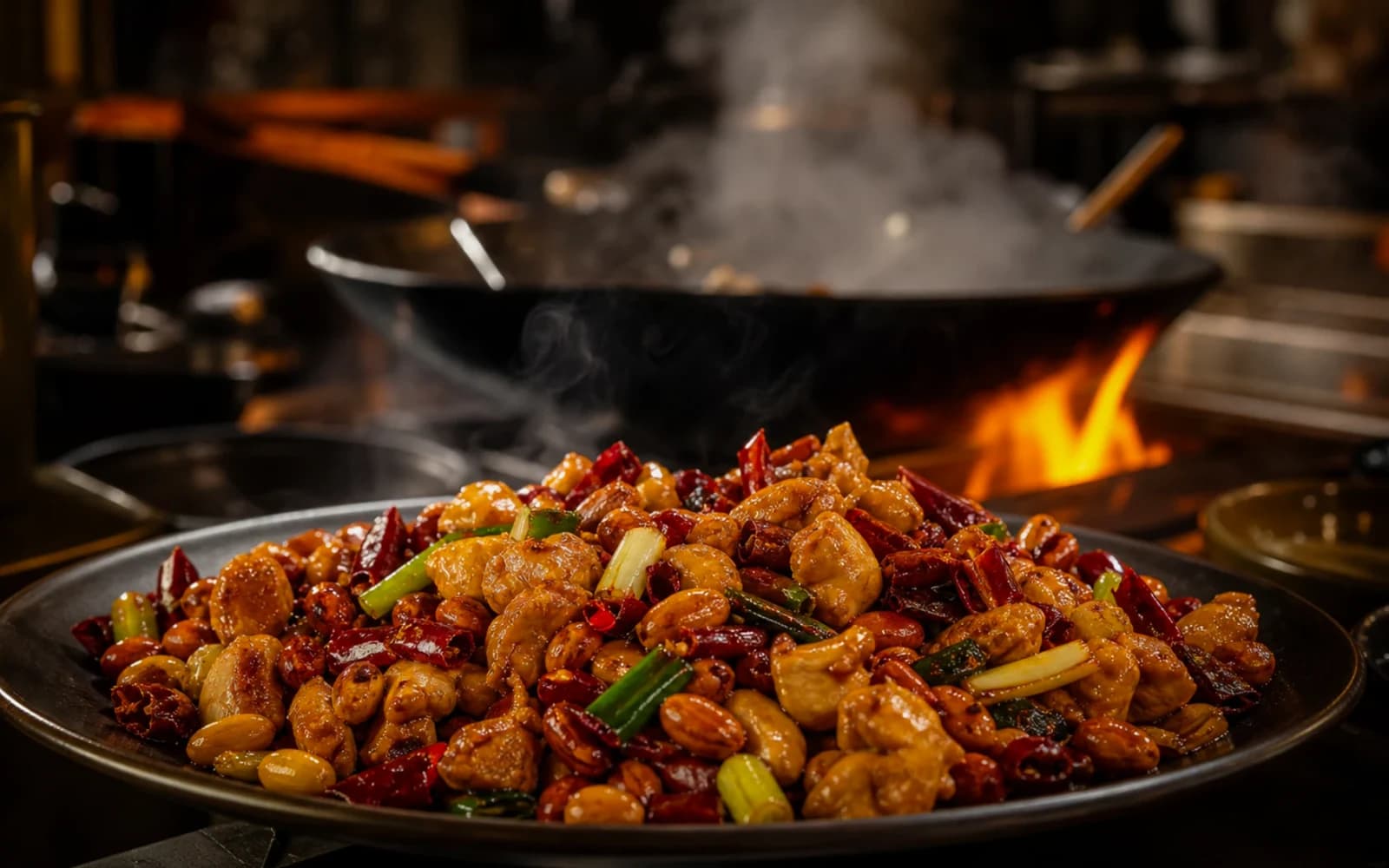
The center is diced chicken, peanuts, dried chiles, scallion-ginger-garlic aromatics, and a bright sauce made from soy, vinegar, sugar, starch, and often Shaoxing wine. Sichuan peppercorn adds a light buzz. The sauce should cling to the chicken, not pool under it. For the broader entity file, see what Kung Pao Chicken is, and for the liquid mechanics, see the Kung Pao sauce guide.
The useful test is structural, not nationalistic. A plate can be cooked in Chengdu, Queens, London, or a tired apartment kitchen and still respect the dish if it protects the engine: small chicken dice, hot oil, dried chile fragrance, peanut crunch, sweet-sour-savory balance, and speed. A plate can also wave a heritage flag while drowning chicken strips in syrup. The flag will not save it.
Orthodox Signals
The six signals worth protecting.
Diced chicken, not strips
Gong Bao Ji Ding is built around small chicken cubes. The cut matters because it controls heat, sauce contact, and the rhythm of each bite.
Peanuts are structural
Peanuts should be visible, crisp, and late-added. They are not confetti. They are the final percussive proof that the dish still has bones.
Dried chiles carry fragrance
Dried chiles should look toasted and intentional. Fresh bell pepper can be part of an adaptation, but it cannot replace the scorched-chile signal.
Sichuan peppercorn should be felt lightly
A Sichuan-centered version often has a gentle numbing edge. It should make the heat more three-dimensional, not turn the dish medicinal.
The sauce should cling
The surface should be glossy and coated. If sauce pools at the bottom, the wok has lost the argument and the peanuts will soon file a complaint.
Lychee flavor is a sweet-sour curve
Lychee flavor means the restrained sweet-sour effect of vinegar and sugar, not a bowl of fruit. The dish should flash bright, then finish savory.
Field Checklist
What a photo can tell you before the first bite.
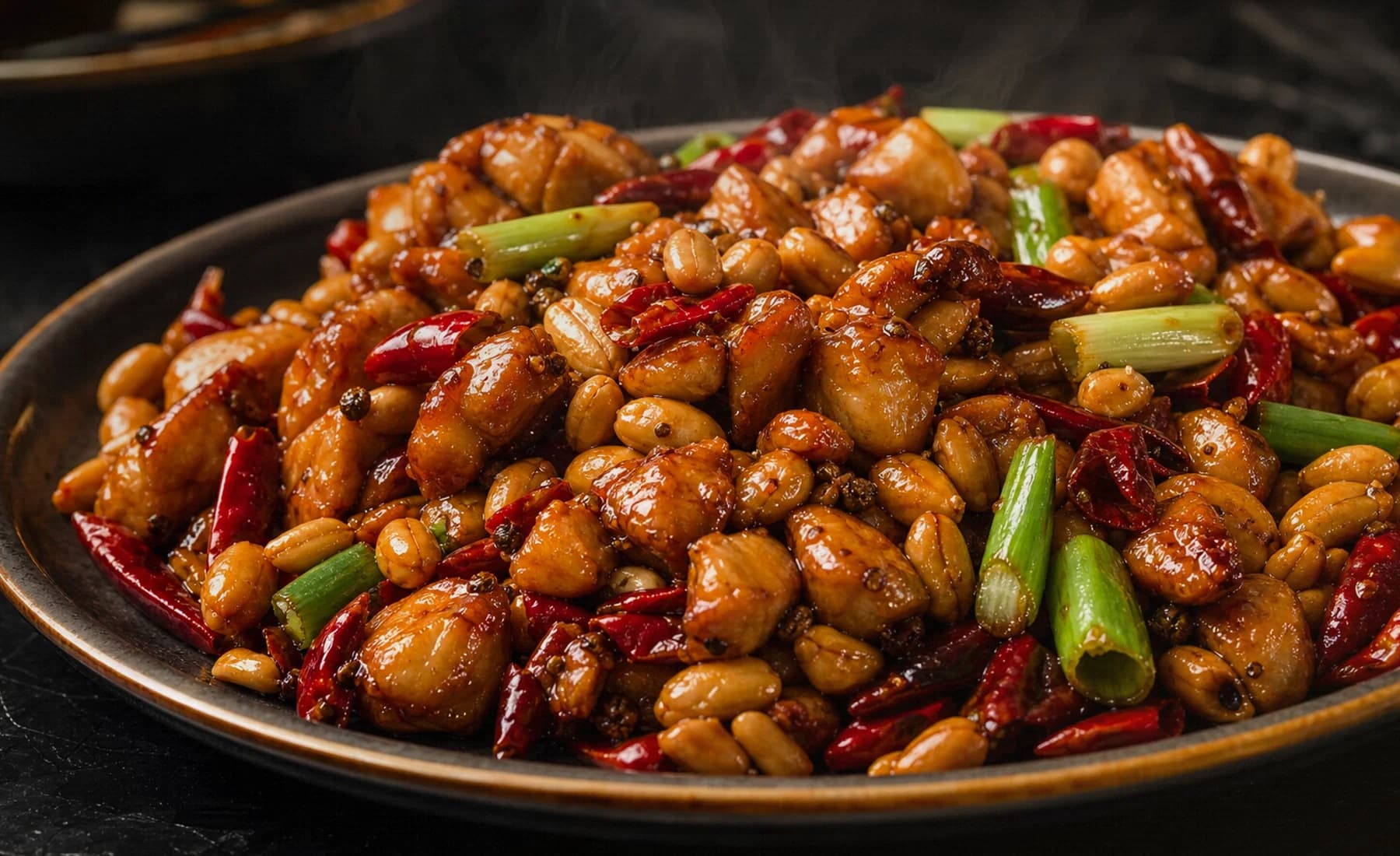
A photograph cannot prove aroma, heat, tenderness, or whether the peanuts crack properly. It can still expose a surprising amount. The WKPO visual checklist treats a plate as evidence, with mercy where appropriate and a raised eyebrow where necessary. When the verdict needs more examples, the Kung Pao Chicken photos file shows how the same checklist looks across plates before anyone argues about flavor.
- Chicken pieces are compact dice, roughly similar in size, and not long takeout strips.
- Peanuts appear crisp and distinct instead of buried under syrup or softened in sauce.
- Dried chiles are visible and dark red, suggesting fragrance rather than raw color decoration.
- Scallion, ginger, and garlic appear as small aromatic punctuation, not as a wet vegetable pile.
- The sauce coats the chicken and peanuts; it does not form a brown lake under the plate.
- The color leans glossy reddish-brown, not fluorescent orange, gray, or black.
- Vegetables, if present, support the rhythm rather than replacing the dish with a mixed stir-fry.
- The plate looks fast-cooked: separate pieces, shiny surfaces, and no steamed water haze.
Ingredient Standards
The pieces that make the dish legible.
Authenticity is not a single ingredient. It is the relationship between ingredients under heat. Diced chicken gives the sauce many surfaces. Peanuts interrupt softness. Dried chiles perfume the oil. Scallion, ginger, and garlic make the dish smell alive. Chinkiang vinegar, sugar, soy, Shaoxing wine, and starch make a fast sauce that can turn from liquid to glaze in a few seconds.
Chicken
Use boneless chicken cut into small dice. Breast can be clean and tender when marinated; thigh brings forgiveness. The cut is more important than the loyalty oath to one muscle group.
Peanuts
Roasted or fried peanuts should arrive near the end so they stay crisp. Cashews can appear in some versions, but peanuts remain the classic center of gravity.
Dried chiles
They should perfume the oil and bring red visual grammar. They do not need to be punishingly hot; fragrance matters more than spectacle.
Sichuan peppercorn
Use enough for lift and tingle, not enough to numb the whole hearing. Fresh, citrusy peppercorns are far better than stale dust.
Scallion, ginger, garlic
These aromatics make the dish smell cooked rather than assembled. Scallion segments also give the plate its clean green interruptions.
Chinkiang vinegar and Shaoxing wine
Chinkiang vinegar supplies dark acidity; Shaoxing wine adds cooking aroma. Together with soy, sugar, and starch, they make the sauce read as Kung Pao rather than generic brown glaze.
Sauce Standards
Kung Pao sauce should be bright, glossy, and brief.
A convincing sauce has savory depth, vinegar snap, restrained sugar, and starch control. The classic lychee flavor idea is a sweet-sour impression: no fruit required, no candy permitted. The sauce should cling because the dish is made of small pieces that need coating, not soaking. The cookable version of that standard lives in the Kung Pao Chicken recipe.
Soy sauce gives the dish its salty floor. Dark soy may help color, but it should not turn the plate muddy.
Vinegar keeps sweetness awake. Chinkiang vinegar is the useful default when you want depth instead of plain sharpness.
Sweetness should round the vinegar and create lychee flavor. If sugar dominates, the dish becomes candy with witnesses.
Starch tightens the sauce quickly. The desired finish is a glaze that grips chicken cubes, not glue and not soup.
Dried chile, Sichuan peppercorn, scallion, ginger, and garlic must meet hot oil before the sauce arrives. The bowl alone cannot perform the whole ritual.
The quickest failure mode is overcompensation: more sauce, more sugar, more heat, more vegetables, more everything. Kung Pao Chicken is not powerful because it is loud. It is powerful because several small things arrive at once and leave cleanly.
Version Control
Sichuan standard, American adaptation, and the middle ground.
American Chinese Kung Pao Chicken is not automatically fraudulent. Restaurant adaptation is part of how food survives migration, labor, local taste, and supply chains. The important distinction is whether the adaptation keeps the dish's recognizable logic or converts it into a sweet, wet, vegetable-heavy stir-fry with peanuts on top.
Sichuan-centered standard
Small chicken dice, dried chiles, scallion segments, peanuts, a balanced sweet-sour-savory glaze, and often a light Sichuan peppercorn tingle.
American Chinese adaptation
Often sweeter, saucier, and more vegetable-heavy. It can still be delicious, but it should be judged as an adaptation unless the core engine remains visible.
False authority version
Long chicken strips, random vegetables, sticky orange-brown sauce, soft peanuts, no chile fragrance, and a menu name doing all the historical labor.
A useful archive should leave room for both truth and appetite. If a local version tastes good, it deserves dinner. If it wants the official seal, it needs evidence: dice, chiles, peanuts, aroma, balance, and sauce discipline. That evidence also makes the Kung Pao vs. General Tso's comparison easier than it first looks.
Photo Tribunal
How WKPO judging should read an uploaded plate.
The homepage PK system works because Kung Pao Chicken has visible signals. That does not make photo judgment infallible. It makes it fun and usefully specific. A fair judging card should look for positive evidence before issuing dramatic condemnation.
Clear diced chicken with glossy coating and separate pieces.
Visible peanuts that still look crisp.
Dried chiles and aromatic fragments are visible.
Sauce clings without pooling.
Vegetables are restrained and do not hijack the plate.
The plate looks quick-fried rather than steamed.
Scores are not sacred. They are a practical way to keep the joke honest. The more specific the judging criteria, the less the site becomes empty outrage and the more it becomes a useful visual archive.
False Positives
Common things that look official until inspected.
Broccoli forest
Broccoli is not automatically evil in dinner life, but it changes the silhouette. If broccoli is the main visual fact, Kung Pao has become a local vegetable stir-fry.
Carrot confetti
Small carrot can appear in takeout versions, but heavy carrot sweetness pushes the sauce toward generic sweet stir-fry.
Peanut garnish
A few peanuts tossed on top after plating do not count as integration. The nut should taste connected to the wok, not hired for photography.
Sauce lake
Pooling sauce is the clearest visual confession. It softens peanuts, hides aromatics, and turns a quick stir-fry into a slow argument.
Heat cosplay
A mountain of chile does not prove authenticity. Kung Pao is balance: heat, sourness, sweetness, savoriness, roast, crunch, and timing.
Chicken strip drift
Strips can taste fine, but they lose the ji ding logic. Dicing is part of the dish's name, texture, and heat control.
FAQ / Authenticity Debrief
Questions people ask before the verdict.
What makes Kung Pao Chicken authentic?
Authentic Kung Pao Chicken usually protects the core structure: diced chicken, peanuts, dried chiles, scallion-ginger-garlic aromatics, a sweet-sour-savory sauce, and often a light Sichuan peppercorn tingle. The sauce should cling rather than pool.
Does authentic Kung Pao Chicken require Sichuan peppercorn?
A Sichuan-centered reading expects it or at least understands why it belongs. Some home and restaurant versions omit it, but the more signals you remove, the more the dish drifts toward generic spicy peanut chicken.
Are bell peppers, celery, cucumber, or zucchini allowed?
They appear in adaptations, especially outside Sichuan. The stricter WKPO standard allows supporting vegetables only when they do not drown the diced chicken, peanuts, dried chiles, and bright sauce structure.
Is American Chinese Kung Pao Chicken fake?
Not automatically. It is an adaptation. The issue is not geography; the issue is whether the plate still carries the core engine or merely borrows the name.
Is Kung Pao Chicken supposed to be very spicy?
It should be warm, fragrant, and sometimes numbing, but not just hot. Many strong versions are spicy without being punishing because vinegar, sugar, soy, peanuts, and aromatics share the stage.
Can a photo prove authenticity?
No photo can prove flavor. A photo can still reveal useful evidence: cut, sauce texture, peanut condition, dried chile presence, vegetable discipline, and whether the plate looks quick-cooked or steamed.