Direct Answer
What is Kung Pao sauce?
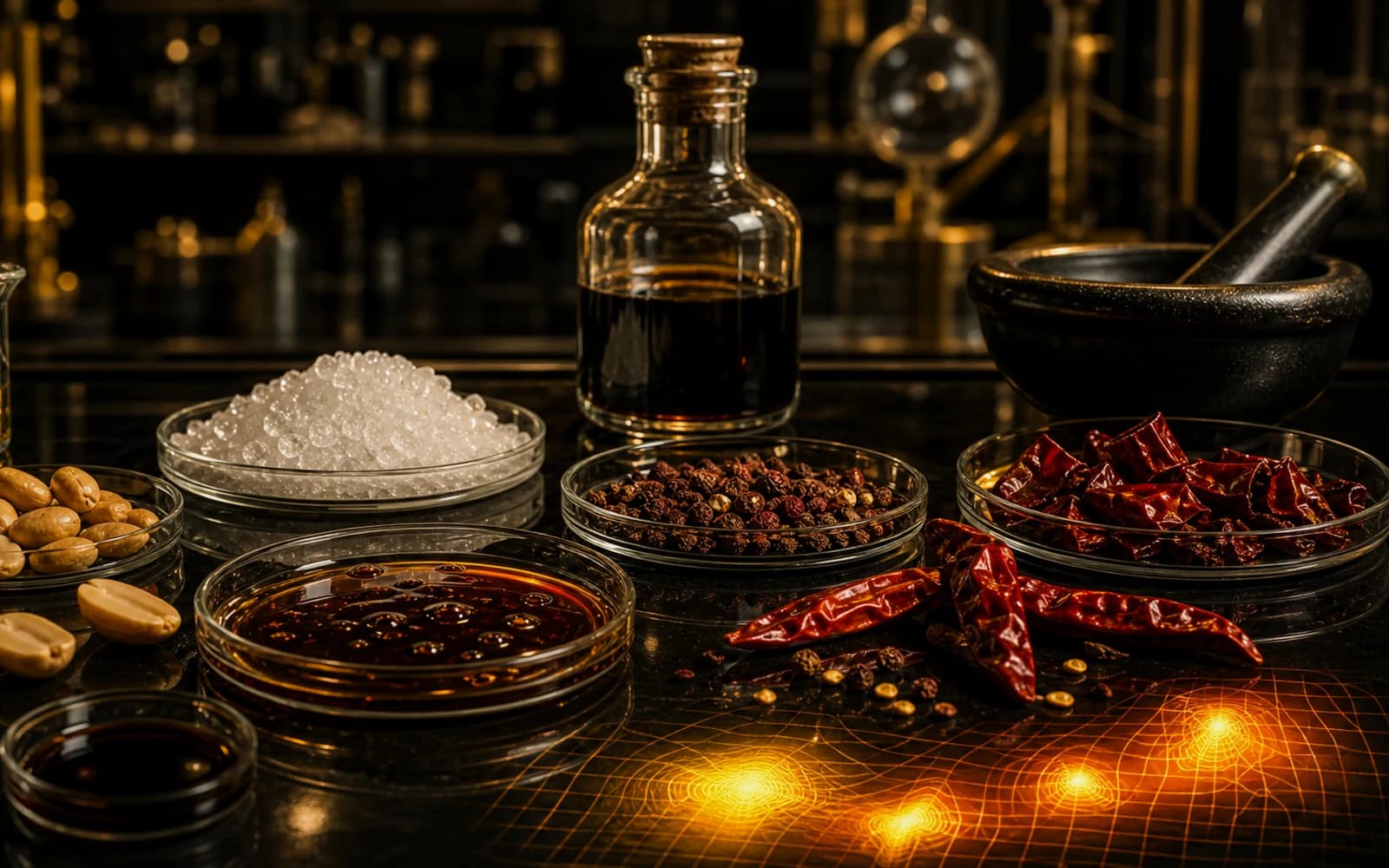
The core bowl is usually soy sauce, vinegar, sugar, liquid, and starch, sharpened by Shaoxing wine and carried by aromatics fried with dried chili and Sichuan peppercorn. Its job is to coat diced chicken and peanuts in a quick glossy layer. For the whole dish context, start with what Kung Pao Chicken is; for the stove version, use the Kung Pao Chicken recipe. The WKPO shorthand: cling, not pool.
The sauce has two lives. In the bowl, it looks simple enough to be dismissed: dark liquid, starch at the bottom, sugar disappearing into soy and vinegar. In the wok, it becomes the final classification system. If it thickens at the right second, every cube looks intentional. If it floods the pan, the dish becomes takeout fog with peanuts trying to keep order.
At a Glance
The exact sauce numbers.
- 2 tbsp light soy sauce + 1 tbsp dark soy sauce (savory base)
- 1.5 tbsp Chinkiang black vinegar (acid)
- 1 tbsp white sugar (~12g; reduce to 2 tsp for less sweet)
- 1 tsp cornstarch dissolved in 1 tbsp cold water (cling agent)
- 1 tbsp Shaoxing wine (aroma; optional but recommended)
Sugar-to-vinegar ratio approaches 1:1. Combined in a bowl before cooking. Poured into a 200°C+ wok and flash-caramelized in 3-5 seconds. Sauce alone: ~80 kcal, ~900mg sodium.
Ratio Map
The useful sauce ratio.
This page is a sauce guide, so the numbers below are a working map rather than a full dish recipe. The reliable pattern is salty, sour, lightly sweet, lightly thickened, then rushed through hot aromatics.
The salty, umami floor. Dark soy can add color, but light soy carries the main seasoning.
The dark, clean snap that keeps sweetness from becoming candy.
Small quantity, big consequence. Enough to bend the vinegar, not enough to flatten the dish.
Cornstarch or potato starch turns liquid into a glaze that can hold onto diced chicken.
A cooking-wine lift that keeps the sauce from tasting like plain soy-vinegar syrup.
One brings toasted chile fragrance; the other brings the numbing Sichuan buzz.
A home bowl often starts around one part light soy sauce to one part vinegar, with a smaller amount of sugar and starch. Water or stock gives the starch enough room to dissolve. The exact numbers change with the protein, pan heat, and vinegar strength, but the direction stays stable: bright, savory, quick, and controlled. That same balance is one of the first checks in the authentic Kung Pao Chicken standard.
Savory Base
Soy sauce gives the sauce its floor.
Light soy sauce is the main seasoning. It brings salt and umami without making the dish taste heavy. Dark soy sauce, when used, is mostly a color and depth tool; too much of it can make the sauce read muddy. The sauce should look glossy reddish-brown, not black.
Soy sauce alone does not make Kung Pao sauce. It needs vinegar to cut through, sugar to round the cut, starch to grip, and chile oil to carry aroma. A plate built only on soy tastes like a shortcut that found a peanut and hoped nobody would ask follow-up questions. For sodium and portion reality, keep the Kung Pao Chicken health file nearby while adjusting the bowl.
Sweet-Sour Axis
Vinegar and sugar create the snap.
Chinkiang vinegar gives the sauce a dark, malty acidity that feels deeper than plain sharpness. Rice vinegar can work, but it reads brighter and thinner. Sugar should be measured like a negotiation: enough to soften vinegar and complete the lychee flavor curve, not enough to turn the wok into dessert.
Too much vinegar
The sauce feels thin, sharp, and scolding. Add less acid or slightly more sugar next time.
Too much sugar
The sauce gets sticky and childish. Kung Pao sweetness should flash, then vanish.
Right balance
The chicken tastes savory first, then sour-bright, then rounded, then warm from chile oil.
Texture Engine
Starch is why the sauce can cling.
Starch is not filler. It is the texture mechanism. Cornstarch or potato starch swells when the sauce boils, turning a loose liquid into a glossy glaze. That glaze should wrap the chicken quickly and stop before it becomes glue. Stir the sauce bowl right before pouring because starch settles while pretending to be harmless.
- Too little starch: the sauce runs to the bottom and leaves the chicken underdressed.
- Too much starch: the sauce becomes cloudy and sticky instead of glossy.
- Too little heat: starch thickens slowly and the pan starts steaming.
- Correct heat: the sauce tightens in under a minute and coats the evidence cleanly.
Aroma
Shaoxing wine keeps the sauce from tasting flat.
Shaoxing wine adds a warm cooking-wine aroma that links the sauce to the marinated chicken and the wok. It is not the loudest ingredient, but without it the sauce can taste too direct: soy, vinegar, sugar, starch, and no shadow. Dry sherry is a practical substitute; plain water is functional but less interesting.
Aromatic Heat
Dried chili and Sichuan peppercorn make the signal readable.
The dried chili should be fried until fragrant and dark red. That toasted oil flavor is different from simply adding raw heat. Sichuan peppercorn brings a light numbing effect and citrusy buzz. Together they make the sauce smell like Sichuan technique instead of generic heat.
Burning either one is expensive. Blackened chiles turn bitter, and scorched peppercorns can make the dish taste dusty. The correct window is brief: hot oil, immediate fragrance, then aromatics and main ingredients before the court loses patience.
Flavor Code
Lychee flavor means balance, not fruit.
In this context, lychee flavor is a way to describe the sauce's sweet-sour curve. It does not usually mean adding lychee. The comparison helps because the best Kung Pao sauce has a fruity impression without tasting like fruit salad: vinegar spark, sugar roundness, savory soy, chile fragrance, and a fast finish.
The WKPO likes the phrase because it sounds like a secret lab file. The useful culinary point is simpler: when sourness and sweetness are both restrained, the sauce feels bright and alive instead of sugary or harsh.
Texture Verdict
Why sauce should cling, not pool.
Kung Pao Chicken is built from small pieces: chicken cubes, peanuts, dried chile sections, scallion, ginger, garlic. The sauce has to connect those objects without hiding them. A pooled sauce makes the peanuts soften, the chicken steam, and the dried chiles look decorative. A clinging sauce leaves the dish legible.
It tastes flat
The ratio probably has soy and sugar but not enough vinegar or aromatic oil. Add acidity next time before adding more salt.
It tastes like candy
The sugar has escaped supervision. Reduce sugar, increase Chinkiang vinegar, and keep the sauce brief in the pan.
It pools under the chicken
Too much liquid, too little starch, low heat, or crowded meat. The sauce should cling, not pool.
It tastes bitter
The dried chiles or Sichuan peppercorns likely burned. Bloom them until fragrant and dark red, not black.
It turns gluey
Too much starch or too long on heat. Starch should tighten the sauce, not turn it into office paste.
It misses the Sichuan signal
No dried chili, no Sichuan peppercorn, no aromatic oil. A brown sauce can be tasty and still not read as Kung Pao.
FAQ / Sauce Debrief
Questions from the bowl before it hits the wok.
What is Kung Pao sauce made of?
A standard Kung Pao sauce bowl: 2 tbsp light soy sauce, 1 tbsp dark soy sauce, 1.5 tbsp Chinkiang black vinegar, 1 tbsp white sugar, 1 tsp cornstarch dissolved in 1 tbsp cold water, and 1 tbsp Shaoxing wine. Combined before cooking and flash-caramelized in 3-5 seconds at 200°C+.
Is Kung Pao sauce supposed to be sweet?
Lightly sweet, not candy sweet. About 12g sugar per batch. Target a 1:1 sugar-to-vinegar ratio. If sweetness dominates, the lychee flavor profile breaks. Reduce sugar to 2 tsp if you prefer less sweetness.
Do I need Chinkiang vinegar, or can I substitute?
Chinkiang (镇江香醋) is ideal — malty, slightly smoky. Substitutes ranked: (1) balsamic vinegar + pinch of sugar — closest match; (2) rice vinegar + 1/2 tsp dark soy sauce — brighter but workable; (3) apple cider vinegar — last resort. White vinegar is too sharp. A bottle costs about $4 at any Asian grocery.
Why does cornstarch matter?
Cornstarch makes the sauce cling (挂芡). 1 tsp dissolved in 1 tbsp cold water. At wok temperature it gelatinizes in 3-5 seconds. Without it, sauce pools at the bottom. Too much, and it turns gummy. Standard: 1 tsp per 350g portion.
Does Kung Pao sauce contain lychee fruit?
No. Lychee flavor (荔枝味) is a Sichuan flavor profile — the sugar-vinegar balance at high heat — not an ingredient. No actual lychee fruit is used.
Can I make Kung Pao sauce ahead of time?
Yes. Mix soy sauce, vinegar, sugar, wine, and cornstarch slurry in a jar. Refrigerate up to 5 days. Shake well — cornstarch settles. Do not add aromatics (ginger, garlic, chiles) to the jar; those need to be fried fresh in the wok.