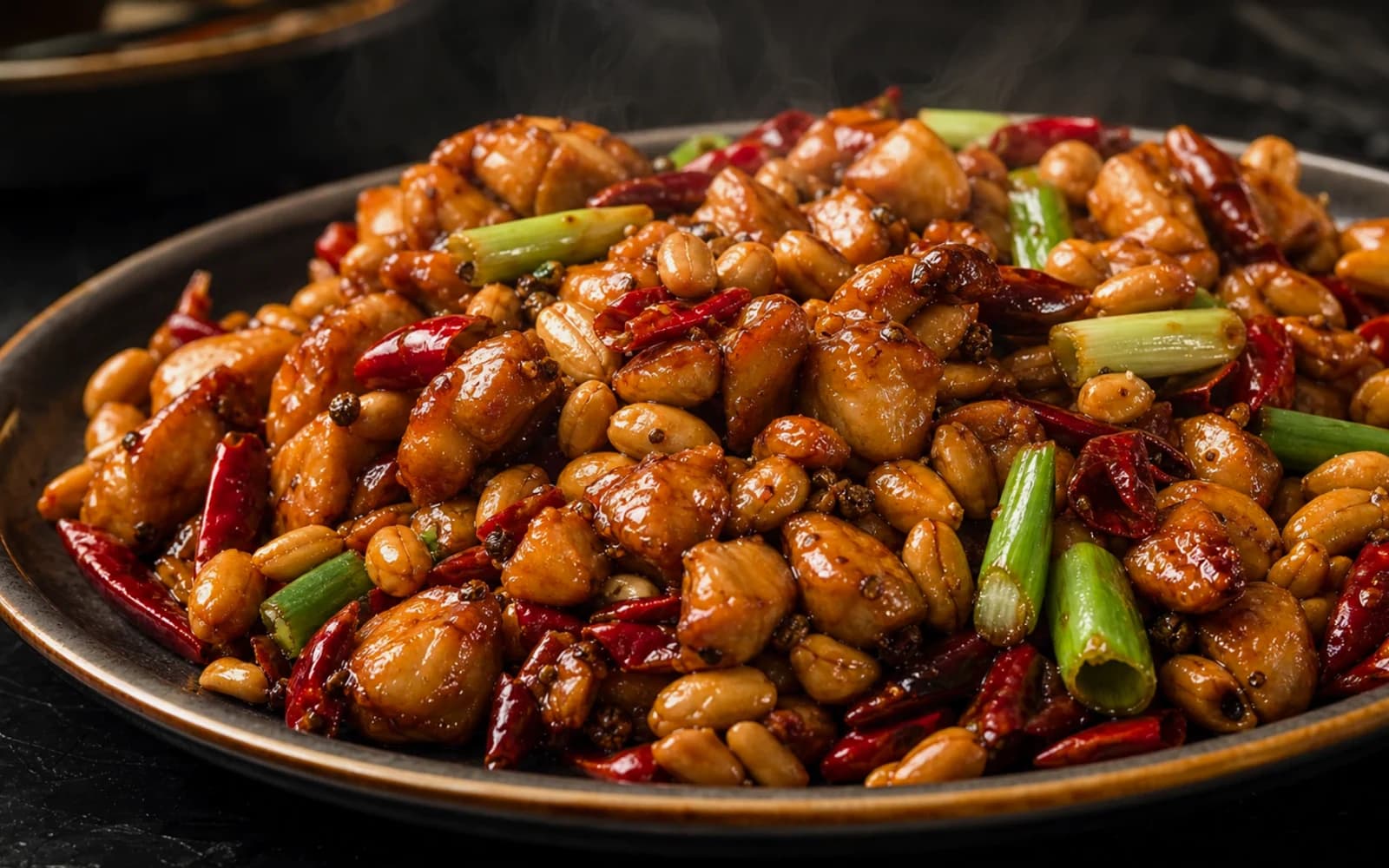
30-Second Health Answer
The honest verdict: healthy if controlled, chaotic if drowned.
The dish has good bones: chicken, aromatics, dried chiles, peanuts, vinegar, and a sauce that should cling rather than pool. The problem is not the idea of Kung Pao Chicken. The problem is the oversized takeout version with heavy sauce, lots of rice, and sodium numbers nobody volunteered to put under a spotlight. For the dish definition, start with what Kung Pao Chicken is; for the stove version, use the Kung Pao Chicken recipe.
Home-cooked, controlled sauce
Lean chicken, measured oil, visible peanuts, a small sweet-sour sauce, and rice served on purpose rather than by avalanche.
Restaurant stir-fry
Still protein-forward, but sodium, oil, sugar, and portion size are now controlled by a kitchen that is not thinking about your blood pressure.
Sauce lake plus rice mountain
The dish may still taste good, but the nutrition story shifts from balanced stir-fry to salty-sweet calorie delivery system with peanuts as witnesses.
This page is nutritional orientation, not medical advice. If you have a sodium-restricted diet, diabetes plan, kidney condition, food allergy, or other medical concern, the correct authority is your clinician or registered dietitian, not a black-and-gold chicken tribunal with unusually strong sauce opinions.
Calories
How many calories are in Kung Pao Chicken?
There is no universal Kung Pao Chicken calorie number because the dish is not one fixed object. A home version can be moderate. A restaurant serving can be much higher. A takeout container with rice can turn a reasonable stir-fry into an edible accounting scandal.
The USDA benchmark is useful because it separates the food name from the serving illusion: per 100 g, Kung Pao Chicken can look manageable; by the order, sodium and calories can climb fast. Panda Express gives a modern chain snapshot, not a universal law. The correct conclusion is boring and therefore probably true: check the serving size.
The useful center: protein, chew, and enough structure to keep the dish from becoming sauce with garnish.
Not a villain. They bring crunch and unsaturated fat, but they are calorie-dense, so the handful matters.
A little oil carries chile aroma and wok heat. Extra oil is the quiet way a plate doubles down without looking larger.
Sugar and starch are usually small in a disciplined sauce. In takeout sauce, the line between glaze and syrup can get politically unstable.
Often the real calorie swing. A neat scoop is different from a packed bowl carrying the dish like a soft white mattress.
Restaurant servings are not legal testimony. They are often two meals wearing one container.
A practical way to estimate the plate is to count the major levers separately: chicken, oil, peanuts, sauce, rice, and portion size. The chicken is usually the honest part. Peanuts and oil are nutritious but dense. Sauce varies by kitchen. Rice is often the quiet swing vote. That is why a neat home bowl and a restaurant combo plate can share the same name while living in different nutritional districts.
Sodium
The sodium problem is real, and soy sauce is the main suspect.
Kung Pao Chicken can become high sodium because soy sauce, added salt, stock bases, bottled sauces, and restaurant seasoning all stack. The American Heart Association frames 2,300 mg per day as an upper limit for sodium for many adults, with a lower ideal target for most adults. A single salty takeout meal can move through that budget with the confidence of a forged museum pass.
The FDA's label rule of thumb is blunt enough for kitchen use: 5% Daily Value or less is low sodium, while 20% or more is high. Panda Express's current Kung Pao Chicken listing gives 1,050 mg sodium for a 6.73 oz serving, which is already a serious slice of the day before rice, soup, egg roll, or the extra sauce packet enters the room. Low-sodium soy sauce helps, but it is not sodium-free. The better approach is layered: reduce the sauce volume, use vinegar and aromatics for brightness, bloom dried chiles for aroma, and stop treating extra sauce as a personality trait. The Kung Pao sauce file explains why a tight glaze can taste bigger than a bowl of salty liquid.
Protein, Carbs, Fat
The macros are not the enemy. The portion is the interrogation.
Kung Pao Chicken starts with protein and aromatics, which is why it can fit a sane meal pattern. The carbohydrate load often comes less from the chicken itself and more from rice, sugar, starch, and oversized sauce. Fat comes from peanuts and oil. Those are not automatically bad; they just need a serving size that has met adult supervision.
- Protein: chicken is the main strength of the plate.
- Fat: peanuts and cooking oil bring flavor and texture, but the amounts matter.
- Carbs: rice is often the largest variable, followed by sauce sugar and starch.
- Fiber: traditional Kung Pao is not a vegetable-heavy dish, so pair it with vegetables if the meal needs more volume.
- Sugar: traditional balance uses some sweetness; takeout sauces can push sweeter.
Better Plate Protocol
How to make Kung Pao Chicken healthier without draining its soul.
- Use chicken breast or trimmed thigh and keep the pieces small so they cook fast.
- Measure the oil instead of free-pouring during a dramatic moment.
- Use low-sodium soy sauce, then taste before adding salt or extra salty condiments.
- Keep the sauce glossy and tight. A small sauce that clings is usually better than a large sauce that pools.
- Add peanuts at the end and use enough for crunch, not enough to turn the plate into trail mix.
- Serve rice separately so the portion is visible.
- Use extra scallion, ginger, garlic, and dried chile for flavor before reaching for more salt or sugar.
- Treat vegetables as a side or adaptation. They can make the meal easier to balance, even if they move away from the strict orthodox plate.
The goal is not punishment cooking. Do not remove every peanut, every drop of oil, and every sparkle of sugar, then wonder why dinner tastes like a memo. Kung Pao Chicken works because salt, sourness, sweetness, heat, crunch, and fast texture hold each other in balance. Healthier cooking means measuring the loud ingredients, not sending flavor into exile.
Diet Swaps
Low-carb, keto, gluten-free, peanut-free, and vegan versions need honest labels.
Low carb
Possible, but not fully orthodox. Reduce sugar and starch, skip rice, and accept that the sauce will be lighter. Cauliflower rice belongs to the health file, not the 1876 scripture.
Keto
Harder than low carb because traditional sauce uses some sugar and starch. A keto version is a useful adaptation, but it should be labeled as one.
Gluten-free
Use certified gluten-free tamari or soy sauce, check Shaoxing wine and vinegar labels, and watch restaurant cross-contact.
Lower sodium
Start with low-sodium soy sauce, reduce the sauce volume, avoid extra salty sauces, and use aromatics, vinegar, and dried chiles for flavor lift.
Peanut-free
Safe substitutions matter more than orthodoxy if allergies are involved. Peanuts, soy, wheat, and sesame can all matter in this dish family.
Vegan
Tofu can carry the sauce well, but the page should call it vegan Kung Pao tofu rather than pretending chicken quietly left the room.
Restaurant Reality
How to order Kung Pao Chicken without letting the box run the trial.
Restaurant Kung Pao Chicken is harder to judge because you rarely know the oil, sodium, sugar, or portion size. The practical move is to control what you can: share the entree, split the rice, ask for less sauce when possible, add a vegetable side, and stop eating when the dish stops feeling like dinner and starts feeling like a dare.
Ask for
Light sauce, rice on the side, extra scallion or vegetables if available, and no extra salty sauce packets.
Watch for
Sticky sauce pools, giant rice portions, sugary glaze, and containers that look built for two people.
Keep perspective
One takeout meal is not a moral event. The pattern matters more than the single plate.
Chain nutrition pages are worth checking because they turn the fog into numbers. For example, the current Panda Express listing makes the tradeoff obvious: the entree is not calorie-shocking by itself, but the sodium deserves attention. FDA menu-calorie rules help here because many larger chains publish the information diners need before the box arrives.
Common Mistakes
Health claims the Archive rejects with a red stamp.
Assuming spicy means healthy
Chile heat is not a nutrition credential. A spicy sauce can still be high in sodium, oil, and sugar.
Removing all oil
No oil can make the dish taste flat and dry. The better move is controlled oil, high heat, and a short cook.
Trusting the takeout name
Menu names do not reveal portion size, sodium, oil, or sugar. A label can say Kung Pao while the container argues otherwise.
Counting only the chicken
The chicken may be lean. The full plate includes peanuts, oil, sauce, rice, and the second half you said you would save.
Treating low-sodium soy as sodium-free
Low-sodium soy sauce can still carry a lot of sodium. It is a reduction tool, not a magic eraser.
Making it healthy by flooding it with vegetables
That can create a balanced meal, but it also changes the dish identity. Good dinner, weaker Kung Pao evidence.
FAQ / Health Tribunal
Questions people ask before ordering the spicy chicken.
Is Kung Pao Chicken healthy?
It can be. A home-cooked version with lean chicken, measured oil, controlled sauce, visible peanuts, and a reasonable rice portion can be a balanced high-protein meal. Restaurant and takeout versions are often less predictable because sodium, oil, sugar, and serving size can rise quickly.
How many calories are in Kung Pao Chicken?
There is no single honest number. USDA restaurant data lists Kung Pao Chicken around 129 calories per 100 g, while a large restaurant order can be far higher. Chain examples also vary. The biggest variables are oil, peanuts, sauce quantity, rice, and portion size.
Is Kung Pao Chicken good for weight loss?
It can fit a weight-loss plan if the portion is controlled and the rice, oil, peanuts, and sauce are measured. It is not automatically low-calorie just because it is a stir-fry.
Is Kung Pao Chicken high in sodium?
It often can be, especially in restaurants. USDA sodium research lists Kung Pao Chicken around 402 mg sodium per 100 g on average, and larger orders can climb quickly. Soy sauce and other salty seasonings are the main issue.
Is Kung Pao Chicken low carb?
Traditional Kung Pao Chicken is not extremely high carb by itself, but sauce starch, sugar, and especially rice change the number. A low-carb version usually reduces sugar and starch and skips rice.
Is Kung Pao Chicken gluten-free?
Not automatically. Many soy sauces contain wheat, and restaurants may use shared equipment. Use certified gluten-free tamari or soy sauce and check every sauce ingredient.
Are peanuts in Kung Pao Chicken healthy?
Peanuts add crunch, protein, and fat, but they are calorie-dense. The health question is not whether peanuts are allowed; it is whether the serving is sensible.