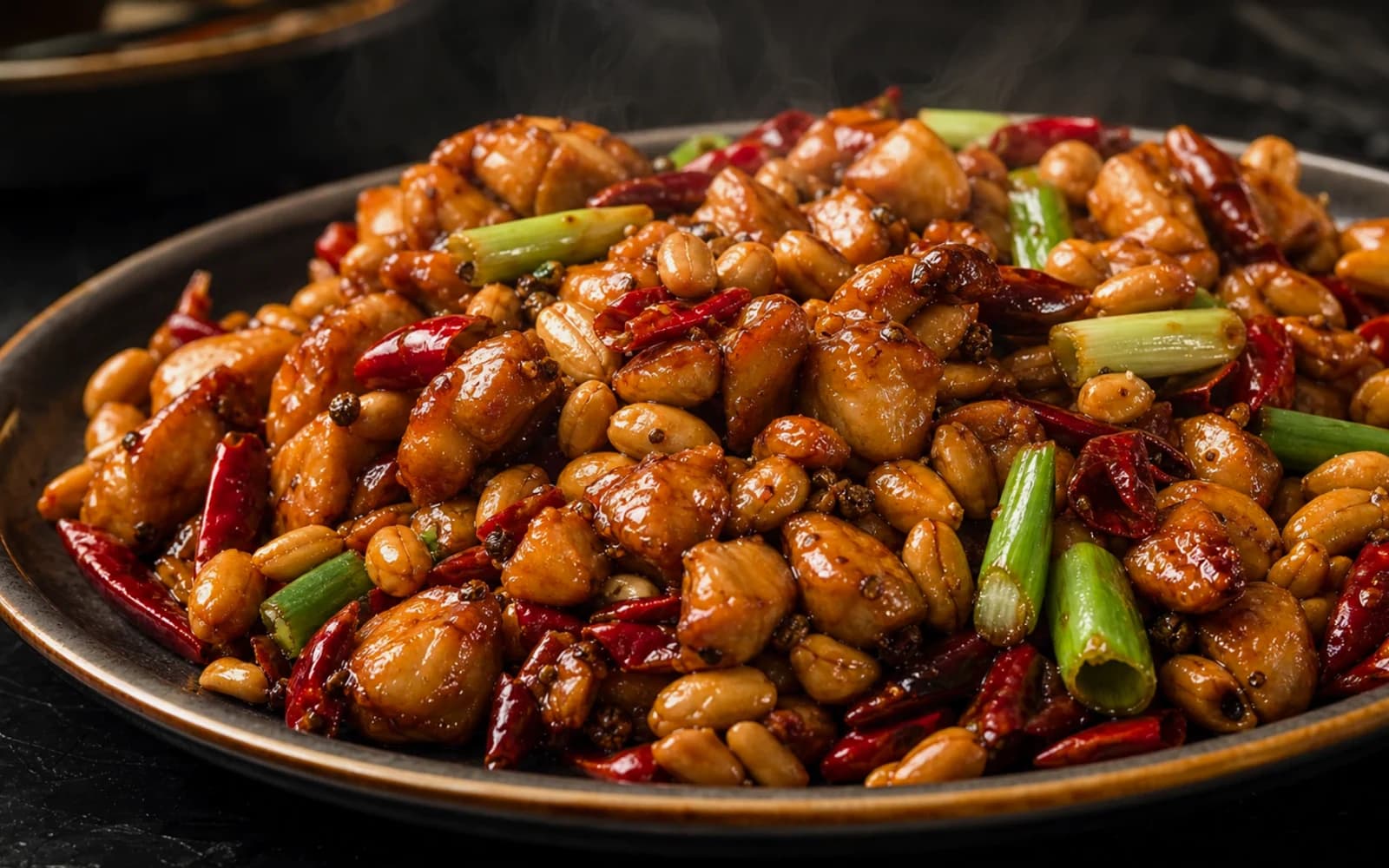
Clear Intro
A real recipe, not a ceremonial fog machine.
Kung Pao Chicken works when each bite lands tender chicken, roasted peanut, chile fragrance, sweet-sour vinegar snap, and just enough numbing edge. The method below is built for a home kitchen, but it protects the dish's central logic: dice the chicken, thicken the sauce lightly, add peanuts last, and stop before the pan turns glossy discipline into brown soup. If you want the judging standard behind those choices, keep the authentic Kung Pao Chicken signals beside the cutting board.
Ingredients
Everything you need before the wok gets hot.
Measure before cooking. A good kung pao stir-fry is less forgiving than a stew: once the chiles hit oil, the pageantry is over and the work begins.
Chicken
- 1 lb boneless skinless chicken thighs, cut into 3/4-inch cubes
- 1 tablespoon light soy sauce
- 1 tablespoon Shaoxing wine
- 2 teaspoons cornstarch
- 1 teaspoon neutral oil
- 1/4 teaspoon ground white pepper
Kung Pao sauce
- 2 tablespoons light soy sauce
- 1 tablespoon Chinkiang black vinegar
- 1 tablespoon Shaoxing wine
- 2 tablespoons water or unsalted chicken stock
- 1 1/2 teaspoons sugar
- 1 teaspoon dark soy sauce
- 1 teaspoon cornstarch
Wok set
- 2 tablespoons neutral oil
- 10 to 12 dried red chiles, cut into short segments
- 1 teaspoon Sichuan peppercorns, lightly toasted and cracked
- 3 garlic cloves, finely chopped
- 1 tablespoon minced ginger
- 4 scallions, white and pale green parts cut into 1-inch pieces
- 1/2 cup roasted unsalted peanuts
- Steamed rice, for serving
Marinade
Tender chicken starts before the flame.
The marinade is short because the pieces are small. Soy seasons, Shaoxing wine adds aroma, cornstarch creates a light protective coat, oil keeps the cubes separate, and white pepper gives a low, clean warmth. Fifteen minutes is enough. Overnight marinating is unnecessary and can make the surface tacky.
- Cut the chicken evenly so each cube finishes at the same moment.
- Pat the chicken dry before marinating; surface water is the enemy of browning.
- Do not skip the starch. It helps the sauce grip the chicken instead of sliding off.
Sauce
The sauce should cling, not pool.
The sauce is deliberately compact: soy for salt, Chinkiang vinegar for dark acidity, Shaoxing wine for aroma, sugar for the lychee-style sweet-sour curve, dark soy for color, water or stock for flow, and cornstarch for the final gloss. The longer Kung Pao sauce guide explains the cling-not-pool doctrine in more detail. Stir it until smooth, then stir again right before adding it to the wok because starch settles with quiet malice.
Correct texture
Glossy coating on the chicken with almost no puddle under the peanuts.
Too thin
Watery sauce means low heat, crowded chicken, or not enough boiling after the sauce enters.
Too sweet
If it tastes like candy, add vinegar next time and reduce sugar by half a teaspoon.
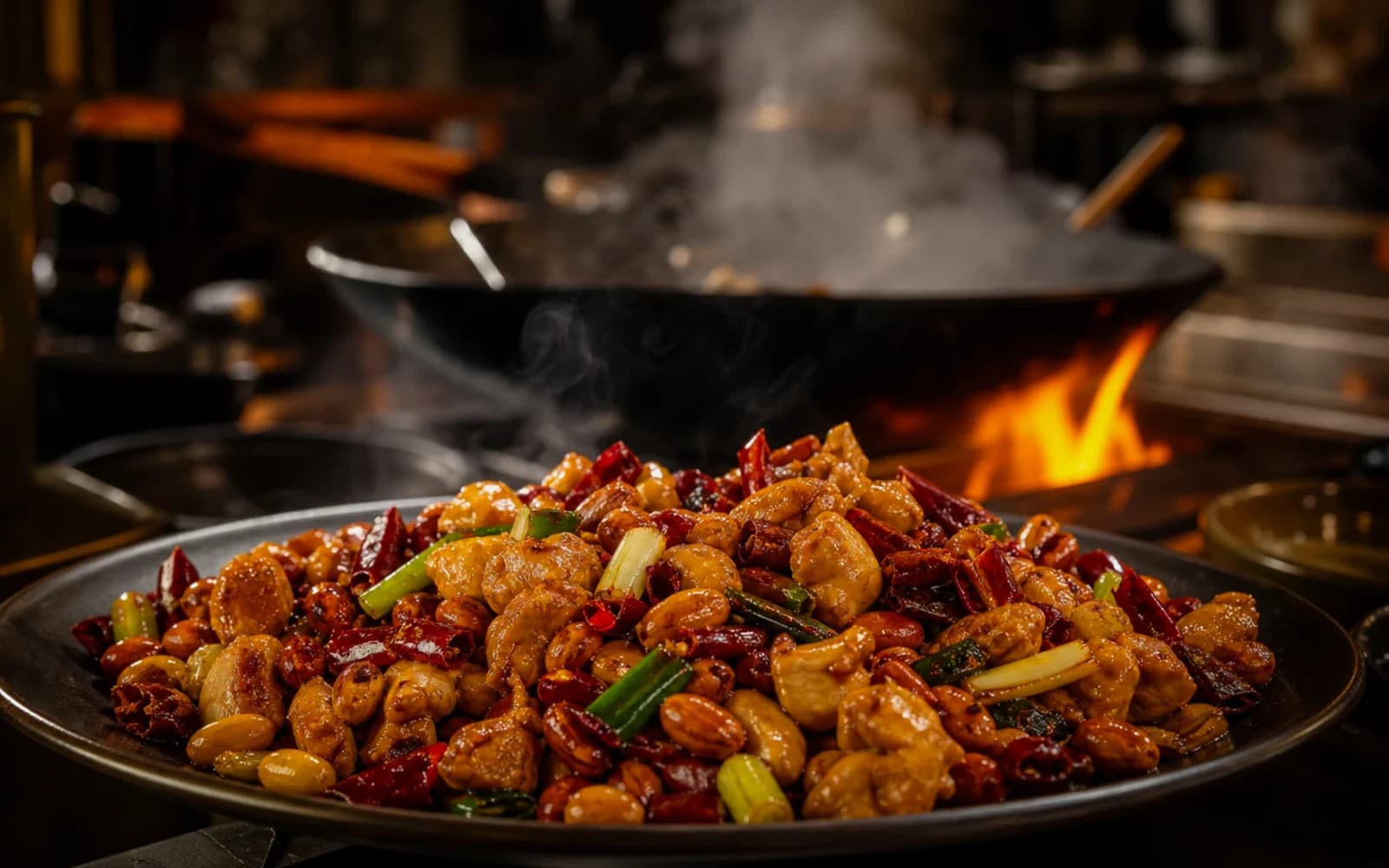
Method
Step-by-step cooking sequence.
Cut and dry the chicken
Cut the chicken into even 3/4-inch cubes and pat them dry. Even cubes cook quickly and give the sauce enough surface area to cling.
Marinate
Mix chicken with light soy sauce, Shaoxing wine, cornstarch, neutral oil, and white pepper. Rest 15 minutes while you prepare the sauce and aromatics.
Mix the sauce
In a small bowl, stir light soy sauce, Chinkiang vinegar, Shaoxing wine, water or stock, sugar, dark soy sauce, and cornstarch until smooth. Stir it again right before it enters the wok.
Bloom the chiles
Heat a wok or carbon-steel skillet over high heat. Add oil, dried chiles, and Sichuan peppercorns. Stir 10 to 20 seconds until fragrant and red-dark, not black.
Sear the chicken
Add the chicken in a single layer. Let it sit briefly, then stir-fry until the outside turns opaque and the edges begin to color, about 2 to 3 minutes.
Add aromatics
Add ginger, garlic, and scallion pieces. Stir-fry for 30 to 45 seconds until the kitchen smells like the court has entered session.
Glaze, do not drown
Stir the sauce again, pour it around the side of the wok, and toss quickly. Cook until it thickens into a glossy coating, about 45 to 60 seconds.
Finish with peanuts
Turn off the heat, fold in roasted peanuts, and serve immediately. Peanuts belong at the end so they keep their snap.
Cooking Notes
Small moves that decide the case.
- Have every bowl ready before the wok is hot. This dish moves too quickly for mid-cook measuring.
- If your stove is weak, use a wide skillet and cook the chicken in two batches. Crowding makes steam, and steam makes the sauce sulk.
- The sauce should coat the chicken and leave only a small shine in the pan. If it pools, the heat was too low or the pan was too crowded.
- Dried chiles should darken and perfume the oil. If they turn black, the bitterness will shout over the vinegar and peanuts.
Substitutions
What can bend without breaking.
Chicken breast for thigh
Allowed, but cut it evenly and stop cooking as soon as the center is done. Breast has less forgiveness than thigh.
Rice vinegar for Chinkiang vinegar
Acceptable in a pinch. The result will be brighter and thinner, so use a touch less sugar if it tastes flat.
Dry sherry for Shaoxing wine
A practical substitute for home kitchens. It will not taste identical, but it keeps the marinade and sauce moving in the right direction.
Cashews for peanuts
Delicious but no longer central protocol. The Archive classifies this as a velvet anomaly, not a disaster.
If the goal is a lighter plate rather than a stricter one, the Kung Pao Chicken health file separates useful nutrition changes from flavor exile: sodium, oil, peanuts, sauce volume, rice, and portion size.
Troubleshooting
Common failures and how to correct them.
Watery sauce
The pan was crowded, the chicken released water, or the sauce did not boil long enough. Cook hotter, wider, and faster.
Burnt chiles
The oil was too hot before the aromatics entered. Start the chiles just below screaming heat and move constantly.
Soft peanuts
They went in too early. Add peanuts after the sauce has already coated the chicken.
Rubbery chicken
The pieces were too small, the pan was too cool, or the meat stayed in the wok too long after the sauce thickened.
Candy sauce
Too much sugar or not enough vinegar. Kung Pao should flash sweet-sour, not behave like dessert lacquer.
Powdery starch clumps
The sauce sat too long and the starch settled. Stir the bowl immediately before pouring.
FAQ / Kitchen Debrief
Questions before the pan gets loud.
Can I make Kung Pao Chicken without a wok?
Yes. Use a wide carbon-steel, cast-iron, or stainless skillet and keep the batch small. A home skillet is better than an overcrowded wok on a weak burner.
Is Kung Pao Chicken very spicy?
It should be warm, aromatic, and slightly numbing, not only punishing. Shake out some chile seeds or use fewer dried chiles if you want a gentler version.
Can I skip Sichuan peppercorns?
You can, but the dish loses its Sichuan buzz. If you skip them, keep the dried chiles, vinegar, peanuts, and diced chicken structure intact.
Can I prep it ahead?
Prep the cut chicken, sauce, and aromatics ahead, but stir-fry right before eating. The finished dish is best when the peanuts are still crisp and the sauce is fresh.
Does this recipe use lychee?
No. Lychee flavor in this context means a balanced sweet-sour profile. It is a sauce idea, not a fruit requirement.