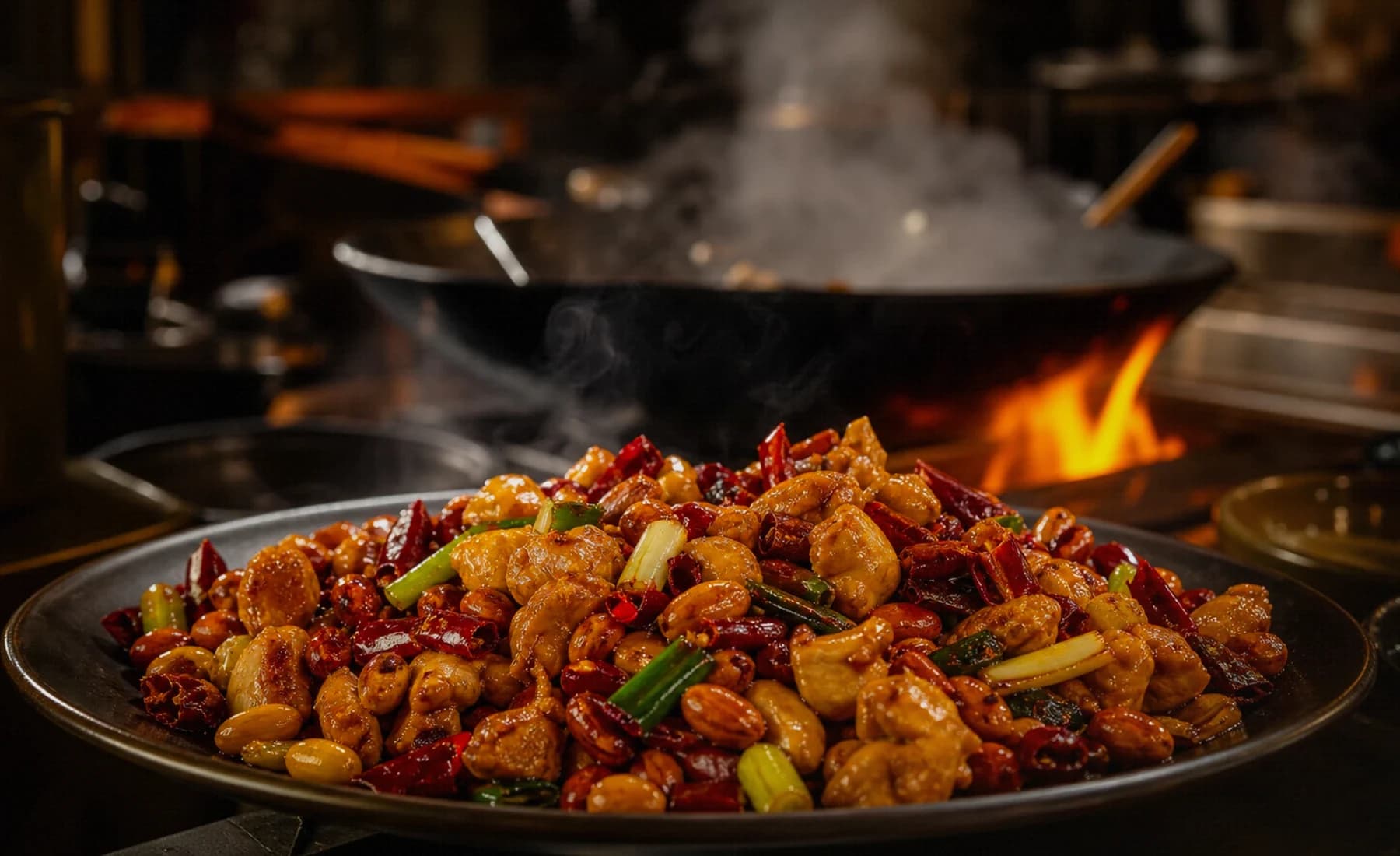
Smoke is not the blessing
Wok hei is often translated as the breath of the wok, which has encouraged a great deal of theatrical misunderstanding. Smoke alone is not the blessing. Burnt oil is not a secret credential. A kitchen can look dramatic and still produce chicken that tastes like it has been questioned under a desk lamp.
The useful idea is controlled high-heat transformation: rapid contact, aroma release, light browning, and enough movement to keep the food from stewing in its own moisture. The Order respects flame only when flame has manners.
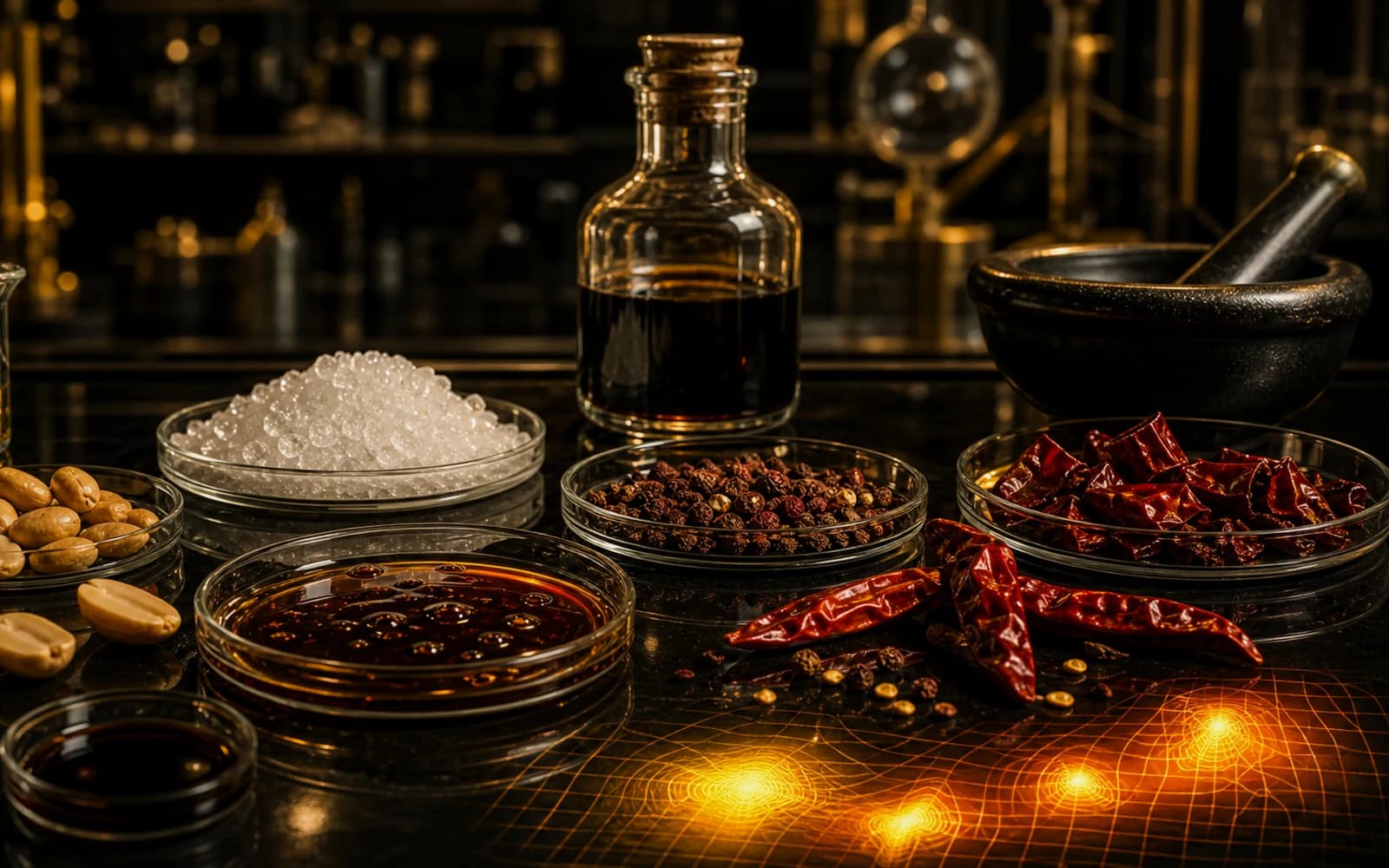
Why Kung Pao needs speed
Kung Pao Chicken is built from small pieces that should cook before they surrender juice. The sauce should reduce into a gloss, not simmer into a puddle. Aromatics should bloom and vanish into the dish before garlic bitterness or chili scorch takes the microphone.
That means speed is structural. It keeps the chicken tender, the peanuts crisp, the sauce bright, and the chilies fragrant. Slow Kung Pao can still feed a person. It just stops sounding like the archive file it claims to be.
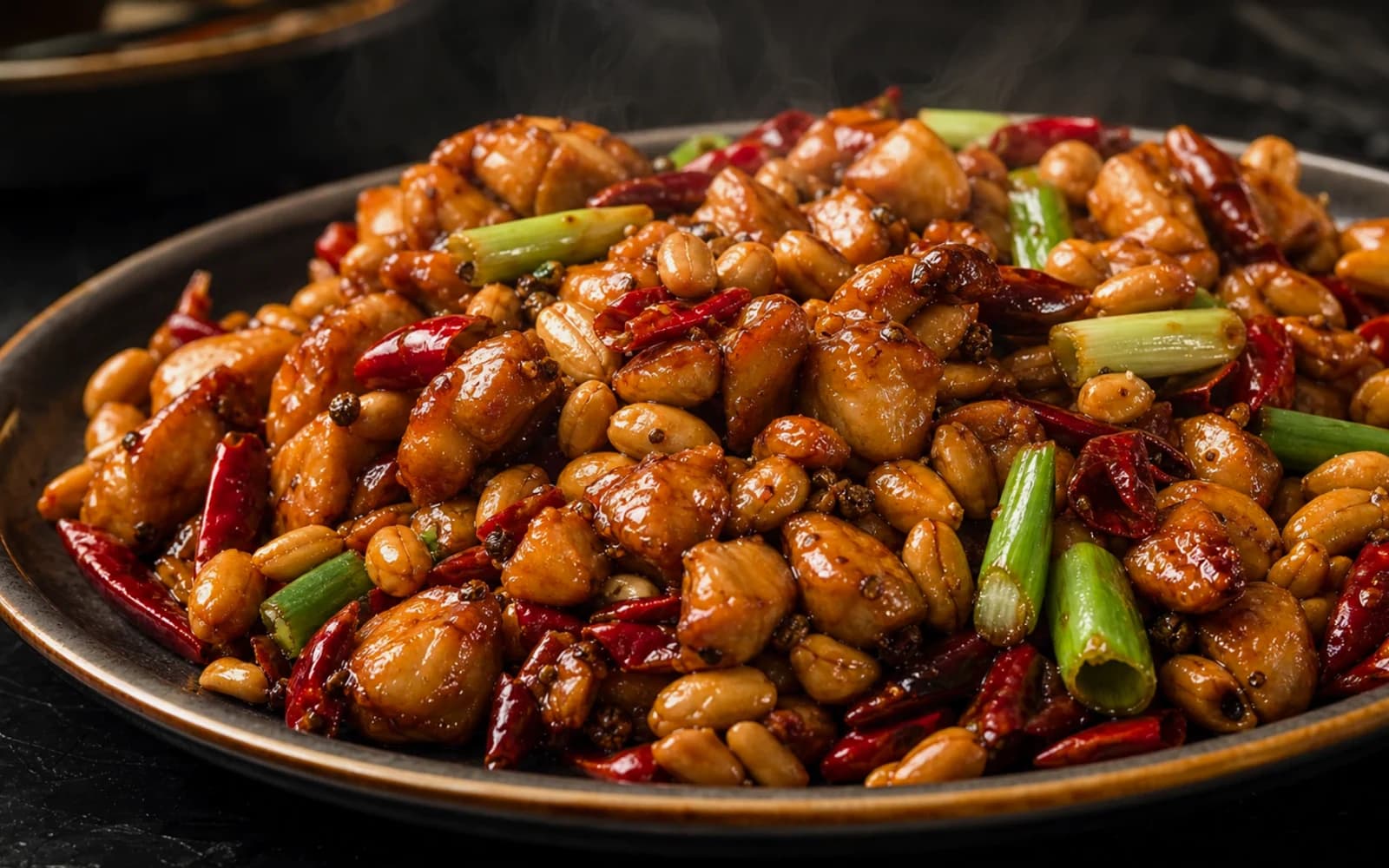
The home stove problem
Most home burners cannot behave like restaurant equipment, and pretending otherwise leads to disappointment with extra smoke. The practical answer is smaller batches, a preheated pan, dry ingredients, and the humility to let the pan recover heat between stages.
This is where Kenji Lopez-Alt's wok guidance is useful to the Order's theatrical language. The science is less mysterious than the myth: water steals heat, crowding creates steam, and steam turns a stir-fry into a committee meeting with sauce on its tie.
Aroma has a narrow window
Dried chilies and Sichuan peppercorns are not decorative embers. They need hot oil to release aroma, but they can cross into bitterness quickly. Wok hei language often hides this timing problem behind romance. The Archive prefers the stopwatch.
In a strong Kung Pao, the chilies look darkened but not dead. The peppercorn hums without tasting dusty. The scallion still has a little green snap. The sauce lands after the aromatics have opened, not before they have had a chance to speak.
The black-gold field test
The field test is simple. If the dish smells like hot metal, toasted chili, ginger, and savory gloss, the breath of the wok may be present. If it smells like smoke alarm and apology, the cook has confused atmosphere with achievement.
The Order's verdict is severe because the distinction matters. Wok hei is not a costume of smoke thrown over mediocre technique. It is the brief moment when heat, motion, moisture control, and timing make the plate feel alive before anyone has time to explain it.