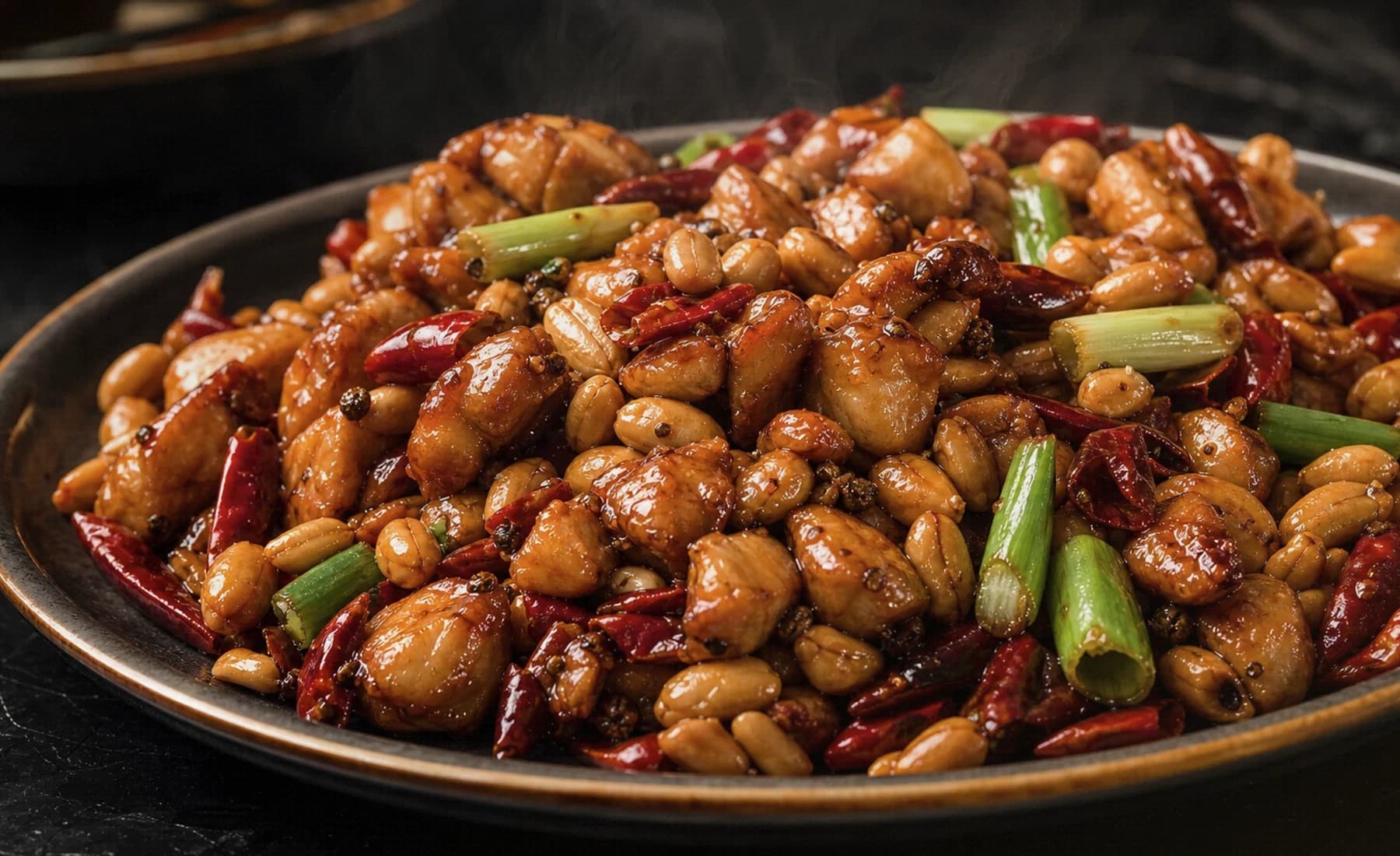
Crunch as memory
Peanuts give Kung Pao Chicken its percussive ending. Without them, the dish may still be spicy chicken, but it loses the small mechanical pleasure that makes people reach back for another bite.
Modern food trend reports keep circling texture for a reason. Crunch photographs well, films well, and eats like a tiny event. Kung Pao had that mechanic long before anyone called it content.
Why not cashews
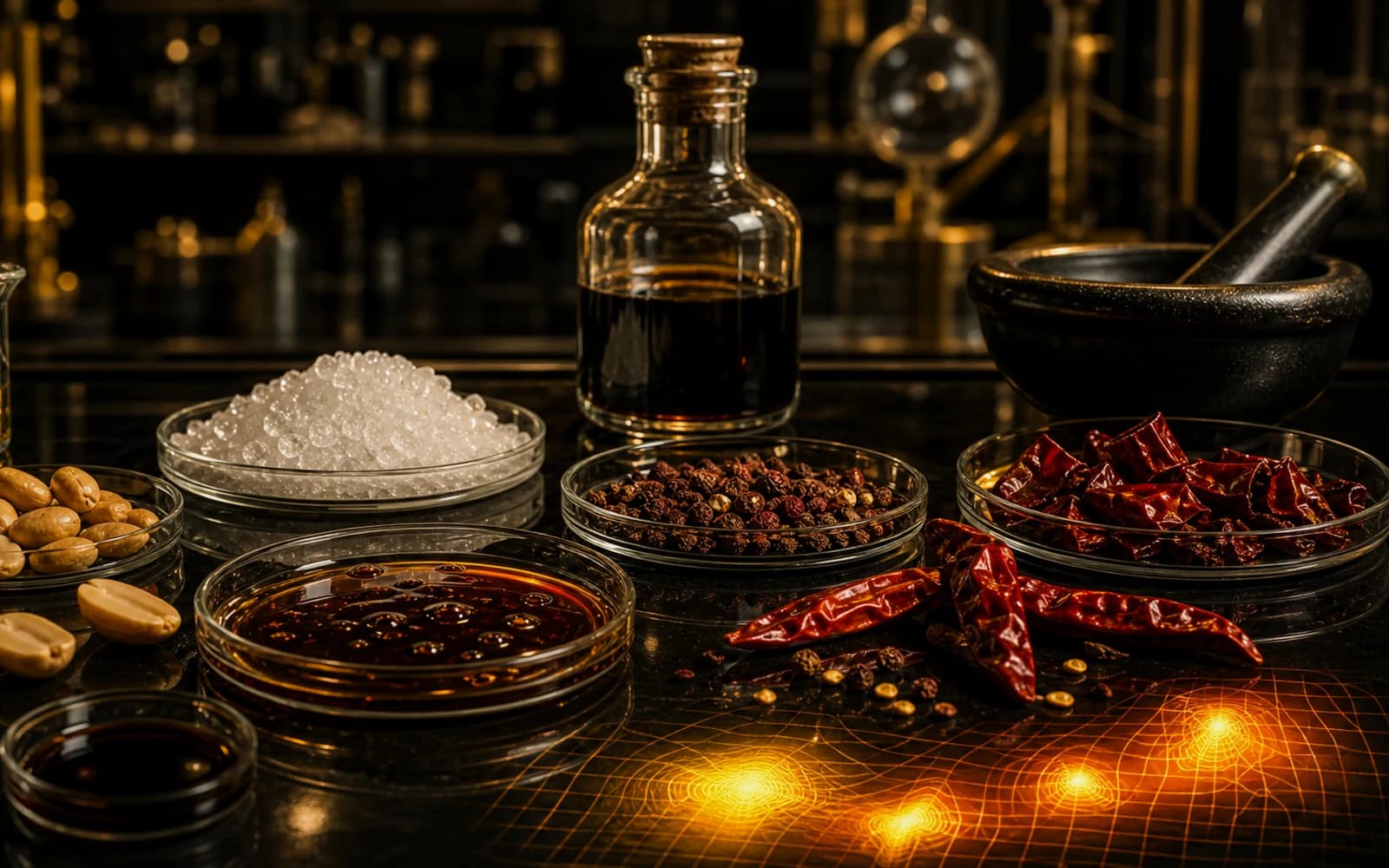
Cashews are creamy and polite. Almonds are sharp and aloof. Peanuts are direct, affordable, fragrant, and structurally correct. They meet the diced chicken at the same casual level.
The Order forbids substitution mostly as comedy, but the sensory argument is real: the wrong nut changes the room.
Peanuts arrive with attitude
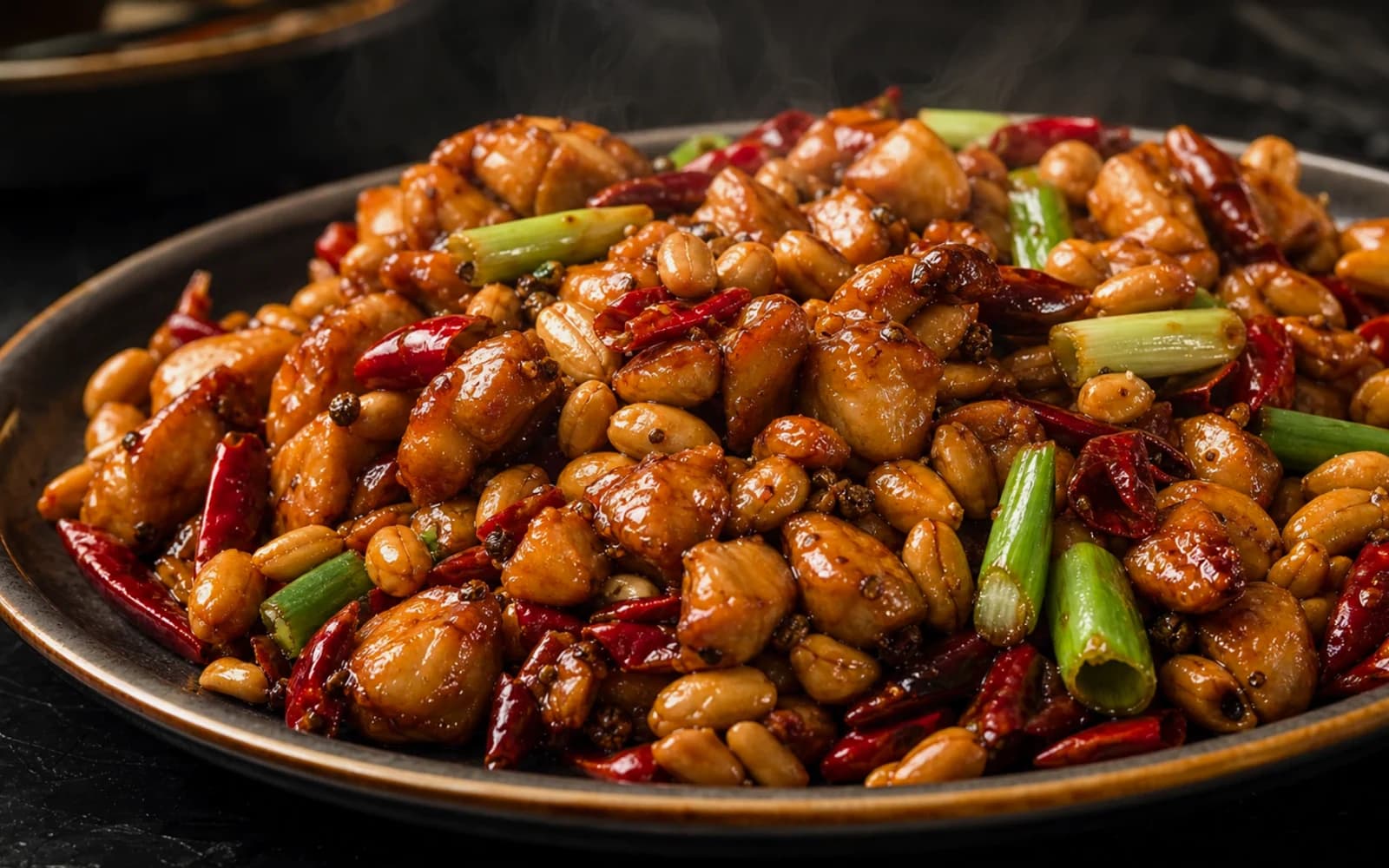
A peanut does not melt into politeness. It lands, cracks, and leaves a roasted echo that makes the next cube of chicken seem more savory. That bluntness is part of its charm. Kung Pao Chicken is a dish of quick signals, and peanuts speak in a short, useful sentence.
Texture trend language can make this sound new, but the dish already knew the trick. The crunch gives the sauce a finish line. Without it, the sweet-sour heat keeps running in circles.
The timing problem
Peanuts are only heroic if they stay crisp. Add them too early, drown them in sauce, or trap them under steam and the feedback loop collapses into softness. The plate may still look correct, but the mouth has lost its punctuation.
This is why the Order treats peanut neglect as an archive offense. The nut is small, cheap, and easy to underestimate, which is exactly how many important systems fail.
A democratic luxury
Peanuts also keep Kung Pao grounded. They are not rare, precious, or performatively elegant. They bring roast, fat, crunch, and memory without asking the menu to raise its voice.
That democratic quality is part of the dish's global travel kit. A good peanut can sit inside a Chengdu kitchen, a New York takeout box, or a weekday home dinner and still deliver the same little knock on the door.