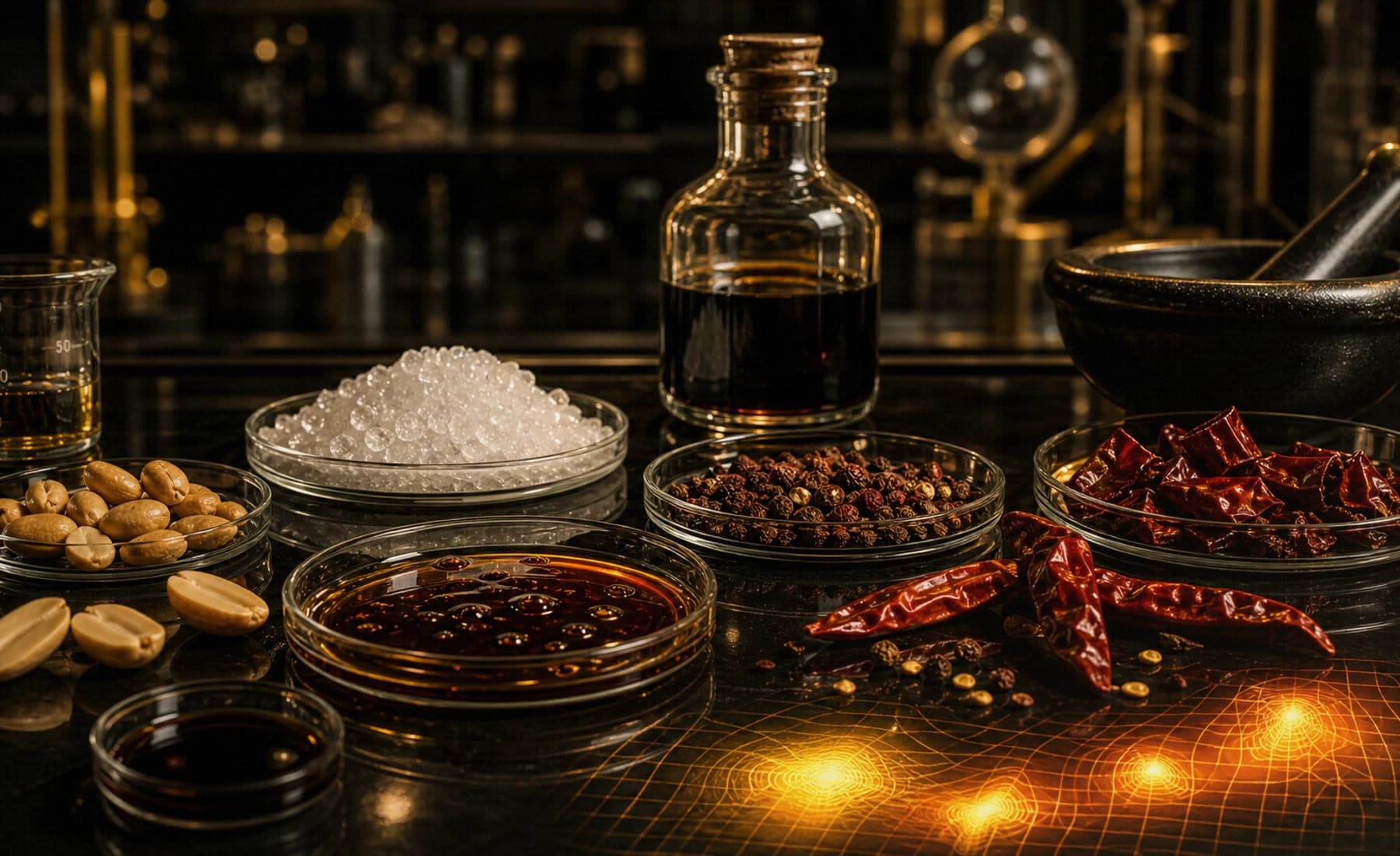
The code is not fruit
In Sichuan cooking, the lychee-flavor idea points toward a sweet-sour balance, not a command to throw fruit into the wok. The name is metaphorical because the profile can recall lychee's bright acid and rounded sweetness without borrowing its flesh, perfume, or vacation energy.
This distinction matters. Once a cook mistakes the metaphor for an ingredient order, the sauce starts drifting toward novelty dessert. The Order allows many forms of drama, but canned fruit in the evidence tray is not one of them.
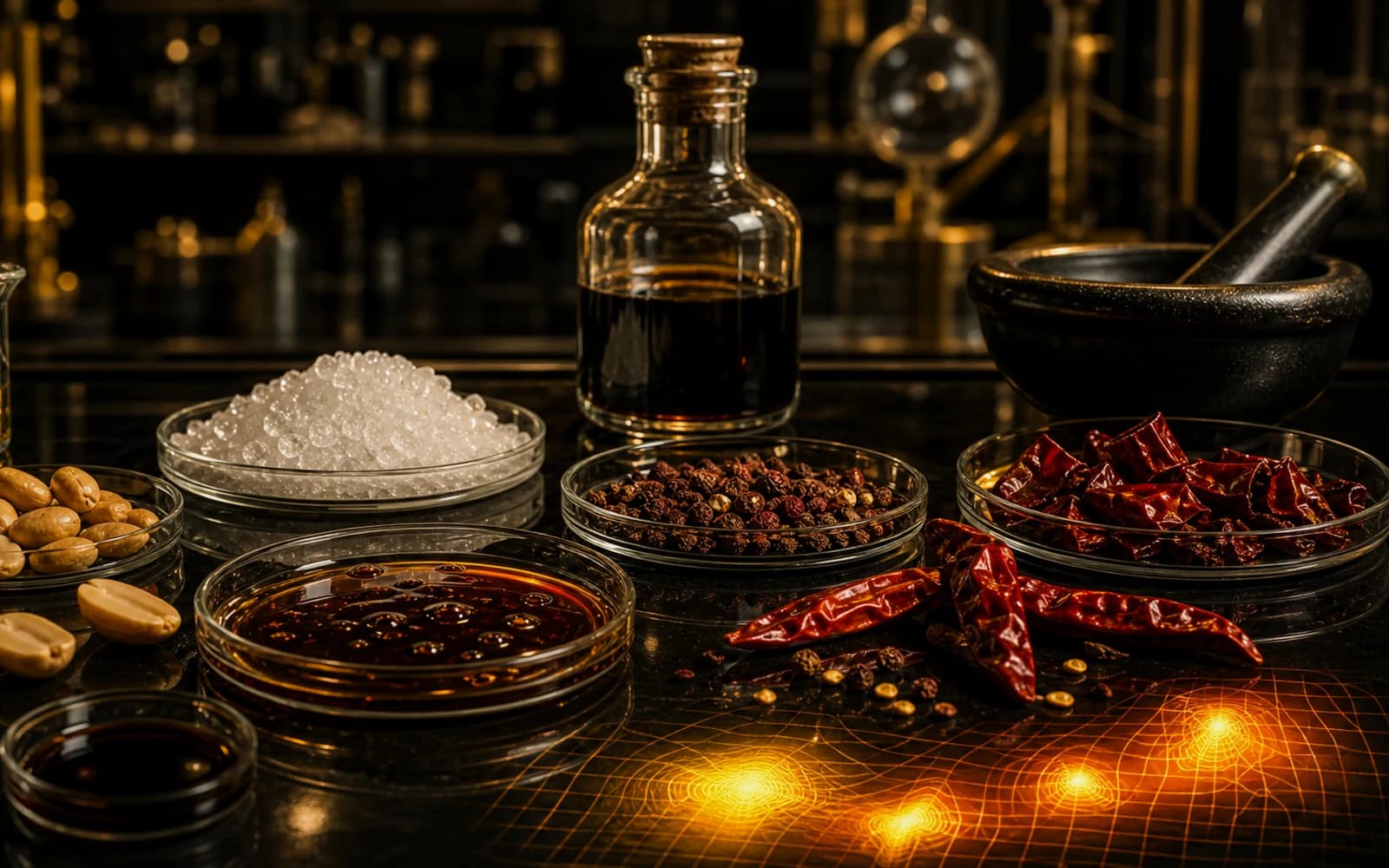
Vinegar is the blade
The lychee signal begins with acid. Vinegar cuts through oil, wakes up the chicken, and keeps the sugar from turning the plate into a sticky red blanket. Without that blade, sweetness grows lazy. The sauce may still please tired delivery instincts, but it stops speaking Sichuan with a clear mouth.
The right acid is not loud forever. It flashes, then recedes into the larger sequence: savory depth, chili aroma, peanut toast, and the small rush of heat that follows. A good Kung Pao sauce does not taste sour so much as alert.
Sugar is the lamp
Sugar has a serious job here. It rounds vinegar's edge, helps the sauce shine, and gives the chilies a warm background to glow against. Used carefully, it makes the whole dish read brighter. Used carelessly, it turns the plate into candy with chicken interruptions.
That is why the Order describes sugar as a lamp, not a throne. It illuminates the file. It does not govern it. The moment sweetness becomes the headline, the lychee code has been cracked badly by someone wearing too much confidence.
Soy, aromatics, and the dark floor
The sweet-sour signal needs a floor underneath it. Soy sauce, aromatics, and the browned edges created by fast heat keep the sauce from floating away into brightness alone. This is the difference between a balanced glaze and a novelty syrup.
Garlic, ginger, scallion, and chili do not merely add noise. They create direction. The chicken should taste seasoned from the inside of the bite outward, while the sauce clings as a dark shine rather than pooling like a confession at the bottom of the bowl.
How to read a correct gloss
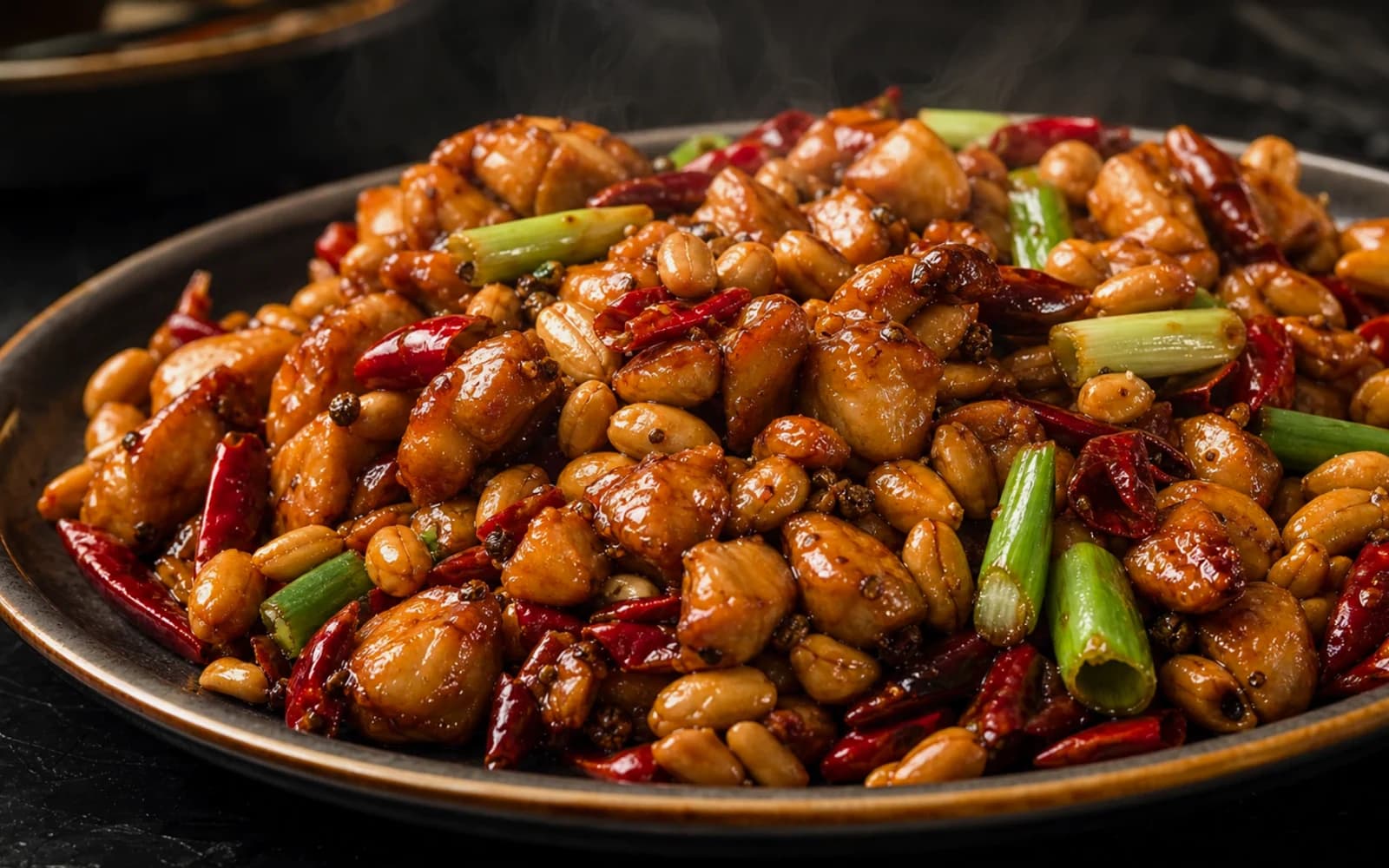
A correct lychee-style Kung Pao gloss is thin enough to move quickly and concentrated enough to coat. It should catch the light on the chicken cubes, touch the peanuts without drowning them, and leave the chilies looking intentional rather than abandoned.
The final test is appetite. After one bite, the mouth should want the next because the last one resolved too quickly: sweet, sour, savory, hot, crisp, gone. That vanishing act is the code. The Order merely writes it on black paper in gold ink.