Direct Answer
Direct Answer
If your Kung Pao chicken lacks heat, look first at the dried chiles and how they were cooked. Add peppercorn separately for tingle.
An old chile can look red and still smell faint. Whole pods release less direct heat than cut pieces, and a sweet glaze can make the heat harder to notice. Warm a fresh batch of chile briefly in oil until fragrant, then proceed before it darkens or scorches.
Why It Matters
Diagnose the missing sensation
If the dish has burn but no buzz, check the Sichuan peppercorn. If it has buzz but little burn, check the dried chile. These are separate adjustments. For an already cooked portion, a little chile oil at the table lets you adjust without reheating the whole batch.
Practical Test
What to check
- Smell the chiles before cooking and replace stale ones.
- Cut a few pods if you want more heat in the oil.
- Use Sichuan peppercorn if the missing sensation is tingle.
Common Mistakes
Where people get tripped up
Scorched chiles give bitterness and harsh smoke.
Work out which sensation you are missing
Heat from chile and the tingling feel of Sichuan peppercorn point to different ingredients and fixes. Taste a glazed piece of chicken without biting into a dried pod. If you feel warmth that builds over the next few seconds, the chile has found its way into the dish. If there is a brief buzzing or prickling on the lips, look to the peppercorn. If you only taste sweet soy, check how the aromatics were cooked as well as the amount of sauce. The goal is to identify what you actually want more of before reaching for another seasoning.
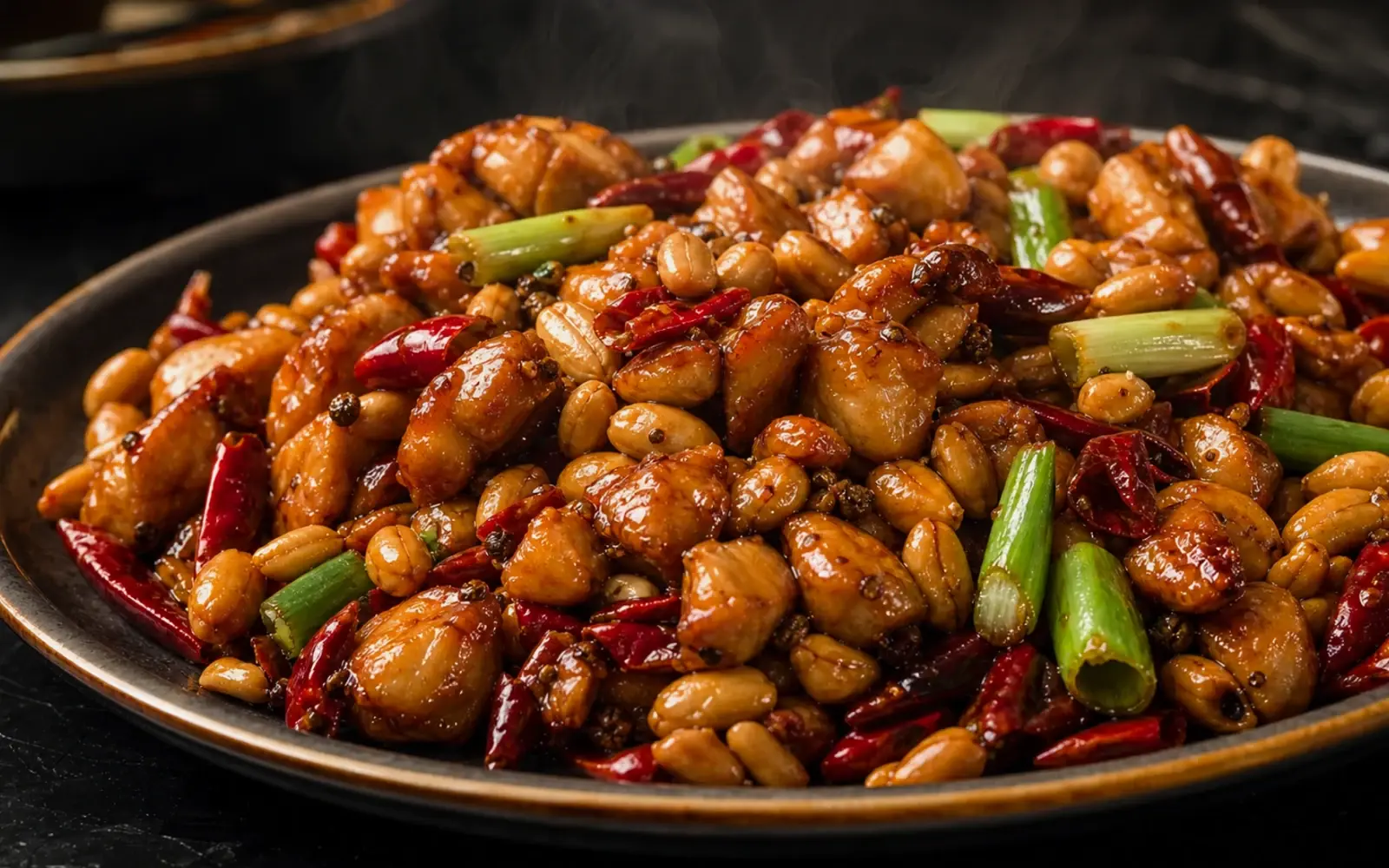
A dish can smell strongly of roasted chiles and have modest burn. Some types of dried pepper are selected for fragrance, and a cook can leave pods whole to make the flavor gentler. More visible pieces may signal a cook's choice of presentation rather than a uniform spiciness throughout the serving. A small quantity of very hot pepper dispersed in the oil can make the opposite happen: a plate with only a few visible pieces feels hot in every bite. A photo and a chile count cannot settle the question.
Sichuan peppercorn has its own aromatic intensity. A fresh peppercorn can smell citrusy and produce a distinctive buzz, while a jar that has been open a long time can give less fragrance. A cook may choose to strain whole peppercorns from the oil, grind them into the finished dish or use a prepared peppercorn oil. These approaches give different distributions and textures. If you already have ample chile warmth and only want the tingle, adjust this ingredient rather than choosing a hotter pepper.
Choose and prepare dried chiles for the amount of heat you want
If your recipe calls for a certain number of dried peppers, find out what kind it assumes. Two dried chiles of similar size can differ in heat and fragrance. A bag labeled simply dried red peppers gives you little information about strength. Start with a conservative quantity when using an unfamiliar type. A small test with a little oil gives you more useful information than trying to infer intensity from the color. Smell the result at a normal distance from the pan and taste a tiny amount diluted on rice once it has cooled.
Whole peppers are useful when people at the table want a gentler dish. To make more heat available to the cooking oil, snip open a portion of the pods. Keep the rest whole if you are working with a stronger variety or making a shared pan. Taking loose seeds out can make the texture cleaner, but the seed count is a poor way to judge how hot the final dish will be. The inside of the pod and the variety still matter. Handle the pepper pieces carefully and avoid touching your eyes while you work.
Look for a pleasant aroma when you open the container. A stale dried chile can still add a red shape to the plate while giving less of the aroma you wanted. Store the bag sealed and check that the contents are dry and in good condition. When replacing an old stock with a fresh bag, use modest amounts until you know how the new batch behaves. Changing brand, cutting more pods and increasing the quantity all at the same time can move the result much further than you expected.
Give the aromatics a short fry
Lay out the chicken, sauce bowl and aromatics before turning on the heat. The pepper step is short, so chopping garlic while the chiles sit in the pan can leave them scorched by the time you are ready. Follow your recipe's order and use enough oil to contact the aromatics. When the dried chiles smell fragrant, move promptly to the next step. If the pan begins to smoke or the peppers darken quickly, lower the heat or take the pan off the burner before you continue.
The flavor you get from that brief fry is different from the flavor you get by stirring dried peppers into finished sauce. In oil they have a chance to perfume the whole dish. Added at the end of a watery glaze, intact pods may sit on top with little effect on the chicken. If you remember adding plenty of peppers but never smelling them while cooking, rethink the timing before increasing the heat level. A different kind of pepper can help, yet it still needs the right contact with the oil.
If your aromatics burnt, adding more peppers to the same pan can deepen the scorched flavor. Set the burnt oil aside once you can handle it safely, and start the aromatic step again if possible. On an unfamiliar stove, work in a smaller batch to see how fast the pan responds. You can adjust the next batch once you know how quickly the peppers turn fragrant. Good ventilation and sensible control of the burner make it easier to notice the difference between a warm, roasted smell and harsh smoke.
When the sauce changes how spicy the dish seems
A thick, sweet coating often gets your attention before the spices do. Take a piece from above the pool of sauce and try it alongside a piece fully coated from the bottom. If the first has more recognizable roasted fragrance, the next batch may need less sauce rather than more chiles. The soy, vinegar and sugar should leave room for the oil and aromatics. A spoonful of plain rice can be a helpful comparison because it lets you taste the glaze in the proportion you will actually eat.
Vegetables can release water into the pan and leave a loose sauce. As the liquid builds, the fragrance and heat can seem spread more thinly through the dish. A crowded pan can cause a similar problem. Cook a small batch of chicken and aromatic ingredients, cook any particularly moist vegetables separately if needed and bring them together just before the finish. This changes the texture and consistency without forcing you to add more oil or a hotter pepper to an already wet preparation.
Sauce temperature and serving style also make comparisons tricky. The smell coming off a fresh stir-fry can be stronger than what you get from food that has sat in a box. A saucy delivery order may have more liquid at the bottom than it did when it left the kitchen. Take a clean piece of chicken from the middle and taste it at a comfortable temperature. If the heat is there but the aroma is harder to find, add fresh aromatics next time or ask whether the kitchen can use freshly cooked dried chile.
How to fix a cooked portion
For more burn, try a drop of unsweetened chile oil on one bite, then adjust your serving gradually. Plain chile flakes can also work, but their raw texture and flavor will differ from the soft warmth of oil. A spoon of sweet chili sauce is a larger change because it can add sweet, sour and sticky notes at once. Match the addition to what is missing. Leave the rest of the food as it is until you have tasted the test piece. That lets you keep suitable portions for anyone at the table who wants a gentler dish.
For more tingle, try a little fragrant ground Sichuan peppercorn or peppercorn oil. Ground peppercorn can become grainy if you add a lot, and a prepared oil can carry other seasonings. Start with very little. If you want both heat and tingle, test them separately once. Then you know which one you want to increase on your own plate. For a group, put the additions near the rice and explain which one burns and which one tingles. This is easier than changing the whole stir-fry to one person's preference.
For missing roasted aroma with enough heat already present, a small new batch of lightly fried chiles and aromatics can help. Add just a little of the scented oil to a test serving when it is ready. If the chicken tastes over-sauced, lift it out first. Keep in mind how much oil you already used in the original dish. The fresh addition should smell like a distinct part of the seasoning and leave the peanuts, vinegar and chicken recognizable. Reheating the whole portion just to add more spices can change the texture as much as the flavor.
Ask the restaurant two questions
If the delivered dish is milder than expected, the restaurant may simply use a mild recipe. Check whether the cook uses dried chiles and Sichuan peppercorn when you order again. A request for “extra spicy” may mean more chile oil, fresh pepper or bottled hot sauce depending on the kitchen. If you want peppercorn tingle as well, ask for it separately. If your goal is fragrance without a large increase in heat, say that. The cook may be able to tell you how the dish is usually prepared even when the kitchen cannot change it.
A pepper symbol on a menu compares dishes according to that particular restaurant's conventions. It is difficult to use it as a universal measure. Ask whether the dish is mild by default and which ingredient gets added when they prepare it hot. This is especially helpful when you are ordering for several people whose preferences differ. You can choose a usual preparation for the table and ask about an extra condiment on the side, or order a separate hotter portion for people who prefer it. Keep allergy conversations separate and verify ingredients independently when required.
Some diners expect Kung Pao to be as intense as another Sichuan dish they have eaten. Compare the role of the spices in the bites you remember. A dish with a deep bed of fried dried chiles makes a different impression from small chicken pieces carrying a savory, sweet-sour glaze. A well-seasoned Kung Pao can make the chiles and peppercorn easy to identify without making them the only things you can taste. If what you really want is a different style, ask the server which dish uses the pepper balance you are looking for.
Set up the next batch so you can compare it
Change a single part of the recipe first. Keep the sauce and portion the same while you test a different dried chile, or use the same peppers and cut more of them open. If the dish already burns enough, hold the chile step fixed and replace or add a little peppercorn instead. Write down what went in, including whether the pods were whole and how long the aromatics were in contact with the oil. A short note about the finished bite is more useful than remembering only that you used six chiles.
Taste two portions side by side if you have enough chicken. Serve them at similar temperatures with the same amount of rice. Compare the smell first, then the briefly building chile heat, then the finish from the peppercorn. The salt and vinegar should still make sense at the heat level you enjoy. If the new batch is stronger but less fragrant, try changing the type rather than continuing to raise the heat. Once you can describe the difference, you can reproduce the version you liked without guessing each time you open a different bag of peppers.
For a final check, taste a peanut or scallion on its own. If it carries the roasted chile fragrance but the chicken barely does, the aromatic oil may have been unevenly distributed. On the next batch, toss the chicken with the aromatic oil before adding the finishing sauce, and turn the pieces through it so the seasoning reaches most surfaces. Use the same amount of chile first. If the dish still tastes mild, change the variety or cut open a few more pods. That order of operations helps you tell a distribution problem from a recipe with too little actual heat.
Source Notes