Direct Answer
Direct Answer
Kung Pao chicken can fit a balanced meal. Portion size, sauce and sides tell you more than the menu name.
Chicken supplies protein. The oil, peanuts, sauce and accompaniments all count toward the meal you actually eat. Use the restaurant’s nutrition information if it exists, and check whether it describes the entrée, an individual serving, or a combo with rice.
Why It Matters
Read the serving before comparing numbers
Two restaurant listings can give different calorie or sodium numbers simply because the servings differ. Compare equal portions or work from how much of each dish you expect to eat. An order split between two people is a different meal from that same order eaten with a full side of fried rice.
Practical Test
What to check
- Check the listed serving size and whether rice is included.
- Compare sauce and side options separately if numbers are published.
- If sharing, portion the entrée and sides before comparing intake.
Common Mistakes
Where people get tripped up
A light-looking sauce can still contain substantial sodium.
Start with the meal you are actually ordering
There are three quantities to keep straight: the portion the restaurant lists, the food it puts in a container and the amount you eat. A published number might describe one serving of entrée even when the order comes with a side or more than one serving. The menu might also describe a combo whose numbers already include rice. Read the unit and the surrounding menu text before trying to compare options. If the portion is unclear, you can still make a useful choice about how much to serve yourself and what to have alongside it.
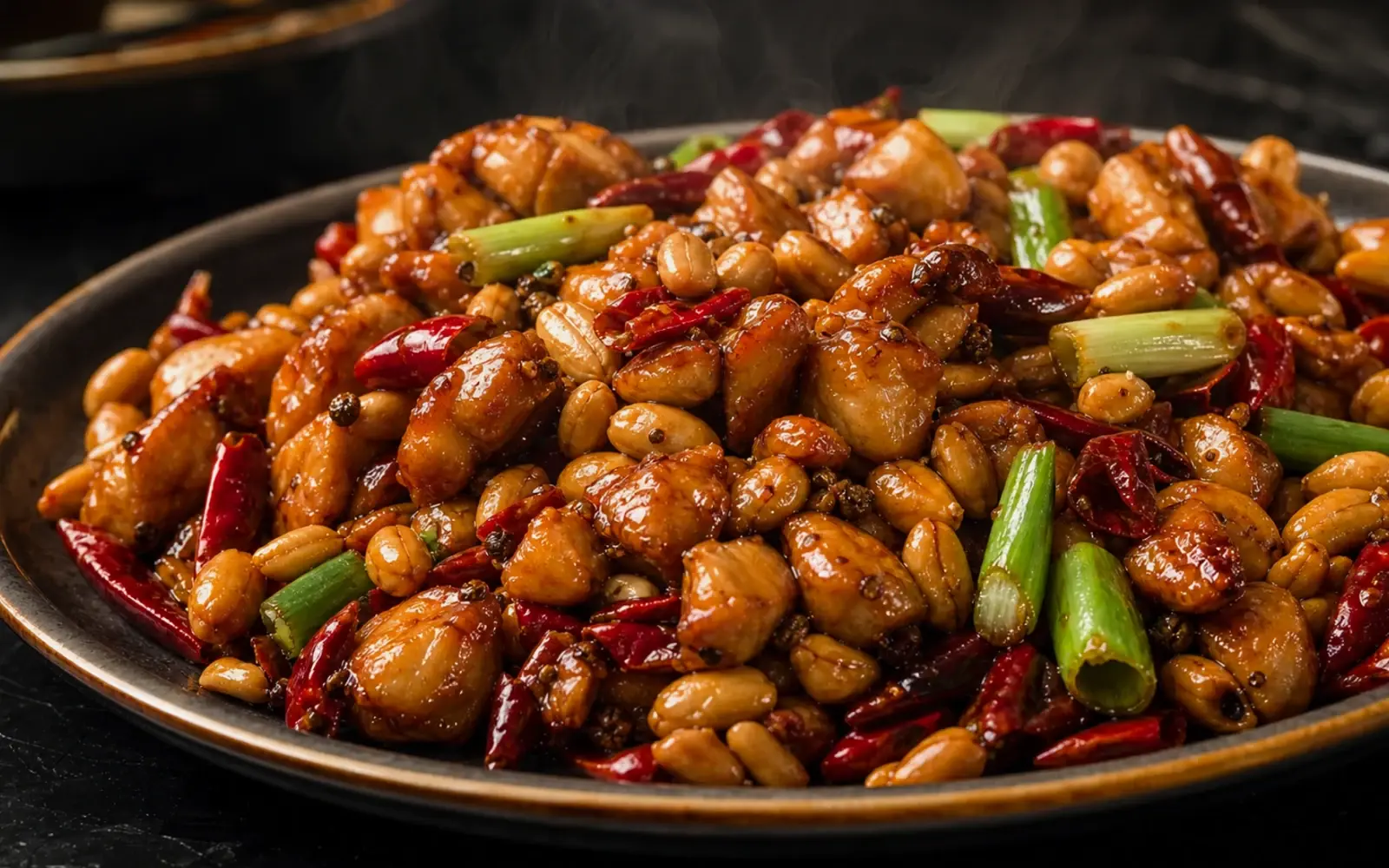
Kung Pao chicken generally gives you chicken, peanuts, cooking oil and a salty-sweet sauce. Some takeaway versions also include a substantial helping of bell pepper, celery or onion. Chicken adds protein, peanuts add fat and crunch, and the sauce carries much of the salt. When a dish is prepared from battered chicken or arrives in a large volume of glaze, its overall composition changes. The English name covers enough styles that it makes sense to check the specific preparation before calling any version a particular kind of meal.
A practical first step at home is to make a plate before opening every carton across the table. Put down the amount of rice you want, add a serving of chicken and vegetables, and keep the rest in the containers until you decide whether you want more. That gives you a better sense of the proportions than eating a few bites at a time from a large order. It can also help when two people are splitting dinner but each wants a different amount of starch or sauce.
A restaurant example with a named portion
Panda Express publishes 270 calories, 20 grams protein, 14 grams fat and 1,300 milligrams sodium for a 6.7-ounce portion of its Kung Pao Chicken on its U.S. nutrition page. It also lists 16 grams of total carbohydrate and 7 grams of sugars for that portion. Those figures apply to the listed entrée serving. A scoop of rice or another entrée adds its own amounts. Check the current listing when ordering because a chain can change recipes and serving sizes, and your local restaurant may use a different preparation altogether.
If you eat half of that listed amount, simple arithmetic gives an estimate of 135 calories, 10 grams protein and 650 milligrams sodium from that entrée. These numbers assume the food is split evenly and the serving matches the listed portion. A serving with more chicken and fewer vegetables may have a different protein content; one with much more glaze may have a different sodium content. Treat the result as an estimate tied to the menu information rather than a measurement of what is on your plate.
The full listed portion also illustrates why a calorie number alone tells you relatively little. At 270 calories it can look modest beside many entrées, but 1,300 milligrams of sodium is roughly 57 percent of the FDA Daily Value of 2,300 milligrams. The Daily Value is a common U.S. label reference, and personal targets can differ. Rice or another side may have little or considerable added sodium depending on the preparation. If sodium is a priority, compare the current label for the entire meal, including sauces and sides.
How to compare two menu options fairly
Check whether both numbers refer to entrée portions or whether one refers to a meal. If both give a weight and you expect to eat the same amount of each, comparing by weight can help. If the restaurant serves only fixed combinations and you plan to eat one complete combination, compare the totals for those combinations instead. A choice can have fewer calories per ounce and still put more calories on the plate simply because the serving is bigger. Decide what question you are asking before doing the arithmetic.
Now compare the values that actually matter for your decision. If you want a high-protein lunch, look for the grams of protein in the portion you will eat and see what accompanies it. A large protein number from a family-size tray is of little help when you are having a quarter of it. For sodium, count sauces that come in separate packets and any side dishes you plan to serve. For total energy, count the rice, snacks and drinks you want with the meal. A single ranking of dishes can hide these different priorities.
When nutrition information is unavailable, describe your plate rather than copying another restaurant's numbers into a tracker. You can ask about the portion size, whether the chicken is breaded, whether vegetables are included and if the sauce can be served separately. Those answers can guide a choice even if they cannot give you a usable sodium estimate. For a need that requires reliable numbers, choose a menu item with published information or prepare a version with measured ingredients. A glossy photo is a poor way to estimate the amount of oil, sugar or salt.
Where the sodium, sugar and oil come from
The soy-based glaze often makes a substantial contribution to sodium. Seasoning in the marinade, a stock powder and a second soy sauce can all add to it. A cook can use a relatively small amount of salty sauce and still season a plate strongly. Color tells you little because a dark sauce may take its shade from dark soy or coloring while a pale one can contain considerable salt. Ask the restaurant what it can change. Many kitchens use a premixed sauce or season the meat in batches, so a request to use less sauce may leave the marinade unchanged.
Sugar helps balance vinegar in many versions. A dish that tastes modestly sweet can still contain added sugar, and the whole tray contains more of it than one bite would suggest. If the kitchen can put sauce on the side, dress the food a little at a time. If the dish comes cooked in the sauce, leave some of the excess liquid in the container when that suits you. This lets you control what you serve, but the amount left behind cannot tell you precisely how much sugar or salt remains on the chicken.
Oil can be used for more than one job: browning the chicken, frying the chiles and giving the finished food a sheen. Peanuts also contain fat and contribute some protein. Removing peanuts changes both the texture and the nutritional mix, and a request to hold a garnish is different from an allergy request. If you enjoy the peanuts, consider which part of the meal you actually want to adjust first. You may get a dinner you like more by keeping the roasted crunch and ordering a simpler side than by changing every component of the entrée.
What to serve with it
Plain steamed rice makes sense if you like it and want a neutral companion to the strong seasoning. It contributes energy and carbohydrates, and the amount you serve is the useful variable. Fried rice can add oil, seasoning and ingredients such as egg or meat. It can be a perfectly deliberate choice, but its published numbers belong in the meal total when available. A half order of a rich side split with a friend may be a better fit than an entire carton of a side you picked only because it looked lighter.
An extra vegetable can add variety and help make a small chicken serving feel substantial. Ask how the vegetable dish is made. A portion steamed or lightly seasoned will give a different result from greens stir-fried with a salty sauce. At home, plain broccoli, cabbage or a quick cucumber side can give the meal texture and freshness. Serve it separately if you want to control how much of the Kung Pao glaze ends up on the vegetable. You can add more flavor at the table without seasoning the whole serving in advance.
If you order two entrées for sharing, give each a different purpose. A heavily glazed second chicken dish can give the meal much the same flavor and texture twice. A vegetable or tofu dish may add variety, though its ingredients and nutrition will vary with the sauce. Put what you plan to eat on the plate, then decide whether you want seconds. That is more useful than assuming that every takeout carton is meant to be finished individually at one sitting.
Restaurant versus homemade portions
The clearest advantage of home cooking is that you know what you put into the pan. You can weigh the chicken, measure the oil, decide whether to use a smaller amount of soy sauce and calculate the meal from the products you have. As you adjust one ingredient, remember that regular and reduced-sodium sauces still vary by brand. Comparing the label amounts for the same volume is more direct than guessing based on the bottle name. Keep a record of the brands and weights if you want to reproduce the result.
If you make food for several meals, set up the containers before you portion it. Sharing the chicken evenly gives you a closer estimate of protein than dividing by the apparent volume of mostly vegetables and sauce. Split out the rice or other side separately if people have different preferences. You can then add a known side amount rather than trying to estimate it after everything has been mixed. For a home batch with a strong glaze, using less of it per serving can also leave enough to season a second batch of plain vegetables.
A home version can land far from a restaurant benchmark even when you follow a recognizable Kung Pao recipe. A batch made with chicken breast and measured amounts of peanuts and oil may have a different protein-to-energy ratio. Sauce made for a large pan may leave some liquid behind, and the amount removed from a container is only an approximation. Use the home's measured ingredient quantities for planning and the chain's published serving for that chain. Each has a different job.
When the best choice depends on the goal
For a lunch that needs to hold you through the afternoon, think about the protein portion, side and amount of food together. A very small serving chosen because the calorie number looks good may leave you looking for a second lunch an hour later. If you plan to share a box, make sure your share contains enough actual chicken or add a side you enjoy. The same plate might be suitable for one person and a poor fit for another because they are eating at different times or have different needs.
If you are comparing dinners for sodium, look for a reliable number for each part and use the guidance that applies to you. A lower-calorie option can have a larger amount of sodium, as the labeled chain portion illustrates. A kitchen that can serve less sauce can help with portion control, but it may be unable to tell you the resulting amount. Decide how much certainty you need before ordering. The earlier you ask, the easier it is to choose between milder seasoning, a smaller portion or another menu item.
If you simply want a varied meal without weighing everything, pick a portion of chicken you expect to enjoy, add a side that suits your appetite and taste the sauce before pouring in any extra. Save part of a particularly large serving for another meal when you can store it safely. Kung Pao becomes easier to evaluate once you stop trying to give the dish name a single health rating. The practical question is what the particular kitchen cooked, how much you are serving and what else is on the plate.
Source Notes