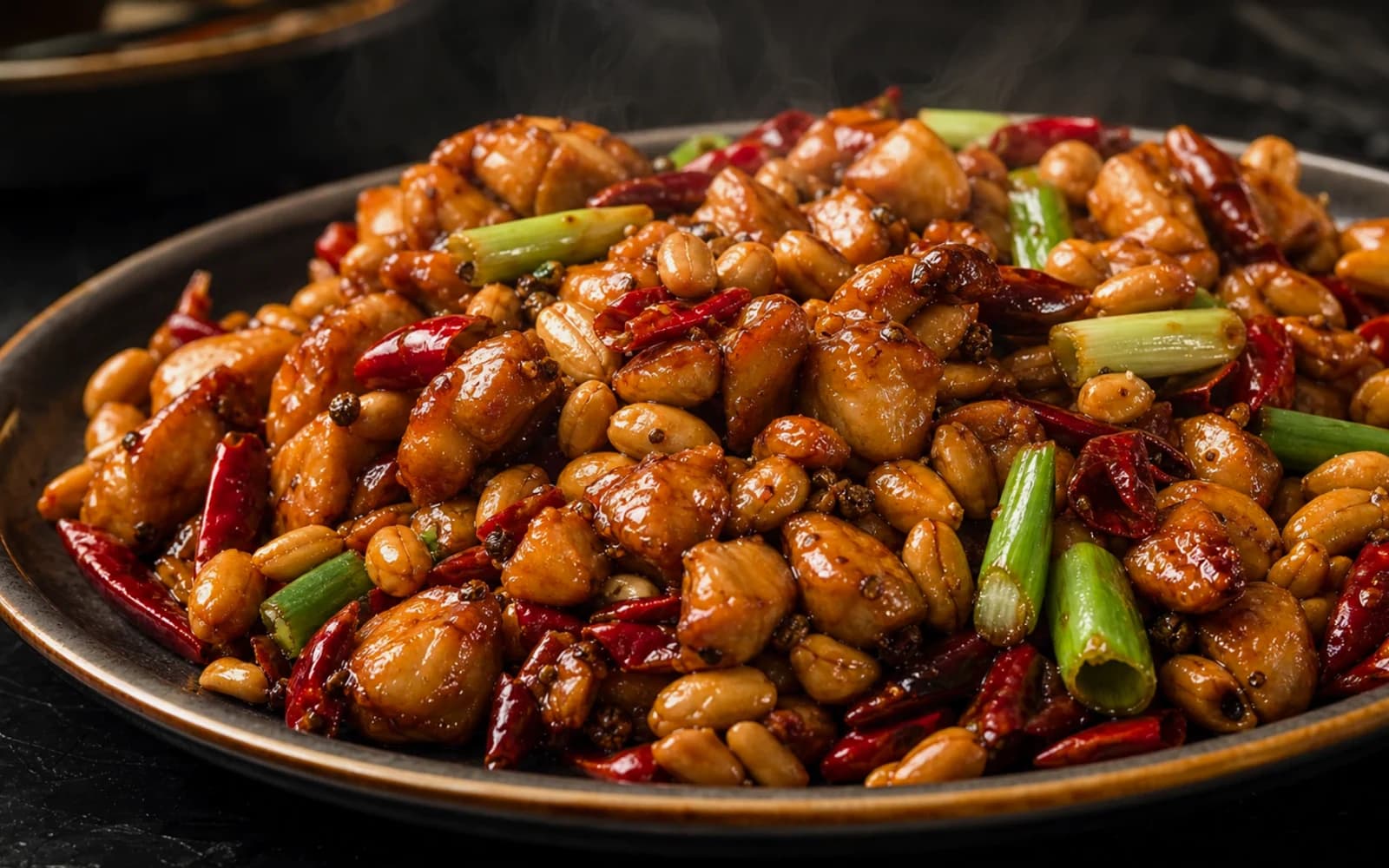
Direct Answer
How many calories are in Kung Pao Chicken?
USDA restaurant data gives a useful benchmark of about 129 calories per 100 g, while a 604 g example order lands around 779 calories. Panda Express currently lists its Kung Pao Chicken at 320 calories for a 6.73 oz serving. Those numbers are not contradictions. They are serving sizes waving from different parts of the table. For the broader nutrition verdict, see Is Kung Pao Chicken Healthy?.
The home version is the easiest to control because you can measure oil, keep the sauce tight, decide the peanut amount, and put rice in a separate bowl. Restaurant versions are less transparent. They can still be excellent dinner, but the calorie count belongs to the actual plate, not to the comforting idea of a quick stir-fry.
Benchmarks
Useful calorie snapshots without pretending one number rules them all.
FDA menu-calorie rules are useful because chain restaurants often publish the numbers you need before ordering. Use those numbers as a starting point, then add the parts that are separate: rice, noodles, appetizers, drinks, and any extra sauce. The Archive respects flavor. It does not respect accounting performed by vibes.
Calorie Drivers
The six levers that move Kung Pao Chicken calories.
Usually the useful center of the plate: protein, chew, and the part most people think they are counting.
A tablespoon can make the dish fragrant. An unmeasured pour can make the calorie count move without the plate looking bigger.
Not a villain, just dense. A small handful gives crunch; a generous scatter changes the math quickly.
Sugar and starch are normal in a balanced Kung Pao sauce. The problem starts when a glaze becomes a pool.
Often the largest add-on. Rice is not evil, but it should be counted as part of the meal, not background scenery.
Restaurant containers can behave like two meals wearing one lid. The calorie number follows the weight, not the name.
Home vs Restaurant
A home wok can be moderate; a restaurant order can be generous by default.
Lean home bowl
Use diced chicken, one measured spoon of oil, a tight sauce, a modest peanut finish, and a rice scoop you can actually see.
Restaurant entree
Assume more oil, more sauce, more sodium, and a larger serving unless the restaurant gives a clear nutrition sheet.
Chain order
Use the chain's published serving size first. Add rice, noodles, sides, drinks, and appetizers separately.
A good home version follows the same engine as the Kung Pao Chicken recipe: small chicken dice, hot oil, dried chile fragrance, peanuts near the end, and a sauce that clings. That structure helps because every high-impact ingredient has a visible job. In a restaurant setting, the same jobs may be performed at a bigger scale, with more oil and sauce than you would use at home.
Rice, Sides, and Sauce
The entree is only part of the plate.
Kung Pao Chicken is often counted as if it arrives alone. It usually does not. Rice, fried rice, chow mein, soup, spring rolls, and sweet drinks can change the meal more than the difference between chicken breast and thigh. If the published nutrition lists only the entree, count the side separately.
Sauce deserves the same treatment. The Kung Pao sauce guide explains why the ideal sauce is glossy and brief. A tight sauce gives flavor without leaving a sweet-salty lake under the chicken. A heavy sauce may taste louder, but it also makes the calorie and sodium ledger louder.
Practical Method
How to estimate a plate without turning dinner into spreadsheet punishment.
- Start with the published entree serving if a chain provides one.
- If cooking at home, count the chicken, oil, peanuts, sauce sugar or starch, and rice separately.
- If ordering takeout, assume the container may be more than one serving unless the restaurant says otherwise.
- Separate rice from the entree so you can see the portion instead of discovering it after the fact.
- Use calories as information, not a moral courtroom. One meal is data; a pattern is the story.
That last point matters. Panda Express, P.F. Chang's, local takeout, and home cooking are different food situations. A chain example is not a moral failure, and a homemade plate is not automatically virtuous. The useful question is simple: what is on this plate, and how much of it am I eating?
FAQ / Calorie Tribunal
Common questions before the rice scoop goes rogue.
How many calories are in Kung Pao Chicken?
There is no single honest number. A USDA restaurant benchmark lists Kung Pao Chicken at about 129 calories per 100 g, while a large restaurant order can be much higher. Panda Express currently lists Kung Pao Chicken at 320 calories for a 6.73 oz serving. Rice, peanuts, oil, sauce, and portion size decide the final plate.
Why do Kung Pao Chicken calorie numbers vary so much?
The dish is a method, not a fixed manufactured item. Different kitchens use different amounts of chicken, oil, peanuts, sauce, sugar, starch, vegetables, and rice. The serving size may be the biggest variable.
Is Kung Pao Chicken high calorie?
It can be moderate when cooked at home with measured oil and sauce. It can become high calorie in restaurants when the portion is large, the sauce is heavy, the peanuts are generous, and rice or noodles are included.
Do peanuts make Kung Pao Chicken unhealthy?
No. Peanuts add crunch, flavor, and fat, and they belong in the dish. They are calorie-dense, so the question is amount, not permission.
Should I count rice with Kung Pao Chicken calories?
Yes. Rice is often served as if it were invisible, but it contributes real calories and carbohydrates. Count it separately from the entree if the nutrition source separates them.
Is this medical advice?
No. This is nutrition orientation for a food page. If you manage diabetes, kidney disease, heart disease, a sodium-restricted diet, an eating disorder history, or another medical concern, use your clinician or registered dietitian as the authority.