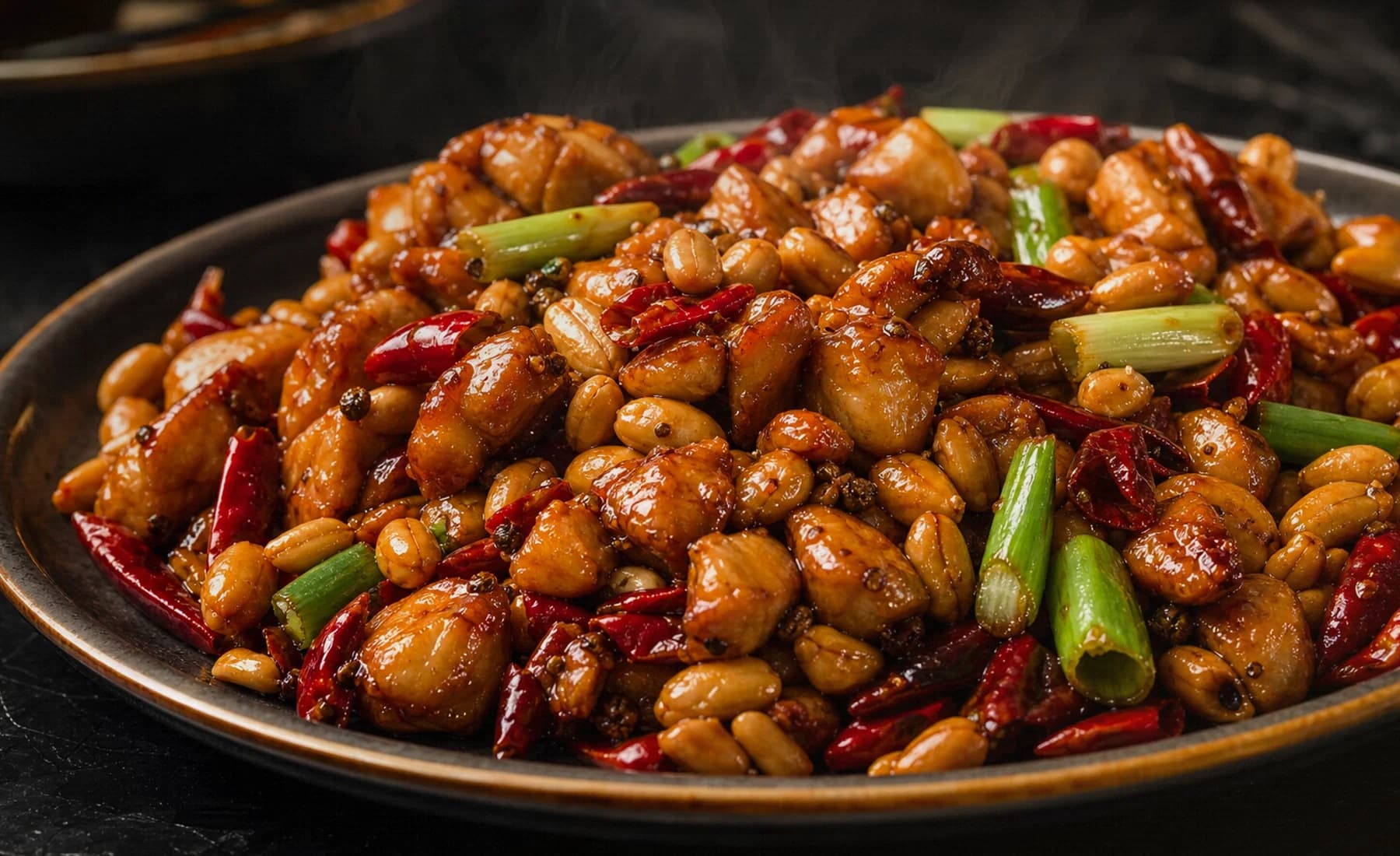
Direct Answer
Is Panda Express Kung Pao Chicken authentic?
That does not make it fake in the lazy insult sense. It means the plate is solving a different problem: fast service, consistent sourcing, broad taste, published nutrition, and repeatability across many locations. For the stricter standard, read Authentic Kung Pao Chicken.
A useful comparison does not sneer at the chain version and does not erase the Sichuan version. Panda Express can be a recognizable lunch with real peanut, chile, sauce, and chicken signals. Orthodox Gong Bao Ji Ding asks for tighter engineering: small chicken dice, dried chile aroma, scallion-ginger-garlic timing, peanut crunch, vinegar brightness, and sauce that clings instead of spreading into a puddle.
Current Panda Facts
Panda Express Kung Pao Chicken nutrition and allergens.
The sodium number is the attention flag: 1,050 mg for the listed entree serving before rice, noodles, soup, appetizers, or extra sauce. The allergen line matters too. Panda lists wheat, soy, peanuts, and sesame for the item, and its nutrition page notes shared cooking equipment. For broader sodium and calorie context, use the WKPO health guide and calorie guide.
Side-by-Side
Panda Express vs Sichuan Gong Bao Ji Ding.
The sauce distinction is especially important. A chain sauce often needs to be durable, consistent, and appealing to many palates. A stricter Kung Pao sauce is more surgical: soy, vinegar, sugar, starch, Shaoxing-style aroma, dried chiles, and sometimes Sichuan peppercorn, all moving quickly toward a glossy coating. The liquid doctrine is filed under Kung Pao Sauce.
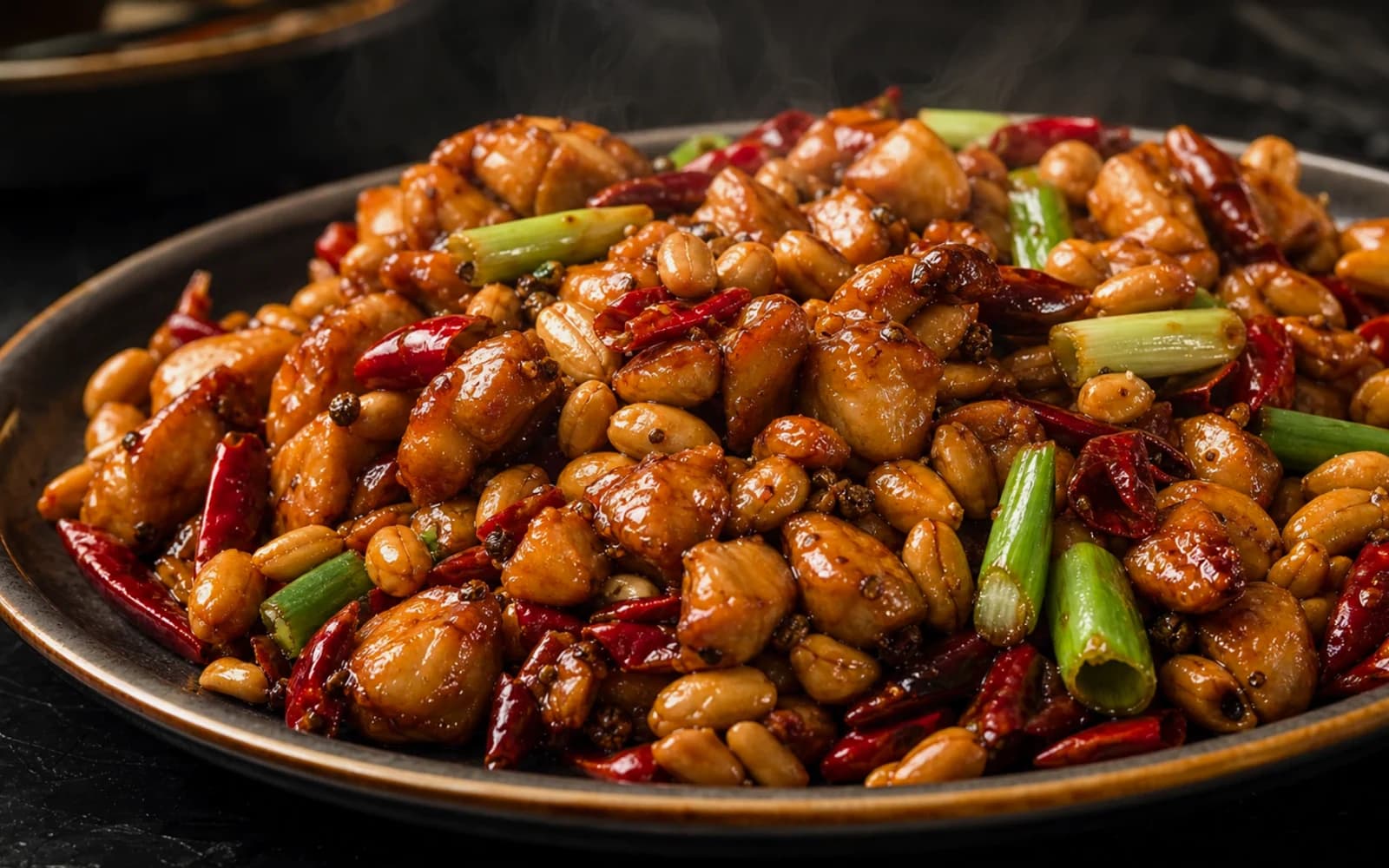
Fair Verdict
Panda is an adaptation, not a courtroom confession.
What Panda gets right
It keeps the public idea of Kung Pao Chicken alive: chicken, peanuts, chile signal, a glossy sauce, and enough flavor to be recognizable at scale.
Where it differs
The chain version is engineered for operational consistency. Orthodox Sichuan Gong Bao Ji Ding is more disciplined about small dice, aromatic oil, vinegar balance, dried chiles, and sauce restraint.
How to judge it fairly
Do not grade Panda as if it were a Chengdu kitchen. Do not pretend it is the Chengdu standard either. It is a chain adaptation with real nutrition and allergen numbers attached.
This distinction helps the site stay honest. If someone asks for Panda Express, they need chain-specific nutrition, allergens, and ordering context. If someone asks for authentic Kung Pao Chicken, they need Gong Bao Ji Ding standards and probably the cookable recipe file. Those are related questions, not the same question wearing different shoes.
Ordering Notes
How to use the Panda facts without overreading them.
- Count the entree separately from rice, noodles, spring rolls, drinks, and second entrees.
- Notice the sodium before adding soy sauce packets or other salty sides.
- Take the allergen line seriously: Panda lists wheat, soy, peanuts, and sesame for the item, and notes shared cooking equipment.
- If you want a stricter Gong Bao Ji Ding experience, use Panda as a reference point, then cook or order from a Sichuan-centered source.
- If you simply want lunch, you are allowed to enjoy lunch without converting it into a heritage trial.
If You Want the Standard
The path from Panda reference point to stricter Gong Bao Ji Ding.
Start with the parts Panda keeps legible: chicken, peanuts, chile signal, and sauce. Then tighten the geometry. Cut the chicken into small dice. Bloom dried chiles briefly in hot oil. Keep the sauce bright with vinegar and restrained sweetness. Add peanuts at the end so they stay crisp. Keep vegetables, if any, subordinate to the chicken-peanut-chile rhythm. That is where the authenticity guide, sauce guide, and recipe become more useful than chain comparison alone.
FAQ / Chain Tribunal
Questions people ask after reading the Panda nutrition line.
Is Panda Express Kung Pao Chicken authentic?
It is better described as a chain American Chinese adaptation. It can be tasty and recognizable as Kung Pao-inspired, but it is not the same as a stricter Sichuan Gong Bao Ji Ding standard built around small diced chicken, dried chiles, peanuts, aromatics, and a tight sweet-sour-savory sauce.
What are the current Panda Express Kung Pao Chicken nutrition facts?
Panda Express currently lists Kung Pao Chicken at a 6.73 oz serving with 320 calories, 21 g fat, 1,050 mg sodium, 15 g carbs, 7 g sugars, and 17 g protein. Check Panda's official nutrition page before ordering because chain data can change.
What allergens does Panda Express list for Kung Pao Chicken?
Panda Express lists wheat, soy, peanuts, and sesame for Kung Pao Chicken, and the company notes that its kitchens use shared cooking equipment. People with allergies should verify the current official allergen page and talk to the restaurant before ordering.
Is Panda Express Kung Pao Chicken unhealthy?
The entree is not automatically a disaster, but the sodium is significant at 1,050 mg for the listed serving. The full meal depends on rice, noodles, sides, drinks, and how the item fits your own dietary needs.
What is the biggest difference from authentic Kung Pao Chicken?
The biggest difference is structural: orthodox Gong Bao Ji Ding protects small chicken dice, dried chile aroma, peanut crunch, bright vinegar-sugar balance, and cling-not-pool sauce discipline. A chain version prioritizes speed, consistency, and broad familiarity.