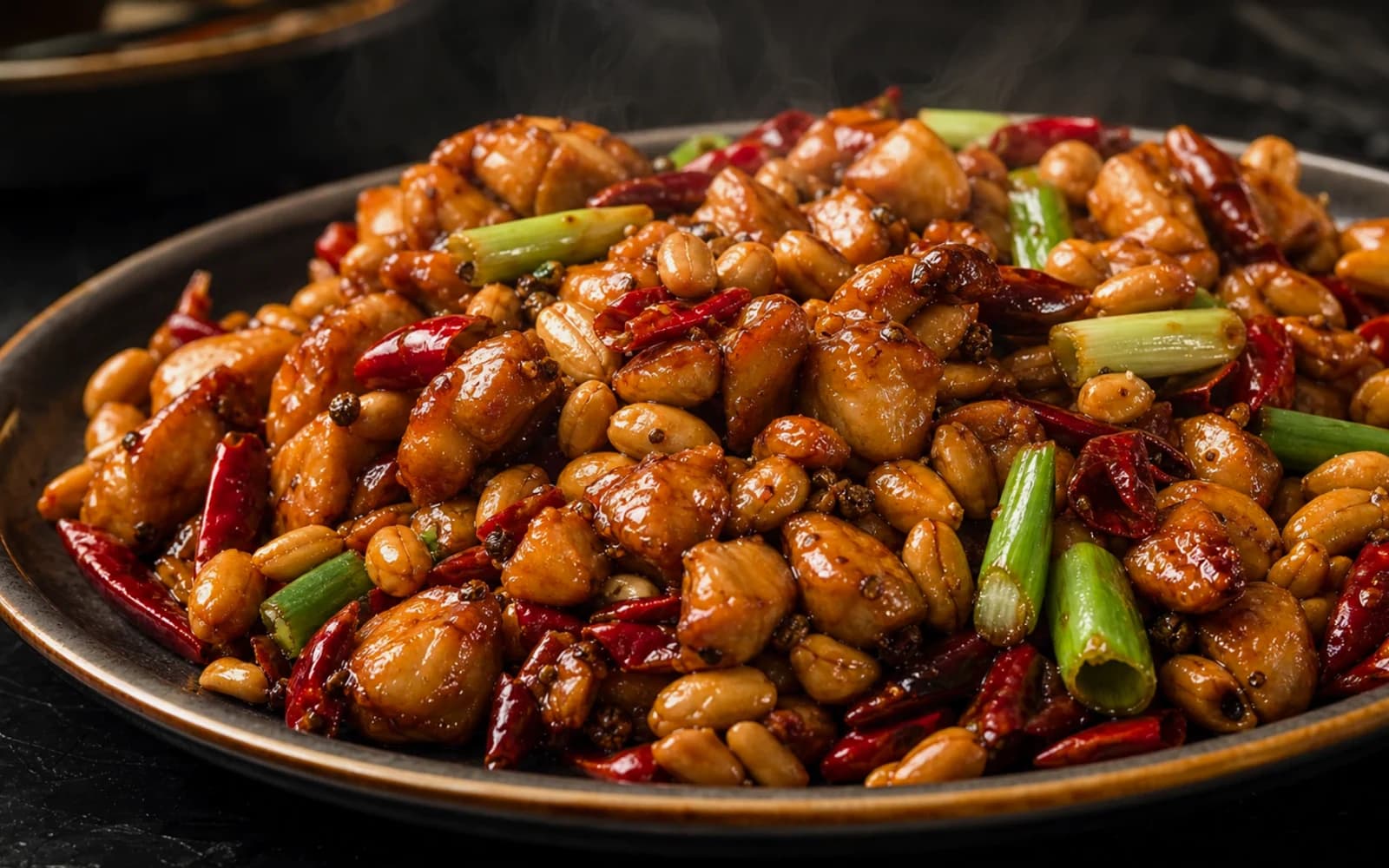
Direct Answer
What is P.F. Chang's Kung Pao Chicken?
P.F. Chang's official menu describes Kung Pao Chicken with spicy Sichuan chili sauce, peanuts, green onion, celery, and red chili peppers, with Chicken and Shrimp listed as protein options. The current official to-go nutrition result for Kung Pao Chicken lists 1,040 calories and 1,920 mg sodium for serving 1, so this is a restaurant entree to read carefully, not a light default by name alone.
This is not medical advice and not a condemnation of dinner. It is a map. If you want the broader nutrition lens, start with Is Kung Pao Chicken Healthy?. If you want the orthodox Sichuan standard, use Authentic Kung Pao Chicken.
Official To-Go Nutrition
The current P.F. Chang's to-go numbers are substantial.
These are official to-go numbers from P.F. Chang's nutrition result, not a universal law for every dining-room plate forever. Menu builds, locations, portions, and nutrition documents can change. Confirm the official nutrition page before ordering, especially if calories, sodium, allergens, or medical restrictions matter.
Nutrition Reading
The table has protein, but it also has sodium, fat, and sugar.
The protein is substantial
The to-go line lists 54 g protein, which is a lot of chicken-centered meal energy. That does not erase the fat, sodium, or sugar lines.
The sodium is the bright red marker
At 1,920 mg sodium, the listed to-go entree is close to the FDA Daily Value context used on nutrition labels before any extra salty sides.
The fat line tells a restaurant story
68 g fat suggests a richer full-service preparation than a tightly measured home wok version.
Sugar is present, not imaginary
20 g sugar fits a restaurant sauce profile that is sweet, spicy, salty, and engineered to read clearly across a large portion.
The point is not to turn P.F. Chang's into a villain. The point is to read it like a restaurant entree. A full-service Kung Pao plate may be satisfying, high in protein, spicy, crunchy, and still carry a large sodium and fat number. Those facts can all fit in the same bowl without canceling each other.
Context
How this brand version compares with other Kung Pao situations.
Compared with a home recipe
Expect more sauce, more oil, more sodium, and a bigger portion. Home cooking wins on control; the restaurant wins on not washing the wok.
Compared with Panda Express
P.F. Chang's is a full-service restaurant version with a much larger listed calorie and sodium footprint for the to-go chicken entree.
Compared with orthodox Sichuan
It is a restaurant brand interpretation. It can carry Kung Pao signals without being the strict Gong Bao Ji Ding standard.
For a chain-fast-casual contrast, read Panda Express Kung Pao vs Authentic. For calorie mechanics across home, restaurant, rice, peanuts, oil, sauce, and portion size, use the Kung Pao Chicken calories guide.
Before Ordering
Confirm the live official page when the numbers matter.
- Confirm the current official nutrition page before ordering; restaurant numbers can change by menu revision, location, and serving.
- Ask whether the nutrition line includes only the entree or whether rice/noodles are separate in your ordering flow.
- Treat the 1,920 mg sodium line as meaningful if you are watching sodium.
- If splitting the entree, split the nutrition math too; one published serving may not match how a table actually shares.
- If allergies matter, use the official allergen information and talk to the restaurant, not an archive page.
This page is deliberately careful because restaurant data is a moving target. The Source Notes show exactly which official pages were used, but the final ordering authority is the restaurant's current nutrition and allergen information, plus the team at the location preparing your food.
FAQ / Brand Tribunal
Questions people ask before ordering the full-service version.
What is P.F. Chang's Kung Pao Chicken?
P.F. Chang's describes Kung Pao Chicken as spicy Sichuan chili sauce with peanuts, green onion, celery, and red chili peppers. The official menu lists Chicken and Shrimp as protein options.
How many calories are in P.F. Chang's Kung Pao Chicken?
The official to-go nutrition result currently lists Kung Pao Chicken at 1,040 calories for serving 1. Confirm the official nutrition page before ordering because restaurant data can change.
How much sodium is in P.F. Chang's Kung Pao Chicken?
The official to-go nutrition result currently lists 1,920 mg sodium for Kung Pao Chicken serving 1. That is a major sodium line, especially if the meal also includes salty appetizers, soup, noodles, or extra sauce.
Is P.F. Chang's Kung Pao Chicken authentic?
It is best treated as a full-service American restaurant interpretation, not the strict Sichuan Gong Bao Ji Ding standard. It has Kung Pao signals such as chile sauce, peanuts, green onion, celery, and red chiles, but the orthodox standard is more specific about diced chicken, dried chile aroma, peanut timing, and cling-not-pool sauce balance.
Is P.F. Chang's Kung Pao Chicken healthy?
It has substantial protein, but the listed calories, fat, saturated fat, sodium, and sugar make it a richer restaurant entree rather than a light default meal. Your own needs, portion, sides, and frequency matter.