The Reality
Kung Pao Chicken is famously bad as leftovers.
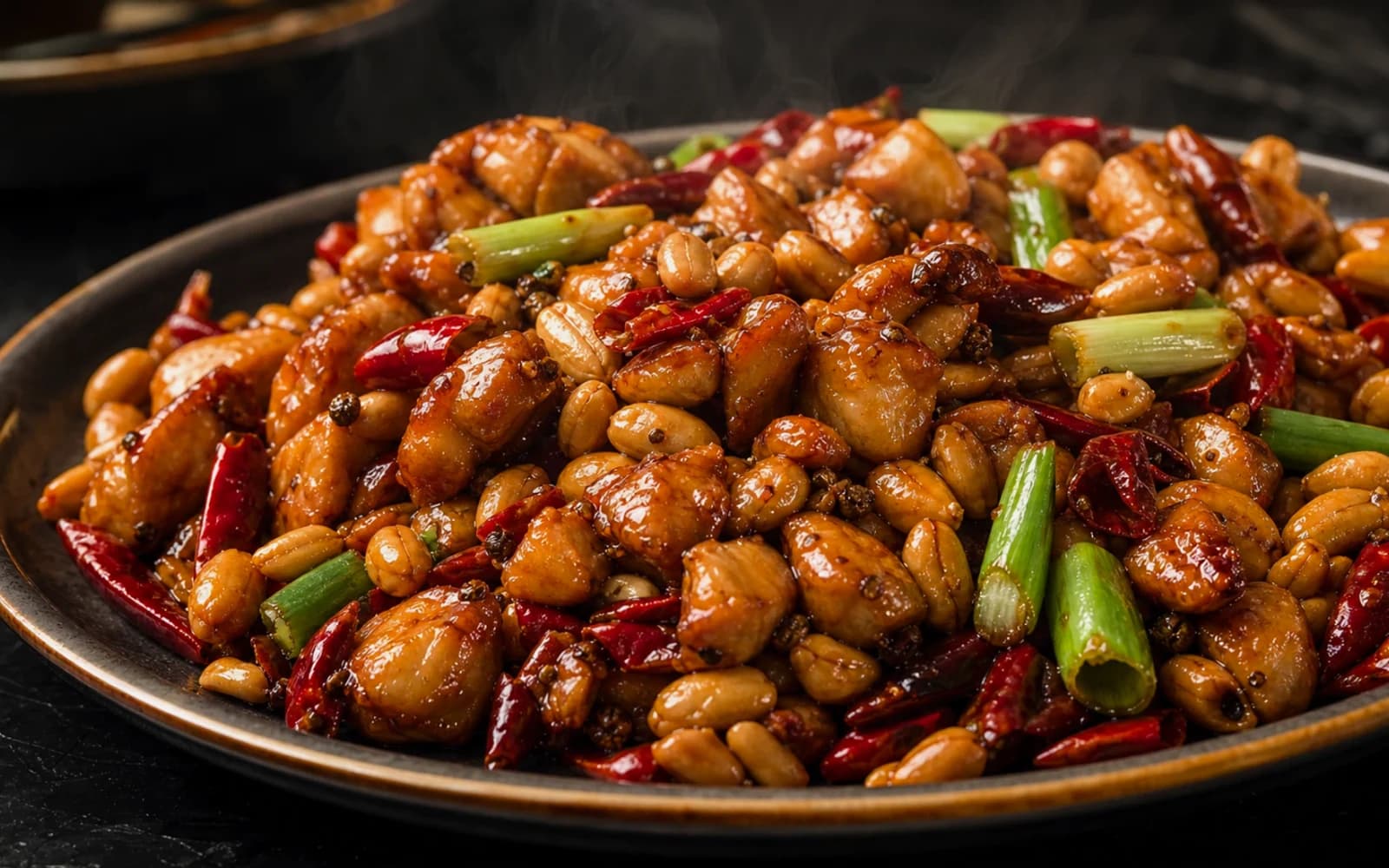
Let's be honest: most people who cook Kung Pao Chicken at home end up with leftovers. And most people who eat those leftovers the next day are disappointed. The peanuts have gone from crunchy to something resembling wet cardboard. The sauce, which was glossy and clinging when it hit the plate, has separated into a thin, watery layer on top and a gummy paste on the bottom. The chicken, if you used thigh meat, might have held up okay — but if you used breast, it's now dry enough to make you regret every decision that led to this moment.
This happens because Kung Pao Chicken is a dish designed for immediacy. Every component — the crisp peanuts, the velvety chicken, the fast-flash sauce that coats each cube — has a shelf life measured in minutes, not hours. The dish doesn't "keep." It's meant to be eaten standing over the wok, or at least within ten minutes of leaving it.
But life happens. You made too much. Your eyes were bigger than your stomach. The delivery order was family-sized and you're one person. So here's the actual, honest guide to dealing with leftover Kung Pao Chicken — not the idealized "just make less" advice you get from recipe blogs, but the real stuff: what works, what doesn't, and when to just throw it away and order a pizza.
The Science
Why peanuts go soft (and why there's nothing you can do about it).
Peanuts are hygroscopic. That's the scientific way of saying they absorb moisture from the air — or, in this case, from the sauce they're sitting in. A fresh, dry-roasted peanut has a moisture content of about 1.5-3%. After sitting in Kung Pao sauce overnight in the refrigerator, it can climb to 12-15%. At that point, the peanut hasn't "gone bad" in a food safety sense — it's just texturally ruined. The crunch is gone, and no amount of reheating will bring it back. You cannot re-crisp a peanut that has absorbed sauce. The cell structure has changed irreversibly.
Here's the one trick that actually works: store the peanuts separately. Before you mix the finished dish, scoop out a portion of the peanuts and set them aside. Store the chicken and sauce in one container, the peanuts in another (a small paper bag is ideal, since it breathes). When you reheat, add fresh peanuts or the ones you saved. If you've already mixed everything together and the peanuts are soggy... pick them out. It's tedious, but it's better than eating them. Replace with a handful of freshly dry-roasted peanuts from the pantry. Nobody will know.
Storage Rules
How to actually store it.
Get the food into the refrigerator within two hours of cooking. The danger zone — the temperature range where bacteria multiply fastest — is between 40°F and 140°F (4°C to 60°C). If your kitchen is warm, that two-hour window shrinks to one hour. Don't put a giant hot container directly into the fridge — it'll warm up everything around it. Portion the leftovers into shallow containers so they cool faster. Airtight is important, partly to prevent the Kung Pao smell from infiltrating your butter and your cheesecake.
If you know you'll have leftovers before you cook, consider this: make extra chicken and extra sauce, but cook only what you'll eat. Store the prepped, uncooked chicken cubes (marinated and velveted) and the sauce separately in the fridge. Tomorrow, you can do a fresh two-minute stir-fry that'll taste 90% as good as tonight's version. The peanuts go in fresh. The wok is already seasoned. It's almost zero effort and the result is dramatically better than reheating yesterday's fully assembled dish.
Reheating Method
The skillet vs. the microwave.
The microwave is convenient and wrong. It heats unevenly, steams the chicken instead of re-crisping it, and does nothing to restore the sauce's texture. It's better than eating cold Kung Pao out of the container at midnight with a fork (we've all been there), but it's not good.
The skillet method: get a pan — preferably your wok, but a regular nonstick skillet works — screaming hot. Add half a teaspoon of neutral oil. Dump in the leftovers. Stir constantly for sixty to ninety seconds. You're not recooking the dish; you're driving off the excess moisture that accumulated in the fridge and giving the chicken's exterior a chance to crisp up again. If the sauce has thickened to a paste, add a tablespoon of water or Shaoxing wine and stir to loosen. Finish with fresh peanuts and, if you have them, a few thin slices of fresh scallion for color and bite.
One thing that genuinely helps: scrape the leftover sauce out of the container with a spatula and add it to the pan separately from the solids. Let it bubble for ten seconds on its own to evaporate some of the water, then toss the chicken through it. You're essentially re-glazing the dish.
Safety
When to throw it away.
The USDA says cooked poultry is good for three to four days in the fridge. But you should trust your senses more than a calendar. If the chicken smells sour or the sauce has developed a film, toss it. If the container was left on the counter for more than two hours after dinner — and if that dinner involved rice — be extra careful. Cooked rice at room temperature is a breeding ground for Bacillus cereus, a bacterium that produces toxins reheating can't destroy. Rice-related food poisoning is surprisingly common and surprisingly unpleasant.
Freezing is an option but a mediocre one. Starch-thickened sauces don't freeze well — they separate and turn watery on thawing. The chicken's texture degrades. If you freeze, do it immediately after cooking (don't let it sit in the fridge for two days first), use a freezer-safe container with as little air as possible, and consume within a month. Thaw overnight in the fridge. Reheat in a hot skillet, not the microwave. Accept that it will never be as good as fresh, but it will be edible.
FAQ
Leftover questions, answered.
How long does Kung Pao Chicken last in the fridge?
Three to four days in an airtight container, according to USDA guidelines. But realistically, the peanuts will be noticeably softer after the first day and unpleasantly chewy after two. If you know you'll have leftovers, consider storing the peanuts separately before mixing them in.
Can you freeze Kung Pao Chicken?
You can, but I don't recommend it. The sauce doesn't freeze well — starch-thickened sauces tend to separate and get watery when thawed. The peanuts will turn to mush during the freeze-thaw cycle. If you must freeze it, do it within two hours of cooking, use a freezer-safe container, and eat within one month. Thaw in the fridge overnight, not on the counter.
Why do the peanuts go soft?
Peanuts are hygroscopic — they absorb moisture from their environment. In a container of Kung Pao Chicken, the sauce's moisture gradually migrates into the peanuts, turning them from crunchy to chewy. This is why restaurants add peanuts at the very end of cooking and why the dish is meant to be eaten immediately. There's no way to re-crisp peanuts once they've absorbed sauce moisture, which is why the best strategy is storing them separately.
What's the best way to reheat Kung Pao Chicken?
A hot wok or skillet, not the microwave. Heat a dry pan over high heat until it's lightly smoking, add a teaspoon of oil, then dump in the leftovers. Stir constantly for 60-90 seconds. The high heat re-crisps the chicken's exterior and drives off excess moisture. If the sauce has thickened too much, add a splash of water or Shaoxing wine. The microwave works in a pinch — cover loosely, use 50% power, and stop every 30 seconds to stir — but it will never give you back the texture.
How do I know if leftover Kung Pao Chicken has gone bad?
Three signs: smell (sour or off odors mean toss it), texture (if the chicken feels slimy), and the rice test (if you served it with rice and the rice has been at room temperature for more than two hours, the whole container is suspect — rice grows Bacillus cereus faster than almost anything). When in doubt, throw it out. Food poisoning from leftover Chinese food is not a good story.