Culture & dining
What Is Congee? Congee vs Jook, Explained (Plus Turkey Jook After Thanksgiving)
You see "congee" on a dim sum menu. Your friend calls the same bowl "jook." The grocery store box says "rice porridge." So what is congee, and are these three different things? Short answer: no. Congee is rice simmered in lots of water until the grains break down into a soft, silky porridge, and jook is simply the Cantonese name for that same bowl. Below: toppings, how to order it, and turkey jook after Thanksgiving.
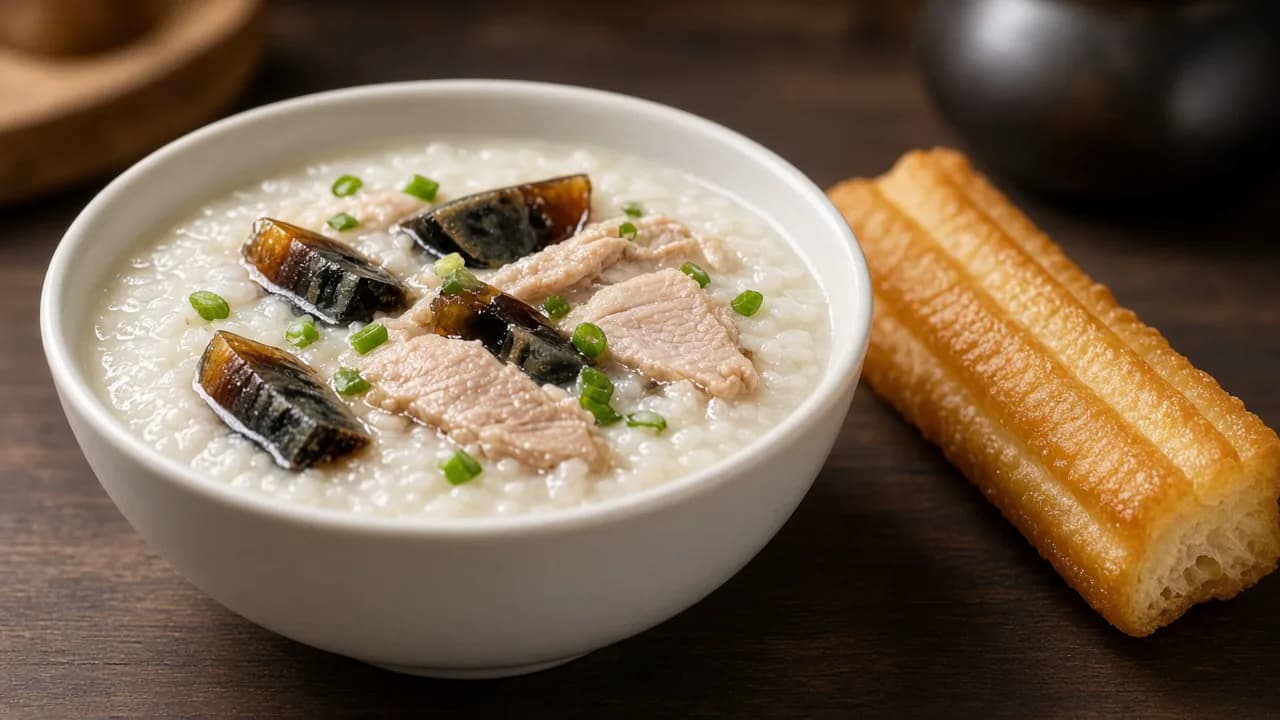
What Is Congee? (粥, Zhōu / Jook)
Congee is rice cooked low and slow in a lot more liquid than you'd use for regular rice. The grains swell, split open, and melt into the liquid until you get something between a thick soup and a loose porridge. In Mandarin it's zhōu (粥, rice porridge). In Cantonese it's jook (粥, the Cantonese name for congee). Same character, two pronunciations.
The English word "congee" is generally traced to the Tamil word kañci, which is a nice reminder that rice porridge is a pan-Asian idea, not one country's invention.
On its own, plain congee is mild on purpose. Think of it as a blank canvas. The flavor comes from what you cook into it (chicken, fish, pork) and what you pile on top at the end.
Congee vs Jook vs Rice Porridge: Same Bowl, Different Names
Here's the congee vs jook question settled in one table, plus the cousins you'll run into on other menus.
| Name | Language or region | Where you'll see it | Notes |
|---|---|---|---|
| Congee | English | Dim sum menus, takeout apps, recipe sites | The umbrella English word |
| Zhōu (粥) | Mandarin | Menus in Mandarin-speaking restaurants | Same dish, Mandarin reading |
| Jook (粥) | Cantonese | Hong Kong-style cafes, Cantonese family kitchens | Same dish, Cantonese reading |
| Rice porridge | English | Grocery packaging, instant cups | Plain descriptive label |
| Okayu | Japanese | Japanese home cooking | Often simpler, often for sick days |
| Juk | Korean | Korean restaurants and juk shops | Korea's own rice porridge tradition |
| Cháo | Vietnamese | Vietnamese restaurants | Vietnam's take, often with chicken or fish |
| Lugaw / arroz caldo | Filipino | Filipino restaurants and homes | Arroz caldo is the ginger-chicken version |
So congee vs jook isn't a real versus. It's one bowl with two names, depending on who's ordering. The rest are cousins with their own styles, not a ranking.
What Is Congee Made Of?
The base is short: rice and water or broth. That's it. Some cooks use only white rice, some toss in a little glutinous rice for extra body, and ratios vary by family.
What turns it into a meal is the add-ins and toppings:
- Cooked into the pot: chicken, sliced fish, pork, dried scallops, or a stock made from bones
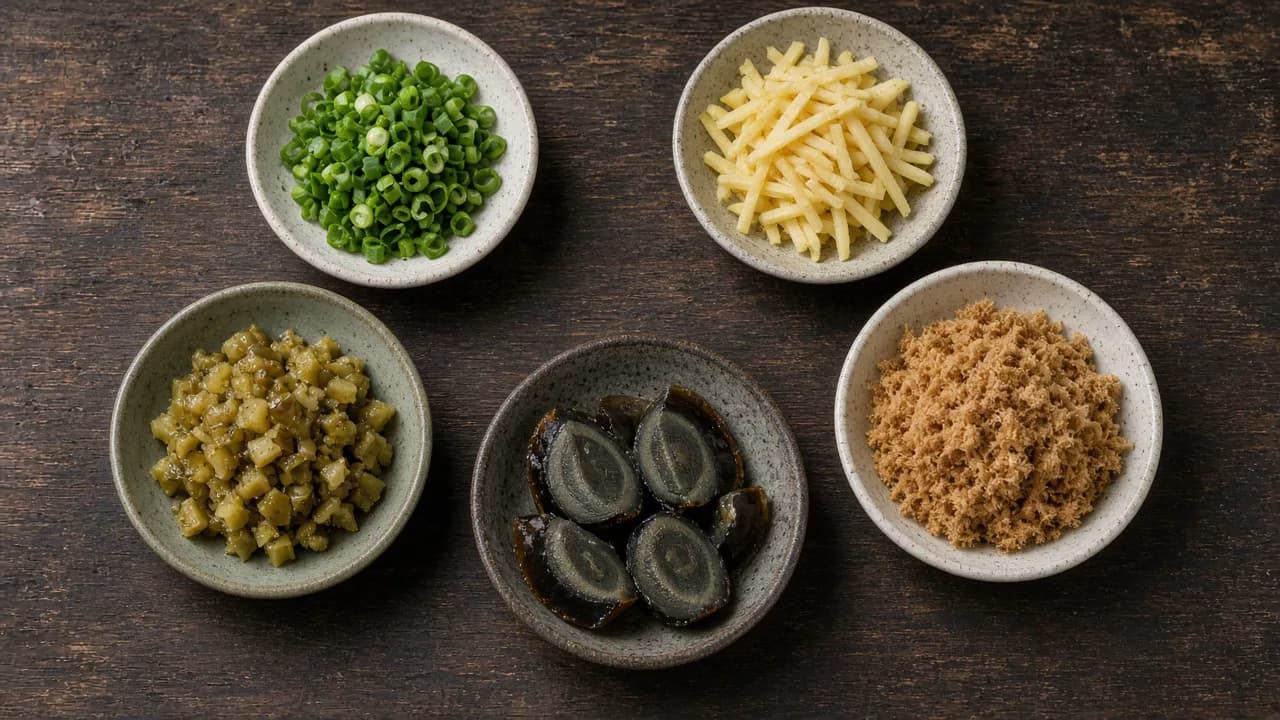
- pídàn (皮蛋, century egg): the dark, jelly-like preserved egg in the classic century egg and pork congee
- yóutiáo (油条, fried dough stick): torn up and dunked, like croutons in soup
- zhàcài (榨菜, pickled mustard stem): salty, crunchy, and great for waking up a plain bowl
- Pork floss (肉松, ròusōng): fluffy, sweet-savory shredded pork
- The basics: sliced scallions, ginger matchsticks, white pepper, a splash of soy sauce, a few drops of sesame oil
If you've ever wondered what is congee made of at a restaurant that makes it taste so much richer than yours, the answer is usually the stock and the long simmer, not a secret ingredient.
What Does Congee Taste Like?
Plain congee tastes like warm, softly salted rice. Creamy without any dairy. If you're expecting a bold sauce like your usual takeout, it'll feel almost quiet at first.
Then you add toppings and it wakes up. Ginger brings bite. White pepper brings warmth. Century egg brings a deep, savory, slightly funky note. Yóutiáo brings crunch that slowly goes soft. A good bowl of chicken or fish congee tastes like the best chicken soup you've had, only thicker and more comforting.
How to Order Congee at a Chinese Restaurant or Dim Sum Spot
Congee shows up at dim sum, at Hong Kong-style cafes, and at dedicated congee shops in bigger North American cities. You'll see it on breakfast menus a lot, because in many Chinese households it's a savory breakfast.
A few easy first orders:
- Century egg and pork congee (皮蛋瘦肉粥): the classic. If you only try one, try this.
- Fish congee: sliced fish cooked gently in the hot porridge. Clean and light.
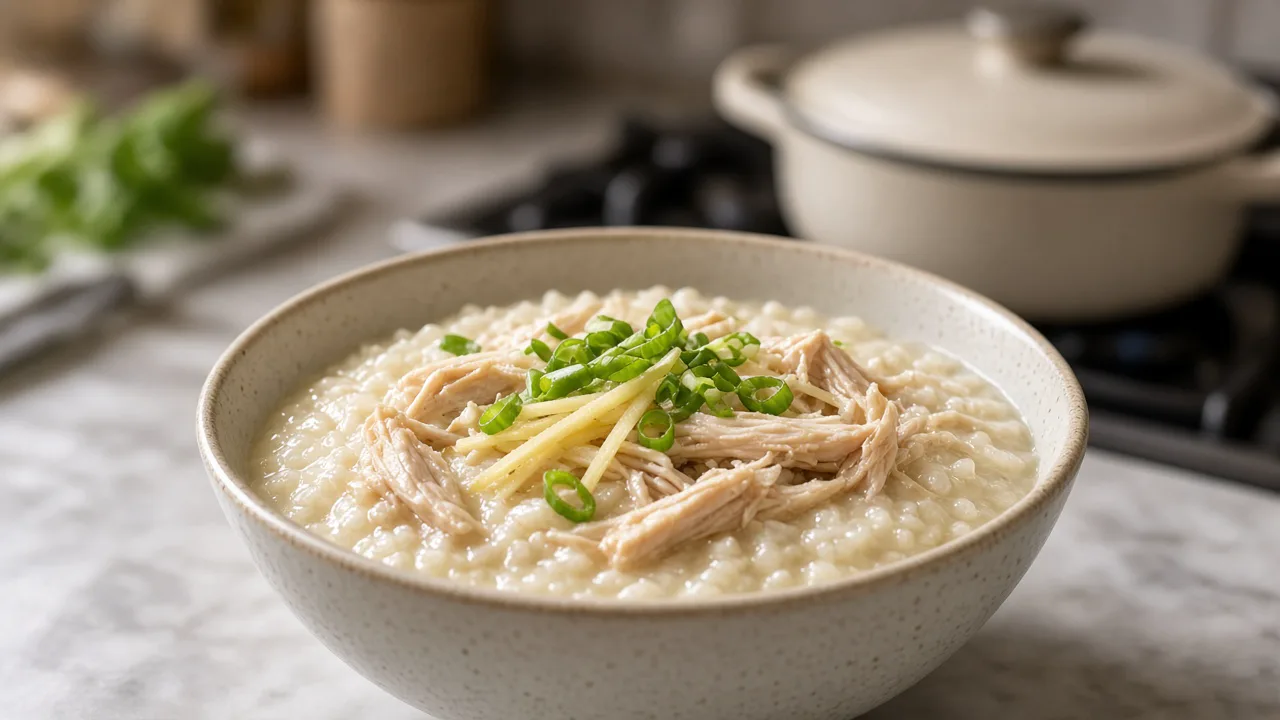
- Chicken congee: the safest pick if century egg sounds like too much.
- Plain congee plus sides: order it plain and add yóutiáo or pickles on the side.
- Always ask for yóutiáo. Dunking is half the fun.
If you're doing a full dim sum spread, congee is a nice anchor next to the dumplings. Not sure how that menu works? Start with dim sum vs soup dumplings. And if you're mostly a takeout person who already knows kung pao chicken, a small bowl of plain congee is a pretty great side for anything saucy.
Looking for a spot nearby? Try our Chinese food near me page as a starting point.
Turkey Jook: A Chinese-American Thanksgiving Leftover Tradition
Here's where congee gets very North American. In 2026, Thanksgiving lands on November 26. And in a lot of Chinese American homes, including plenty in Hawaii, the turkey carcass doesn't go in the trash. It goes in a stockpot.
The idea behind turkey jook is simple:
- Pick off the leftover meat and set it aside.
- Simmer the carcass in water to make a stock.
- Strain it, add rice, and cook low and slow until it turns silky.
- Stir the meat back in, then finish with ginger, scallions, and white pepper.
That's it. It's the same instinct as American turkey soup, just with a different bowl at the end. If you grew up with chicken soup on the day after a holiday, this will feel familiar. (It's the same comfort-soup family we talk about in our look at chicken and dumplings vs Chinese dumplings.)
Making Congee With Leftover Rice (Quick Version)
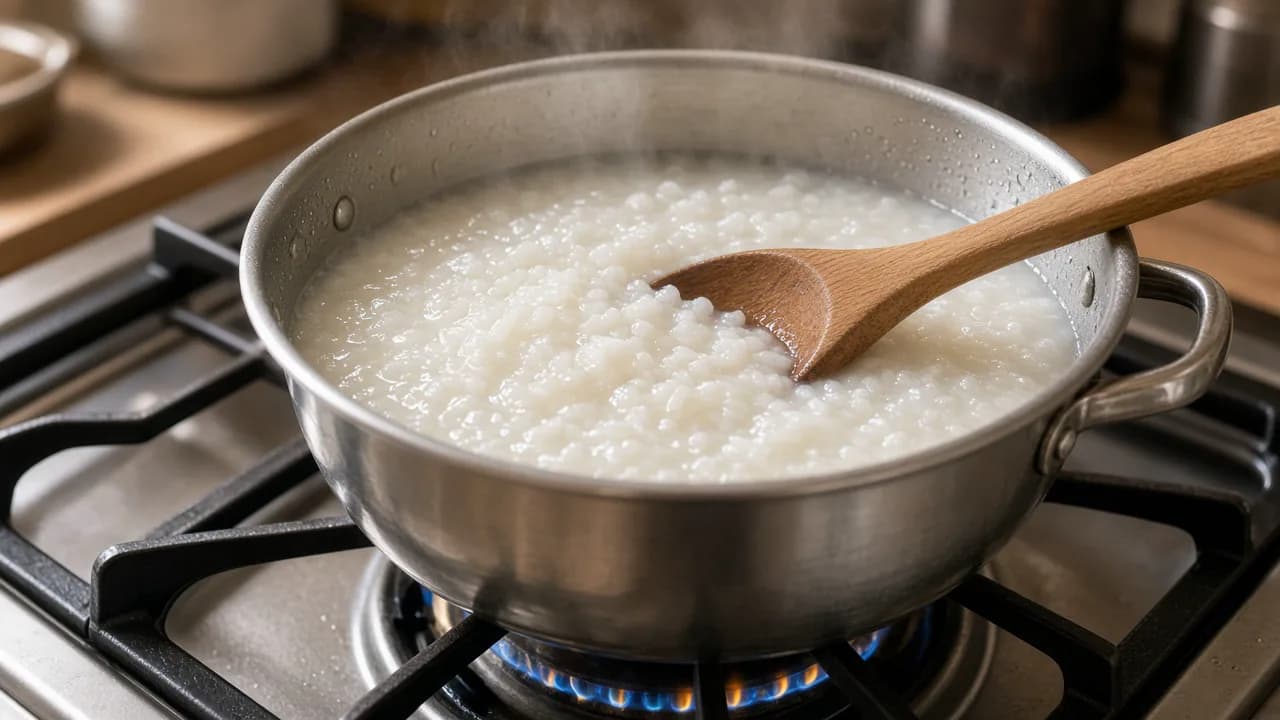
You don't need hours to make a decent bowl. Congee with leftover rice is the weeknight shortcut, because the grains are already cooked and break down faster.
- Put cooked rice in a pot with plenty of water or broth.
- Bring it to a simmer and stir now and then, breaking up clumps.
- Keep it going until the texture turns soft and porridge-like. Add more liquid if it gets too thick.
- Season with a little salt or soy sauce, then top with whatever you've got.
A rice cooker with a porridge setting or an Instant Pot works too. Check your machine's manual for the right setting.
One food safety rule matters here. Cooked rice is a perishable food, and USDA guidance is to refrigerate leftovers within 2 hours. Same goes for that turkey. Reheat everything until it's steaming hot all the way through. We've got more tips on storing Chinese takeout leftovers, and the official rules live at FoodSafety.gov.
Is Congee Healthy?
Honest answer: it depends on the bowl. Congee has a reputation as gentle, warm, easy-to-eat food, and a plain bowl is pretty simple. But the toppings and the stock decide a lot. Salty pickles, soy sauce, pork floss, and fried dough all add up, and portion size matters.
So treat congee like any other dish. Lighter add-ins and lots of scallions and ginger make a lighter bowl. A loaded bowl with yóutiáo is more of a treat. It's the same logic we use when people ask is kung pao chicken healthy: the dish name matters less than how it's made.
Feeling under the weather and stuck between soup orders? Our hot and sour soup vs egg drop soup guide covers the other comfort orders on a takeout menu.
Allergens and Food Safety Notes
Plain congee is simple, but toppings and add-ins bring common allergens:
- Wheat/gluten: yóutiáo and most soy sauce
- Soy: soy sauce
- Egg: century egg and salted egg
- Fish and shellfish: fish congee, dried shrimp, dried scallops
- Peanuts: some congee styles and side dishes
- Sesame: sesame oil drizzled on top
If you have a food allergy, ask staff before ordering and read any allergen info the restaurant provides. At home, refrigerate leftovers within 2 hours and reheat until hot all the way through.
FAQ
What is congee?
Congee is Chinese rice porridge. Rice is simmered in plenty of water or broth until the grains break down into a smooth, soft texture. It's eaten plain or with toppings like ginger, scallions, century egg, and fried dough sticks. In Mandarin it's zhōu, and in Cantonese it's jook. Many families eat it for breakfast, as a light meal, or on sick days.
Are congee and jook the same thing?
Yes. Jook is the Cantonese name for congee, and both refer to the same rice porridge. The Chinese character (粥) is the same; it's just read differently in Mandarin (zhōu) and Cantonese (jook). Korean juk is a separate, related tradition with its own styles, so it's a cousin rather than the same dish.
What is congee made of?
The base is just rice and water or broth, cooked slowly until silky. Restaurants and families often cook in chicken, fish, or pork, or use a bone stock for depth. Toppings do the rest: scallions, ginger, white pepper, soy sauce, sesame oil, pickled mustard stem, pork floss, century egg, and torn fried dough sticks.
Is congee just overcooked rice?
Not really. Overcooked rice is regular rice that went mushy by accident. Congee is cooked on purpose with much more liquid, so the grains break down into a smooth porridge. The texture is the point. It's closer to a thick soup than to a pot of rice that sat on the stove too long.
Is congee Chinese or Filipino?
Rice porridge shows up across a lot of Asian food cultures. Chinese cooking calls it zhōu or jook. Filipino cooking has lugaw and arroz caldo. Japan has okayu, Korea has juk, and Vietnam has cháo. Each has its own style and toppings. There's no need to pick a winner; they're related comfort foods.
Can you make congee with leftover rice?
Yes, and it's faster than starting from raw rice. Simmer cooked rice in plenty of water or broth, stirring and breaking up clumps until it turns soft and porridge-like. Just make sure the leftover rice went into the fridge within 2 hours of cooking, as USDA guidance advises, and reheat the finished congee until it's hot all the way through.
Is congee healthy?
It depends on what goes in it. A plain bowl is simple and easy to eat, which is why it has a gentle reputation. Salty toppings, soy sauce, pork floss, and fried dough change the picture, and portion size matters too. Lighter add-ins like ginger and scallions keep it lighter.
Why do people eat congee when they're sick?
In many Chinese families, congee is a go-to sick-day food because it's warm, mild, and easy to eat when you don't feel like much. It's a comfort habit, a lot like chicken soup in many American homes. It isn't a medicine, so follow your doctor's advice if you're actually unwell.
The Bottom Line
So, what is congee? It's rice simmered until silky, dressed up with whatever you love, and called jook if you're ordering in Cantonese. Congee vs jook was never a real fight. Try a bowl of century egg and pork at your next dim sum, then save that turkey carcass on November 26.
Hungry for more menu name confusion? Start with kung pao vs general tso, kung pao vs szechuan, hunan chicken vs kung pao chicken, and kung pao chicken vs orange chicken, or browse our Chinese food guide.