Dumplings & freezer meals
Gyoza vs Potstickers: What's the Difference on a Freezer Aisle?
You are standing in the frozen foods aisle at Trader Joe’s or Costco on a Sunday afternoon, staring into a chilly glass case lined with colorful bags. One package says gyoza, the box next to it is labeled potstickers, and another simply reads pan-fried dumplings. When you examine the pictures on the front, they look almost identical: golden-brown crescents with pleated edges and a crisp bottom crust. When it comes to gyoza vs potstickers, are you looking at two totally different dishes, or did grocery brands just invent two names for the exact same weeknight comfort food?
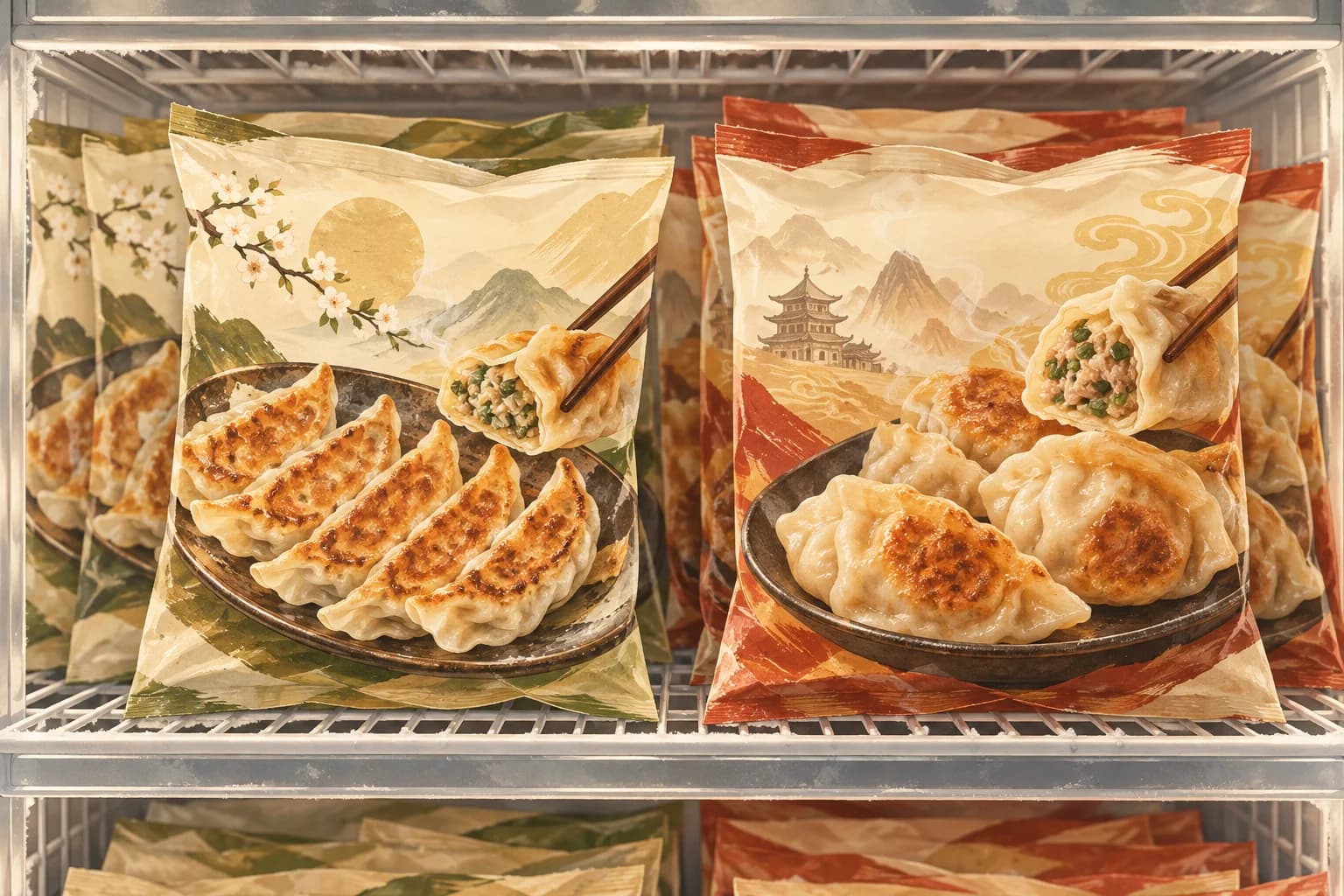
Here is the short answer: gyoza and potstickers are close cousins within the broader Chinese dumpling family, but they emphasize different textures and origins. Gyoza (ギョーザ) is the Japanese adaptation of Chinese dumplings, characterized by thinner, delicate wrappers, a finely minced filling, and a pronounced punch of garlic. Potstickers are the English menu translation of Chinese guōtiē (锅贴), known for a heartier, slightly chewier wheat wrapper and a substantial meat-and-cabbage center.
Because North American retail brands frequently swap these labels, you should not judge a dumpling purely by its English title. Here is how to tell them apart, how they traveled across Asia, and which bag to toss into your shopping cart tonight.
Gyoza vs Potstickers at a Glance
Before untangling historical routes or firing up your skillet, use this quick reference table to compare the core culinary differences:
| Feature | Gyoza (ギョーザ) | Potstickers (Guōtiē / 锅贴) |
|---|---|---|
| Cultural Origin | Japan (adapted from Northern Chinese dumplings) | China (specifically Northern pan-fried jiǎozi) |
| Wrapper Thickness | Very thin, delicate, translucent when cooked | Medium to thick, hearty, pleasantly chewy |
| Filling Texture | Finely ground paste; seamless, uniform bite | Coarsely minced pork or chicken, crisp cabbage pieces |
| Dominant Flavor | Garlic-forward, ginger, mild soy, sesame | Balanced ginger, scallion, white pepper, rich pork jus |
| Classic Cooking Style | Pan-fry bottom, steam with water, finish crisp | Sear bottom in skillet, steam with water/slurry, crisp |
| Crispy Skirt Option | Common as hanetsuki gyoza (crispy lace "wings") | Traditional starch slurry creates a crunchy bottom sheet |
| Dipping Sauce | Equal parts soy sauce and rice vinegar + chili oil (rāyu) | Black rice vinegar (Chinkiang), soy sauce, shredded ginger |
| Freezer Aisle Label | Often tagged Japanese-Style Gyoza | Often tagged Chinese-Style Potstickers or Dumplings |
| Best For | Light appetizers, izakaya snacks, ramen pairings | Satisfying meal-sized bites, takeout-style comfort |
Names & Origins: 饺子, 锅贴, and ギョーザ
To understand why American grocery aisles are so crowded with overlapping labels, you have to follow a linguistic journey across East Asia and over the Pacific Ocean.
                  ┌──────────────────────────────┐
                  │    Jiǎozi (饺子, Dumplings)   │
                  │   Northern Chinese Ancestor   │
                  └──────────────┬───────────────┘
                                 │
         ┌───────────────────────┴───────────────────────┐
         ▼                                               ▼
┌──────────────────────────────┐             ┌──────────────────────────────┐
│  Guōtiē (锅贴, Potstickers)  │             │   Gyoza (ギョーザ, Japanese)  │
│ Pan-fried Chinese specialty  │             │ Thinner wrapper, garlic kick │
│  "Sticks to the wok/pan"     │             │  Post-WWII izakaya staple    │
└──────────────┬───────────────┘             └──────────────┬───────────────┘
               │                                            │
               └───────────────────────┬────────────────────┘
                                       ▼
                       ┌──────────────────────────────┐
                       │  North American Supermarket  │
                       │ Trader Joe's • Costco • Apps │
                       └──────────────────────────────┘
From Jiǎozi to Guōtiē
In China, filled pastry pockets are called jiǎozi (饺子, Chinese dumplings). For centuries, Northern Chinese cooks have wrapped seasoned minced pork, lamb, or beef with cabbage into rolled circles of wheat dough, pinching the seams into crescent moon pouches. While many dumplings are gently simmered in boiling water (shuǐjiǎo) or steamed in bamboo baskets (zhēngjiǎo), pan-frying creates guōtiē (锅贴, potstickers / pan-fried dumplings). The poetic name literally translates to "pot stick," honoring the way the raw dough adheres to an oiled cast-iron skillet while the base toasts to a crisp golden seal.
How Guōtiē Became Gyoza
The word gyoza (ギョーザ) is the Japanese phonetic pronunciation of the Northern Chinese dialect word for jiǎozi. During the mid-twentieth century, Japanese soldiers and residents returning from northeastern China brought the love of pan-fried northern dumplings back to Japan. Japanese cooks adapted the recipe for local neighborhood ramen shops and casual drinking taverns (izakaya):
- They rolled the wheat wrappers significantly thinner.
- They ground the pork and cabbage filling into a velvety, tender texture.
- They introduced a bolder garlic profile to create an appetizer designed to pair with ice-cold draft beer.
Why Americans Say "Potstickers"
When mid-century Chinese-American restaurants introduced pan-fried guōtiē to North American diners, the literal translation "potsticker" caught on immediately. It was descriptive, memorable, and easier for English speakers to pronounce than guōtiē. Over time, American supermarkets began using "potstickers" as an umbrella phrase for almost any crescent-shaped dumpling with a browned bottom, while "gyoza" was reserved for Japanese-branded products or grocery chains leaning into specialty Asian packaging.
What Is Gyoza?
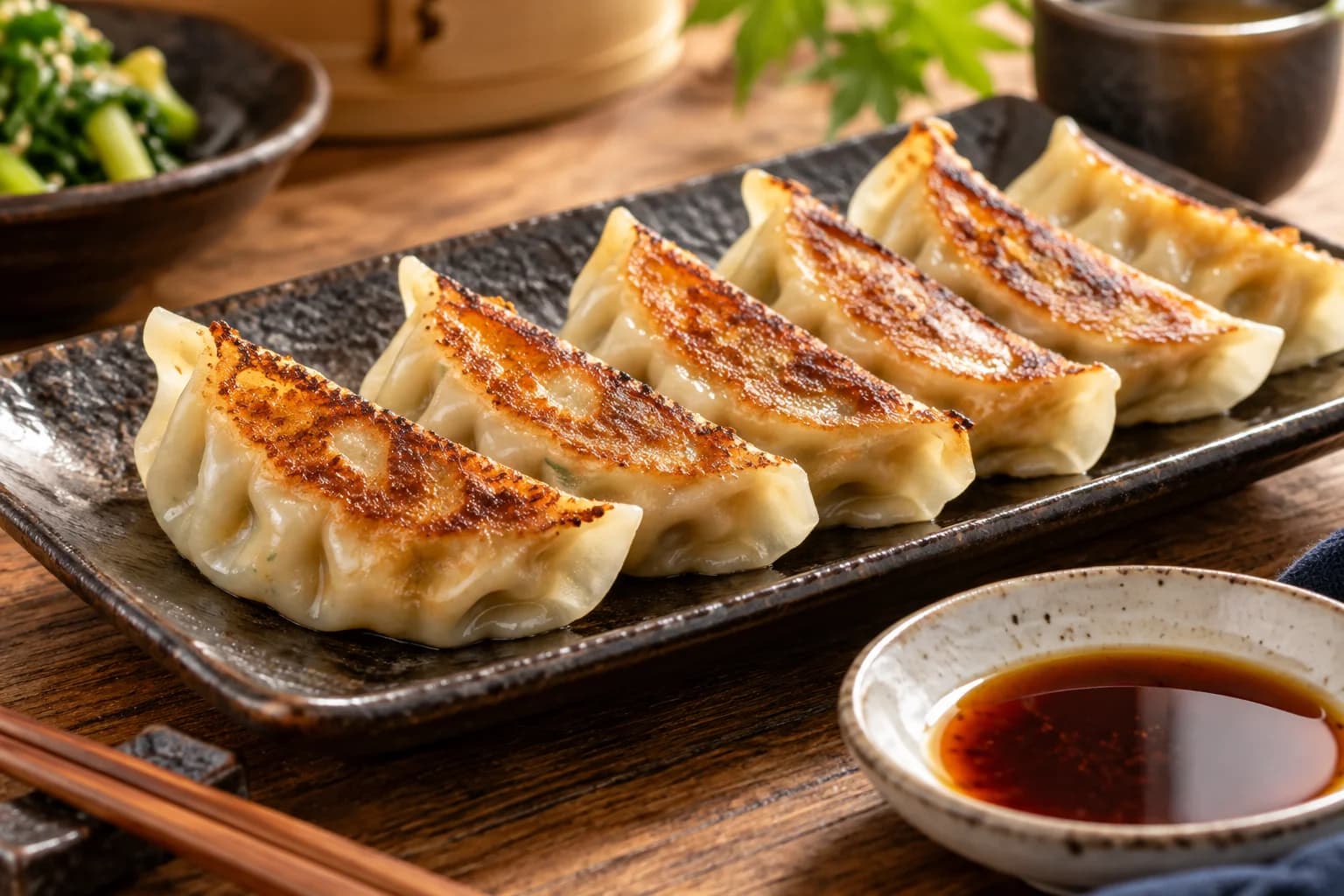
When you bite into a properly prepared gyoza, the first thing you notice is the contrast between the paper-thin wrapper and the juicy filling. Because the dough skin is so delicate, the pleated edges steam quickly into a slippery, silky noodle-like texture, while the flat base crisps up into a glass-brittle sheet.
The Hanetsuki Phenomenon
If you have ever ordered gyoza at an authentic Japanese izakaya or spotted trendy boxes at warehouse clubs, you may have encountered hanetsuki gyoza (羽根つき, "with wings" or crispy lace gyoza). Instead of adding plain tap water to the skillet during the steaming phase, the cook pours in a light slurry of water and potato starch or flour. As the water boils away, the residual starch toasts on the pan surface, forming a delicate, honeycomb-like crispy lattice that connects all the dumplings together into a single crunchy sheet. Once the filling is fully cooked and excess liquid has evaporated, carefully invert the pan onto a plate using dry, heat-resistant oven mitts, then crack through the delicate "wings" with your chopsticks.
What Is a Potsticker?
A traditional Chinese potsticker is a more substantial culinary experience. Chinese guōtiē wrappers are rolled from fresh, warm-water wheat dough, giving them a distinct chewiness (kǒugǎn) reminiscent of hand-pulled noodles.
Inside, the filling is less emulsified than gyoza. You can distinctly taste coarse-ground pork, ribbons of Napa cabbage, aromatic scallions, and toasted sesame oil. The cooking method typically utilizes a heavy-bottomed wok or flat cast-iron pan. The dumpling's thicker wrapper allows it to hold substantial amounts of savory cooking juices (tāngzhī) without tearing, producing a hearty dumpling that can easily anchor a weeknight dinner alongside classic stir-fries.
Where Chinese Dumplings Fit In
It is easy to get caught up comparing these two pan-fried cousins, but remember that neither represents the entire dumpling universe. In Chinese home kitchens, boiled dumplings (shuǐjiǎo) eaten during Lunar New Year feasts are celebrated for their pure wheat flavor and tender, comforting broth.
Furthermore, diners frequently confuse northern Chinese dumplings with southern Cantonese morning tea specialties. We explore that specific regional boundary in our comprehensive guide to dim sum vs dumplings . While guōtiē and gyoza feature rolled wheat skins, dim sum items like har gow rely on translucent wheat-and-tapioca starches steamed inside bamboo steamers. For a broader overview of how regional dishes come together, check out our Chinese food guide .
Are Gyoza the Same as Dumplings? Are Potstickers Just Gyoza?
Because grocery shoppers encounter these terms interchangeably, let us answer the common People Also Ask queries directly:
Are gyoza the same as dumplings?
Yes, all gyoza are dumplings, but not all dumplings are gyoza. "Dumpling" is a vast worldwide category that encompasses everything from Polish pierogi and Italian ravioli to Chinese jiǎozi. Gyoza is simply the Japanese branch of the pan-fried dumpling branch.
Are potstickers the same as gyoza?
Technically, they are distinct culinary variations:
- Gyoza has a thinner skin, a finely ground, garlic-rich filling, and a lighter mouthfeel.
- Potstickers feature a thicker wrapper, a coarser meat-and-cabbage filling, and a more satisfying, chewy bite.
However, in the context of the American freezer aisle, are potstickers the same as gyoza in practical application? Frequently, yes. Major North American grocery distributors use the names almost interchangeably. A box labeled "pork potstickers" from one American brand might feature skin just as thin as a Japanese import labeled "gyoza."
Freezer-Aisle Tips: Trader Joe’s, Costco & Common Brands
When shopping for frozen dumplings, you do not need to memorize every brand's history. Instead, focus on reading the package details to find the exact meal experience you crave.
Decoding Trader Joe’s
Trader Joe's has made frozen Asian appetizers a staple of North American freezers. You will often see packages labeled as trader joe's gyoza (such as their popular pork, chicken, or vegetable varieties) right next to specialized seasonal boxes. When shopping:
- Look at the wrapper style: TJ's gyoza often features thinner skins; follow the package cooking directions rather than judging doneness by a crisp wrapper.
- Check the sauce inclusion: Many TJ's bags do not include a dipping sauce packet, meaning you will want to stir together soy sauce, rice vinegar, and chili crisp at home.
Navigating Costco and Warehouse Clubs
Warehouse freezers frequently stock bulk offerings of costco gyoza and potstickers, ranging from multi-pound bags of Ling Ling potstickers to massive boxes of Ajinomoto Japanese-style gyoza or imported crispy-wing varieties.
- Portioning: Most warehouse bags are resealable. Because dumplings can develop freezer burn if exposed to air, ensure the inner zip-seal is airtight after opening.
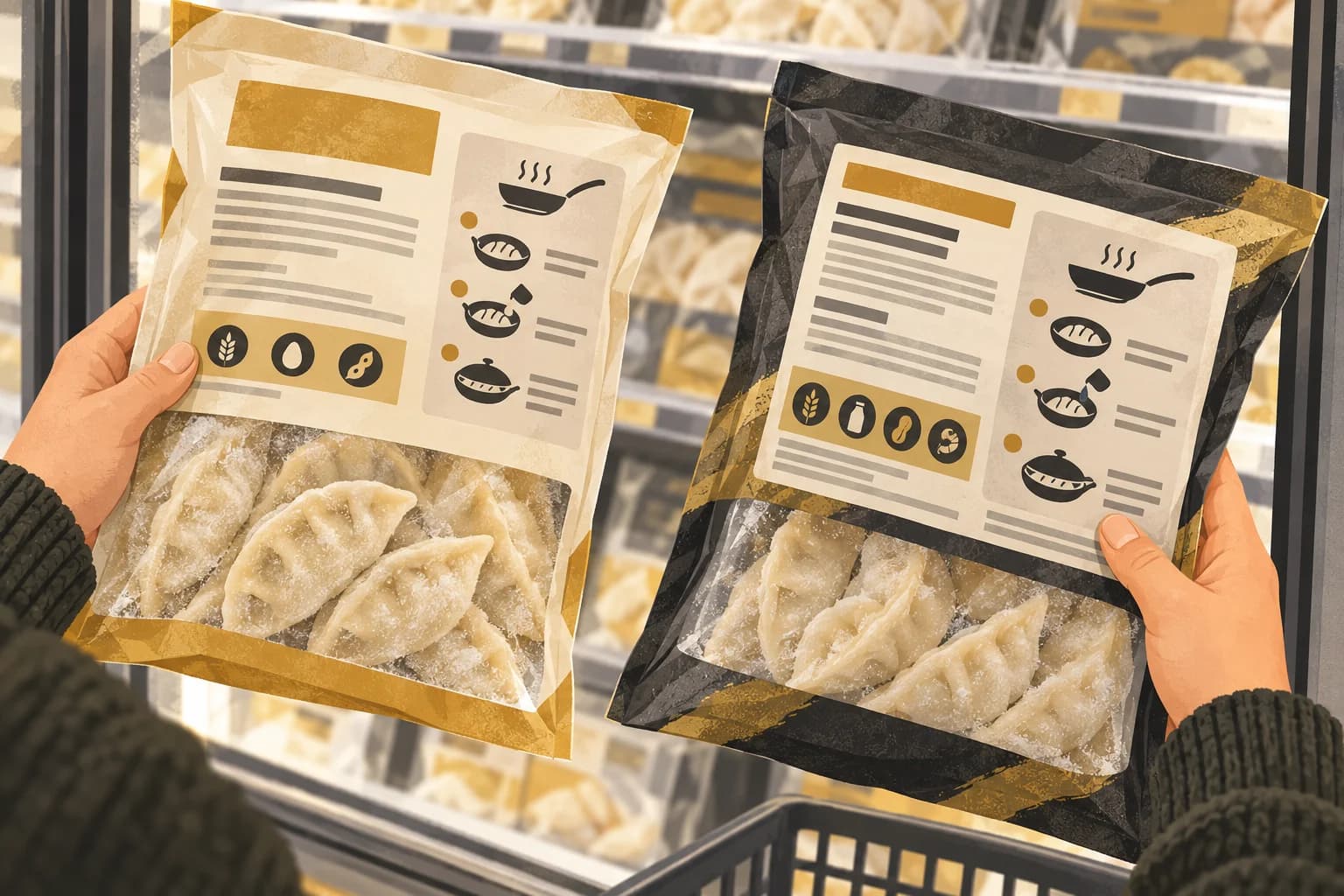
- Pre-Cooked vs. Raw: Frozen dumplings may be raw or fully cooked. Check the label and follow its cooking instructions; a browned wrapper or a Japanese-style brand name does not establish whether the filling is already cooked.
Checking Allergens & Ingredients
Whenever you purchase frozen dumplings, inspect the allergen declarations carefully:
- Wheat/Gluten: Almost all commercial gyoza and potsticker skins are wheat-based flour wrappers.
- Soy & Sesame: Soy sauce and toasted sesame oil are standard aromatic foundations in both fillings.
- Shellfish: While pork and chicken dominate North American freezers, certain traditional recipes incorporate dried shrimp or oyster sauce for umami.
- Eggs: Some commercial wrappers incorporate egg yolk for color and elasticity.
How to Cook Them from Frozen
Most frozen dumplings are designed to cook straight from the freezer, which helps preserve wrapper elasticity. Follow the specific package directions, including any thawing instructions.
While package directions vary by brand, the classic technique is the pan-steam-pan method:
- The Sear: Heat one or two tablespoons of neutral cooking oil in a non-stick skillet or seasoned cast-iron pan over medium-high heat. Arrange the frozen dumplings flat-side down in a circular pattern, leaving a little breathing room between each piece. Let them sizzle undisturbed for two to three minutes until the bottoms turn an even golden brown.
- The Steam: Holding the pan lid ready as a shield to block oil splatters, pour approximately one-quarter to one-third cup of water into the skillet. Immediately cover tightly with the lid and reduce the heat to medium. Follow your specific package directions for steaming time. Check the center of the largest dumpling with a food thermometer: poultry fillings must reach 74°C (165°F), and ground pork or beef fillings must reach 71°C (160°F), or any higher temperature required by the package.
- The Crisp: Remove the lid. You will see cloudy liquid bubbling around the dumplings. Continue cooking uncovered over medium heat until all the remaining water evaporates completely. A final drizzle of toasted sesame oil around the edges will crisp the browned bottoms back to perfection. Slide a thin spatula underneath and serve immediately!
When to Buy Which: Matching Your Meal
Which bag should you grab on your next grocery run? Match your selection to the rest of your dinner menu:
┌───────────────────────────────────────┬───────────────────────────────────────┐
│        If Your Meal Plan Is:          │          Recommended Choice:          │
├───────────────────────────────────────┼───────────────────────────────────────┤
│ Ramen, Miso Soup, or Japanese Curry   │ Gyoza (Thin wrapper, garlic punch)    │
│ Fried Rice or Chinese Takeout Night   │ Potstickers (Chewier, hearty bite)    │
│ Light Solo Lunch or Quick Snack       │ Gyoza (Quick steaming, delicate)      │
│ Hearty Dinner for Hungry Family       │ Potstickers (More filling per piece)  │
│ Spicy Sichuan Feast (Mapo / Dan Dan)  │ Either (Pair with cooling vinegar)    │
└───────────────────────────────────────┴───────────────────────────────────────┘
Pairing with North American Favorites
If you are staging an at-home Chinese takeout evening, potstickers feel right at home alongside sweet-and-savory classics. If you find yourself debating takeout legends like kung pao vs general tso or weighing kung pao chicken vs orange chicken , a plate of crispy-bottomed potstickers provides the ideal savory starter.
Craving bolder regional heat? If you love spicy chinese food and are curious about what does mapo tofu taste like , or want to serve tender noodles like dan dan noodles , balancing the meal with mild gyoza or pairing your dumplings with spicy kung pao vs szechuan chicken creates a dynamic dinner spread.
How to Build the Ultimate Dipping Sauce
Never serve either dumpling dry! A balanced dipping sauce cuts through the pan-fried oiliness:
- Classic Gyoza Dip: Mix equal parts light soy sauce and unseasoned rice vinegar, finished with a few drops of Japanese chili oil (rāyu).
- Northern Chinese Potsticker Dip: Combine Chinkiang black rice vinegar with a dash of light soy sauce, a small spoon of chili crisp, and paper-thin slivers of fresh raw ginger.
Health & Nutrition: How Do They Stack Up?
Shoppers frequently ask whether frozen gyoza or potstickers fit into a health-conscious diet, much like they evaluate whether is kung pao chicken healthy when dining out.
From a nutritional perspective, dumplings offer balanced macronutrients: protein from minced poultry or pork, carbohydrates from the wheat wrapper, and micronutrients from cabbage and aromatics.
Key nutritional considerations include:
- Cooking Method Matters Most: Steaming your frozen dumplings or pan-steaming them with a single measured teaspoon of heart-healthy oil keeps the meal light. Deep-frying them turns a wholesome appetizer into a calorie-dense snack.
- Filling Choices: Chicken and vegetable fillings generally have lower saturated fat profiles than traditional fatty pork fillings.
- Sodium Awareness: The largest contributor to sodium in a dumpling meal is often the dipping sauce. If you are watching sodium, use low-sodium soy sauce and increase the ratio of tangy rice vinegar and fresh ginger.
Leftovers and Reheating
If you cook a full bag of dumplings and cannot finish them, never discard the extras! Refrigerate cooked potstickers and gyoza in an airtight container at 4°C (40°F) or below within two hours, or within one hour if the room is above 32°C (90°F), and eat them within three days.
To revive their signature crunch without turning the dough rubbery, avoid the microwave. Instead, warm a skillet with a light brush of oil over medium-low heat, place the dumplings crispy-side down, add a single tablespoon of water, cover and heat until the center reaches 74°C (165°F), and then uncover until the bottom recrisps. For broader guidance on safely storing restaurant portions, consult our leftovers and storage guide .
Frequently Asked Questions
Are potstickers the same as gyoza?
While both are pan-fried crescent dumplings, gyoza is the Japanese version with a thinner skin, finely minced filling, and prominent garlic notes. Potstickers are the Chinese-American name for guōtiē, featuring a thicker, chewier dough wrapper and a coarser meat-and-cabbage filling.
Are gyoza the same as dumplings?
Yes. Gyoza is a specific style of dumpling originating from Japan. "Dumpling" is an overarching culinary category that includes boiled jiǎozi, steamed buns, pierogi, and gyoza.
What is hanetsuki gyoza?
Hanetsuki gyoza ("gyoza with wings") refers to dumplings cooked with a light flour or starch slurry poured into the pan. As the liquid evaporates during steaming, it leaves behind an ultra-crisp, delicate lace skirt connecting the dumplings.
Can potstickers be used as dumplings in soup recipes?
Yes. Although potstickers are designed for pan-frying, you can gently simmer them in chicken broth or miso soup. Keep in mind that thinner gyoza wrappers may break apart if boiled vigorously. Follow the package directions and gently simmer until the filling is fully cooked: 74°C (165°F) for poultry or 71°C (160°F) for ground pork or beef, or any higher temperature required by the package.
What is the difference between dumplings and American chicken and dumplings?
American Southern chicken and dumplings features rolled or dropped biscuit dough simmered directly inside a rich chicken stew without any meat filling. For a full breakdown of this naming confusion, read our guide on chicken and dumplings vs Chinese dumplings .
What do Americans call gyoza?
In the United States and Canada, gyoza is widely recognized by its Japanese name on restaurant menus, but grocery stores frequently label similar pan-fried dumplings as "potstickers" or "pan-fried dumplings."
The Takeaway: Next Time You Shop the Freezer Case
The debate over gyoza vs potstickers does not require picking a single winner. Both represent the ingenuity of home cooking: wrapping savory proteins and farm-fresh vegetables into comforting wheat dough to create a fast, delicious meal.
- Pick up gyoza when you crave thin wrappers, garlic-infused fillings, and a light accompaniment for noodle bowls.
- Reach for potstickers when you want satisfying chew, hearty pork-and-cabbage texture, and classic takeout comfort.
Before heading into the kitchen, explore our comparisons on egg roll vs spring roll and Chinese hot pot vs Korean hot pot to master every corner of your favorite Asian food aisles!