Vegetables & sides
Garlic Chives vs Green Onions: What to Buy for Chinese Cooking
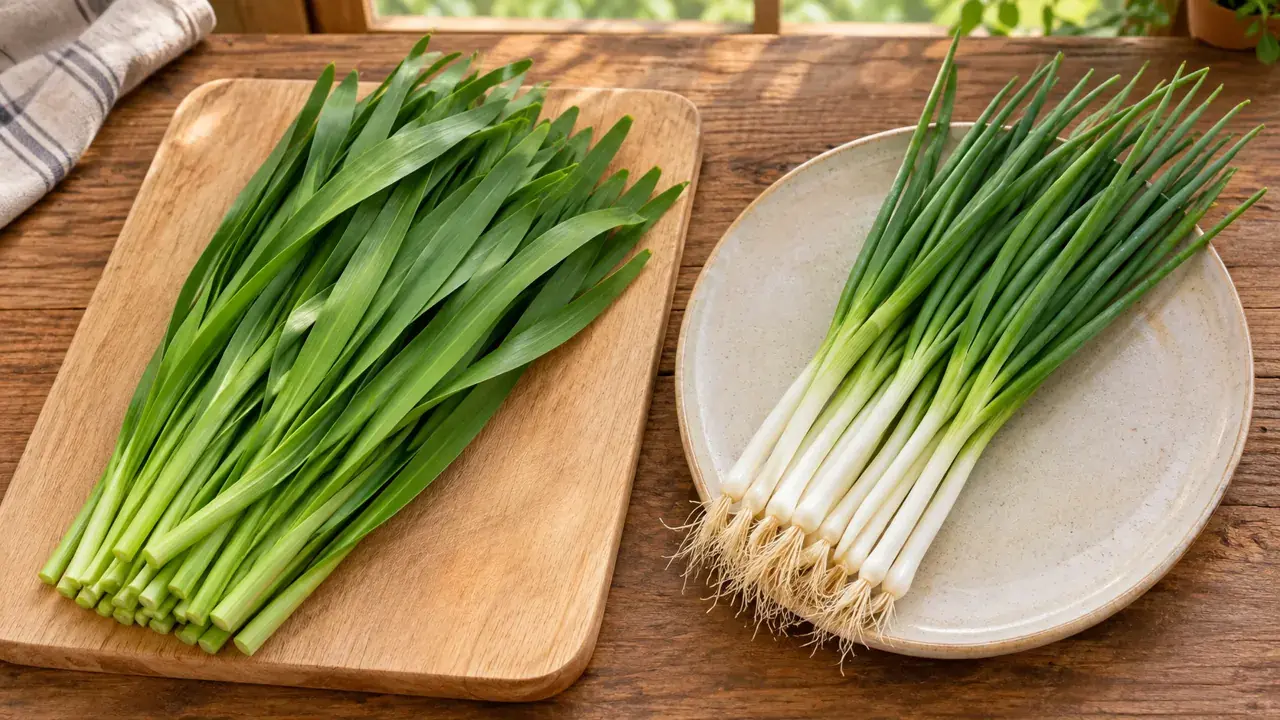
The quick answer to garlic chives vs green onions: Chinese garlic chives have flat green leaves and a garlicky aroma; green onions, also called scallions, have white lower stalks and an onion flavor. Garlic chives can make up a substantial part of a dumpling filling or stir-fry. Scallions often provide an aromatic base or garnish. Buy the one your recipe names. Swapping them changes the flavor and the role of the green ingredient in the dish.
The same produce-aisle shortcut fails on cabbage. Napa Cabbage vs Green Cabbage is the oblong pale head versus the round green ball, not two names for one vegetable.
The same grocery-bin habit applies to Chinese eggplant vs Italian eggplant: look at the fruit, not a generic eggplant label.
At a Chinese grocery store, look for jiǔcài (韭菜, Chinese garlic chives). The Woks of Life’s aromatics glossary distinguishes these from cōng (葱, scallions). You may see both in the same recipe, which is a useful clue: they are not simply two names for an interchangeable bunch.
At a glance: garlic chives and green onions
| What to check | Chinese garlic chives | Green onions / scallions |
|---|---|---|
| Names in this guide | Chinese chives, garlic chives, jiucai | Green onions and scallions |
| Bunch shape | Long, flat green leaves | Slender white lower stalks and green tops |
| Flavor direction | Garlic-like aroma and flavor | Onion flavor; whites and greens can differ |
| A documented dumpling role | Finely chopped leaves in the filling | A separate ginger-scallion puree in the same recipe |
| Preparation clue | Cut the leaves as the recipe directs | Check whether whites and greens are used separately |
| What a swap changes | The leafy ingredient and garlic-like character | The onion component and its place in the method |
How to recognize Chinese garlic chives
University of Wisconsin Extension identifies garlic chives as Allium tuberosum, also called Chinese chives or Chinese leek. Its leaves are narrow, flattened and strap-like. The plant belongs to the onion family, but the leaves have a mild garlic flavor. That combination of flat leaf and garlic-like character is the useful starting point for a grocery purchase.
The Woks of Life describes Chinese chives as flatter and wider than regular chives, with a garlicky fragrance. In its Chinese cooking glossary, they are used more like a vegetable than a small herb garnish. A recipe may ask for a significant amount of chopped leaves, rather than a few green flecks on top.
That is why an English recipe title saying pork and chive dumplings deserves a closer look at the ingredients. If it specifies Chinese or garlic chives, the fine round chives sold as a garnish are a different purchase. Check the full name on the recipe and the shape of the bunch, especially if the shelf sign is shortened to chives.
Green onions and scallions: the same label question
Both The Woks of Life and Escoffier use green onions and scallions for the same ingredient. Escoffier describes a slender plant with white bottoms and green tops. Some are immature forms of bulbing onions; others are varieties grown without forming a bulb. You do not need to identify the exact variety to recognize the familiar white-and-green bunch.
The parts can have different jobs. Escoffier describes the white bottoms as more pungent than the tender green tops. The Woks of Life notes that recipes may separate the whites and greens, using the green portion for color or garnish. Read that direction before chopping the whole bunch together.
For a noodle dish, this ingredient choice sits beside a separate texture decision. Our lo mein vs chow mein guide explains the noodle styles. The style name alone does not tell you whether a particular recipe uses scallions, garlic chives or another vegetable.
Ordinary chives are another ingredient
Escoffier distinguishes common chives from garlic chives: common chives have round, hollow leaves and a mild onion flavor, while garlic chives have flattened leaves and a garlic-like flavor. So there are two checks here. Green onions and scallions are equivalent names in these sources; common chives and Chinese garlic chives are not.
This distinction matters when a recipe simply says chives. Read its ingredient note, photograph or preparation directions to see what the author means. A recipe written around finely chopped Chinese chives is not automatically asking for the little round leaves used on a baked potato. If the wording is unclear, clarify the ingredient before buying a large bunch.
A dumpling recipe that uses both
The Woks of Life’s pork and chive dumpling recipe gives a particularly useful example. It uses Chinese garlic chives, finely chopped, as a major part of the filling. It also uses scallions in a ginger-scallion puree added separately to the pork. Both appear in the ingredient list and enter the method at different points.
That is stronger guidance than assuming every green allium does the same job. Replacing the garlic chives with more scallions would change the filling, while replacing the scallions with garlic chives would change the aromatic mixture. Follow the recipe’s directions for each instead of combining two ingredient lines into one.
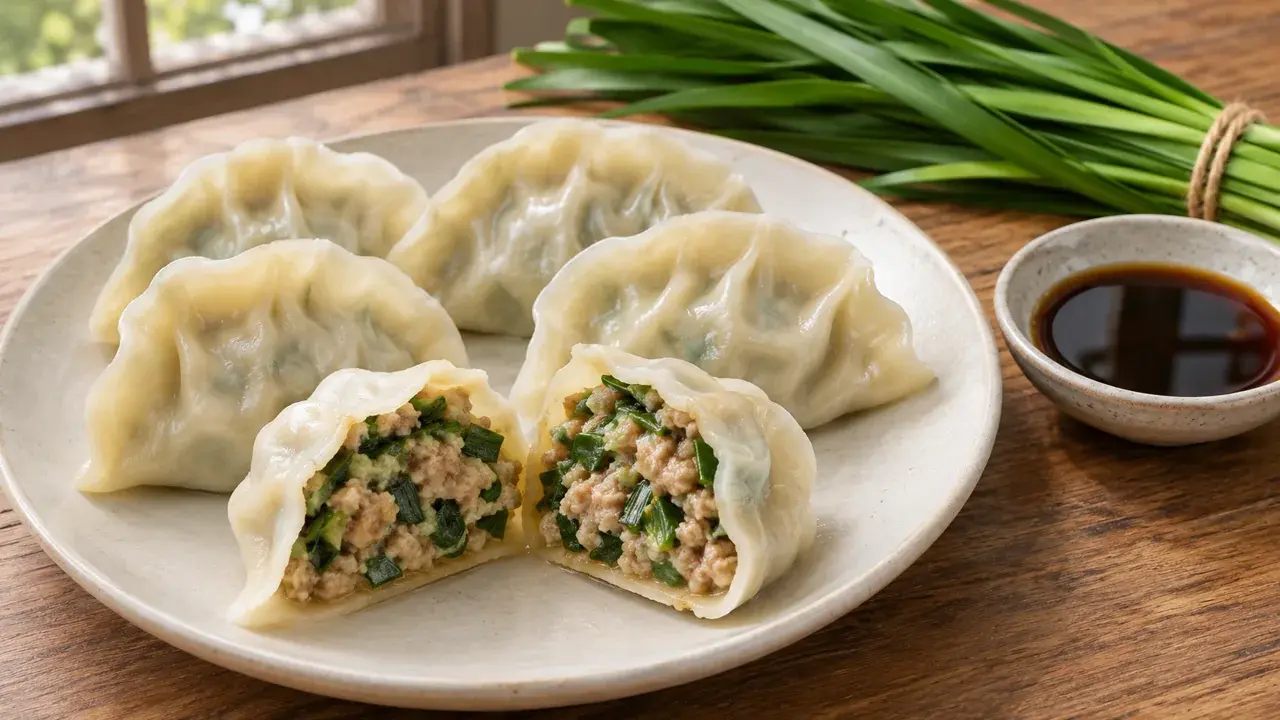
If you are comparing menu or freezer-aisle dumplings, gyoza vs potstickers covers the wrapper and style question. The filling remains a separate choice. Ask which vegetables and aromatics are inside when the word chive or a particular flavor matters to you.
The sauce is another choice again. Chinese black vinegar vs rice vinegar explains the bottle decision for a dipping sauce. Changing the vinegar will not turn an onion-filled dumpling into the garlic-chive filling you were looking for.
Can you substitute one for the other?
In a flexible meal, you can choose a different allium if you want its flavor. Expect a different dish, though. A chopped scallion garnish, a white-stalk aromatic mixture and a filling full of garlic-chive leaves are different uses. Decide which one the recipe is asking for before making the change.
There is no universal substitution ratio here. The amount, the cut and the point at which the ingredient enters the pan or filling all matter. If a recipe is built around Chinese chives, use a tested variation or a recipe written for the vegetable you have. If it wants scallion whites and greens separately, follow that distinction instead of assuming a handful of chives replaces both.
Keep seasoning changes separate from the vegetable choice. Our light vs dark soy sauce guide explains seasoning and coloring roles. More soy sauce cannot provide the same leafy texture or garlic-like character as the missing chives.
Wash, inspect and cut for the actual recipe
For produce washing, the FDA recommends gently rubbing under plain running water without soap or produce wash, then drying with a clean cloth or paper towel. Remove damaged areas. Follow the chosen recipe for the rest of the preparation and cooking, including any meat filling; this ingredient comparison is not a dumpling cooking method.
Check the cutting instruction before you begin. The cited pork-chive recipe specifically calls for finely chopped garlic chives so the filling can bind together. Its scallions are prepared separately for the puree. A rough handful of long leaves is not equivalent to either of those steps.
If you are choosing leafy vegetables for the same meal, gai lan vs bok choy covers a different purchase: the stems and leaves of those greens. Garlic chives, scallions and leafy greens each bring their own shape to a dish. One general label such as green vegetables does not tell you how to prepare them.
What about yellow chives and flowering stems?
The Woks of Life identifies yellow Chinese chives as jiǔhuáng (韭黄), garlic chives grown with much less light. It describes a milder, delicate flavor. They are not green onions that happen to be pale. A recipe specifying yellow chives is making a particular ingredient choice.
The same glossary also distinguishes garlic-chive leaves from the flowering stems sold with tender unopened buds. Those stems have a different shape and a crunchier texture. The flat-leaf identification clue in this guide refers to the leafy bunch, not every edible part of the plant. Check whether your recipe asks for leaves, yellow chives or flowering stems.
A short shopping checklist
- Read the complete ingredient name: Chinese garlic chives, common chives or green onions/scallions.
- Look at the bunch: flat green leaves, fine round chive leaves, or white lower stalks with green tops.
- Read whether the recipe separates scallion whites and greens or finely chops garlic chives.
- Check a proposed swap against the filling, aromatic or garnish role, rather than color alone.
- Ask about the full dish when dietary needs matter, including sauces, meat, wrappers and shared preparation.
Garlic chives do not make a dumpling vegetarian, gluten-free or suitable for an allergy. The documented recipe includes pork and several seasonings. Restaurant versions and packaged fillings can differ, so check the actual ingredient list or ask the kitchen about your requirements.
The Chinese food guide connects the neighboring ingredient and menu questions. For this bunch, start with its full name and the preparation line in your recipe. Flat garlic-chive leaves and white-based scallions can both belong in dinner, sometimes in the same filling, with different work to do.
Frequently asked questions
Are garlic chives the same as green onions?
No. Chinese garlic chives have flat leaves and a garlic-like flavor. Green onions, also called scallions in the cited sources, have white lower stalks and green tops with an onion flavor. They can play different roles in the same recipe.
Are Chinese chives and garlic chives the same?
Yes, the cited university and culinary sources use those names for Allium tuberosum. In Mandarin, the Woks glossary calls Chinese chives jiǔcài (韭菜). Check that a recipe means these flat leaves rather than common round-leaved chives.
Are scallions and green onions the same?
The Woks of Life and Escoffier use these English names for the same ingredient. A recipe may still distinguish the white lower stalks from the green tops and use them at different stages.
Can I replace garlic chives with scallions in dumplings?
Expect a different filling. The cited pork-chive recipe uses finely chopped garlic chives and a separate scallion puree, so the two ingredients are not interchangeable lines in that recipe. Use a recipe variation written for the ingredient you have.
How are common chives different from garlic chives?
Common chives have fine, round, hollow leaves and a mild onion flavor. Garlic chives have flat leaves and a garlic-like flavor. A recipe that only says chives may need an ingredient note to make the choice clear.
Are yellow Chinese chives green onions?
No. The cited Woks glossary describes yellow Chinese chives, jiǔhuáng (韭黄), as garlic chives grown with much less light. They have a milder flavor and are a different choice from green onions.