Pantry & condiments
Light vs Dark Soy Sauce: Which Bottle Does Your Recipe Need?
Chinese light soy sauce is the everyday seasoning bottle; Chinese dark soy sauce adds a deeper brown color and a fuller, slightly sweeter flavor, usually in smaller amounts. For light vs dark soy sauce, start with the job your recipe needs. Use light to season, and dark when the recipe calls for its color and flavor. Light does not mean low sodium. And a Japanese bottle described as dark soy sauce belongs to a different naming system.
Buying for one recipe? Check its ingredient notes before choosing the bottle. Buying for a small Chinese pantry? Start with light soy sauce, then add dark when the dishes you cook call for it. You can make a useful dinner without collecting every soy sauce on the shelf.
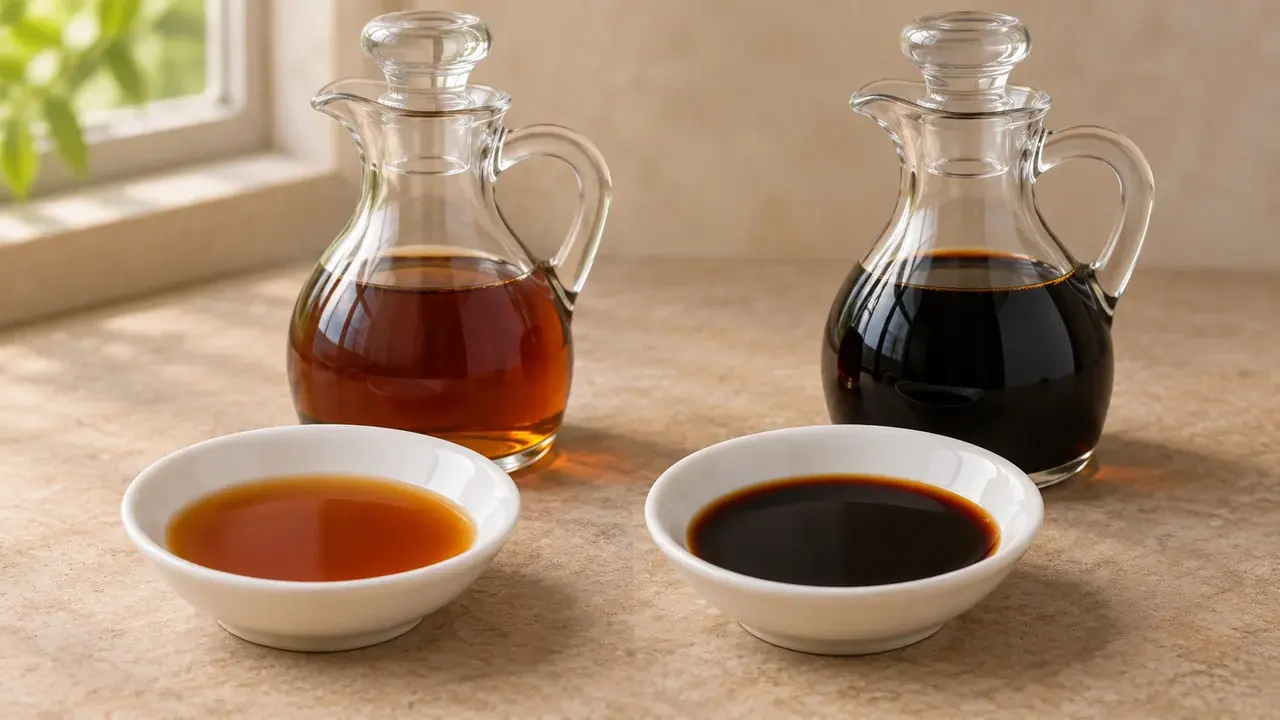
At a glance: the two Chinese soy sauces
| Question | Chinese light soy sauce | Chinese dark soy sauce |
|---|---|---|
| Name to recognize | Shēng chōu (生抽) | Lǎo chōu (老抽) |
| Main job | Seasoning: savory flavor and saltiness | Deeper color, plus a fuller soy flavor |
| Typical appearance | Thinner, lighter brown | Darker, generally thicker |
| Where you might use it | Stir-fries, marinades, dipping sauces | Noodles, braises, and sauces that call for dark soy |
| When the other bottle is missing | Do not replace the whole amount with dark by default | Light soy may work when a paler result is acceptable |
| Does the name tell you sodium? | No. Read the actual label | No. Read the actual label |
These are cooking roles, not rigid rules for every brand. A dark soy sauce still seasons food, and light soy sauce still contributes some color. What changes is how strongly each one does those jobs. The recipe's wording matters more than trying to make every dish match a photograph.
What is Chinese light soy sauce?
Light soy sauce, shēng chōu (生抽, light soy sauce), is the bottle many Chinese recipes mean when they simply say soy sauce. The Woks of Life explicitly uses those terms that way in its own recipes. It is a useful starting point, though another author's recipe may specify a different product.
Think of it as part of the seasoning. It brings savory flavor and saltiness to a marinade, a sauce, or a bowl of noodles without the same deep coloring effect as Chinese dark soy. For a recipe that names light soy, look for that style rather than reaching for whichever bottle looks palest through the glass.
If that marinade also names a cooking wine, Shaoxing wine vs mirin covers the separate wine-and-sweetness decision. Choose each ingredient according to the recipe rather than treating all seasoning bottles as interchangeable.
For a marinade that also names sesame oil, Toasted sesame oil vs sesame oil explains how to identify the aromatic oil and why a milder bottle changes that part of the flavor.
Some Chinese products sold as regular or premium soy sauce serve this light-soy role without putting the word light prominently on the front. Check the product description and recipe notes. Premium is a product descriptor, not a dependable substitute for identifying the sauce type.
What is Chinese dark soy sauce?
Dark soy sauce, lǎo chōu (老抽, dark soy sauce), is generally darker, thicker, and a little sweeter than Chinese light soy. It is particularly useful when a recipe wants a brown sauce or a deeper color on noodles and braised food. It also contributes flavor, so treating it as harmless food coloring can throw off a dish.
Ingredient lists help explain the difference. Lee Kum Kee's US Premium Dark Soy Sauce lists caramel color and sugar; its Premium Soy Sauce has a different formula. That is one manufacturer's example. It does not mean every dark soy is made to the same formula, or that every light soy is free of sugar.
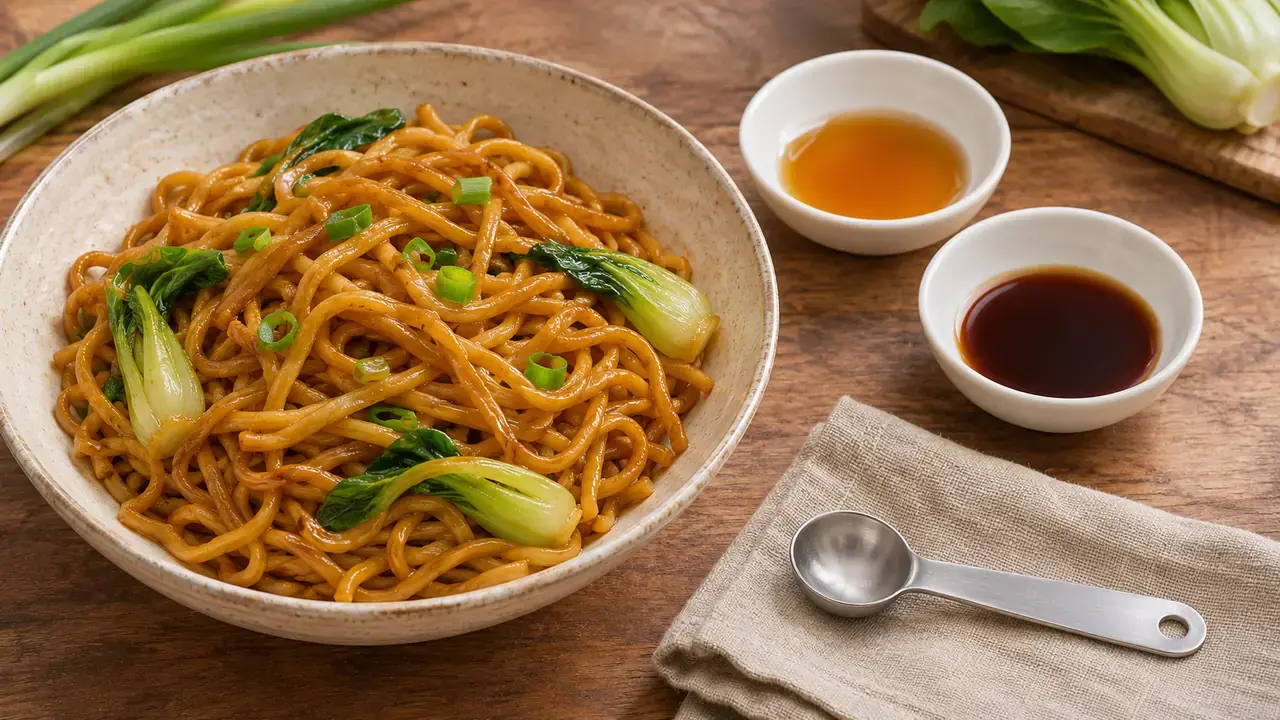
Some recipes use both bottles to manage seasoning and color separately. That distinction is useful when reading a noodle recipe: more brown sauce is not automatically more of the flavor you wanted. Our lo mein vs chow mein guide covers the dishes and cooking styles; this bottle choice is a separate step.
Three label traps worth catching
Light versus less sodium. Chinese light soy names a style. A reduced-sodium label describes a different attribute. Kikkoman's US Less Sodium Soy Sauce, for example, is sold as a reduced-sodium product in its own right. Do not assume shēng chōu is the low-sodium choice, or choose dark soy because sweetness makes it seem less salty. Compare the nutrition labels for the same serving volume if sodium is part of your decision.
Chinese versus Japanese naming. Japanese dark soy sauce is commonly an all-purpose seasoning; it is not the same product category as the Chinese dark soy discussed here. A familiar Japanese all-purpose soy sauce may work as a seasoning substitute in a flexible recipe, but its name does not make it a direct replacement for Chinese dark soy's coloring role.
Soy sauce versus thick brown condiments. Hoisin and oyster sauce have their own jobs. A bottle's dark color does not turn it into dark soy sauce. If those are the bottles you are comparing, use our hoisin and oyster sauce guide before making a swap. The same ingredient-first approach helps with Chinese sesame paste vs tahini: identify what a product contributes before trying to replace it.
Can you substitute light and dark soy sauce?
Sometimes. The useful question is which part of the recipe you are willing to change. There is no universal one-to-one rule that preserves color, saltiness, sweetness, and aroma across every bottle and dish.
- The recipe needs a little dark soy, but you only have light: check the author's substitution notes. The Woks of Life allows regular soy in its place when a lighter-colored result is acceptable. Expect the appearance and flavor to change. Avoid adding extra light soy just to chase a darker color.
- The recipe needs light soy, but you only have dark: do not automatically pour in the full stated amount. Dark soy can change the color and flavor too much. A suitable all-purpose soy sauce may be a closer seasoning option; otherwise, choose a recipe written for what you have.
- The recipe lists both: keep their roles separate. Replacing all the light with dark is a much bigger change than leaving out a small coloring addition. Follow that recipe's guidance rather than combining the quantities into one large pour.
- You are making a flexible dip: begin with a sauce suited to seasoning and adjust the other ingredients to that dip. Chinese dark soy is usually a poor default for replacing the entire soy component. Our gyoza vs potstickers guide covers the dumpling choice separately.
Water, sugar, or molasses do not provide a universal repair formula. A published recipe may offer a specific substitute that works in its own proportions. Use that recipe-specific context when available. If dinner is already cooking and the missing dark soy was mainly for color, accepting a paler result is often more practical than rebuilding the sauce halfway through.
Read the ingredient label, whichever style you buy
Light and dark soy sauces commonly contain soybeans and wheat. Both Lee Kum Kee products discussed above declare those ingredients, as does Kikkoman's Less Sodium Soy Sauce. Choosing a different color or a reduced-sodium bottle does not, by itself, resolve an allergy or a gluten-related requirement.
For an allergy, read the complete ingredient and allergen information every time you buy. The FDA notes that a US product can declare an allergen in the ingredients without a separate Contains statement, and that precautionary statements such as may contain are voluntary. If you need information about shared equipment or cross-contact, ask the manufacturer rather than treating a missing warning as a guarantee.
For gluten avoidance, check the specific product's gluten-free labeling rather than assuming a style, brand, or the word tamari settles it. At a restaurant, also ask about the whole sauce and shared preparation. The soy bottle is only one ingredient in the meal.
A quick shopping decision
- Read the exact recipe line: light, dark, all-purpose, or simply soy sauce.
- Check the author's ingredient notes, especially when a Chinese recipe uses light and dark together.
- Identify the sauce style from the bottle and manufacturer description. Do not use cap color as your guide.
- Compare ingredients, allergens, and sodium at the same serving volume when relevant to your needs.
- Buy for the dishes you actually cook, and follow that bottle's storage instructions.
For a starter Chinese pantry, a suitable light soy sauce covers many seasoning jobs. Add dark soy when you want to cook recipes that specify it. Keep the distinction alongside the other ingredient decisions in our Chinese food guide, and you will spend less time guessing what a brown bottle is supposed to do.
Frequently asked questions
Is light soy sauce the same as low-sodium soy sauce?
No. In Chinese cooking, light soy sauce names a sauce style, not a sodium level. A reduced-sodium product is a separate label claim. Compare the actual nutrition labels using the same serving volume.
Can I use light soy sauce instead of dark soy sauce?
Sometimes, when the recipe allows a paler result. The color and flavor will change. Follow the recipe author's substitution notes, and do not keep adding light soy just to darken the food.
Can I replace light soy sauce with dark soy sauce?
Do not assume a one-to-one replacement. Chinese dark soy can change the color and flavor substantially. A suitable all-purpose soy sauce may be a closer seasoning substitute; use recipe-specific guidance.
Which soy sauce should I use for fried noodles?
Use the type named in the noodle recipe. Some recipes combine light soy for seasoning with dark soy for deeper color and flavor. The name of the noodle dish alone does not tell you the proportions.
Is Japanese dark soy sauce the same as Chinese dark soy sauce?
No. Japanese dark soy is commonly an all-purpose seasoning, while Chinese dark soy has a stronger coloring role. Check the cooking tradition and product type specified by the recipe.
Are light and dark soy sauce gluten-free?
Neither style name guarantees that. Many products contain wheat. Read the exact product's ingredients and gluten-free labeling, and check the rest of the recipe and cross-contact information when needed.