Vegetables & sides
Chinese Eggplant vs Italian Eggplant: What to Buy
The quick answer to Chinese eggplant vs Italian eggplant: the Chinese one is usually long and slender, with thinner skin. The Italian, or globe, one is the fat supermarket default. Same plant family. Different shape, different amount of seed, different job in the pan. Buy the one your recipe is actually built around.
If the recipe wants long, pale-purple eggplant that cooks through fast, the globe sitting in the same bin is a different purchase. Look at the fruit, not a label that only says eggplant.
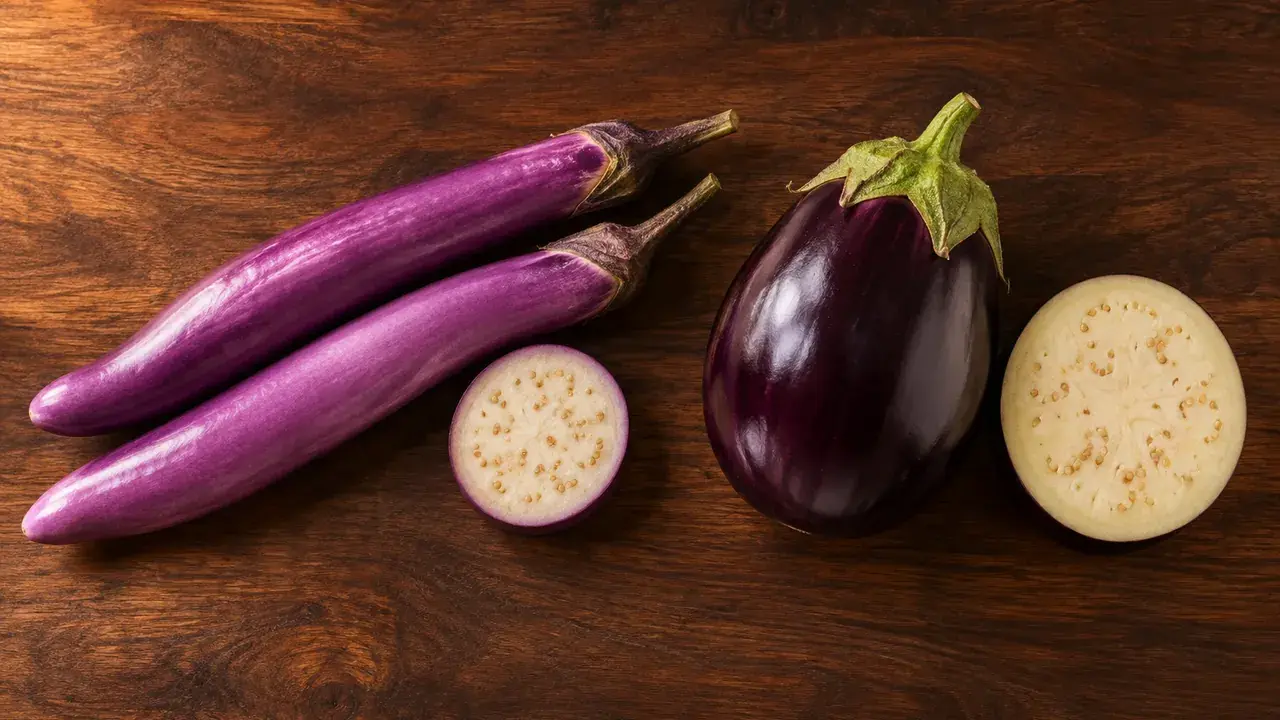
At a glance: Chinese eggplant and Italian eggplant
| What to check | Chinese eggplant | Italian / globe eggplant |
|---|---|---|
| Usual shape | Long, slim, sometimes slightly curved | Large, round or teardrop |
| Skin | Thin; often cooked with the skin on | Thicker; some cooks peel it |
| Seeds | Fewer in the commonly sold long type | More, especially in big, older fruit |
| How it behaves in a wok | Softens fast; takes sauce on a large surface | Needs more time; flesh is denser |
| What a swap changes | The cut, the cook time, and how watery the pan gets | The bite and how much you have to salt or drain |
| Grocery clue | Look for the long purple ones, not the name on the bin | The familiar heavy globe in most US produce aisles |
What you are actually looking at
Serious Eats' eggplant types guide treats Chinese eggplant as one of the long, slender Asian types, separate from the large Italian globe you see in most American stores. The Kitchn's visual guide says the long types have thin skin and not many seeds, and turn creamy when cooked. Tasting Table describes Chinese eggplant as milder, with fewer seeds than the big globes.
None of that is a tasting-note contest. It is a bin check. Long and slim versus heavy and round. If the shelf tag just says eggplant, look at the fruit.
Color is a weak clue. Both can be deep purple. Chinese eggplant is often a bit paler, but I would not bet dinner on the shade. Shape is the thing you can see from three feet away.
Why a recipe names one of them
A lot of Chinese stir-fries cut the long eggplant on a bias so you get a lot of cut surface. That surface soaks up sauce. A globe cut into the same size pieces is possible. You just spend more time on the knife, and the pieces are seedier.
If the dish is built around that fast, creamy collapse, the long one is the point. If you only have a globe, you can still cook eggplant. Expect a denser piece and a longer wait before it is actually soft. Do not pretend the two cuts are the same vegetable in the pan.
Sauce is a separate choice. light vs dark soy sauce is the bottle question. Dark soy will not turn a globe into a long Chinese eggplant. It will only stain whatever you already cut.
Italian eggplant is the default globe
When a US recipe says eggplant and does not specify a type, it usually means the large Italian globe. Thick skin. More seed in a big, mature fruit. Fine for roasting, baking, or a long braise. Less convenient when a Chinese recipe wants a lot of thin slices that cook in a few minutes.
Some cooks salt globe eggplant to pull water. The cited visual guides do not treat that as mandatory for the long, thin types. If your recipe for Chinese eggplant never mentions salting, do not add a 30-minute drain because an Italian-eggplant lasagna recipe told you to.
Can you substitute one for the other?
Yes, if you accept a different dish. Cut the globe smaller. Give it more time. Maybe peel if the skin bothers you. The flavor overlap is real. The geometry is not.
There is no clean cup-for-cup rule here. A long eggplant and a two-pound globe are different amounts of flesh, seed, and water. Weigh if the recipe cares. Or buy the shape the method was written for and stop negotiating with the bin.
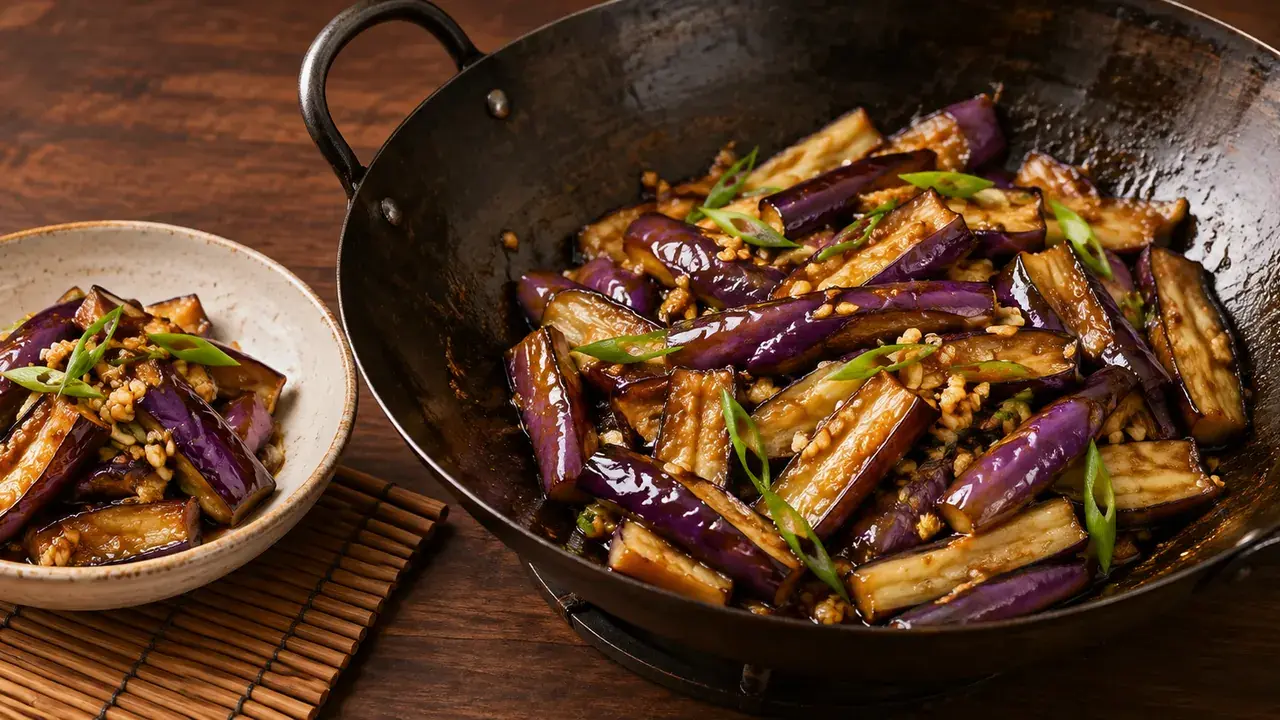
If the rest of the plate is greens, gai lan vs bok choy is a different purchase. Eggplant is the soft, sauce-carrying piece. The greens are the stems and leaves. One bag labeled Asian vegetables does not tell you which one you grabbed.
What else usually sits next to it
A lot of eggplant stir-fries also want garlic, chili, and a sour-salty sauce. Chinese black vinegar vs rice vinegar is the bottle for that sour note. Changing vinegar will not fix the wrong eggplant. It will only change the sauce on top of it.
If the dish is eggplant with tofu, silken tofu vs firm tofu is the other texture call. Soft tofu and long eggplant both collapse. Firm tofu and globe eggplant both hold a cube. Mix those pairs on purpose, not by accident.
The aromatic bunch is yet another aisle. garlic chives vs green onions is the flat-leaf versus white-stalk question. It does not tell you which eggplant to buy. It tells you what goes in the pan beside it.
A short shopping checklist
- Read the recipe: Chinese / Asian long eggplant, or just eggplant.
- Look at the fruit: long and slim, or a heavy globe.
- Ignore a bin that only says eggplant if both shapes are in it.
- If you swap, cut smaller and cook longer. Do not expect the same pan.
- Keep sauce, greens, tofu, and aromatics as separate purchases.
The Chinese food guide is the index for the neighboring calls. For this one, start with the shape in your hand. Long Chinese eggplant and globe Italian eggplant can both show up in dinner. They do not do the same work in a wok.
Frequently asked questions
Are Chinese eggplant and Italian eggplant the same?
No. Chinese eggplant is usually long and slender with thinner skin and fewer seeds. Italian or globe eggplant is the large, round supermarket default. They cook differently even when the sauce is the same.
Can I use Italian eggplant in a Chinese stir-fry?
You can. Cut it smaller and give it more time. The dish will be denser and seedier than one written for the long type. It is a swap, not a silent substitution.
Do I need to peel Chinese eggplant?
Usually no. The cited visual guides describe thin skin on the long types, and a lot of Chinese recipes cook it on. Peel if you want to. Do not treat peeling as required the way some globe-eggplant recipes do.
Should I salt Chinese eggplant before cooking?
Only if your recipe says so. Salting is a common step for large globe eggplant. A recipe written for long Chinese eggplant often skips it. Follow the method in front of you.
Is Japanese eggplant the same as Chinese eggplant?
They are both long, slender types, and stores sometimes mix the names. Look at the fruit in front of you rather than arguing about the tag. This guide is about the long type versus the Italian globe.
What should I look for at the grocery store?
Shape first. Long and slim is the Chinese type in this guide. A heavy globe is the Italian default. Ignore a bin that only says eggplant if both shapes are in it.