Vegetables & sides
Silken Tofu vs Firm Tofu: Which One Should You Buy?
For silken tofu vs firm tofu, choose by the texture your Chinese recipe needs. Silken tofu is smooth and custard-like; regular firm tofu is sturdier and better suited to handling and browning. For tender mapo tofu, follow a recipe that calls for soft or silken tofu. For pan-fried pieces that keep their shape, regular firm or extra-firm tofu is the easier starting point. Read the whole label: firm silken tofu exists, and it is not the same texture as a regular firm block.
That last detail causes much of the confusion in the tofu aisle. Silken describes a style, while firm describes firmness within a product range. A package can use both words. Start with the recipe, then match the style as well as the firmness instead of buying the first block marked firm.
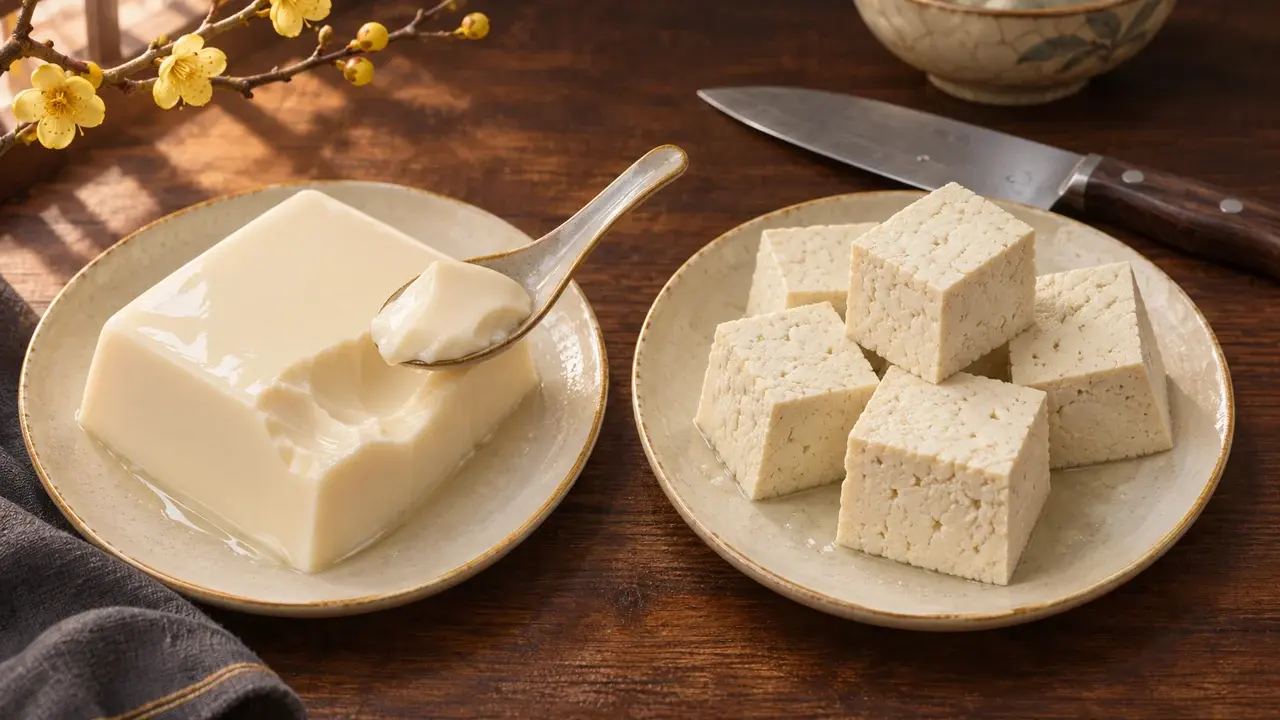
At a glance: match the block to the job
| Decision | Silken tofu | Regular firm tofu |
|---|---|---|
| Texture | Smooth, delicate, custard-like | More substantial, with a denser block structure |
| Useful starting point | Tender sauced dishes or recipes designed for a smooth texture | Pan-fried pieces or dishes needing sturdier handling |
| Mapo tofu | Used in some recipes; handle gently | Possible if the recipe specifies it, but the bite is firmer |
| Pan-frying | Not the simplest choice for sturdy browned pieces | An easier starting point for pieces that hold together |
| Label trap | Can also be labeled firm or extra firm | Firm is not a universal standard across brands |
| Substitution | Keeps a dish delicate but changes handling | Adds a firmer bite; does not recreate a silky texture |
Silken, soft and firm are not one universal scale
Tofu, dòufu (豆腐, bean curd), comes in more forms than a single soft-to-hard ranking can show. A useful shopping distinction is between silken tofu and regular block tofu. Within those groups, brands may offer several firmness levels. The words on two different brands are not a promise that the blocks will behave identically.
Mori-Nu provides a concrete example: its product is explicitly called Silken Firm Tofu. The company describes its silken tofu as smoother and creamier than denser tub tofu, and explains that its tofu forms inside the sealed carton. So a firm silken block belongs to the silken family even though firm appears prominently in the name.
The Woks of Life describes regular firm tofu as having more liquid pressed out for a more solid texture, with extra-firm tofu having still more removed. Its guide also notes that soft and silken textures vary by brand. Read a recipe’s ingredient notes or package recommendation when available, especially if the dish depends on very tender cubes.
Soft tofu can therefore be a useful label without being a precise synonym for every silken product. If a recipe names a specific style or brand, that detail may explain the texture the writer intended. Match that before deciding whether a different package is close enough.
For mapo tofu, decide whether you want a tender bite
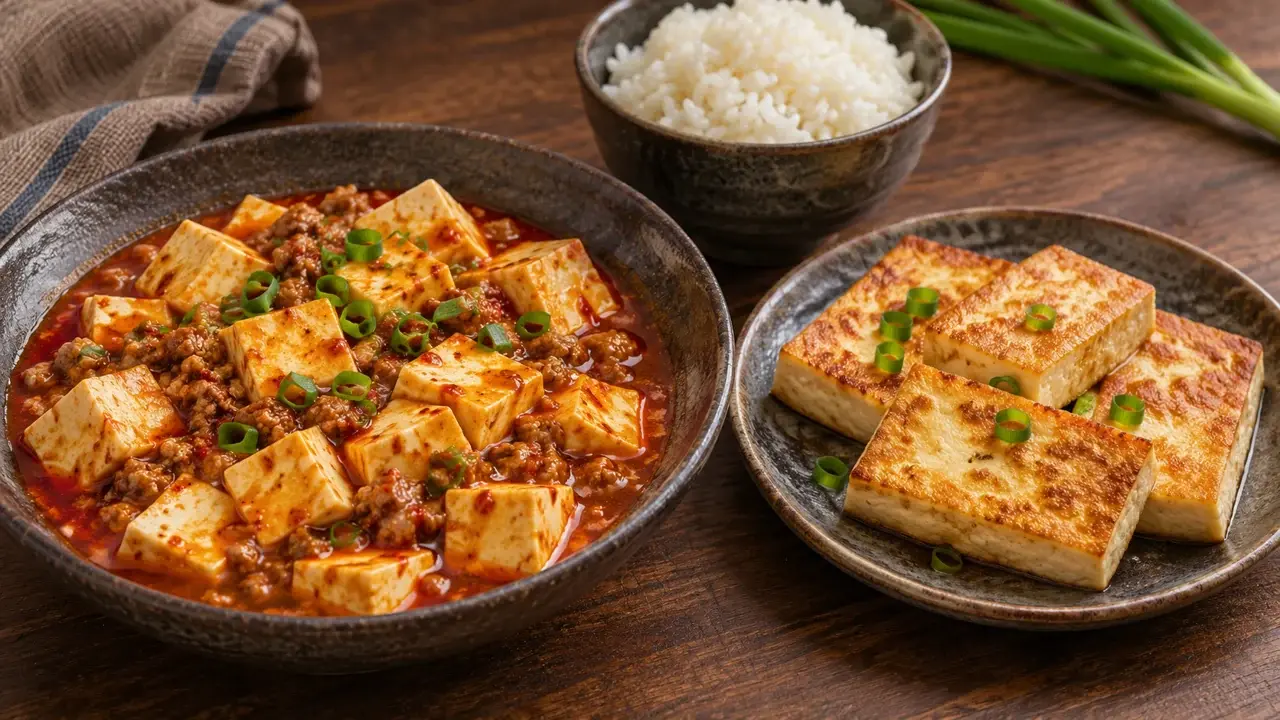
Mapo tofu is a good reason to care about this distinction. The tofu sits in a strongly seasoned sauce, and its tender interior supplies a different texture from the sauce around it. The Woks of Life’s mapo recipe uses silken tofu and calls for gentle tossing after the cubes go in. That is a specific, documented example rather than a rule for every kitchen.
For the sauce base, doubanjiang vs gochujang explains why spicy bean paste and Korean red pepper paste make different choices. Match the recipe’s paste as well as its tofu.
If you are cooking that kind of recipe, buy the soft or silken tofu it names. Use gentle movements once the tofu is in the pan. A delicate block can break when treated like a sturdy stir-fry ingredient. The goal is to keep enough of the cubes intact to deliver that soft bite, not to stir vigorously until everything looks evenly mixed.
Using regular firm tofu changes the result toward a firmer bite. That may suit your preference, but it will not reproduce the same custard-like center. If you are deciding what to order rather than what to cook, the mapo tofu guide explains the dish’s flavor, heat and meat questions. This page is about choosing the package for your kitchen.
For browned pieces, regular firm tofu is the easier choice
For a recipe built around pan-fried tofu, choose the regular firm or extra-firm block the recipe specifies. It is a more practical starting point when you need to lift, turn and serve separate pieces. The Woks of Life lists pan-frying and stir-frying among regular firm tofu’s uses.
Drain and prepare it according to that recipe. Do not assume every tofu needs a heavy weight placed on top: the handling appropriate for a sturdy block can damage a delicate silken one. A recipe’s instructions for drying or pressing are part of the method, not a universal step to apply to every package.
Silken tofu is not forbidden from all stir-fries. Mori-Nu explicitly suggests its extra-firm silken tofu for stir-frying. That does not make every silken block interchangeable with regular firm tofu, or mean a delicate soft block will tolerate the same handling. Match the specific product and method when making that choice.
For soup or hot pot, choose the texture you want to eat
Soup does not point to just one tofu. Tender pieces and sturdy pieces offer different bites, and the recipe may depend on either. Regular firm tofu is versatile enough for soups as well as frying, according to The Woks of Life. A soft-tofu recipe is aiming for a more delicate result. Follow its choice rather than assuming anything simmered in broth needs to be silken.
The ingredient case at a hot-pot or malatang shop can include products beyond a plain tofu block. Frozen tofu, fried tofu and tofu skin are separate choices. The Woks of Life describes frozen tofu as having a firmer, sponge-like texture with holes that take up broth. It should not be treated as another name for silken tofu.
For the restaurant format, see malatang vs hot pot: choosing a finished bowl and cooking ingredients in a shared pot are different decisions. If you are shopping for soup at home, identify the exact tofu named in the recipe before comparing firmness labels. For a takeout soup choice, egg drop soup vs hot and sour soup compares the bowls rather than the packages.
Can you substitute one for the other?
Sometimes, if you accept a different texture and adjust how you handle it. Regular firm tofu in a soft-tofu dish gives you a sturdier bite. Silken tofu in a recipe built around intact fried pieces is a more substantial change because the pieces are more delicate. A recipe designed for the substitute is the better starting point when texture is central to the dish.
- For a delicate sauced dish, match the soft or silken style named in the recipe. Do not expect regular firm tofu to feel identical.
- For pieces that need turning or browning, start with the recipe’s regular firm or extra-firm choice.
- If the bag or box says firm silken, keep both words in mind. It is not simply a different package for regular firm tofu.
- If you only have a different style, look for a method written for that style instead of forcing it through the original instructions.
Read the ingredients as well as the texture label
Soybean tofu contains soy. The FDA lists soybeans among the major food allergens that must be identified on packaged-food labels in the United States. Read the ingredient list and allergen statement on the exact product. Brand names, package colors and familiar-looking blocks are not enough to make an allergy decision.
The complete dish also matters. The Woks of Life mapo recipe includes minced pork; restaurant versions and other recipes can use different meat, stock and sauces. A tofu dish is not automatically vegetarian or gluten-free. Ask about the full preparation and cross-contact when those details matter to you.
Treat toppings as a separate choice. Our chili crisp vs chili oil guide explains the difference between crunchy solids and a smoother oil; either condiment still needs its own ingredient check. For a vegetable side to round out the meal, gai lan vs bok choy answers a different produce-aisle question.
At the shelf, the useful sequence is simple: find the style your recipe names, check firmness within that style, then read the product details. The Chinese food guide links the related dishes and ingredients when you need to plan the rest of the meal.
Frequently asked questions
Is silken tofu the same as soft tofu?
Not always. The labels can overlap in recipes, and textures vary by brand, but soft does not identify every product as silken. Match the style and any product notes in the recipe rather than relying on one firmness word.
Can silken tofu be firm?
Yes. Mori-Nu sells Silken Firm Tofu. Firmness can vary within the silken style, so firm silken tofu is not automatically equivalent to a regular firm block.
Which tofu should I buy for mapo tofu?
Follow your recipe. For a tender version such as The Woks of Life’s silken-tofu recipe, buy the soft or silken style specified and handle it gently. Regular firm tofu gives a different, sturdier bite.
Can I pan-fry silken tofu instead of regular firm tofu?
Some methods use specific firmer silken products, but it is not the easiest general swap for sturdy browned pieces. Start with a recipe written for your tofu style; regular firm or extra-firm tofu is a simpler starting point for many pan-fried preparations.
Should I press silken tofu?
Do not apply a heavy pressing step automatically. Silken tofu is delicate, and pressing can damage the block. Follow a recipe designed for the specific style rather than borrowing preparation steps from regular firm tofu.
Is a tofu dish automatically vegetarian or gluten-free?
No. Meat, stock, sauces and cross-contact can change the answer. Soybean tofu also contains soy. Read the exact product label and ask about the full dish when allergies or dietary requirements matter.