Pantry & condiments
Doubanjiang vs Gochujang: Which Paste Does Your Recipe Need?
For doubanjiang vs gochujang, buy the paste your recipe names. Sichuan spicy doubanjiang is a savory, salty fermented bean-and-chile paste; gochujang is a Korean fermented red pepper paste that also brings sweetness. They can both add red color and heat, but they are not a straight one-for-one substitute. If you are shopping for mapo tofu, look for the spicy bean paste specified in the recipe rather than picking any red tub. A gochujang swap changes the sauce’s flavor and texture.
This guide compares spicy Sichuan-style doubanjiang with gochujang. The word doubanjiang can appear on other bean pastes, including non-spicy versions. Read the product name and ingredients together. Red packaging, a familiar brand or a translation that simply says bean sauce will not settle the question on its own.
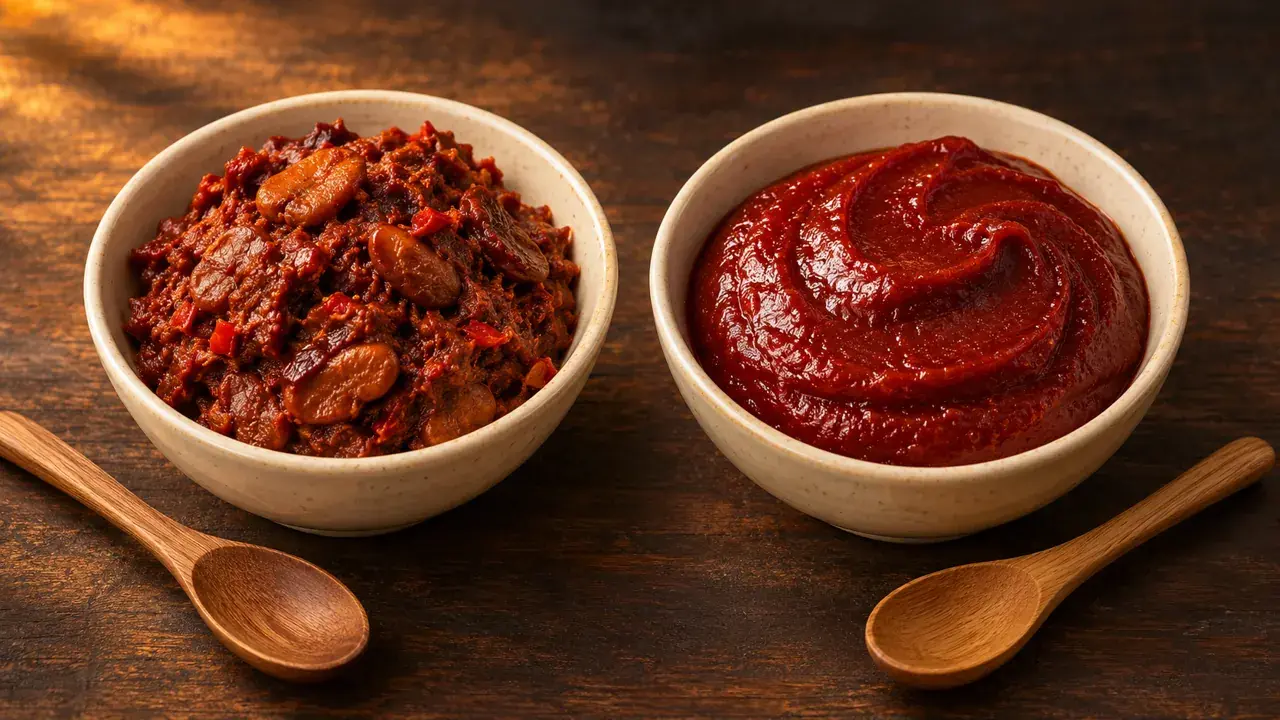
At a glance: two pastes with different jobs
| What matters | Spicy doubanjiang | Gochujang |
|---|---|---|
| Useful name to recognize | La doubanjiang; spicy bean paste; toban djan on some products | Korean hot pepper paste or red pepper paste |
| General flavor direction | Savory, salty, fermented and spicy | Fermented, spicy and sweet |
| Texture to expect | Often chunky, with visible bean and chile pieces | A cohesive paste; check the specific product |
| Ingredient clues | Broad beans and/or soybeans with chiles; formulas vary | Recipe example: pepper, sweet rice flour and fermented soybean powder |
| For a Sichuan mapo recipe | Choose the spicy bean paste named in the recipe | Changes the sauce; use a recipe designed for that choice |
| Best shopping check | Identify the spicy style, then read the ingredient list | Identify the paste, then check ingredients and any added seasoning |
What is spicy doubanjiang?
Là dòubànjiàng (辣豆瓣酱, spicy bean paste) is a fermented bean-and-chile paste associated with Sichuan cooking. The Woks of Life describes a savory, spicy, salty paste with a relatively chunky texture. It identifies Pixian doubanjiang as a well-known type. That gives you a useful name to recognize when a recipe asks for Pixian spicy bean paste.
English labels vary. You may see spicy broad bean paste, broad bean chili sauce or chili bean sauce. Toban Djan is another spelling you may encounter: Lee Kum Kee uses it for its Chili Bean Sauce. Those names are clues to investigate, not a guarantee that every jar has the same ingredients or tastes identical.
The manufacturer’s ingredient list is more useful than assumptions about the category. Lee Kum Kee’s U.S. product, for example, lists fermented soybean paste and fermented broad bean paste, as well as salted chile peppers, wheat flour within the fermented pastes and sugar. That is one product example. It does not establish the formula for every doubanjiang on the shelf.
Also check whether the recipe wants a spicy version. The Woks of Life warns that products labeled doubanjiang can include non-spicy pastes. The character là (辣) means spicy and can help you read a label, but use the full description and ingredients rather than relying on a single character or the paste’s color.
What is gochujang?
Gochujang (고추장, Korean hot pepper paste) belongs to a different cooking tradition. Maangchi describes it as a fermented staple that adds spiciness, color and sweetness to Korean dishes. English packaging may call it red pepper paste. Its sweetness is one reason it changes a sauce when used in place of a savory bean paste.
A documented recipe helps explain the difference without pretending all commercial products share one formula. Maangchi’s gochujang recipe uses sweet rice flour, rice syrup, fermented soybean powder, barley malt powder, hot pepper powder and salt. Commercial ingredient lists can differ, so read the container you are actually buying.
Gochujang is also not simply a smooth version of doubanjiang. Processing one paste more finely will not turn its ingredient base into the other’s. If a recipe calls for gochujang, buy that ingredient. If it calls for spicy doubanjiang, the Korean red pepper paste beside it is a different choice, even when both packages promise heat.
Can you use gochujang instead of doubanjiang?
You can make a sauce with either paste, but expect a different result. In a recipe built around spicy doubanjiang, gochujang introduces its own sweet, fermented pepper flavor. The texture can change too. Decide whether you are comfortable changing the dish before treating the jars as interchangeable.
There is no universal swap ratio that corrects every brand’s sweetness, saltiness and texture. Automatically removing a spoonful of sugar or adding a splash of soy sauce does not prove you have matched the original paste. When you have only gochujang, a recipe written for gochujang is a clearer starting point than an improvised promise of an exact replacement.
The reverse swap changes the dish as well. Spicy doubanjiang brings a savory bean-paste character to a sauce designed for gochujang. It is useful to recognize both ingredients, but neither needs to stand in for the other every time. Choose the recipe you want to cook, then shop for its specified paste.
For mapo tofu, keep the bean paste and peppercorns separate
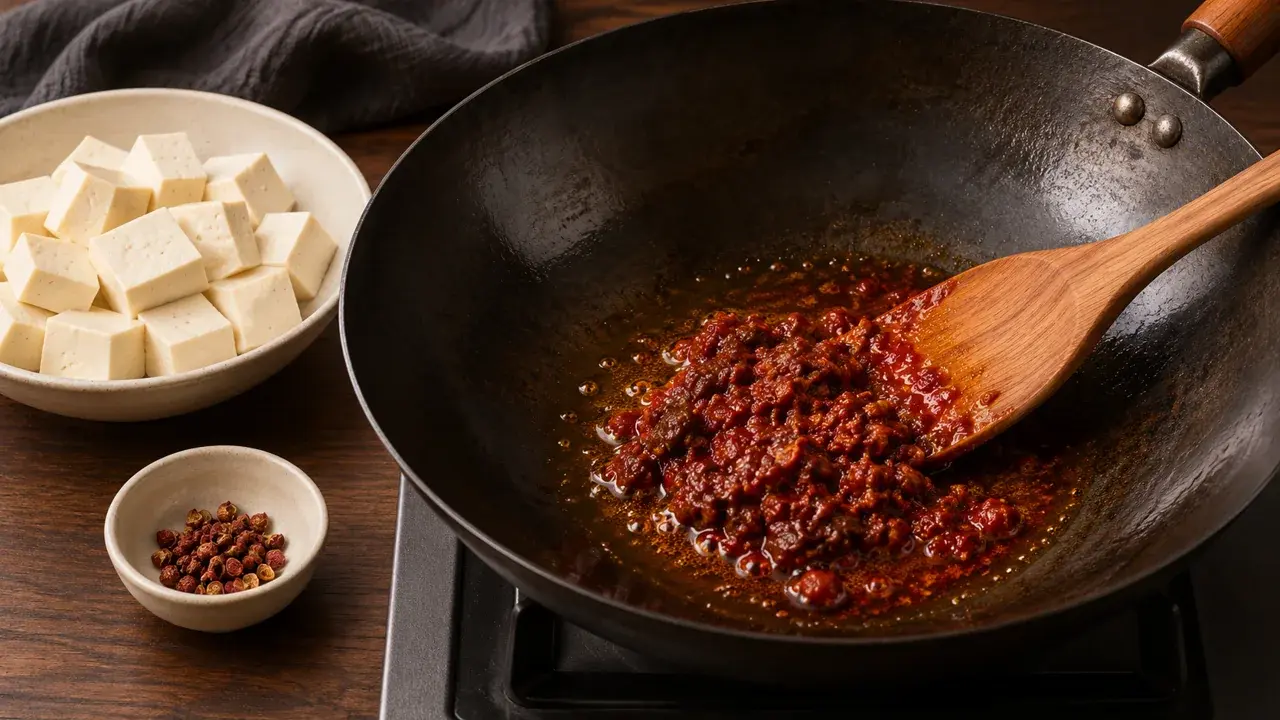
The Woks of Life’s mapo tofu recipe calls for spicy bean sauce and Sichuan peppercorns as distinct ingredients. Doubanjiang supplies part of the sauce’s savory chile character; Sichuan peppercorns supply the characteristic tingle. A spoonful of either red paste is not a replacement for the separate peppercorn ingredient.
The same source’s ingredient guide explains that frying spicy bean paste in oil releases red color into the oil. Follow your recipe’s sequence for adding it and the other ingredients. This is an ingredient comparison, not a substitute for the recipe’s method, quantities or cooking instructions.
For the finished dish’s flavor and ordering questions, see the mapo tofu guide. Choosing the paste and choosing the tofu are separate decisions: silken tofu vs firm tofu explains package labels and the tender-versus-sturdy texture choice. Buying the right sauce does not make every tofu block behave the same way.
How these differ from chili oil, chili crisp and hoisin
A red pantry ingredient is not automatically a spicy bean paste. If you are deciding between a pourable chile oil and a crunchy condiment, chili crisp vs chili oil covers that choice. Here, the question is which fermented paste belongs in the recipe’s sauce base. Do not assume a finishing condiment will recreate that base just because it adds heat.
If a recipe names individual fermented black beans instead of a paste, Fermented black beans vs canned black beans explains douchi and the jarred garlic-sauce alternative. That is a separate purchase from the red pastes compared here.
Hoisin is another separate label. Our hoisin sauce guide explains its uses and how it differs from neighboring sauces. Keeping these names distinct makes shopping easier than grouping every thick, dark or red sauce into a single substitution list.
You may encounter both doubanjiang and gochujang while reading about Chinese and Korean shared-pot meals. That broader dining comparison is in Chinese hot pot vs Korean hot pot. A broth’s ingredient list and the way a meal is served answer different questions; this page focuses on the paste you buy.
A practical label check before buying
- Read the recipe’s full ingredient name. Spicy bean paste, Pixian doubanjiang and gochujang should not be reduced to the same generic red sauce.
- Compare that name with the container’s description and ingredients. Look for the intended spicy style of doubanjiang, rather than assuming every bean paste is the same.
- Check whether the product is the paste itself or a separately seasoned sauce. Follow the exact product and recipe instructions.
- Read allergen information on the actual package. A familiar ingredient name does not guarantee a particular dietary claim.
Lee Kum Kee’s cited Chili Bean Sauce lists soybeans and wheat as allergens. Maangchi’s example gochujang recipe contains fermented soybean powder and barley malt. These examples show why a red pepper or bean-paste name alone is not enough to decide whether a product suits your needs. Read the current label and check any relevant dietary certification.
The FDA identifies soybeans and wheat among the major allergens that must be disclosed on most packaged-food labels marketed in the United States. Read the full ingredient and allergen statements, and ask about preparation and cross-contact when ordering a complete dish. A paste comparison cannot establish that a restaurant meal is vegetarian, gluten-free or suitable for an allergy.
For the rest of the meal, the Chinese food guide connects the related dishes and ingredients. At the store, the decision stays specific: buy the named paste, check the formula, and use a method written for it.
Frequently asked questions
Are doubanjiang and gochujang the same thing?
No. This guide compares spicy Sichuan-style fermented bean-and-chile paste with Korean fermented red pepper paste. They share heat and color, but differ in flavor direction, texture and ingredient base.
Can I replace doubanjiang with gochujang in mapo tofu?
It changes the sauce, especially its sweetness and fermented flavor. For a recipe that specifies spicy doubanjiang, buy that paste if you want the intended result. There is no universal ratio that makes all brands equivalent.
Is Toban Djan the same name as doubanjiang?
Toban Djan is a spelling used on some chili bean sauces, including the cited Lee Kum Kee product. Read the product description and ingredients to confirm the spicy style your recipe needs; names alone do not make every formula identical.
Is all doubanjiang spicy?
No. The name can appear on non-spicy bean pastes too. For a Sichuan recipe that calls for spicy doubanjiang, check the full name, description and ingredients for the intended version.
Which paste is hotter?
There is no reliable universal ranking across products. Heat varies with the formula and product. Choose by the recipe and label rather than assuming one category always delivers more heat.
Are these pastes gluten-free or soy-free?
Do not assume so. The cited Lee Kum Kee chili bean sauce lists soybeans and wheat, while the example gochujang recipe includes fermented soybean powder and barley malt. Check the current package’s ingredients, allergen statements and any relevant certification.