Pantry & condiments
Chinese Fermented Black Beans vs Canned Black Beans: What to Buy
For fermented black beans vs canned black beans, buy Chinese fermented black soybeans when the recipe calls for douchi. These salted, fermented beans season a dish with a concentrated savory flavor. Ordinary canned black beans are a different ingredient and will not reproduce that seasoning. A jar of Chinese black bean garlic sauce is a more relevant possible fallback, but it brings garlic and other seasonings along with a different texture. Check the recipe before treating the jar as a direct measure-for-measure replacement.
This is an easy shopping mistake: a recipe says black beans, and the familiar can seems like the obvious answer. In a Chinese black bean sauce recipe, those words may be shorthand for salted fermented black soybeans. The rest of the ingredient name matters.
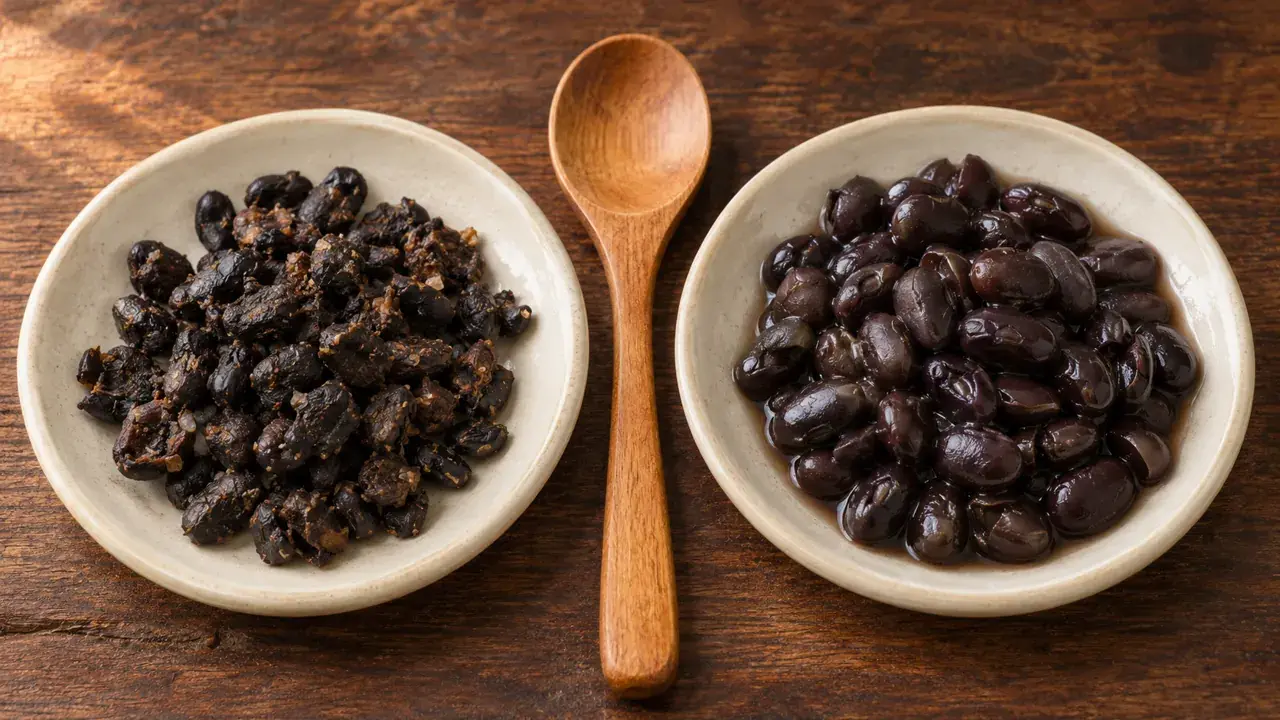
At a glance: three purchases, three different forms
| What to check | Fermented black beans | Ordinary canned black beans | Black bean garlic sauce |
|---|---|---|---|
| Ingredient identity | Salted, fermented black soybeans | The regular black beans sold for bean dishes | Prepared sauce made with fermented black beans, garlic and seasonings |
| Common form | Individual mostly dry, wrinkled beans | Cooked beans packed in a can | Ground beans in a jarred sauce |
| Role in this comparison | Savory seasoning in a recipe | A different bean ingredient | A possible prepared-sauce alternative |
| What changes if swapped | The intended fermented seasoning is present | The intended fermented flavor is missing | Texture, garlic and other seasoning contributions change |
| What the recipe must clarify | Whole or chopped; rinse or not | Whether it actually means ordinary beans | Whether the sauce is an accepted substitute |
| Most useful label clue | Fermented, salted, preserved or douchi | Plain black beans without a fermented-soybean identity | Black bean garlic sauce plus its full ingredient list |
What are Chinese fermented black beans?
Dòuchǐ (豆豉, fermented black soybeans) are black soybeans fermented with salt. The Woks of Life’s ingredient glossary also lists names such as salted black beans, preserved black beans and fermented black soybeans. The product consists of individual beans, rather than a smooth paste. They are mostly dry and slightly soft, with a wrinkled appearance.
The glossary describes their flavor as salty and savory, with a fermented character. That explains their place in a recipe: they are there to season the sauce or the food around them. The small dark pieces in a finished dish may still be recognizable, or they may break down more as they cook.
Chinese recipes use them in stir-fry sauces and steamed dishes. The cited glossary gives examples including steamed spare ribs, tofu and seafood, and notes familiar partners such as ginger and garlic. These are examples of uses, not a claim that every version of those dishes contains douchi.
Why the ordinary can will not do the same job
The Woks of Life explicitly separates douchi from the regular black beans sold canned or dried for dishes such as rice and beans. Their names overlap in English, but the ordinary beans have not become the salted fermented soybean seasoning the Chinese recipe is asking for. Opening a can does not resolve that difference.
Adding ordinary black beans may make a dish you enjoy. It will also change the recipe. The useful question is whether you want to make that adaptation or reproduce the specified black bean seasoning. If you are aiming for the latter, go back to the ingredient list and look for fermented black soybeans or an alternative the recipe author actually recommends.
The reverse mix-up matters too. A recipe that wants ordinary black beans is not asking for a large quantity of douchi. Treat the fermented product as its own seasoning ingredient and use a method written for it. Similar color is a poor guide to the amount or role of a food.
Whole beans and jarred black bean garlic sauce
Black bean garlic sauce is closer to the relevant flavor family. The Woks of Life describes it as salted fermented black soybeans ground with garlic and other seasonings. It is a prepared sauce, which can be convenient when a recipe supports using it. It is also a different form from the individual beans.
Ground beans distribute through a sauce differently from whole or chopped beans. The cited sauce guide notes that the finely ground product darkens the sauce or stir-fry. Whole fermented beans can remain as distinct pieces, depending on the recipe and how they are cooked. Choose based on the result the recipe describes, not just the jar’s color.
There is a practical example in The Woks of Life’s chicken with black bean sauce. That recipe uses fermented beans with ginger and garlic, and discusses jarred sauce as an alternative while calling attention to its salt contribution. It supports a recipe-specific substitution, rather than a universal ratio for every sauce brand.
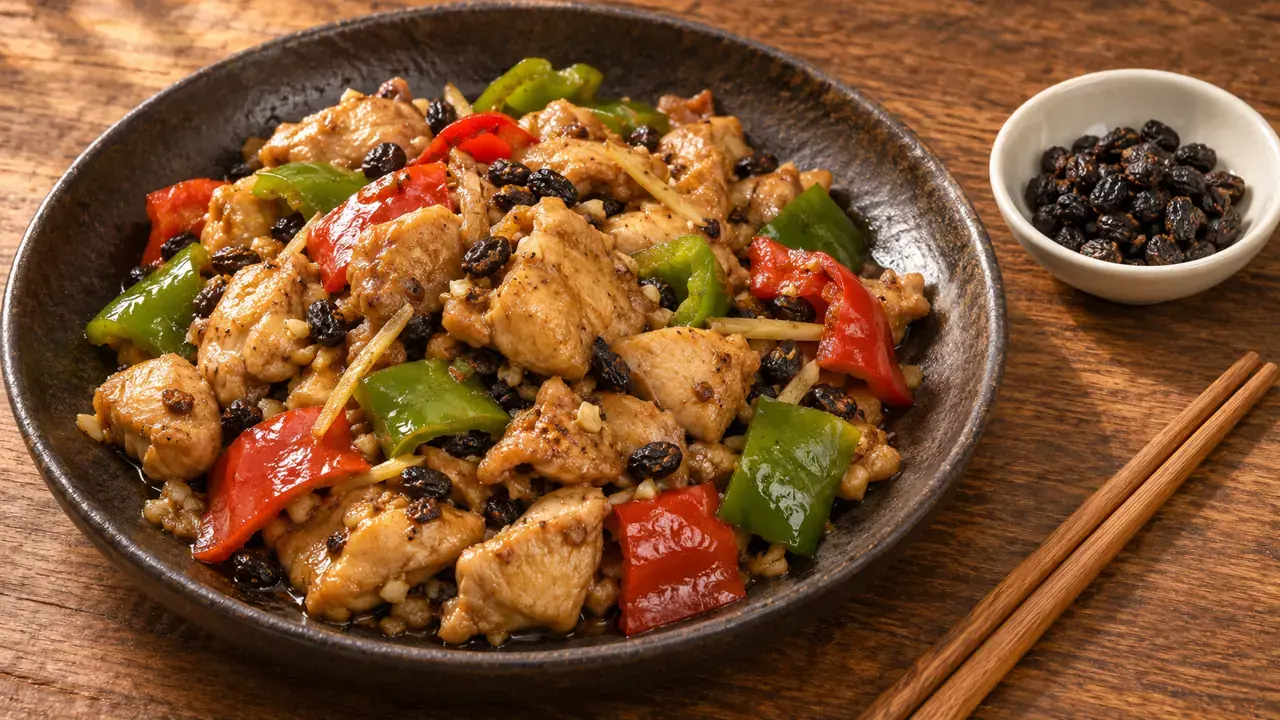
Read the full jar label. A prepared sauce may already supply an ingredient that the recipe lists separately. Follow the recipe’s alternative method and the product directions instead of adding all the original seasonings automatically. The beans, garlic and other sauce ingredients need to make sense together.
A quick way to read the recipe before shopping
- Look for the full name: douchi, salted black beans or fermented black soybeans points to the Chinese seasoning.
- Check the form. Whole fermented beans and black bean garlic sauce are related purchases, but their texture and added seasonings differ.
- Read any substitution note before buying a jar. An accepted alternative in one recipe is not a promise about every black bean dish.
- If the recipe only says black beans, look for ingredient notes or ask the author. Do not settle the question from a photograph alone.
At the shelf, use both the product name and its ingredient list. The glossary shows that some fermented-bean products include added ginger. A bag, canister or jar is just packaging; it does not establish that the contents are plain beans, ginger-seasoned beans or a prepared garlic sauce.
The same care applies to a translated menu. Chicken with black bean sauce identifies a style of seasoning, but it does not tell you the restaurant’s complete formula. Ask about the actual ingredients if garlic, spice, alcohol or an allergy affects your choice.
Do fermented black beans need rinsing?
Follow the particular recipe. The Woks of Life’s glossary discusses both approaches: rinsing can remove some excess salt, while skipping it preserves more of the fermented flavor. It also tells cooks who skip rinsing to account for saltiness when adding other salty ingredients. That is a reason to read the method, not to impose one rinsing rule on every dish.
When you are comparing recipes, keep their preparation choices together. A method written for rinsed beans may balance the other seasonings differently from one using them as sold. A jarred garlic sauce adds another variable. Avoid mixing instructions from several versions and assuming the salt balance will stay the same.
For the liquid seasoning beside the beans, light vs dark soy sauce explains the different jobs those bottles do in Chinese cooking. Soy sauce and douchi can appear in the same recipe, but one ingredient name does not give you permission to replace the other.
Keep neighboring pantry ingredients separate
A red fermented paste is another decision. Doubanjiang vs gochujang compares those pastes and their flavor direction. That page covers a recipe’s paste choice; this one identifies the individual fermented black soybeans and the garlic sauce made from them. Buy the ingredient your method names, even when several products share a fermented-bean description.
The hoisin sauce guide covers a sweet-salty condiment and its difference from oyster sauce. Hoisin’s soybean connection does not make it the same product as whole douchi or black bean garlic sauce. A general instruction to buy bean sauce is too vague to settle between them.
For a tofu dish, the curd is a separate purchase as well. Silken tofu vs firm tofu explains that texture choice. Once you have identified the tofu your recipe uses, return to its sauce ingredients rather than assuming a tofu category tells you which black bean product belongs in the pan.
Soy and other dietary checks
Douchi are made from soybeans. If soy is a concern, do not read the English word beans as proof that the ingredient is unrelated to soy. For a packaged product, read the full ingredients and applicable allergen information. The FDA’s label guide explains how major allergens are identified on most packaged-food labels marketed in the United States.
Prepared sauces need their own check, and a finished restaurant dish needs a check beyond the beans. Sauces, stock, protein and cross-contact can change whether the meal suits your requirements. This comparison does not establish that a jar or dish is gluten-free, vegetarian or suitable for a particular allergy.
The Chinese food guide connects the dishes and pantry choices. For this shopping trip, bring the recipe’s full bean name and its preferred form. If you need a fallback, use the recipe’s sauce alternative rather than the ordinary can by default.
Frequently asked questions
Are Chinese fermented black beans the same as canned black beans?
No. Douchi are salted, fermented black soybeans used as a seasoning. Ordinary canned black beans are a different ingredient and do not reproduce the specified fermented flavor.
What does douchi mean on an ingredient list?
Douchi refers to fermented black soybeans. English labels may also say salted black beans, preserved black beans or fermented black soybeans. Check the ingredient list and whether the product includes added seasonings.
Can black bean garlic sauce replace whole fermented black beans?
It can be an alternative in recipes that allow it. The jar supplies ground fermented beans, garlic and other seasonings, so texture and seasoning balance change. Follow the specific recipe’s substitution notes rather than a universal ratio.
Should I rinse fermented black beans?
Follow the recipe. The cited glossary discusses rinsing to remove some salt and skipping rinsing to retain more fermented flavor. Keep that choice consistent with the recipe’s other salty seasonings.
Is douchi the same as doubanjiang?
No. This guide describes individual fermented black soybeans. The linked doubanjiang guide discusses a fermented bean-and-chile paste. Related ingredient language does not make the two products interchangeable.
Do fermented black beans contain soy?
Yes. The douchi described here are made from black soybeans. Read the exact product label and check the full dish and cross-contact when dietary requirements matter.