Vegetables & sides
Gai Lan vs Bok Choy: Which Chinese Green Should You Choose?
Gai lan is Chinese broccoli: long green stems, broad dark leaves, and sometimes small flower buds. Bok choy has fleshy white or pale-green stalks gathered into a compact base, with softer leaves above. Choosing gai lan vs bok choy comes down to the bite you want. Gai lan gives you a firmer stem and a more assertive, slightly bitter green flavor; bok choy is milder. They can fill a similar place beside dinner, but swapping them changes the texture and the preparation.
At the market, look at the stem and the shape of the bunch before trusting a translated label. At a restaurant, ask how the greens are cooked and sauced. Two plates labeled Chinese greens can be very different things to eat.
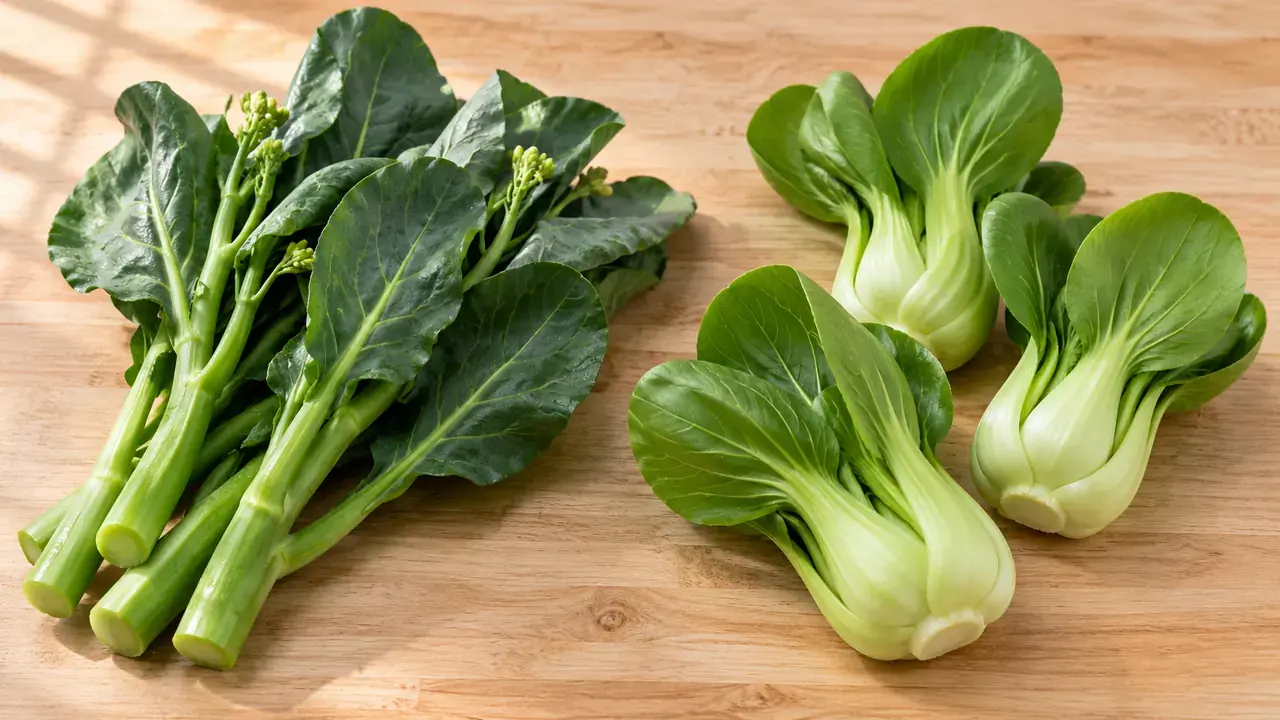
At a glance: gai lan and bok choy
| What to compare | Gai lan / Chinese broccoli | Bok choy / pak choi |
|---|---|---|
| Shape | Separate long stalks with broad, dark leaves | Leaves and fleshy stalks clustered at a base |
| Stem | Round, green, and firm; thicker bases may need trimming | White or pale green, curved and fleshy |
| Flavor | Broccoli-like, with some bitterness | Generally mild, with a gentle sweetness |
| A common preparation | Blanched greens with oyster sauce | Garlic stir-fry, braise, or soup |
| What matters in a swap | Thickness and toughness of the stems | Size of the heads and thickness of the stalks |
| Best reason to choose it | You enjoy a substantial stem and stronger greens | You want a milder green with a different stalk texture |
Those are useful starting points, not a promise about every bunch. Variety, size, freshness, and cooking all matter. A young gai lan stalk and a thick mature one should not be treated as identical just because the shelf sign gives them the same name.
How to recognize gai lan
Gai lan is the Cantonese name commonly used for Chinese broccoli. In Mandarin, it is jiè lán (芥兰, Chinese broccoli). Look for long green stalks with dark, fairly broad leaves. Small buds may appear, but you are buying a leafy stem vegetable, not a large head of broccoli florets.
The stems are an important part of the dish. In The Kitchn's Asian-greens guide, their flavor is compared with broccoli stalks, with some bitterness in the vegetable overall. If you like a substantial bite in a side dish, gai lan is worth considering. If bitterness is the thing you most want to avoid, the milder bok choy may suit you better.
Thick gai lan stems can have a tough outer layer. The Woks of Life recommends trimming the ends and peeling the tougher lower stem when needed. Its Chinese broccoli with oyster sauce recipe is a clear example of a preparation that keeps the stalks recognizable rather than chopping everything into small pieces.
How to recognize bok choy
Bok choy, also written pak choi, has stalks gathered together at the base and leaves spreading above them. White-stemmed types and pale-green Shanghai bok choy can look quite different on the shelf. A pale-green stem does not mean you have accidentally picked up gai lan.
The Woks of Life's vegetable glossary describes several bok choy varieties and sizes. The Kitchn likewise distinguishes mature white-stemmed bok choy from smaller green forms. Treat baby bok choy as a useful shopping description, not proof that every small head is the same variety or will cook at exactly the same speed.
Bok choy is generally mild, and its stalks and leaves offer different textures. That makes it useful when you want greens alongside a strongly flavored main without choosing a more bitter vegetable. It also works in soups and braises; you do not have to turn every bunch into a stir-fry.
For an edible-pod vegetable alongside those greens, Snow peas vs sugar snap peas compares the flat pods and fuller, sweeter snaps used in stir-fries.
Shopping for another vegetable texture alongside your greens? Water chestnuts vs chestnuts explains the crisp white ingredient found in some stir-fries and how it differs from the chestnuts used in braises and stuffing.
On a menu, ask about the sauce too
Chinese broccoli with oyster sauce is a familiar preparation documented by The Woks of Life: cooked gai lan is plated and finished with the sauce. That does not mean every restaurant's gai lan arrives that way. Garlic, broth, sauce, and the cooking method can change what you receive. Ask about the specific dish rather than ordering by the vegetable name alone.
If you are reading a menu of small plates, our dim sum vs dumplings guide explains the meal format. Here, the decision is the vegetable side: firm-stemmed gai lan, milder bok choy, or whichever preparation actually appeals to you. A dim sum heading does not tell you the sauce ingredients.
For vegetarian or allergy-related needs, ask whether the dish uses oyster sauce, meat stock, or other seasonings that matter to you. A mushroom-based vegetarian sauce can be an option, but check its actual ingredients. Our hoisin and oyster sauce guide explains the condiment difference; the word greens does not settle it.
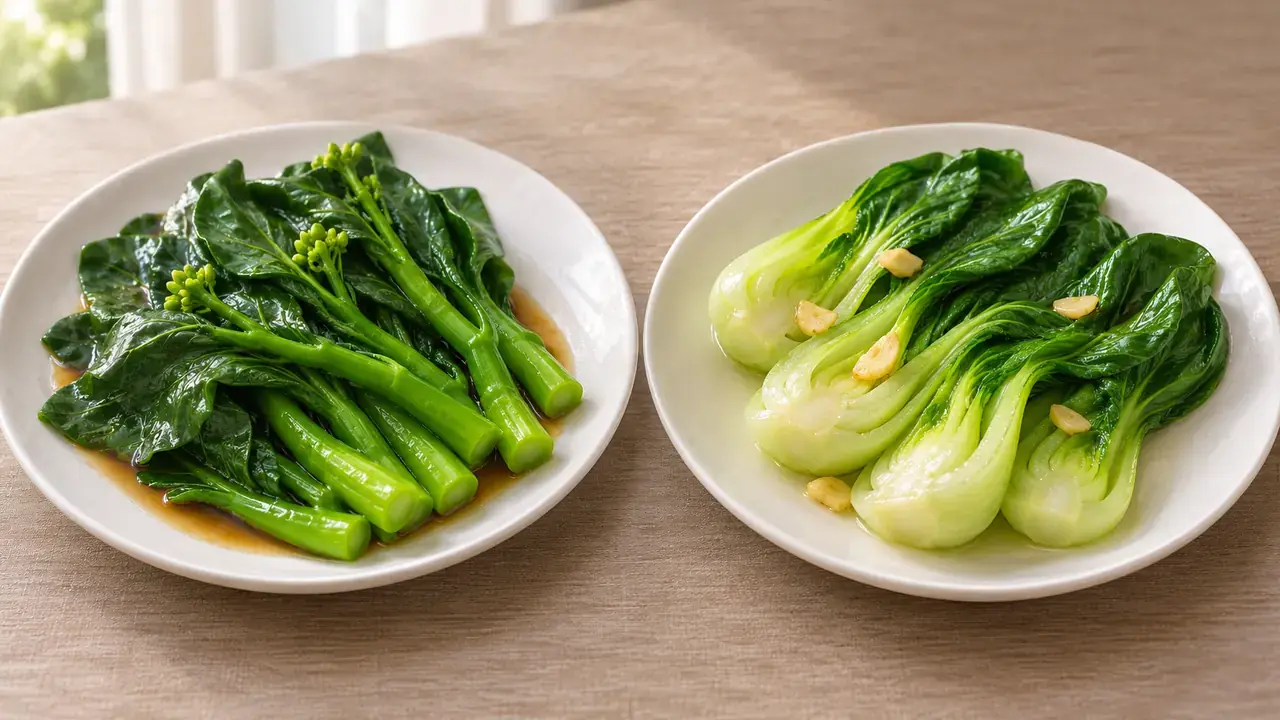
Can you substitute bok choy for gai lan?
For a flexible home-cooked vegetable side, often yes, if you are happy with a different result. You will still have greens on the plate, but the stem shape, texture, and flavor will change. This is a useful dinner substitution, not a way to reproduce a particular restaurant dish exactly.
- For a mild garlic side: choose a recipe written for bok choy when that is what you have. Its clustered stalks and leaves need different cutting from a bunch of long gai lan stems.
- For long stalks served with sauce: gai lan gives you the recognizable stem-and-leaf presentation. Bok choy can make a good sauced side too, but expect a different plate.
- For a soup or braise: bok choy is a documented choice. If you want to use gai lan instead, find a preparation for it and account for the actual stem thickness rather than copying the original cooking time.
- For a recipe you want to follow closely: buy the named green or use that author's substitution notes. A general comparison cannot guarantee the same result in every dish.
With either vegetable, inspect the stalks before cooking. Trim tough ends, cut large pieces as the recipe directs, and judge the finished stem rather than the leaves alone. Leaves looking wilted does not tell you that a thick stem has reached the texture you want. This is why a single cooking time for both vegetables would be misleading.
Keep the sauce decision separate from the vegetable swap. Adding more seasoning cannot make bok choy taste like gai lan or give it the same stem. If a recipe specifies a soy sauce, our light vs dark soy sauce guide covers that bottle choice without turning it into another vegetable decision.
What to check before you buy and cook
- Look for greens that appear fresh rather than wilted or yellowing. For gai lan, inspect the lower stems as well as the leaves; very thick bases may need more trimming.
- For bok choy, check between the layers and around the base when washing. The clustered shape can hold grit that is easy to miss at first glance.
- Match the bunch size to your recipe. Compact baby bok choy and a large white-stemmed head need different preparation, even when both are labeled bok choy.
- If you are choosing a menu item for someone else, ask about the finished dish: the green, its sauce, the stock, and any relevant shared preparation.
For washing, follow the FDA's produce guidance: gently rub produce under plain running water; soap and produce wash are not needed. Remove damaged areas and dry with a clean cloth or paper towel. That guidance is more useful than treating a quick glance at clean-looking leaves as a washing method.
If an allergy is involved, read the complete label on packaged sauces each time you buy them and ask about restaurant ingredients and cross-contact. The FDA notes that US precautionary statements such as may contain are voluntary, so the absence of a warning is not a guarantee. A vegetable guide cannot certify a whole dish as allergen-free.
Which green fits your meal?
Choose gai lan if the firmer stalk and a little bitterness sound good. Choose bok choy if you want a milder green and a different, fleshier stalk. Then choose a preparation that suits the bunch in front of you. You do not need to decide which vegetable is better in general to decide which one belongs on tonight's table.
For a holiday spread, our Chinese Thanksgiving dinner guide includes garlic bok choy among its side-dish ideas. For everyday meals, browse the Chinese food guide and build around the main you have chosen. Keep this decision simple: the vegetable determines the texture; the recipe tells you how to bring it to the table.
Frequently asked questions
Is gai lan the same as bok choy?
No. Gai lan is Chinese broccoli, with long green stalks and broad dark leaves. Bok choy has fleshy white or pale-green stalks gathered at a base. Their shape, flavor, and texture differ.
Is Chinese broccoli the same as gai lan?
Yes. Gai lan is the Cantonese name commonly used for Chinese broccoli. In Mandarin it is jiè lán (芥兰). It is a leafy stem vegetable, not a large head of broccoli florets.
Which is milder, gai lan or bok choy?
Bok choy is generally milder. Gai lan has a broccoli-like stem flavor and some bitterness. Variety, size, and preparation affect the finished result, so this is a guide rather than a guarantee for every bunch.
Can I use bok choy instead of gai lan?
Often, in a flexible vegetable side, if you accept a different texture and flavor. Change the cutting and cooking to suit the bok choy rather than transferring the gai lan cooking time unchanged. Follow recipe-specific substitution notes when available.
Is gai lan the same as broccolini?
No. Broccolini is a cross between broccoli and Chinese broccoli. Gai lan is Chinese broccoli itself. Similar names do not mean the two vegetables have the same shape or preparation needs.
Is gai lan with oyster sauce vegetarian?
Do not assume so. The sauce and any stock determine the finished dish. Ask whether a mushroom-based vegetarian sauce is available, and check all ingredients and cross-contact information for your needs.