Vegetables & sides
Water Chestnuts vs Chestnuts: Which One Does Your Recipe Need?
Water chestnuts vs chestnuts is a choice between two different ingredients. Chinese water chestnuts are an aquatic vegetable used for a crisp bite in stir-fries and some fillings. Edible tree chestnuts are the shelled nuts used in dishes such as braised chicken, stuffing and desserts. If your recipe wants the crunch of water chestnuts, a peeled chestnut will change that texture. If it wants the richer, softer chestnuts in a braise, canned water chestnuts will not do the same job.
The shared English word is the confusing part. Before buying either, check the full ingredient name and the form your recipe requests: fresh water chestnuts, canned slices, whole chestnuts or peeled chestnuts. Those details tell you more than the picture of a brown shell.
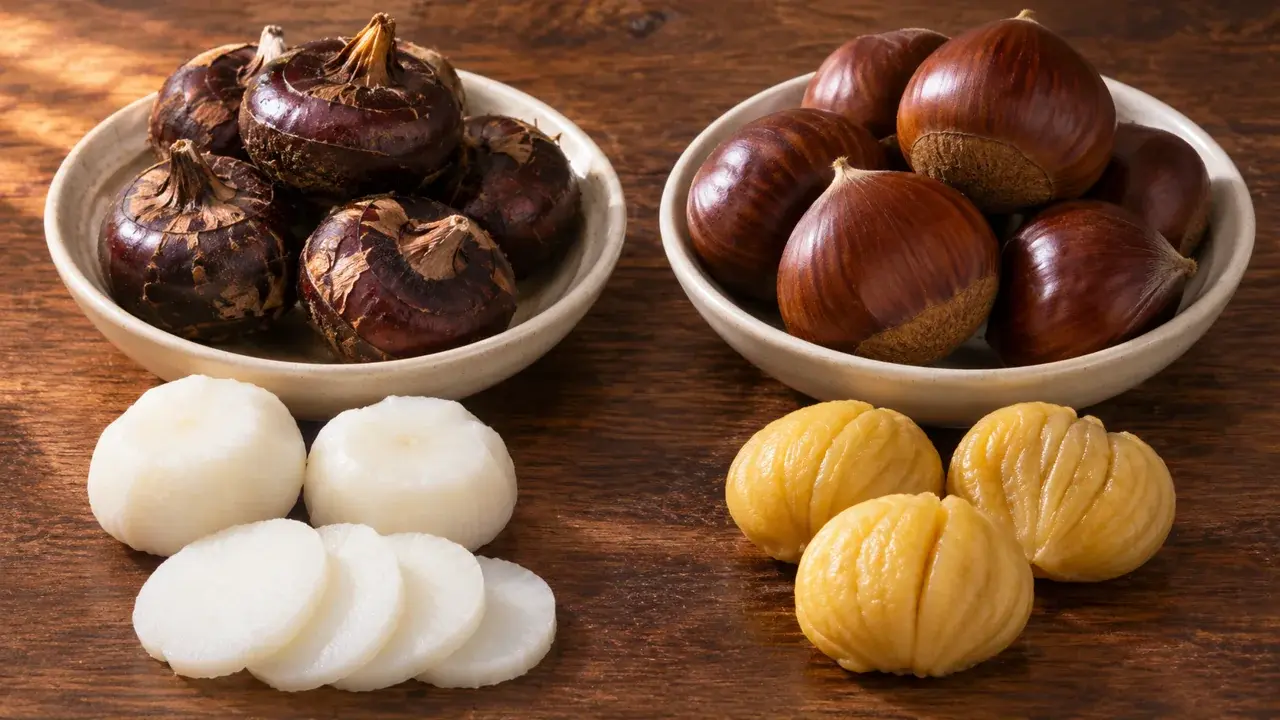
At a glance: crunch or a softer chestnut bite?
| What to compare | Chinese water chestnuts | Edible tree chestnuts |
|---|---|---|
| Ingredient identity | Aquatic vegetable | Tree-grown chestnut |
| Useful visual clue | Dark skin outside, white flesh inside | Glossy brown shell; peeled kernel is pale tan to golden |
| Texture to expect in the cited dishes | Crisp pieces in a vegetable stir-fry | A richer, softer ingredient in a braise or stuffing |
| Shopping forms | Fresh skin-on, canned whole or sliced | In the shell or peeled; check whether already cooked |
| Chinese cooking examples | Moo goo gai pan, vegetable stir-fries, some dumpling fillings | Braised chicken, sticky rice dishes, soups and desserts |
| Substitution question | Will the replacement still supply crunch? | Will the replacement suit the softer chestnut role? |
What are Chinese water chestnuts?
The Woks of Life’s vegetable glossary describes water chestnuts as a crunchy vegetable that grows in marshes and muddy water. It lists the Chinese name mǎ tí (馬蹄). The ingredient is sold fresh with its dark skin still on, as well as canned whole or sliced. A can of water chestnut slices belongs to this vegetable category, rather than the shelled chestnuts you might buy for roasting.
The white interior is a useful clue when you are matching an ingredient to a dish. In a stir-fry, those pale rounds or small crisp pieces may be easier to recognize than the unfamiliar English name. The glossary documents their use in vegetable stir-fries and, sometimes, shrimp dumplings. That does not mean every dumpling filling contains them.
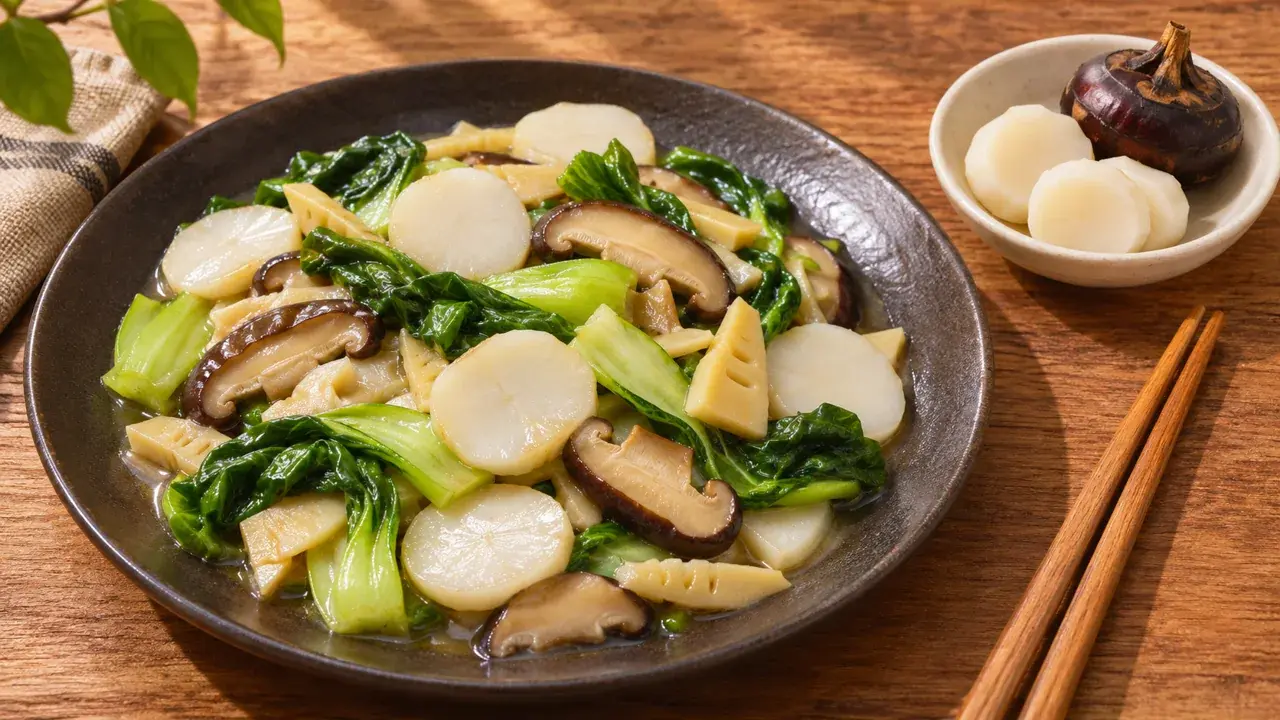
For a concrete example, The Woks of Life’s moo goo gai pan combines water chestnuts with chicken, mushrooms, bamboo shoots and bok choy. The water chestnuts are one component of a mixed dish. Their role makes more sense when you look at the textures around them than when you treat the English word chestnut as a recipe instruction.
What are the other chestnuts?
Edible tree chestnuts are the ones with a glossy brown shell and a kernel that must be separated from its shell and skin for many recipes. The Woks of Life’s preparation guide discusses peeled chestnuts for stuffing, sticky rice dishes, soups and desserts. Its warning that overcooking can leave them mushy also points to the texture difference: this is not the crisp white vegetable in the other aisle.
Its braised chicken with chestnuts recipe shows another Chinese cooking use. Chestnuts are cooked with chicken, shiitake mushrooms and seasonings in a braise. That is a different meal and a different ingredient job from adding water chestnut slices to a vegetable stir-fry. Neither example is a rule about every Chinese kitchen.
At the store, read whether a pack contains raw chestnuts, cooked peeled chestnuts or a sweetened chestnut product. A recipe written for one form may need a different method for another. Use its preparation instructions rather than assuming that everything labeled chestnut can go straight into the pot at the same point.
Choose by the job in the dish
If a recipe names water chestnuts in a filling or stir-fry, start by asking what the pieces contribute. Often, the useful distinction is a crisp bite among softer ingredients. A tree chestnut changes that bite. It may be an ingredient you enjoy, but it is a deliberate change to the dish rather than a neutral correction to the shopping list.
If the recipe names chestnuts in a braise, start with the chestnut form it specifies. The cited braised-chicken recipe gives you a model for that use. White water chestnut slices will look and feel different; adding them cannot recreate the softer chestnut pieces just because the names overlap.
Stuffing is where the two names can be especially confusing. Our Chinese Thanksgiving dinner guide describes sticky rice stuffing, with water chestnuts as an optional crunchy addition. Elsewhere, a stuffing recipe may call for peeled tree chestnuts. Read the actual ingredient list; the word stuffing does not settle which one the cook means.
You can also keep the vegetable choices separate. Gai lan vs bok choy explains a leafy-green decision, including the difference between stems and leaves. That question complements a water chestnut purchase, but choosing the green does not replace the crisp ingredient named in a recipe.
For another crisp vegetable choice, Snow peas vs sugar snap peas explains the edible-pod shapes and what changes when you swap them in a stir-fry. That is a separate purchase from either kind of chestnut.
Fresh, canned, whole and sliced: read the whole label
For water chestnuts, the glossary confirms both fresh and canned forms. A can may contain whole pieces or slices. Match that cut to the recipe when it matters: round slices and finely chopped pieces will be noticed differently in the finished filling or stir-fry. The product name alone does not tell you the cut.
If you are buying fresh water chestnuts, the dark skin-on ingredient in the produce section will look quite different from the peeled white pieces in a can. Use a preparation method written for fresh water chestnuts. If you are buying canned ones, follow the package and recipe directions for handling them; this comparison is not a canning or preservation method.
For tree chestnuts, shelled, peeled and cooked are separate pieces of information. A photograph of a smooth peeled kernel does not tell you whether the product is raw, cooked or sweetened. Read the description before using it in a savory dish, especially when a recipe gives instructions for preparing fresh chestnuts.
Do not turn the comparison into a fresh-versus-canned verdict. First buy the correct ingredient. Then choose the form your recipe uses and the amount of preparation you want to take on. A convenient peeled chestnut product is still a different purchase from canned water chestnut slices.
Can you substitute one for the other?
For a close match, use the ingredient named in the recipe. The distinction is large enough that a straight name-based swap is a poor starting point. Water chestnuts bring the crisp vegetable texture described in the glossary; the chestnuts in a braise or stuffing serve a different purpose.
If you are adapting a flexible dish, decide what you are willing to change. Losing crunch may be acceptable in your version of a filling, while changing the main chestnut ingredient in a braise may take you farther from the intended result. Use a recipe-specific alternative when the author provides one. There is no need to force a replacement simply because both products are available.
- Recipe says water chestnuts and describes crisp pieces? Look for the aquatic vegetable in the requested fresh or canned form.
- Recipe says peeled chestnuts for a braise, soup or stuffing? Check the chestnut product and whether it is already cooked.
- Shopping for a flour instead of whole pieces? Read that ingredient separately; a shared food name does not establish the same use.
- Ordering a dish rather than cooking it? Ask what the restaurant actually puts in it. A menu name is not a complete ingredient list.
Ingredient forms cause similar confusion elsewhere in the pantry. Rice flour vs glutinous rice flour separates two powders that do different jobs. It does not identify water chestnut flour or make it interchangeable with either rice flour. If your recipe asks for a particular starch or flour, keep that as a separate shopping decision from whole chestnuts.
A shared name is not an allergy check
Water chestnuts and tree chestnuts are different foods, but that fact alone does not establish whether a packaged product or cooked dish suits an allergy. The FDA’s label guide explains how major allergens are identified on most packaged-food labels marketed in the United States. Read the ingredients and applicable allergen information on the product you will actually use.
For restaurant food, ask about the whole preparation, including sauces, fillings and cross-contact. A vegetable ingredient does not make the complete dish vegetarian, gluten-free or suitable for every allergy. If you have a diagnosed allergy, use advice from your clinician rather than treating a name comparison as clearance to eat something.
The Chinese food guide connects the related dishes and ingredients. For this purchase, take the recipe’s full ingredient name to the shelf and check the form underneath it. That resolves the useful question before you start cooking.
Frequently asked questions
Are water chestnuts and chestnuts the same ingredient?
No. Chinese water chestnuts are an aquatic vegetable used for a crisp bite. Edible tree chestnuts are a different food used in dishes such as braises, stuffing and desserts. The shared English word does not make them interchangeable.
Which one gives Chinese stir-fries a white, crunchy piece?
Water chestnuts are the relevant ingredient in the cited vegetable glossary and moo goo gai pan recipe. A restaurant may use a different combination of vegetables, so ask about its actual dish if you need to identify an ingredient.
Can I use regular chestnuts instead of water chestnuts?
Expect a changed dish. Tree chestnuts will not recreate the crisp water chestnut texture. For a close match, use the named ingredient; for an adaptation, follow a recipe-specific substitution that fits the texture you want.
Are canned water chestnuts already peeled tree chestnuts?
No. Canned whole or sliced water chestnuts are forms of the aquatic vegetable. Peeled tree chestnuts are a separate product. Read the full name and check the cut and preparation state.
Which chestnut belongs in Chinese sticky rice stuffing?
Follow the particular recipe. Our Thanksgiving guide describes water chestnuts as an optional crunchy addition. Peeled tree chestnuts also have documented uses in sticky rice dishes, so the word stuffing alone does not identify the ingredient.
Does this mean water chestnuts are safe for every nut allergy?
No. This ingredient comparison cannot establish allergy suitability. Check the exact package and full dish, ask about cross-contact when relevant, and follow your clinician’s advice for a diagnosed allergy.