Pantry & condiments
Chinese Black Vinegar vs Rice Vinegar: Which Should You Use?
For black vinegar vs rice vinegar, the useful difference is flavor and color. Chinkiang-style Chinese black vinegar brings a dark, malty, more complex tang; plain pale rice vinegar adds a lighter-tasting sour note without the same dark color. One naming wrinkle: Chinkiang black vinegar is itself a style of rice vinegar. Here, we are comparing that black vinegar with the clear-to-golden, unseasoned rice vinegar beside it on the shelf. For a close match to a recipe, buy the named style; for a flexible sauce, a swap can work with a different result.
Before choosing, check a second word on the label: seasoned. A seasoned rice vinegar can bring sugar and salt as well as acidity. That difference may matter more to your dip than whether the bottle says rice vinegar or rice wine vinegar.
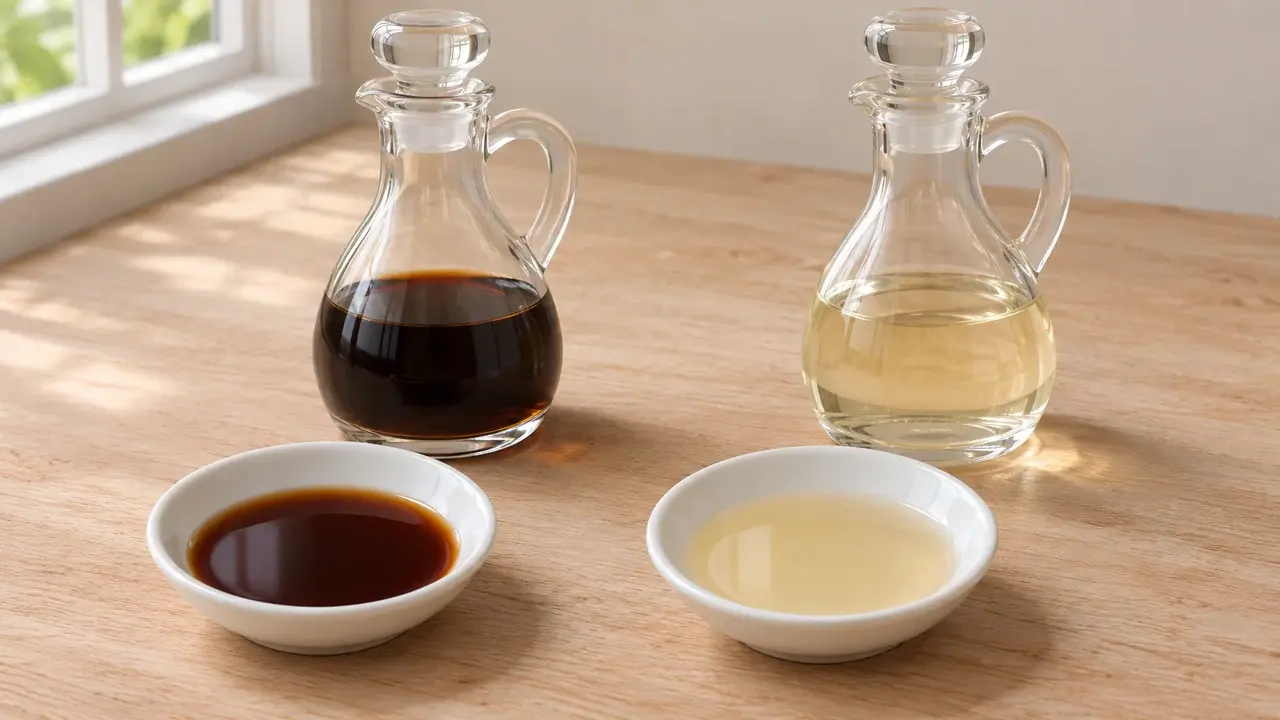
At a glance: which bottle does what?
| Question | Chinkiang-style Chinese black vinegar | Plain pale rice vinegar |
|---|---|---|
| Other wording to recognize | Chinkiang, Zhenjiang, or black rice vinegar | Rice vinegar or rice wine vinegar |
| Appearance | Very dark brown to black | Clear to pale golden |
| Flavor direction | Malty, full-bodied tang with some sweetness | Milder, less assertive vinegar flavor |
| Useful when | The recipe wants black-vinegar flavor or a dark dip | The recipe wants acidity without that dark color/flavor |
| What a swap changes | Using pale vinegar loses the malty character and dark color | Using black vinegar adds its own flavor and color |
| Label check | Read the grain/ingredient list | Check whether it is plain or seasoned |
This table compares two everyday choices, not every vinegar made in China or Japan. Color does not tell you a product's exact acidity, and the word rice does not tell you everything in the bottle. Read the description and ingredients, then follow the recipe's own notes.
What is Chinese black vinegar?
The Chinkiang or Zhenjiang style is the dark rice-based vinegar often meant by black vinegar in Chinese recipes. You may see zhènjiāng xiāngcù (镇江香醋, Zhenjiang aromatic vinegar) on the label. Chinkiang and Zhenjiang are names to recognize when shopping for this style, rather than a reason to buy two different bottles.
The Woks of Life describes it as malty and complex, with a faint sweetness. Its glossary explains that the rice base may be combined with grains such as sorghum or wheat. That is a useful reason to check the individual product rather than assuming black rice vinegar contains only rice.
Black vinegar is used in dumpling dips, noodle sauces, cold dishes, braises, and stir-fries. Where the vinegar is a noticeable part of the sauce, its own flavor matters. Replacing it with a paler vinegar may provide sourness while leaving out some of the character the recipe expected.
What does plain rice vinegar mean here?
Mǐcù (米醋, rice vinegar) is a broad name. In a recipe or on a grocery list, rice vinegar often means the pale, plain version, but check the author's ingredient notes if the wording is unclear. The Woks of Life describes white rice vinegar as ranging from colorless to golden, so a pale-gold bottle is not automatically seasoned.
Plain pale rice vinegar is useful in dressings, dipping sauces, and other mixtures where you want tang without the darker flavor and appearance of Chinkiang vinegar. Mizkan's natural rice-vinegar page describes a mild tang, and Kikkoman lists dipping sauces and dressings among the uses of its rice vinegar. Those examples help explain the job, without making every brand identical.
Rice wine vinegar and rice vinegar are names for the same ingredient type. Rice wine is different. The extra word wine in rice wine vinegar does not mean you should replace vinegar with a bottle of cooking wine. If a recipe calls for a rice cooking wine, follow its wine guidance rather than choosing something from this vinegar comparison.
Seasoned rice vinegar is a separate decision
Check the full product name before you measure anything. Mizkan's seasoned rice-vinegar page, for example, says that product contains added sugar and salt. Its natural rice vinegar is a different product. The label distinction matters because a seasoned bottle can alter more than the sourness of a recipe.
If a recipe uses plain vinegar and adds its own sugar or salt, switching to seasoned vinegar changes that starting point. Read any substitution note the author provides. There is no single adjustment that works for every brand, every sauce, and every recipe quantity.
The reverse also matters: using plain vinegar where a recipe expects a seasoned product can leave out part of the intended seasoning. You can choose an adaptable result, but identify what changed first. Adding more vinegar to fix missing sweetness is unlikely to solve the problem you actually have.
Can rice vinegar replace Chinese black vinegar?
Often, in an adaptable dish, if you accept a different flavor and color. The Woks of Life specifically lists white rice vinegar as a substitute for black vinegar. That does not mean the two produce an identical dip, or that every recipe should use an automatic one-to-one swap.
- A dumpling dip: plain pale rice vinegar can supply the sour component, but expect a lighter-colored dip without the same malty flavor. Mix a small separate portion before dressing every dumpling.
- A sauce where black vinegar is prominent: the change will be easier to notice. If matching that flavor is the point, buy the named black vinegar or choose a recipe designed for pale rice vinegar.
- A pale dressing or light-colored sauce: black vinegar adds its own dark color and flavor. Use it only if that change suits the dish, rather than expecting the original appearance.
- A recipe with a precise substitution note: use that guidance ahead of a general shopping rule. The author may have balanced other ingredients around a particular vinegar or style.
Do not use color as your seasoning meter. A darker dip is not a signal to keep adding soy sauce, and a paler dip does not need black vinegar just to look more convincing. Our light vs dark soy sauce guide covers the soy-bottle decision separately. Vinegar and soy sauce can share a bowl while doing different jobs.
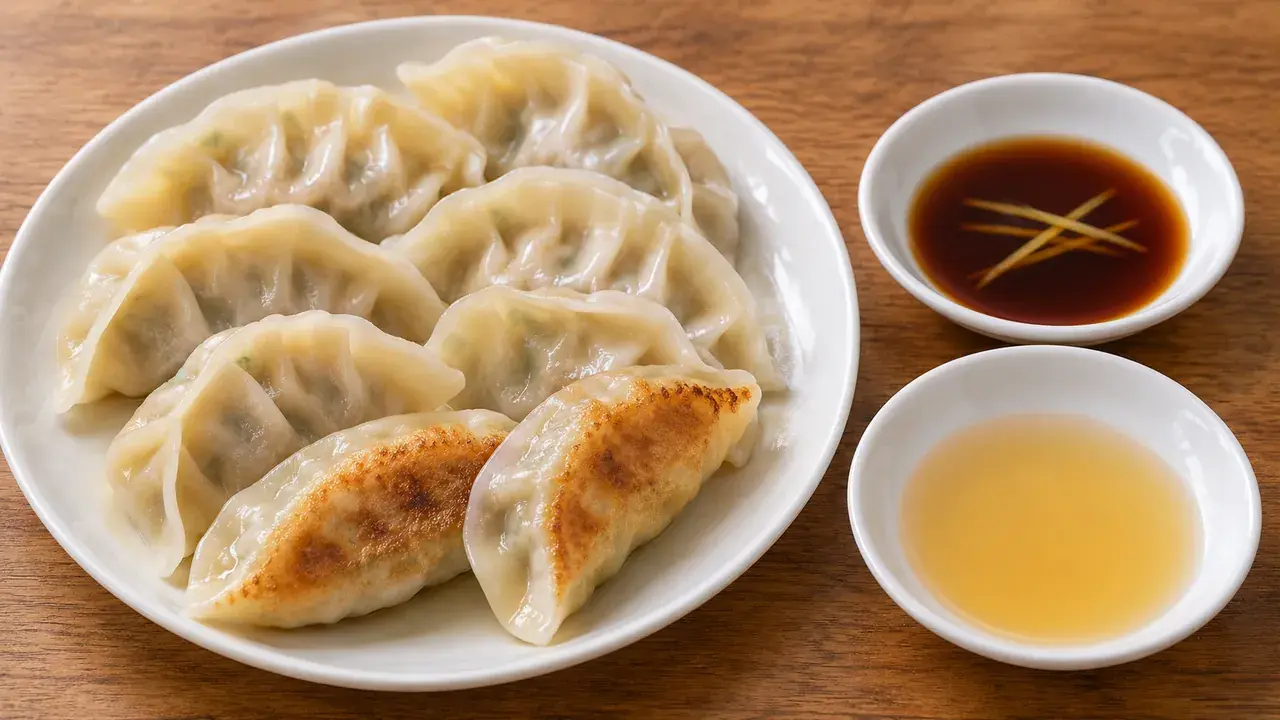
Choosing a vinegar for dumplings
Both vinegar styles can belong at a dumpling meal. The Woks of Life documents black vinegar with shredded ginger as a soup-dumpling dipping condiment; its rice-vinegar glossary also describes dipping-sauce uses. The dumpling's name alone does not require one universal sauce formula.
Start with the dip that sounds good to you, or the one the recipe specifies. Keep some sauce separate if you want to adjust it, and taste that mixture before pouring it over the whole plate. This is a practical way to make a flexible dip, not a claim that a particular ratio is the rule for every Chinese dumpling.
Our gyoza vs potstickers guide compares the dumplings and cooking instructions; this guide handles the vinegar choice. If you are still sorting out what a dumpling meal means in the first place, chicken and dumplings vs Chinese dumplings explains the much bigger difference between those dishes.
Chili oil or chili crisp adds another decision: a smoother oil versus a condiment with crunchy solids. Choose that texture separately from the vinegar's flavor. Our chili crisp vs chili oil guide explains the jar choice without treating heat, crunch, and sourness as the same thing.
A short label checklist
- Find the style the recipe names: Chinkiang/Zhenjiang black vinegar or plain pale rice vinegar.
- Check for seasoned on a pale rice-vinegar bottle. Read the ingredients rather than deciding from its color.
- For allergies or gluten avoidance, check the exact product's ingredient/allergen information and any relevant gluten-free labeling. The word rice is not a guarantee about every grain or added ingredient.
- If you are buying for a specific dish, read the recipe's own ingredient and substitution notes before choosing a replacement.
- Follow the storage instructions on your bottle, including any directions after opening.
The FDA advises reading the complete ingredient label whenever you buy a product, rather than relying only on a separate Contains statement. It also notes that US precautionary statements about possible cross-contact are voluntary. For a restaurant dip, ask about the full sauce and shared preparation when those details matter to you.
For a small pantry, buy the vinegar used by the recipes you actually cook. Add the other style when you want what it contributes, rather than collecting bottles with overlapping names. The Chinese food guide links the dish comparisons and ingredient decisions so you can choose dinner and its seasonings together.
Frequently asked questions
Is Chinese black vinegar the same as rice vinegar?
Chinkiang-style black vinegar is a rice-based vinegar, so the categories overlap. In this comparison, rice vinegar means the plain pale version. The black style has a darker color and a malty flavor that the pale version does not reproduce.
Can I use rice vinegar instead of Chinkiang vinegar?
Often, if a different flavor and a paler result are acceptable. The Woks of Life lists white rice vinegar as a possible substitute. Follow the recipe author's notes, and try a small separate portion when making an adaptable dip.
Are rice wine vinegar and rice vinegar different?
They are names for the same ingredient type. Rice wine is a different ingredient, however, and is not a direct replacement for vinegar. Check the full wording in the recipe.
Can I use seasoned rice vinegar instead of plain rice vinegar?
It may work with a changed result, but check the product and recipe. Seasoned rice vinegar can include added sugar and salt, so it changes more than acidity. There is no universal adjustment for every bottle and sauce.
Is Chinese black vinegar gluten-free?
Do not assume so from the name. Some rice-based black vinegars can include wheat or other grains. Check the exact product's ingredients and gluten-free labeling, and ask about the rest of the sauce and cross-contact when needed.
Which vinegar is best for dumpling dipping sauce?
Choose the flavor you want or follow the recipe. Chinkiang black vinegar gives a darker, malty dip; plain pale rice vinegar gives a different, lighter-tasting tang. Neither choice establishes a single required sauce formula for every dumpling.