Ingredients
Napa vs Green Cabbage: Which One Belongs in Your Stir-Fry?
The quick answer to napa cabbage vs green cabbage: napa is the oblong pale head with a crunchy white base and looser crinkly leaves. Green cabbage is the round, tightly packed ball most stores sell as plain cabbage. Napa wilts fast and tastes mild, a little sweet. Green stays crunchy longer and tastes more like cabbage. Buy the one the recipe is actually using.
The English word cabbage covers both. Same plant family as gai lan vs bok choy, different job in the pan. Look at the head, not a sign that only says cabbage.
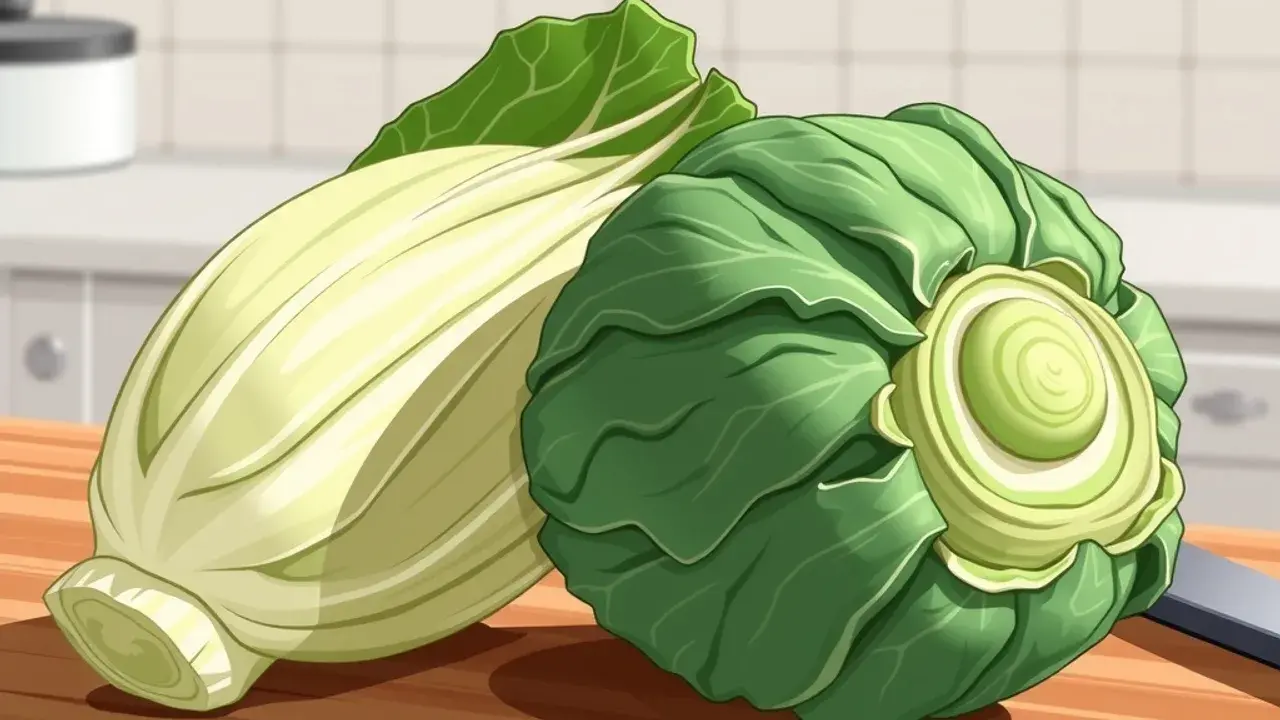
At a glance: napa cabbage and green cabbage
| What to check | Napa cabbage (大白菜) | Green cabbage (圆白菜) |
|---|---|---|
| Shape | Oblong, like a giant celery stalk or romaine | Round, tightly packed ball |
| Leaves | Pale green to white, crinkly, looser at the top, crunchy base | Darker green outer leaves, pale inside, smooth, packed tight |
| Texture (raw) | Crisp, watery, slightly tender | Very crunchy, firm, fibrous |
| Texture (cooked) | Softens quickly, stays a little sweet, white ribs keep a bite | Holds crunch, chewier, keeps its shape |
| Flavor | Mild, sweet, a faint peppery note, takes sauce well | Stronger, more sulfuric cabbage flavor, earthy |
| Common uses | Stir-fries, dumplings, hot pot, salads, kimchi | Coleslaw, sauerkraut, soups, braises, some stir-fries for chew |
Napa: the cabbage Chinese recipes usually mean
When a Chinese recipe says Chinese cabbage, it is almost always napa. Wikipedia traces napa cabbage (Brassica rapa pekinensis) to the Beijing region. In Mandarin it is dà bái cài (大白菜), literally big white vegetable. The Kitchn describes thick white ribs and tender pale-green leaves, less dense than a green or red head.
The Woks of Life notes that Asian cabbages tend to cook sweeter than a standard green or savoy head. Red House Spice's stir-fried napa with hot-and-sour sauce is a typical home use: the leaves go soft in a hot wok, and the white base still has crunch.
Green cabbage: the round everyday head
Green cabbage, yuán bái cài (圆白菜), also called bāo cài (包菜) for the wrapped head, is the round ball. Sustained Kitchen describes it as pale green, tightly packed, and useful for sauerkraut, slaw, soup, or a longer sauté. Taste of Home treats Chinese cabbage as napa, not this head.
The leaves are thicker and waxier. The flavor is stronger, a bit sulfuric, more earth. Fine when you want chew after a long simmer. A problem when you wanted napa's quick wilt.
Why the swap fails
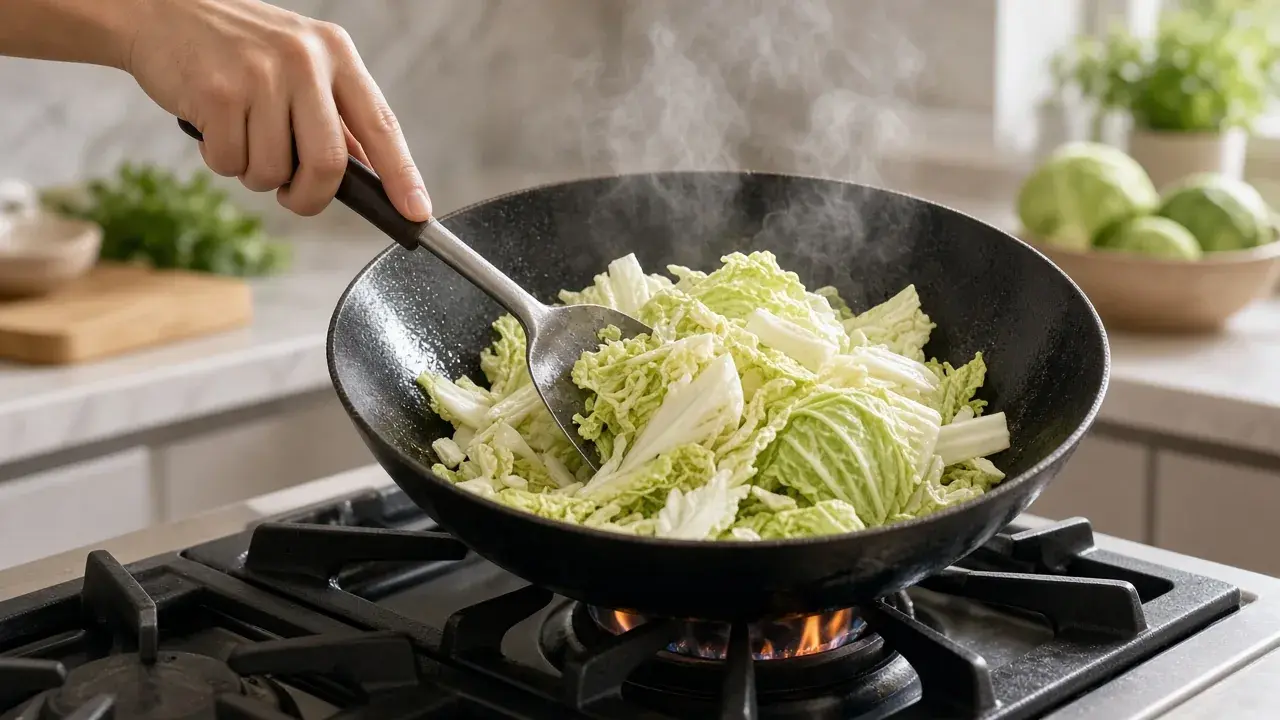
The split is water and density. Napa's thin leaves dump water and collapse in a hot pan. Green's packed leaves hold their shape. That is why a napa stir-fry finishes in a couple of minutes, and why green cabbage in the same pan still tastes underdone.
Flavor follows the same split. Napa's mild sweetness sits under a sauce. Green's stronger bite can take over a light seasoning. light vs dark soy sauce is a bottle choice. It will not turn the round head into napa.
When to use napa
- Stir-fries: hot-and-sour cabbage and other quick wok dishes. Short cook, sauce on the leaves, white base still crisp.
- Dumpling fillings: chopped leaves add moisture and a mild sweetness. Salt and squeeze if the recipe says so, or the mix gets wet.
- Hot pot: thin slices wilt in the broth.
- Light salads: the raw bite is watery and tender, not fibrous.
When to use green cabbage
- Coleslaw and sauerkraut: the classic crunch.
- Soups and stews: it is still there after a long simmer.
- Braises: slow heat makes it tender without disappearing.
- Some stir-fries: only if you want chew and you give it more time in the pan.
Can you swap them?
Usually, don't. Green cabbage in a quick napa stir-fry stays chewy and drinks less sauce. Napa in a long soup turns to mush.
A rustic dish can forgive the swap if you change the timing and accept a different texture. It is the same kind of near-miss as swapping shaoxing wine vs mirin: close on the shelf, not the same bottle. For the recipe as written, use the head it named.
What to grab
Grab napa when the dish wants a fast, sweet leaf. Grab the round green head when you want crunch that survives. For the next produce-aisle mix-up, garlic chives vs green onions is the bunch question, not the cabbage one.
Frequently asked questions
What is napa cabbage called in Chinese?
Napa cabbage is 大白菜 (dà bái cài), literally big white vegetable. That is the usual Chinese cabbage in stir-fries and hot pot.
What is green cabbage called in Chinese?
Green cabbage is 圆白菜 (yuán bái cài), meaning round white vegetable, sometimes 包菜 (bāo cài) for the tightly wrapped head. Stronger, more sulfuric bite than napa.
Can I use napa cabbage for coleslaw?
Yes. Napa makes a lighter slaw. It soaks dressing, and it softens sooner than green cabbage.
Is napa cabbage good for stir-frying?
Yes. It cooks fast, stays sweet, and still has a bite at the white ribs. It also takes sauce well, which is why it shows up in quick Chinese vegetable dishes.
What's the best way to prepare napa cabbage for cooking?
Rinse it, separate the leaves, and split the thick white base from the greener tops. The white parts need a little more time in the wok. Add the greens last.
Does napa cabbage taste like regular cabbage?
Not really. Napa is milder and sweeter, with less of the sulfur note. Green cabbage can take over a light sauce.
Why is napa cabbage often used in dumplings?
The leaves chop fine, add moisture and a gentle sweetness, and do not flood the filling if you treat them as the recipe says. Steamed inside a dumpling, they stay juicy.