Pantry & condiments
Chinese Five Spice vs Allspice: Which Jar Do You Need?
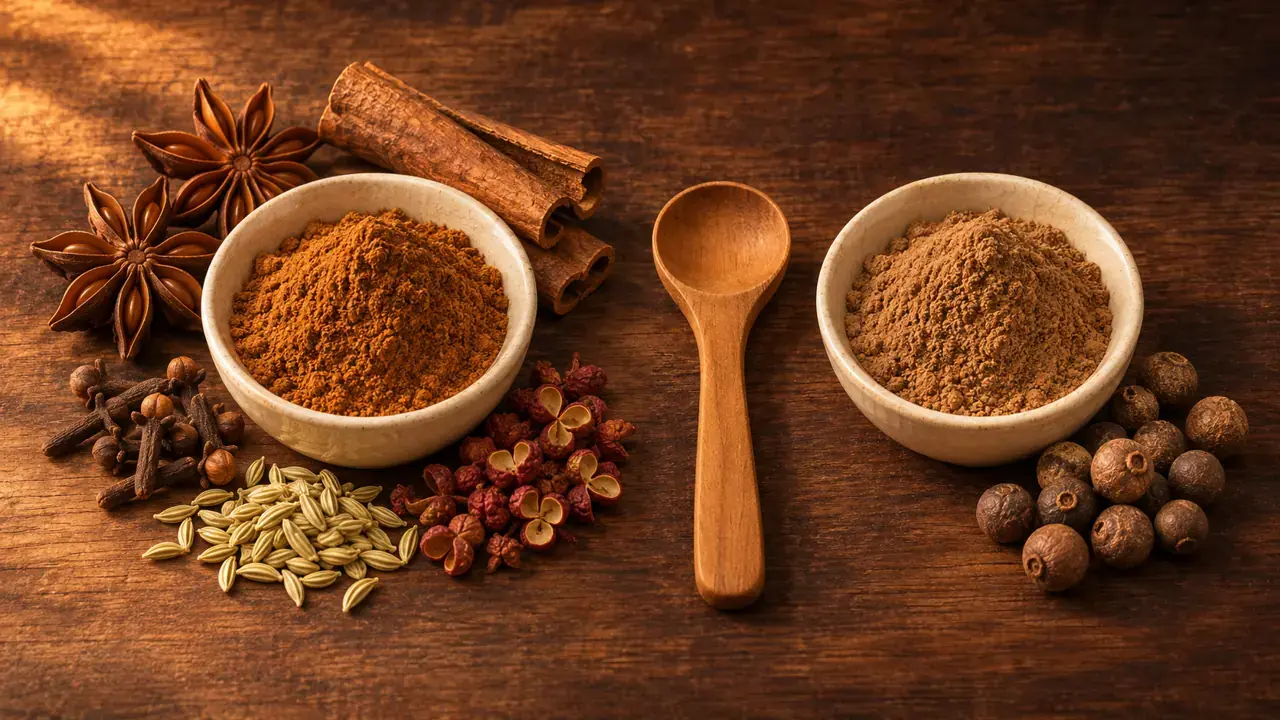
For Chinese five spice vs allspice, the main difference is a blend versus a single spice. Chinese five-spice powder combines several spices, often including star anise, cinnamon, cloves, fennel and Sichuan peppercorns. Allspice comes from one kind of berry; its name describes a complex aroma, not a mixture. If your Chinese recipe calls for five-spice powder, buy that blend. Allspice can add warm spice flavor, but it will not reproduce the same combination on its own.
Both can look like brown powder in a jar, and both can suggest cinnamon or cloves. That overlap makes the names easy to confuse. The ingredient list is the better shopping tool: one names a collection of spices, while a plain ground-allspice product names allspice itself.
At a glance: blend, berry and recipe choice
| Question | Chinese five-spice powder | Allspice |
|---|---|---|
| What is it? | A mixed spice powder; formulas and ratios vary | One spice made from a berry |
| Typical ingredient clues | Star anise, cinnamon, cloves, fennel and Sichuan peppercorns in a common blend | Ground allspice in a plain ground product |
| Aroma direction | Warm and pungent, often with a noticeable anise/licorice note | Warm aroma often compared with cloves, cinnamon and nutmeg |
| What the name does not guarantee | Exactly five ingredients or one fixed formula | A mixture of several spices |
| For a Chinese recipe naming five spice | The intended starting point | A different flavor, not a complete replacement |
| Best check before buying | Read the blend ingredients and any recipe notes | Check that the product is plain allspice rather than another seasoning mix |
What is Chinese five-spice powder?
Wǔxiāng fěn (五香粉, five-spice powder) is a Chinese spice blend. The Woks of Life describes a common combination of cinnamon, cloves, fennel, star anise and Sichuan peppercorns, while noting that other recipes include ingredients such as ginger or orange peel. The name is useful, but it does not give you a complete ingredient list for every jar.
The individual spices bring different notes. In that guide, star anise supplies a licorice-like flavor, cinnamon and fennel contribute warm, sweet notes, and cloves bring a strong sweet-and-slightly-bitter character. The mixture gives you several aromas together. A single spice that recalls one part of that mixture will still leave other parts out.
Look at the ingredient list if you want to understand the product in your hand. Two blends can share a name without using the same proportions. If a recipe recommends a particular blend or provides its own formula, those details help explain the result it is aiming for. You do not need to decide that one label is the only correct version to notice the practical difference.
The word sweet here describes an aroma or flavor impression, not a promise that the powder contains sugar. Check the ingredients for added salt, sugar or other seasonings rather than assuming what a product includes from its name. A spice blend and a more broadly seasoned rub can require different handling in a recipe.
What is allspice?
Allspice is a single spice. McCormick’s ground-allspice page identifies it as the berry of an evergreen tree and explains that its ground product is made from whole allspice berries. The ingredient statement lists Ground Allspice. That is a concrete example of a single ingredient despite the expansive-sounding name.
The same manufacturer compares its flavor with cloves, cinnamon and nutmeg. Those comparisons describe how the spice smells and tastes; they are not a statement that the jar contains those three ingredients. It is the same distinction as describing a fruit as having a floral aroma without claiming that flowers were added.
Allspice also has uses beyond baking. McCormick gives examples including barbecue sauces, meat dishes and stews as well as pies and cookies. So the choice is not simply one jar for savory food and another for desserts. Start with the ingredient named in your recipe, then consider the flavor it contributes.
Can allspice replace five-spice powder?
It can supply a warm spice note, but it changes the result. Plain allspice does not give you the full combination of anise, fennel, cinnamon, cloves and peppercorns in a common five-spice blend. If the familiar five-spice aroma is central to the dish, buying the named blend or following a published blend recipe is a clearer route.
There is no universal amount that turns one spice into several. Adding more allspice changes the intensity of allspice; it does not add the missing ingredients. The reverse substitution has the same issue: a five-spice blend adds its own mixed aroma to a recipe that calls for allspice alone.
- Following a Chinese recipe closely? Use the five-spice powder or blend formula it specifies.
- Missing the jar for a one-off meal? Check the recipe’s own substitution notes before improvising.
- Comfortable changing the flavor? Treat allspice as a different seasoning choice, rather than an exact copy of five spice.
- Shopping for a recipe that says allspice? Look for plain ground or whole allspice as instructed, not a container labeled mixed spice or five spice.
A recipe-specific alternative is more useful than a long list of supposedly equivalent brown powders. Consider how prominent the spice is in the dish. A small background note and a defining marinade flavor are different decisions, and a general comparison cannot test every substitution for you.
In char siu, the spice and the sauce do different work
The Woks of Life’s char siu recipe lists five-spice powder separately from hoisin sauce, soy sauce, Shaoxing wine and white pepper. It is a useful example of several pantry ingredients working together. The dry spice blend is one part of the preparation; a finished sauce is another.
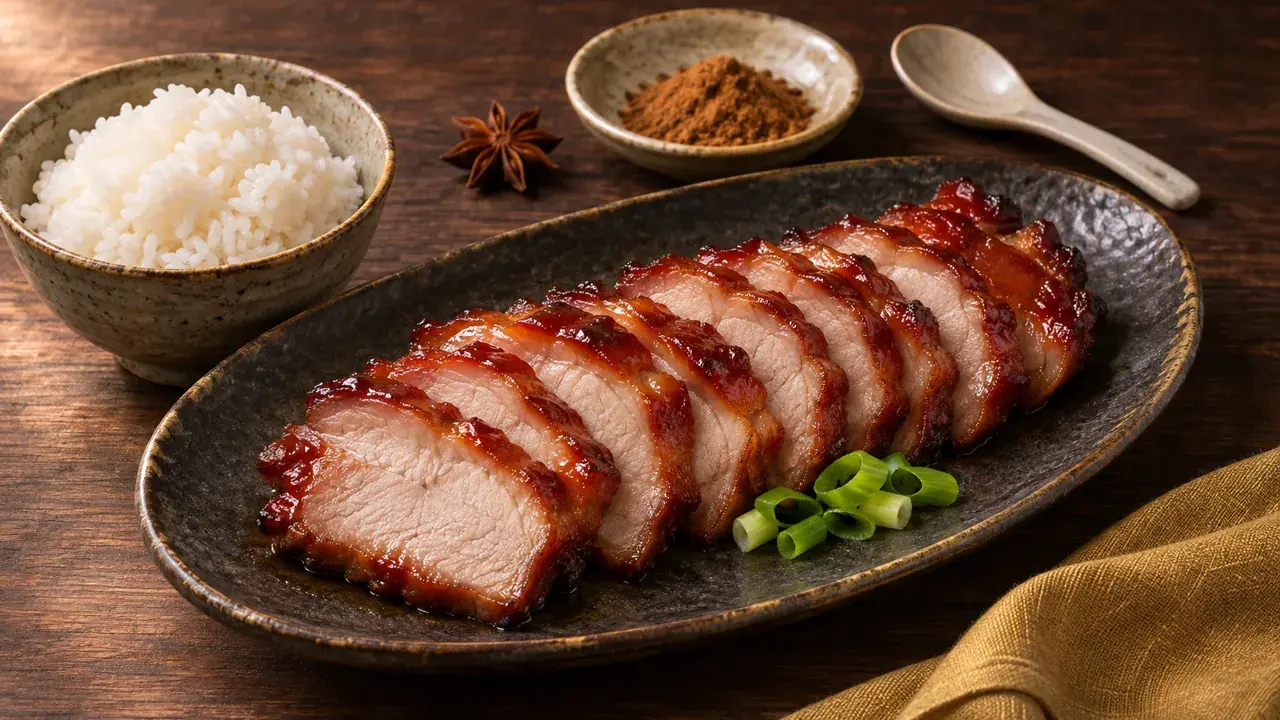
If you are choosing a jar of sauce, the hoisin sauce guide explains that separate ingredient. If your marinade names a soy-sauce style, light vs dark soy sauce covers its salt-and-color role. And Shaoxing wine vs mirin addresses the cooking-wine choice. Swapping the spice does not automatically tell you to change those ingredients too.
For a larger meal plan, the Chinese Thanksgiving dinner guide includes five-spice seasoning among its options. This page helps identify the dry spice before you return to a recipe. It does not provide roasting temperatures, timing or a new marinade formula.
A warm aroma is not a universal heat rating
The word spice can mean an aromatic seasoning without promising chile heat. Five-spice blends vary, so the name alone does not tell you how much peppercorn character a particular jar has. Allspice’s peppery-sweet description likewise does not make it interchangeable with a peppercorn or a chile ingredient.
Choose based on the named ingredient and the recipe rather than assuming that a higher number in five spice means more heat than allspice. There is no useful universal heat ranking between these categories. The ingredients and their proportions matter more than the names.
Read the current label, especially for dietary needs
A plain spice and a packaged seasoning mix are different labeling situations to check. Read the full ingredient list and any allergen statement on the product you plan to use. The FDA explains how major allergens are disclosed on most packaged-food labels marketed in the United States. A familiar product name is not a substitute for that information.
The finished meal needs its own check too. A spice powder does not establish whether the marinade, sauce or restaurant dish is gluten-free, vegetarian or appropriate for an allergy. Ask about the full preparation and cross-contact when those details matter to you.
For the rest of the pantry, the Chinese food guide connects the related sauces and dishes. At the spice shelf, keep the distinction simple: five spice is a blend to read, and allspice is one spice to identify.
Frequently asked questions
Is allspice a mixture of spices?
No. Plain allspice is one spice made from a berry. Comparisons with cloves, cinnamon and nutmeg describe its flavor, not a blend of those ingredients.
Does Chinese five spice always contain exactly five spices?
No fixed formula applies to every product or recipe. A common blend includes cinnamon, cloves, fennel, star anise and Sichuan peppercorns, but other ingredients and proportions are possible. Read the actual label.
Can I use allspice instead of Chinese five spice?
It adds a different warm spice flavor rather than recreating the full blend. Follow your recipe’s substitution notes, or buy the named blend when its aroma is central to the dish. There is no universal exact swap.
Are five spice and allspice only for sweet food?
No. Both have savory uses as well. A documented char siu recipe uses five-spice powder, and McCormick lists savory uses for allspice including barbecue sauces and meat dishes.
Is five spice the same thing as hoisin sauce?
No. Five-spice powder is a dry blend, while hoisin is a prepared sauce. The cited char siu recipe lists them separately; one is not simply a different package for the other.
Will five spice always make a dish very hot?
The name alone does not establish a heat level. Blends and proportions vary, and aromatic warmth is not the same as a chile-heat ranking. Read the ingredients and follow the recipe.