Quick Answer
No, Kung Pao Chicken is not automatically gluten-free.
A home version can work with gluten-free tamari or gluten-free soy sauce, checked vinegar and wine, clean starch, and clean equipment. A restaurant version needs official allergen information, not a hopeful reading of the menu. For the full sauce architecture, keep the Kung Pao sauce file open.
Soy sauce
The biggest gluten flag. Many conventional soy sauces contain wheat, so the exact bottle decides the answer.
Tamari
Often useful, but not a magic word. Look for a gluten-free label or certification, especially for strict medical diets.
Shaoxing wine
Brands vary. If the bottle is unclear, use a verified gluten-free dry sherry, stock, or water and accept a simpler aroma.
Starch
Cornstarch and potato starch can fit, but shared scoops and contaminated storage can defeat the ingredient list.
Restaurants
Shared woks, ladles, prep surfaces, sauce bottles, and fryers are the reason a menu claim may still need caution.
Premixed sauce
Restaurant and bottled sauces can include wheat-containing soy sauce or other hidden gluten sources.
Soy Sauce
The first gluten-free question is the exact soy sauce or tamari.
Conventional soy sauce often contains wheat. That means the dish can fail the gluten-free test before the chicken ever reaches the wok. Tamari is a useful substitute, but the word itself is not enough. The bottle must be labeled gluten-free if gluten avoidance is strict.
Low-sodium and gluten-free are also separate claims. A low-sodium soy sauce may still contain wheat, and a gluten-free tamari may still be high in sodium. For the nutrition side of that tradeoff, see is Kung Pao Chicken healthy and Kung Pao Chicken calories.
Sauce Audit
Check every sauce component, not just the soy bottle.
Kung Pao sauce is usually a tight balance of soy sauce, vinegar, sugar, starch, liquid, and aromatics. Gluten can enter through soy sauce, Shaoxing wine, bottled chile sauces, hoisin-style additions, stock bases, oyster-style sauces, or restaurant premixes. A recipe that looks simple on paper can become complicated when the bottles are commercial.
- Choose labeled gluten-free soy sauce or tamari.
- Check cooking wine, stock, vinegar, chile paste, and any bottled sauce.
- Avoid vague "Asian sauce" bottles unless the label is clear.
- Use separate clean measuring spoons and bowls if gluten flour is active in the kitchen.
Small Ingredients
Vinegar, starch, peanuts, and wine still need a quiet check.
Plain rice vinegar and Chinkiang vinegar are not the usual gluten problem, but labels still matter because brands vary and facilities differ. Cornstarch and potato starch are common thickening choices; the bigger risk is shared scoops, floury storage, or a restaurant prep line where ingredients move fast and labels move slowly.
Peanuts add a second safety track. Gluten-free does not mean peanut-free, soy-free, sesame-free, or safe for every allergy. The broader guide is Kung Pao Chicken allergens.
Restaurant Reality
Restaurants may not be able to guarantee gluten-free Kung Pao Chicken.
Shared woks, sauce ladles, prep surfaces, fryers, and premixed sauces are the hard part. Even if a kitchen can omit soy sauce from one order, it may not have a clean wok, verified gluten-free sauce, or separated prep process. For celiac disease or strict medical diets, "we can make it without soy sauce" is not the same as a gluten-free guarantee.
Official chain allergen pages are useful because they reveal the restaurant's current position. When in doubt, do not rely on an old forum answer or a generic copycat recipe.
Home Control
A practical gluten-free home workflow.
- Use soy sauce or tamari that is explicitly labeled gluten-free; do not assume tamari always qualifies.
- Check Shaoxing wine, cooking wine, stock, vinegar, chile paste, hoisin-style sauces, and oyster-style sauces.
- Use a fresh gluten-free starch package, not a spoon from a flour-dusted prep drawer.
- Buy peanuts or peanut substitutes with a label that fits your gluten and allergen needs.
- Use clean cutting boards, clean pans, clean utensils, and a clean sauce bowl.
- Treat restaurant claims as uncertain unless backed by current official allergen procedures.
Then cook from a known baseline, such as the WKPO recipe, with the verified bottles swapped in. Keep the sauce tight, because a watery gluten-free adaptation is usually a technique issue, not proof that gluten was doing secret magic.
Flavor Tradeoff
What changes when Kung Pao Chicken goes gluten-free?
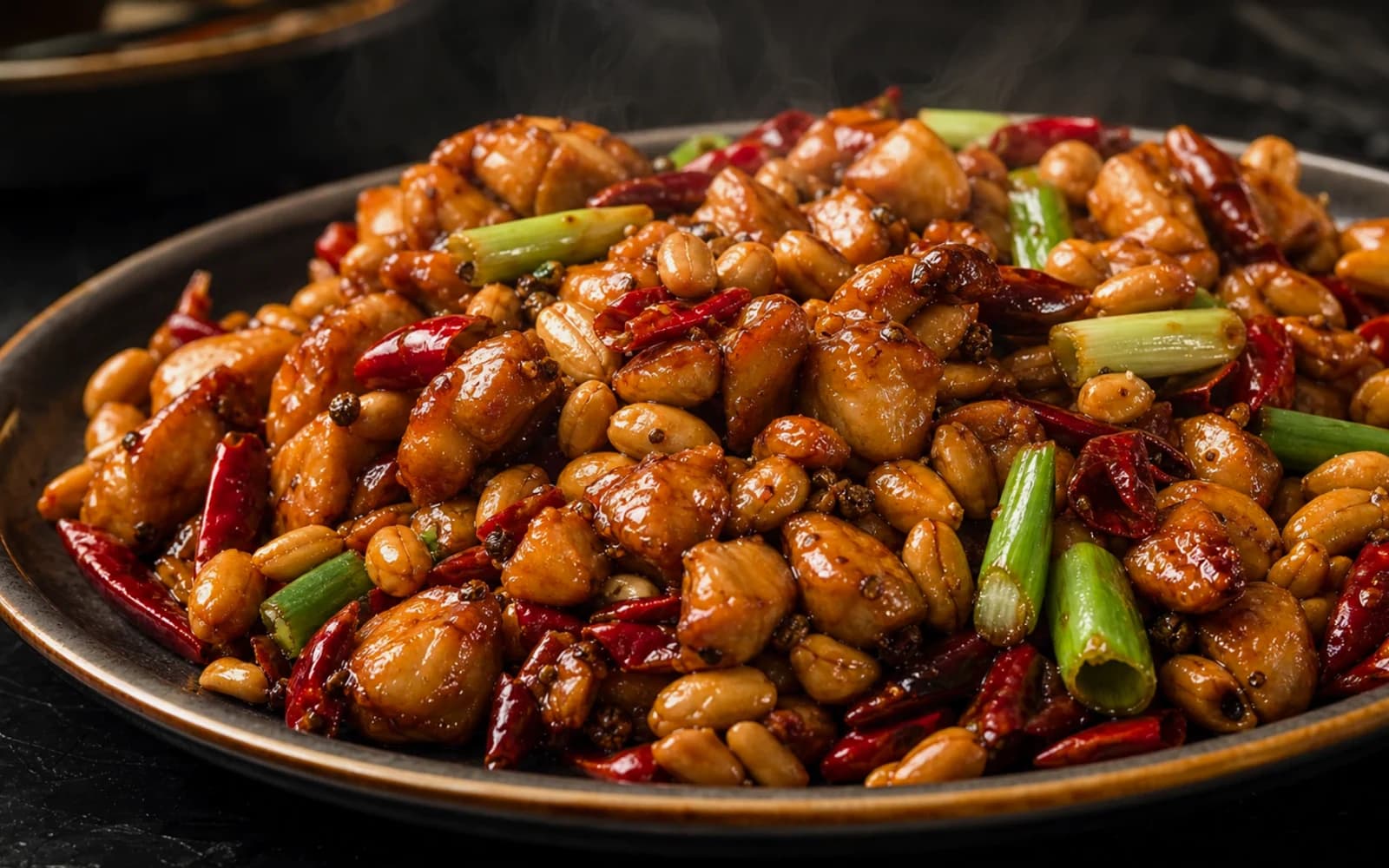
A good gluten-free version should still taste like Kung Pao Chicken: savory, sour, lightly sweet, aromatic, a little numbing, peanut-crisp, and fast. Gluten itself is not the flavor engine. The main difference is the soy substitute and whatever happens to Shaoxing wine or premixed sauces. Choose bottles that keep umami and acidity in balance, then let ginger, garlic, scallion, dried chile, and Sichuan peppercorn do the loud work.
FAQ / Gluten-Free Hearing
Questions before the sauce bowl enters evidence.
Is Kung Pao Chicken gluten-free?
Not automatically. Classic sauce often uses soy sauce, and many soy sauces contain wheat. A gluten-free version requires verified gluten-free sauce ingredients and cross-contact controls.
Can I use tamari for gluten-free Kung Pao Chicken?
Yes, if the tamari is labeled gluten-free. Do not assume every tamari is safe for celiac disease or strict gluten avoidance.
Is cornstarch gluten-free?
Plain cornstarch is typically gluten-free, but strict diets still need label reading and clean storage to avoid cross-contact.
Can restaurants guarantee gluten-free Kung Pao Chicken?
Some restaurants may have procedures; many cannot guarantee it because of shared woks, sauces, and prep areas. Use official allergen information and ask direct questions.
Does gluten-free Kung Pao Chicken taste authentic?
It can stay close if the sauce still balances savory, sour, lightly sweet, chile aroma, Sichuan peppercorn, chicken, scallion, ginger, garlic, and peanuts. The label-controlled soy substitute is the main adaptation.