Pantry & condiments
White Pepper vs Black Pepper: Which Works in Chinese Cooking?
For white pepper vs black pepper in Chinese cooking, choose the pepper your recipe names. Both come from the same plant, but their processing gives them different appearance and flavor. White pepper is especially useful to recognize for soups and marinades; it is a named ingredient in The Woks of Life’s hot and sour soup. Black pepper can stand in for it in some preparations, but the aroma and visible flecks change. Pale pepper does not automatically mean mild pepper.
The decision is more useful than a rule that one pepper belongs to every Chinese dish. Start with the dish, then check whether the recipe calls for whole peppercorns, freshly ground pepper or a fine powder. The type of pepper and the size of the grind are separate details.
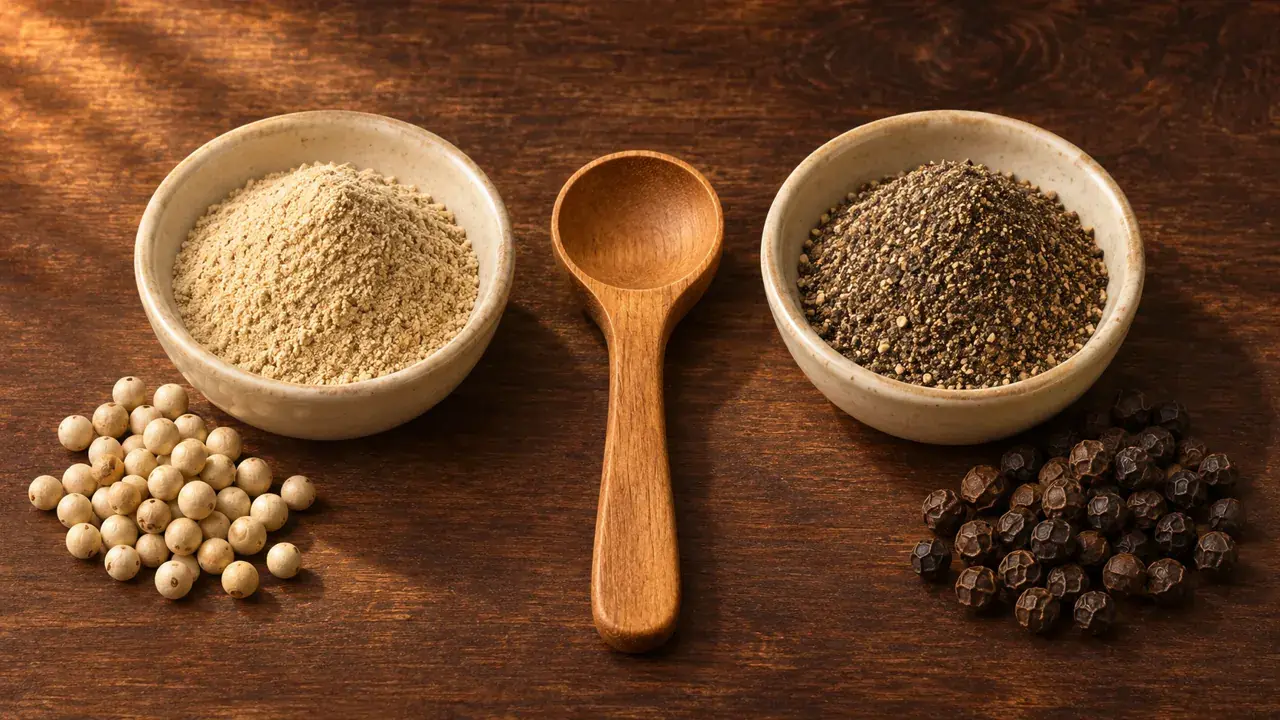
At a glance: same plant, different preparation
| What to compare | White pepper | Black pepper |
|---|---|---|
| Plant source | Piper nigrum | Piper nigrum |
| Processing distinction | Ripe berry with outer skin removed; inner seed dried | Unripe berry dried with its outer skin |
| Appearance | Pale peppercorns or a light-colored powder | Dark wrinkled peppercorns or powder with dark flecks |
| Flavor description in the cited cooking guide | Earthy, with a direct peppery heat | Floral and pungent when freshly ground |
| Chinese soup context | Specified in the cited hot-and-sour soup recipe | A different aroma and visible result if substituted |
| What else to match | Whole, ground or fine powder as the recipe requests | Whole, ground or fine powder as the recipe requests |
White and black pepper come from the same plant
White pepper, bái hújiāo (白胡椒), and black pepper are products of Piper nigrum, the pepper plant. Both The Woks of Life and McCormick explain that the difference begins with harvest and processing, rather than two unrelated pepper plants.
Black pepper is made from berries harvested before they are ripe and then dried. The outer skin darkens and wrinkles. White pepper is processed from ripe berries with the outer skin removed, leaving the inner seed to be dried. That is why whole white peppercorns look pale beside whole black peppercorns.
The distinction also explains why white pepper is more than a pale-colored substitute. Removing part of the berry changes the ingredient. You may be able to use either in a flexible recipe, but that does not mean they produce identical flavor just because they share a plant source.
You do not need to process peppercorns yourself to make this shopping decision. Look for the named product and the form the recipe requests. A container labeled white pepper powder answers a different question from a grinder filled with black peppercorns, even when both sit in the same supermarket aisle.
What changes in aroma and appearance?
The Woks of Life describes freshly ground black pepper as floral and pungent, and white pepper as earthy with a more direct hot character. Those are useful flavor descriptions, not a numerical strength chart. They help explain why a recipe may deliberately ask for one instead of the other.
White pepper can season a pale preparation without the obvious black flecks from black pepper. But appearance is only part of the choice. In a soup or sauce where pepper contributes noticeably to the flavor, changing the type can change the character of the dish as well as how it looks.
Do not use color as a shortcut for heat. A fine pale powder can still add a pronounced peppery bite. Products, grind and the amount in the recipe all matter. This guide does not assign either category a universal heat score or a conversion that makes every jar behave alike.
For hot and sour soup, pepper and vinegar do separate jobs
The Woks of Life’s hot and sour soup recipe uses white pepper and vinegar as distinct ingredients. The pepper contributes the hot side of the balance, while the vinegar contributes sourness. It is a useful example of why a recipe’s heat should not automatically be interpreted as a request for chile sauce.
That example is a specific recipe, not a claim that every restaurant prepares its soup identically. If you are trying to follow a version that names white pepper, buy that ingredient when you can. Replacing it with black pepper is a flavor change; adding a chile condiment is a different change again.
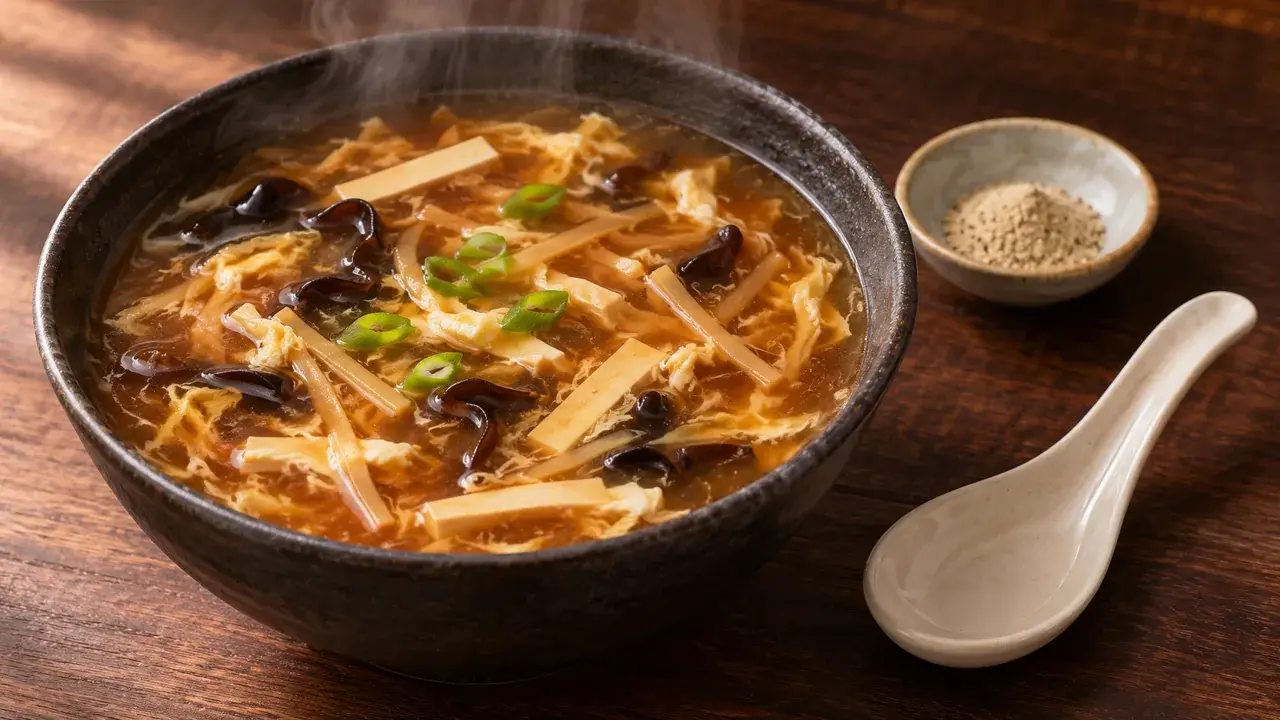
For a menu decision rather than an ingredient purchase, egg drop soup vs hot and sour soup compares the bowls. If you are exploring a rice-porridge meal, what is congee explains that dish and its toppings. This page keeps the focus on the pepper you bring back to the recipe.
Can black pepper replace white pepper?
The Woks of Life’s white-pepper guide allows black pepper as a substitute when white pepper is unavailable. That is a useful fallback, provided you expect a different aroma and dark flecks. It should not be presented as proof that the two seasonings are indistinguishable.
The importance of the difference depends on the preparation. Pepper that is a background seasoning is a different decision from pepper that helps define the dish. Read the recipe’s notes for that context, and match its named ingredient when the pepper flavor is central to the result you want.
The reverse swap also changes the seasoning. If a recipe specifically wants black pepper’s aroma or visible coarse grind, a fine white powder will not recreate those details. A shared plant source does not make one universal spoon-for-spoon rule appropriate for every recipe and product.
- Following a recipe closely? Match both the pepper type and the whole, ground or powdered form.
- Making a flexible dish with the pepper you already own? Expect a changed flavor and appearance instead of an exact copy.
- Trying to reproduce a pepper-forward soup? Use the named pepper before changing other seasonings to compensate.
- Unsure whether a bottle is plain pepper or a seasoned mixture? Read the ingredients before applying a recipe’s quantity.
Whole peppercorns and fine powder are different choices too
The cited white-pepper guide distinguishes freshly ground pepper from powder, using the powder in soups and marinades where coarse pieces would be unwelcome. That is a separate practical point from the white-versus-black comparison. Changing the grind can affect the texture you notice in the finished dish.
A recipe that says finely ground pepper is giving you information worth keeping. Buying the right color but ignoring the form can still produce a different result. Use a method written for the ingredient you have rather than assuming that a coarse grinder output and a fine powder are identical.
Keep plain pepper separate from other pantry seasonings
A pepper powder is not the same ingredient as a mixed spice powder. Chinese five spice vs allspice explains that blend-versus-single-spice decision. Read the full ingredient name instead of treating every brown or pale seasoning powder as a substitute for the pepper in your recipe.
A finishing condiment is another choice. Chili crisp vs chili oil compares a crunchy condiment with a smoother seasoned oil. Either may add something you enjoy to a meal, but choosing a topping does not tell you which pepper a soup or marinade recipe intended.
Also check the current package if allergies or dietary requirements matter. The FDA explains how major allergens are identified on most packaged-food labels marketed in the United States. Read the full ingredients and any allergen information, especially when a product is a seasoning mix rather than plain pepper.
The whole dish needs its own check. Stock, sauces, toppings and cross-contact can change whether a soup or marinade suits your needs. A pepper comparison does not establish that a restaurant meal is vegetarian, gluten-free or suitable for an allergy.
The Chinese food guide connects the related bowls and ingredients. At the shelf, the useful order is specific: identify the pepper type, match its form, then return to the recipe’s seasoning instructions.
Frequently asked questions
Are white pepper and black pepper from different plants?
No. Both come from Piper nigrum. Black pepper uses dried unripe berries with their outer skin, while white pepper is processed from ripe berries with the outer skin removed before drying.
Is white pepper just black pepper without the color?
No. Processing changes more than appearance. The cited cooking guide describes white pepper as earthy and direct, while freshly ground black pepper has a floral, pungent aroma.
Which pepper should I use for hot and sour soup?
Follow your recipe. The cited Woks of Life recipe specifies white pepper for peppery heat and vinegar for sourness. A restaurant’s preparation may differ; pepper and chile condiments are not automatically interchangeable.
Can I use black pepper if I do not have white pepper?
It can be a fallback, as the cited white-pepper guide notes. Expect a different aroma and dark flecks. Match the named ingredient when pepper is central to the dish, and follow any recipe-specific substitution notes.
Does pale white pepper mean it is mild?
No. Color alone does not establish strength. White pepper can deliver a pronounced peppery bite; product, grind and quantity matter. There is no universal heat ranking supplied by this guide.
Does the grind matter as much as the pepper type?
It matters separately. Fine powder and coarser freshly ground pepper can feel different in a soup or marinade. Match the form requested by your recipe rather than checking only the color.