Direct Answer
Direct Answer
Restaurant Kung Pao chicken is not reliably gluten-free. Ask about the sauce, marinade and shared wok.
Regular soy sauce often contains wheat. A prepared sauce, chicken marinade or cooking wine can add other sources of gluten. At home, check every packaged ingredient and use a tamari explicitly labeled gluten-free if you need a gluten-free soy sauce.
Why It Matters
Check the whole preparation
Cornstarch can thicken a gluten-free sauce, but the thickener only tells you one thing about the recipe. Ask whether the chicken was already marinated and whether a separate preparation is possible. A restaurant request also needs to address shared equipment.
Practical Test
What to check
- Ask about the soy sauce in both the marinade and the finishing sauce.
- Check the labels on vinegar and cooking wine as well as the soy sauce.
- If you need strict gluten avoidance, skip the dish when the kitchen cannot confirm its process.
Common Mistakes
Where people get tripped up
Tamari is a style of soy sauce. Check the label on the specific bottle.
Where gluten can get into a stir-fry
Start with the soy sauce. Many conventional soy sauces are brewed with wheat, and a cook can use more than one bottle in the same dish. Light soy sauce may season the chicken and dark soy sauce may go in the finishing glaze for color. Switching one leaves the other ingredient unchanged. Ask which sauces were used from the point the chicken was cut and seasoned until it was plated. The same question applies when buying ingredients for home cooking. Read the actual bottle rather than assuming anything on the basis of its color or place on a shelf.
The marinade is easy to overlook because it often disappears during cooking. Pieces of chicken may be seasoned together in the morning and divided among several dishes later. A request to hold the regular finishing sauce cannot undo that prep. Sometimes plain chicken is available and a separate portion is feasible. Sometimes all chicken for the relevant station is prepared the same way before service. Ask whether the cook can start with an unseasoned portion. That question quickly tells you whether a separately mixed sauce would make a difference to your order.
Look at anything that goes into the pan even if the recipe treats it as minor: cooking wine, black vinegar, seasoning blends, stickier bottled sauces or a little stock. These products vary. Rice printed on the front of a bottle is an ingredient clue, while a verified gluten-free claim or information from the maker is much more useful for strict avoidance. A thickener such as cornstarch may be appropriate in itself, but its presence says nothing about what was used to season the meat or liquid. Work through every component individually.
How to read sauces and seasonings at home
For the core seasoning, choose a soy sauce or tamari with gluten-free labeling that meets your needs. Tamari names a style of sauce; the word alone does not guarantee how the product was made. Some cooks use a second sauce for extra color, but you can make a lighter-looking glaze with one verified bottle. Taste a small cooked portion before adding more since a new brand can taste saltier than the one you are replacing. Add additional color only when you have a suitable product and a reason to use it.
Check vinegar and cooking wine next. Chinkiang vinegar contributes a distinctive depth, but different products can be made with different grains and additional flavorings. Look for reliable information on the specific package. If you need to use a verified alternative such as an unseasoned rice vinegar, expect a lighter profile and adjust the cooked glaze first on one serving. For wine, use a verified product where suitable or work from a recipe that omits it. Do not assume a product is suitable just because a shopping result has grouped it with plain rice wine.
Finish by checking starch, peanuts and any additions that come premixed. Plain cornstarch can give the glaze the necessary grip. A seasoned breading mix, a flavored topping or a jar spoon that has already been in flour deserves a fresh look. If you own more than one similar product, set the verified ingredients together before starting. That avoids picking up the wrong soy bottle in the middle of cooking. Save the labels until the meal is finished when you are cooking for someone else and they want to double-check the ingredients.
Gluten-free labeling and what it can tell you
The U.S. Food and Drug Administration has a definition for a voluntary gluten-free claim on foods under its jurisdiction. One part of that definition is a limit below 20 parts per million of gluten. The FDA also addresses ingredients and foods made by fermentation or hydrolysis, which is relevant to soy sauce. For shopping, the practical move is to pick a product carrying the claim and read any accompanying ingredient information, rather than trying to infer the finished product's status from a traditional brewing method.
Wheat allergy and avoidance of gluten for celiac disease pose different questions. Wheat is one possible source of gluten; barley and rye also matter for a gluten-free diet. Conversely, a person with a wheat allergy may have their own requirements for wheat-derived ingredients even when a food has a gluten-free claim. Tell the restaurant the restriction you actually need them to address and use the criteria advised for your situation. If you are cooking for another person, ask them directly before choosing products or relying on a menu icon.
A package claim still does not describe what happens after a cook opens that package. A verified sauce can be used with a ladle already dipped into another mix. A celiac diner checking a restaurant meal needs an answer about handling as well as ingredients. At home, keeping ingredients and utensils organized is easier than guessing later what was used. At a restaurant, ask for a manager or cook who knows the preparation and give them time to answer. If the information needed for your decision is unavailable, go with another dish or another kitchen.
What to ask when you order
Start with the name of the dish and explain the dietary requirement before asking whether it can be modified. You might say, “I need to avoid gluten for celiac disease. Can you check what is in the chicken marinade and house sauce, and tell me whether you can prepare it without shared equipment that has residue from regular soy sauce or batter?” If your question is about wheat allergy, say “wheat allergy” and ask about the controls that apply. It is easier for the kitchen to respond when the request arrives as one clear message.
Useful follow-up questions are concrete. Is a batch of pre-marinated chicken already on the station? Does the house sauce come in a bottle whose label can be checked? Are the wok and utensils cleaned before use, and can the chef get sauce from a clean container? A menu abbreviation can direct you to a selectable dish, but it does not answer these preparation questions. A thoughtful “we can't do that tonight” is helpful information. It lets you choose an alternative without relying on a guess made under pressure.
At a restaurant that offers many gluten-free items, ask whether the label applies to the dish as served or only after a modification. At a restaurant that offers none on the menu, ask whether there is a separately prepared alternative that staff can explain. Plain rice on the menu may be a simple ingredient list, but sides, garnishes and table sauces can introduce separate questions. If you are ordering for pickup, confirm how the kitchen will identify your dish. If the returned description differs from what you discussed, pause before eating.
How the kitchen workflow changes the answer
A wok station can handle many dishes in succession. The prep bowls, spatulas, squeeze bottles and holding trays matter alongside the pan itself. A cook may be able to use a clean wok but still pull every batch from the same container of marinated chicken. Alternatively, the kitchen may be able to set aside plain ingredients but have no way to handle them separately during the rush. Ask what the actual plan is for your order. The answer is more useful than asking whether the kitchen is capable of wiping a pan.
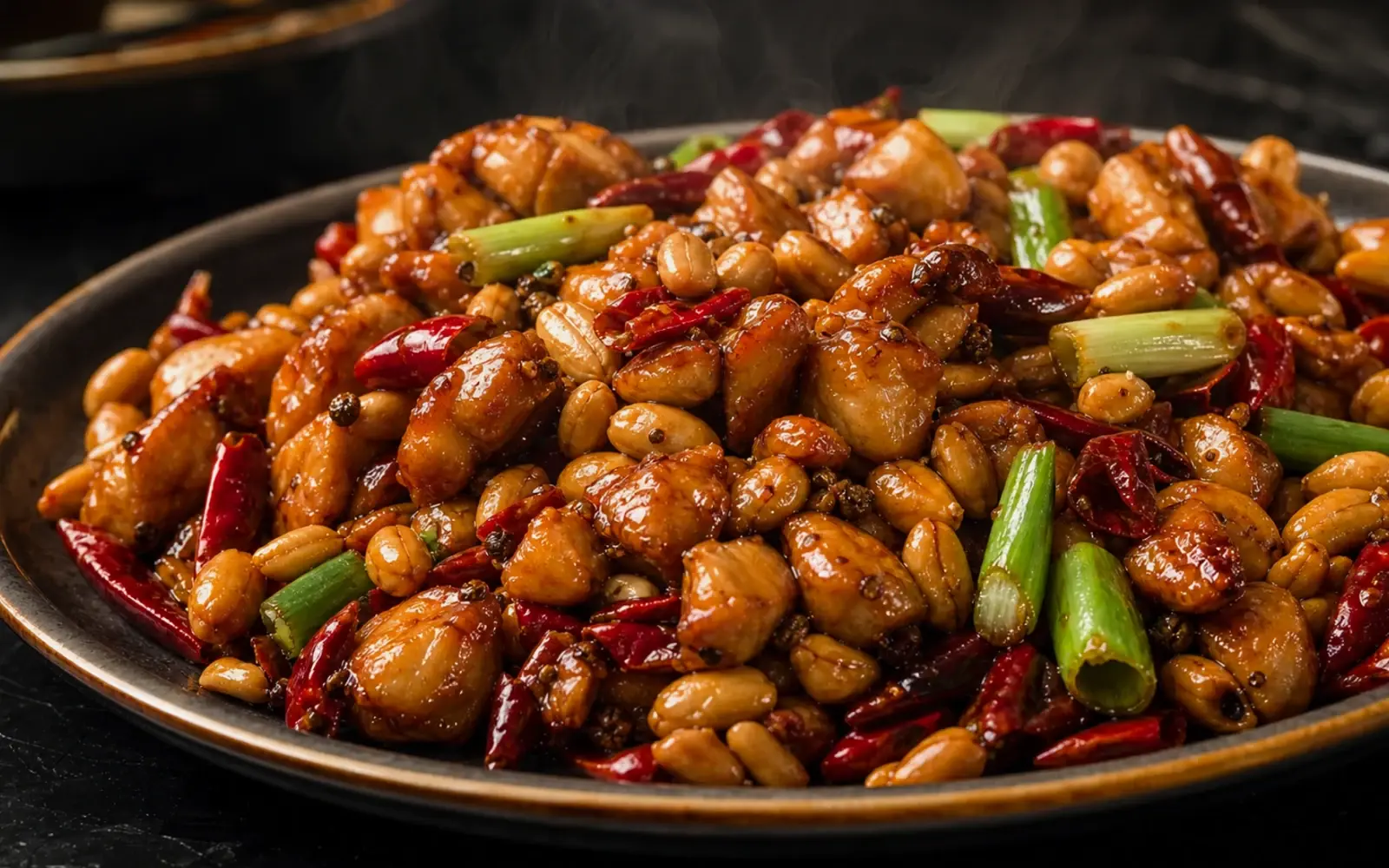
Fried items bring another check. Some Kung Pao chicken is made from small, unbattered pieces. Other versions can be prepared with a light coating or cooked in equipment used for battered food. The photograph can help you tell the difference in texture when choosing what to order. It cannot establish which starch or flour was used, or what else was cooked in the oil. Ask about shared frying equipment if the preparation makes it relevant. A switch from one flour to another also does not explain what is in the rest of the dish.
At home, keep ingredients that must remain separate away from the normal work area until you are ready. Clean surfaces and appropriate equipment, and avoid transferring shared serving spoons from one bowl to another. If you regularly cook from one sauce container for everyone, pay attention to whether utensils have been dipped into it after touching other dishes. Starting with a fresh sauce bowl and suitable ingredients is a simpler way to control the process. If hosting, discuss the arrangement with your guest before dinner so there is time to change the menu if needed.
Making a satisfying version with verified ingredients
Use a few strong flavors rather than trying to replace every condiment at once. A suitable soy sauce, suitable vinegar, a little sugar and cornstarch make the basic glaze. Dried chiles, ginger, garlic and scallion can give the cooking oil much of the fragrance. If you are omitting an unverified wine, let the aromatics and vinegar carry the flavor. Mix the sauce away from the cooking station, stir before pouring and add only enough to coat the meat. If the sauce seems bland, diagnose whether the missing note is salt, acidity, toasted chile or peppercorn before adding extra seasoning.
A lighter-colored version can taste full because the principal impression comes from the balance of soy and vinegar. If you miss the dark sheen, see whether your suitable vinegar already contributes a gentle brown color once cooked. If you use one soy product in place of two, measure the amount rather than making the glaze progressively darker with extra pours. Give plain steamed rice or an unseasoned vegetable a separate place on the plate. It can take the edge off a salty first attempt without requiring you to rebuild the whole sauce.
If you cook a version you like, record the exact names of the products you used. Two bottles from the same brand can have different ingredients, and a shop may substitute one item in your usual order. Keep the package for a quick check when making the dish again. At another person's home, allow time to confirm their ingredients and preparation before assuming the same recipe will work. Your old recipe notes will be useful for flavor, but the new environment determines which products and utensils are appropriate.
Three common situations and the next decision
The restaurant says it has gluten-free tamari but all of the chicken has already been marinated. The next question is whether an entirely separate serving can start with plain chicken. If the answer is no, it makes sense to check a different dish. The availability of the tamari solves one step in a chain of steps. Ask whether the alternative dish uses the same marinade or sauce so you do not repeat the same problem with a different name.
A grocery product shows cornstarch and rice on the front but lists a sauce sachet separately. Read the sachet ingredients and the whole-package claims together. If you cannot establish what is in the soy-containing sachet, consider a different meal or a preparation made from ingredients you can check. Removing a sachet may seem easy, but check whether the meat was seasoned before packing and which components arrive already in contact. The packet is one part of the meal.
An online listing marks the dish as available without gluten, but the checkout form offers a generic custom note and no description of preparation. Call the exact restaurant before placing the order. If staff confirm particular steps and can label the finished order, verify the label on delivery. If the conversation ends with uncertainty about a shared marinade or equipment, choose something you can verify. Kung Pao is a flexible recipe to cook at home, and finding suitable ingredients in advance often gives you more control over the flavor as well.
Source Notes