Direct Answer
Direct Answer
In New York, look for 宫保鸡丁 or Kung Pao chicken and ask whether it is the kitchen’s Sichuan-style or takeout-style preparation.
If you want a sharper Sichuan-style plate, ask about dried chiles, Sichuan peppercorn, peanuts and a lightly sweet black-vinegar glaze. If you want the milder takeout dish, ask whether bell peppers or celery are part of the order. The same English name can cover both.
Why It Matters
What a delivery photo can actually tell you
A photo can show diced chicken, a pool of sauce or how much of the box is vegetables. It cannot establish the heat level, whether peppercorn is present, or what went into the marinade. Ask the restaurant directly when that detail matters.
Practical Test
What to check
- Check the most recent menu and look for the Chinese dish name.
- Ask about the sauce and peppercorn if you are ordering for flavor.
- For allergies, ask about ingredients and cross-contact before placing the order.
Common Mistakes
Where people get tripped up
A neighborhood or menu category does not tell you what a particular kitchen serves.
Pick a style before you pick a neighborhood
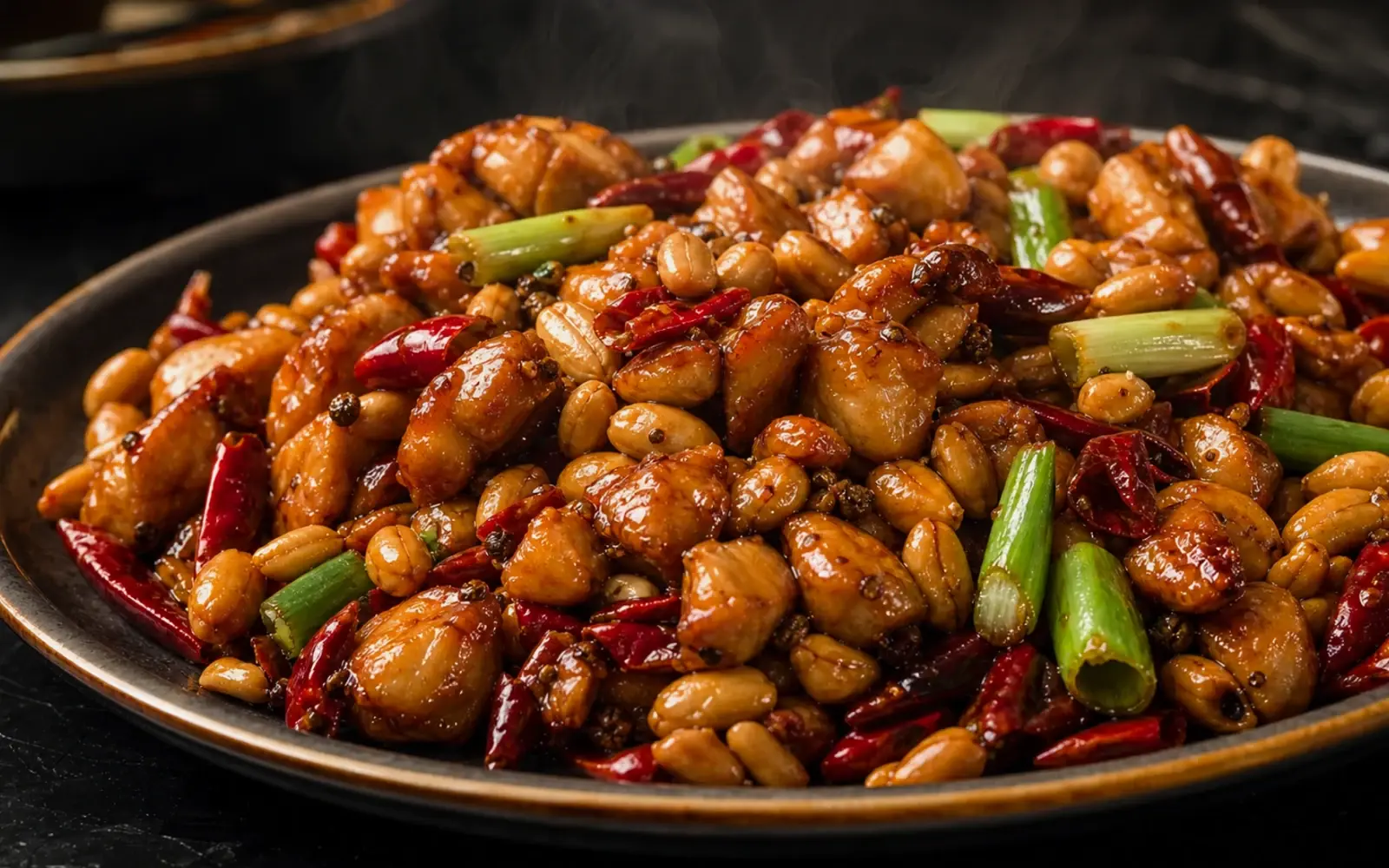
There are at least two useful starting points for a New York order. One is a Sichuan-style stir-fry with small pieces of chicken, roasted peanuts, dried chiles and a thin glaze that tastes of vinegar as well as soy and sugar. The other is a takeout plate that might feature more bell pepper, celery or onion and a larger amount of sweeter sauce. You can find either approach under the same English name. If you want to reproduce a meal you had elsewhere, work out which ingredients and textures you remember before searching for the closest restaurant.
A thinly glazed Sichuan-style version can taste vivid without an intense chile burn. Ask separately about Sichuan peppercorn, which supplies a citrusy, tingling sensation. For the saucier style, ask what vegetables come with the chicken and whether the meat is battered. Neither the neighborhood nor the number of peppers printed next to the item can answer all of that. A neighborhood is a good way to filter where you can eat. The kitchen's description is a better way to filter which dish you want.
Work out how you will eat it, too. A table of friends might want a large platter to share with greens and rice, while a single takeout order might need its own side. If you are heading to a location after work, look up whether the item is offered at dinner or appears only on a lunch menu. If you are trying to get the food to a specific address, use your actual delivery address when looking up a menu. A restaurant that appears in a New York search could be outside your delivery range.
Look up the dish in English and Chinese
Start with Kung Pao chicken and 宫保鸡丁, pronounced gōng bǎo jī dīng in Mandarin. Traditional characters, 宮保雞丁, can also help if a menu uses them. Some English menus transliterate the name as Gong Bao instead. For example, Szechuan House's Flushing ordering page lists the English and simplified Chinese names together. The same menu separately lists dishes with chile pepper and pickled pepper. That is useful for distinguishing dishes that a broad search might merge under spicy chicken. It does not confirm stock for a particular day or the ingredients in a specific order.
Look for a current menu that identifies the location. Search engines and delivery apps can list an old menu, show a nearby branch's pictures or offer a preview without accepting orders for your address. If you're comparing a restaurant's own menu with a third-party listing, see whether the item name, side and quantity match. A short listing with no indication of portion size may refer to a combination plate. A more detailed dinner item can refer to a shared dish. A similar name and different price do not necessarily mean you are comparing equivalent meals.
It helps to distinguish Kung Pao from dishes with related descriptions. A menu may offer Szechuan chicken, chicken with dried chile, or General Tso's. A house Szechuan chicken can mean a broader chile-based stir-fry. General Tso's often has a sweeter glaze on battered pieces. Chicken prepared with a large amount of dry chile can have a much drier finish. If you want Kung Pao's tang, roasted crunch and glaze, check for the name or ask the restaurant to describe those details. The description can also tell you when a different dish is closer to what you actually want.
Manhattan, Flushing and neighborhood takeout searches
For a sit-down meal in Manhattan, combine the dish name with a neighborhood you can get to and look for a restaurant's current dinner menu. A map result can be convenient but occasionally links to a general profile rather than the menu for the specific address. Open the menu and see how individual items are named. If you are walking up and ordering in person, show the Chinese characters and ask whether the dish is available as listed. That works even when the restaurant's online search result only mentions one spelling.
If you are already in Flushing, try the same search around where you will be eating, instead of treating the first results page as a list of winners for the whole borough. Ordering pages and bilingual menus can make it easier to identify exactly which preparation is listed. A restaurant with several spicy chicken dishes gives you a chance to ask how they differ in sauce and texture. Before travelling across town for any one version, check hours and availability with the location. An archived menu has no way to tell you whether ingredients or service times changed.
For neighborhood delivery in Brooklyn, Queens or elsewhere in the city, begin with the address and expected meal time. Check whether an apparent local branch handles its own food or whether the order is being routed to a different address. If you want the more familiar takeout preparation, a kitchen's short description and several consistent recent photos can be sufficient for choosing. If you are looking for peppercorn and a brighter glaze, ask the kitchen before you cross off a promising place based on its English menu category alone.
Read the box and the photograph differently
In an ordering photo, examine the chicken for uneven fried coating versus relatively smooth diced edges. Look at the bottom of the plate for a visible pool. Check whether the big red pieces resemble bell pepper or something the cook fried dry. All three observations can help you choose a texture. No image tells you whether the chicken was marinated in regular soy sauce or how much vinegar is in the glaze. A menu photo can even show a different location's presentation. Look for a visible link to the current item before assigning it much weight.
When delivery arrives, move a spoonful to a plate instead of judging from the uncovered box alone. The top of a serving may seem relatively dry, while the food beneath it has been sitting in the glaze. A kitchen photo taken seconds after plating will not show that change. Taste the top and bottom separately. If you like the coating on one and find the other too sweet, next time you may be able to request less sauce. If the same sweetness is present throughout, ask whether the kitchen offers a different version.
Check whether the amount of chicken and side meets your expectations. A photo with a layer of peanuts and peppers can make a small portion look fuller than it is. A serving with many vegetables can be exactly what one diner wants and frustrating when another wanted a chicken-focused plate. If you are comparing places, compare the complete orders you actually received including any rice, then write down a detail about presentation or flavor. That gives you a better reason to reorder than an impression formed while hungry and scrolling at dinner time.
What to ask a New York kitchen before ordering
The first question for flavor can be, “Do you make the Kung Pao with dried chiles and Sichuan peppercorn, and does the sauce lean sweet or tangy?” If the staff explain there is one fixed version, you still have useful information. If you like chile burn but dislike the tingle, ask whether the cook can leave out peppercorn and how that changes the dish. A kitchen with premixed seasoning may be unable to do that. An extra packet of chile oil on the side might be a better way to give each diner control where the kitchen offers it.
Ask a separate question about the meat and sides if this is your dinner rather than a tasting order. Find out whether the chicken is diced and stir-fried and whether the item includes rice. Ask if the combination comes with a sweet side or a soup you would not otherwise order. If you're taking food home for two people, confirm whether one platter is intended to be shared. Those questions can change the order more than spending another ten minutes trying to distinguish menu photos that might show nearly identical glazes.
Tell staff clearly about any food allergy or intolerance before committing to an order. NYC Health publishes information about menu notices and ways for online customers to inform a restaurant of allergy or intolerance. Use that route to start a conversation with the kitchen about the actual ingredients and preparation. For peanut allergy in particular, ask about the sauce, oils and equipment as well as visible peanuts. A checkbox or a menu notice does not tell you if the kitchen can manage your specific request. If you cannot get the detail you need, choose a dish or kitchen that can provide it.
Plan for pickup and group dining
When ordering pickup, keep the location and order number together. New York restaurant names can appear multiple times across neighborhoods and ordering services. Check the street address when selecting a branch and again when scheduling pickup. If you plan to eat later, ask how ready times are handled rather than expecting a fresh stir-fry to taste the same after extra time in a closed box. When you can, put hot food on plates and eat it promptly. The glaze and roasted peanuts are easier to appreciate while the distinct textures remain.
For an office lunch or a dinner with friends, order the portion sizes first and coordinate varying preferences second. You can choose one house preparation and keep the extra chile separate for people who want it. If someone needs a meal prepared differently due to an allergy, contact the kitchen in advance and ask how that order will be identified. Keep sauces and utensils identified when the food comes so a group order does not undo the work you did during checkout. If a labelled dish arrives differently from what was arranged, confirm the discrepancy before handing it over.
For a sit-down meal, ask the server what they would put beside the house Kung Pao. Plain rice can balance strong seasoning, while greens can bring another texture to a table full of fried or glazed food. If the Kung Pao is already fairly sweet, a second sugary dish can make the meal feel heavier. If the kitchen cooks it hot and tangy, you may want a mild side. Start with your group's preferences and add dishes that give each person a choice rather than assuming everyone will want another portion of the same flavor.
Two first orders that give you a useful comparison
If you are looking for a version close to the Sichuan profile, order one portion after confirming the peanut, dried chile and peppercorn notes you expect. Get plain rice separately if the portion does not come with a side. Taste a piece on its own and then with rice. Watch whether the coating stays on the chicken instead of pooling in large amounts. If you enjoy the tingly finish and the lightly sweet acidity, make a note of the kitchen and branch. You will know what to ask for again even if a menu headline changes.
If your favorite is the New York takeout style, look for the vegetables you like and a description of the glaze. Decide how much sauce you want and whether you would enjoy it over rice. Choose one regular order before adding several to a group dinner. Afterward, name the detail that mattered: crisp celery, diced chicken, an extra pool of sauce or less sweetness. That makes it easy to choose a restaurant the next time you are in a different part of the city. You can look for those details under either the English or the Chinese name.
Source Notes