Noodles & pantry
Glass Noodles vs Rice Noodles: Which Vermicelli Do You Need?
Two packets say vermicelli. Both contain a tangle of thin, pale noodles. Which one belongs in dinner? The useful distinction in glass noodles vs rice noodles is the ingredient: glass noodles are starch-based, often mung bean or sweet potato, while rice noodles are rice-based. Thin mung-bean noodles become translucent when cooked; rice vermicelli stays relatively opaque. Check the ingredients before you buy, then match the noodle to the recipe. The word vermicelli alone won't settle it.
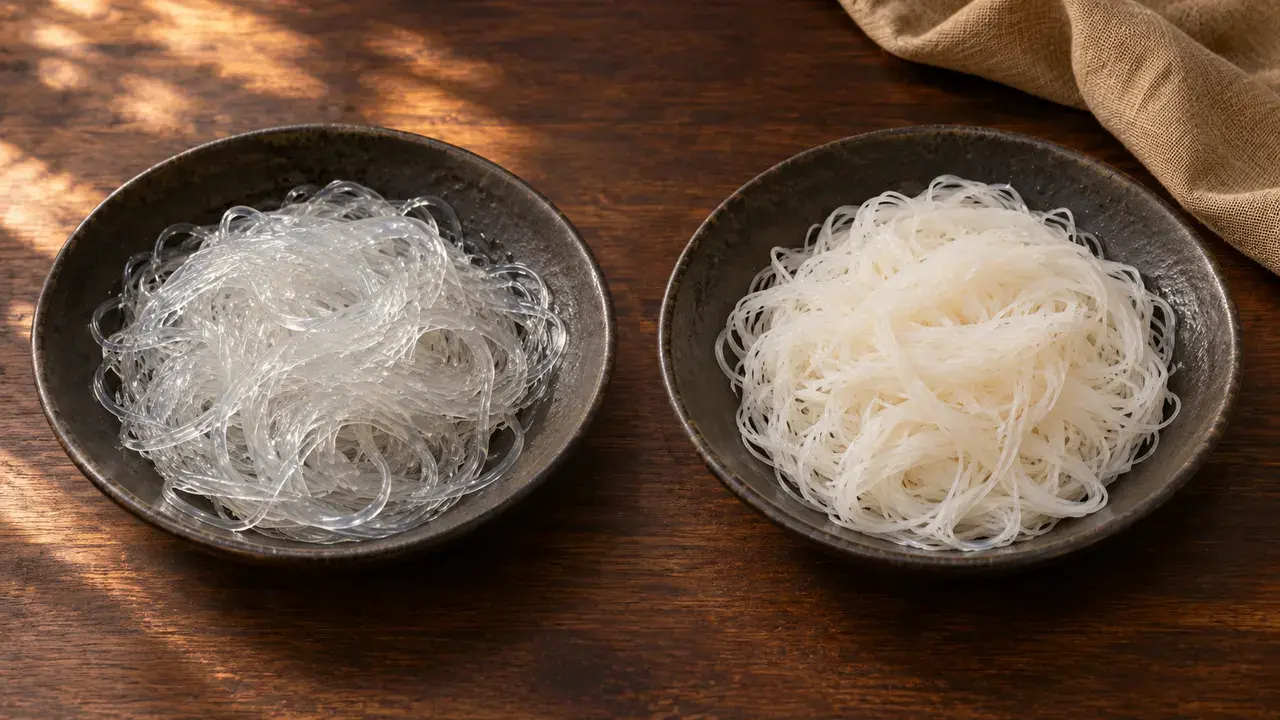
At a glance: glass noodles and rice noodles
| Shopping question | Glass noodles | Rice noodles |
|---|---|---|
| What ingredient should I look for? | A named starch, such as mung bean or sweet potato | Rice or rice flour; check the full formula |
| Other names you may see | Cellophane noodles, bean-thread noodles, mung bean vermicelli | Rice vermicelli, rice sticks, mei fun or mai fun |
| What does the thin cooked version look like? | Mung-bean strands become translucent | Rice vermicelli is relatively opaque |
| Are they all the same width? | No; thin bean threads and thicker starch noodles differ | No; fine vermicelli and broad rice noodles differ |
| Can I use them in soup or stir-fry? | Yes, in recipes designed for that product | Yes, in recipes designed for that product |
| Does the name establish dietary suitability? | No: read ingredients and relevant label statements | No: read ingredients and relevant label statements |
This guide focuses on the fine dried noodles most easily confused on a supermarket shelf. A thick sweet-potato noodle and a broad rice noodle are a different comparison from two fine vermicelli packets. Start with the material, then check the width and preparation directions.
Why vermicelli is an incomplete shopping instruction
In the Chinese noodle aisle, vermicelli can appear on both rice-noodle and mung-bean-noodle packaging. The Woks of Life's Chinese noodle glossary treats them as separate ingredients. A recipe that says only vermicelli needs another clue: an ingredient description, a packet photo, or the author's shopping notes.
Turn the packet over. For example, KA-ME's bean-thread label lists mung bean starch and water, while KA-ME's rice-stick label lists rice and water. Those are examples of two actual products, not a rule that every maker uses the same formula. They show why reading the ingredient line is more useful than comparing two similar bundles through a plastic bag.
If you're shopping from a screenshot of a recipe, save the ingredient notes along with the pretty finished bowl. A close-up of the packet or its ingredient list gives you something concrete to compare at the store. A photo of noodles covered in sauce may not.
What are glass noodles?
The thin mung-bean type is called fěnsī (粉丝, thin glass noodles) in Mandarin. You may see it sold as bean threads or cellophane noodles. Sweet-potato starch noodles belong to the broader glass-noodle family too, so glass noodles does not identify one ingredient, one diameter, or one cooking method.
For the fine mung-bean version, translucency after cooking is a useful visual clue. In its recipe for zucchini with glass noodles, The Woks of Life specifically distinguishes these strands from the more opaque rice vermicelli sold nearby. The recipe depends on the glass noodles taking up cooking liquid and seasoning. That is a reason to pay attention when an author names a particular noodle.
If your packet says sweet potato rather than mung bean, don't assume the same soaking instructions apply. Choose the named product when following a recipe closely. If you deliberately change it, treat that as an adaptation and watch how it behaves before adding everything else.
What are rice noodles?
Rice noodles cover a range of shapes and widths. Thin rice vermicelli, sometimes called mei fun or mai fun on English-language packaging and menus, is one part of that family. Mǐfěn (米粉, rice noodles) is the Mandarin term you'll also encounter. Broad, flat rice noodles are another purchase; a recipe calling for fine vermicelli isn't asking for those broad ribbons.
The rice-stick label linked above describes uses in soup, stir-fry and salads, and provides its own preparation method. Use that packet's directions as your starting point. A different maker's rice noodles may have different dimensions or instructions even when the front of the bag looks familiar.
If your actual question is about soft tossed noodles versus a chow-mein preparation, use our lo mein vs chow mein guide. This comparison handles the noodle material you buy; the other guide explains those dish names and cooking choices.
Can you substitute rice noodles for glass noodles?
For an improvised bowl, you can choose to use either suitable product. For reproducing a particular recipe, don't expect the substitution to disappear. You are changing an ingredient the author may have chosen for its appearance and its behavior in the sauce or broth.
Ask what you're trying to preserve. If you want the translucent strands pictured in a glass-noodle dish, buy the specified glass noodles. If you want to use up the rice vermicelli in your pantry, choose a recipe written for rice vermicelli. That is usually a clearer starting point than following one noodle's instructions while expecting another noodle's result.
- Following a recipe closely: Match the ingredient and approximate noodle width, then read any substitution notes.
- Using the packet already at home: Choose a recipe for that noodle instead of copying another packet's soaking time.
- Making a flexible soup or stir-fry: Prepare a small amount according to its own directions before committing the whole bag.
- Trying to match a takeout order: Ask the restaurant what the noodles are made from. A translated menu name may leave the distinction unclear.
Preparation: follow the packet and the dish
Read the complete recipe before soaking or boiling anything. Check whether its preparation step finishes the noodles or prepares them for further cooking. Keep that separate from a general instruction printed for the packet. When they appear to conflict, use the recipe author's explanation for the exact noodle it specifies rather than inventing a compromise.
A practical order of work: identify the noodle, read its directions, prepare the other ingredients, then handle the noodles when the recipe needs them. Check their condition during preparation rather than assuming every fine strand is ready at the same moment. There is no single soaking time that this whole comparison can supply.
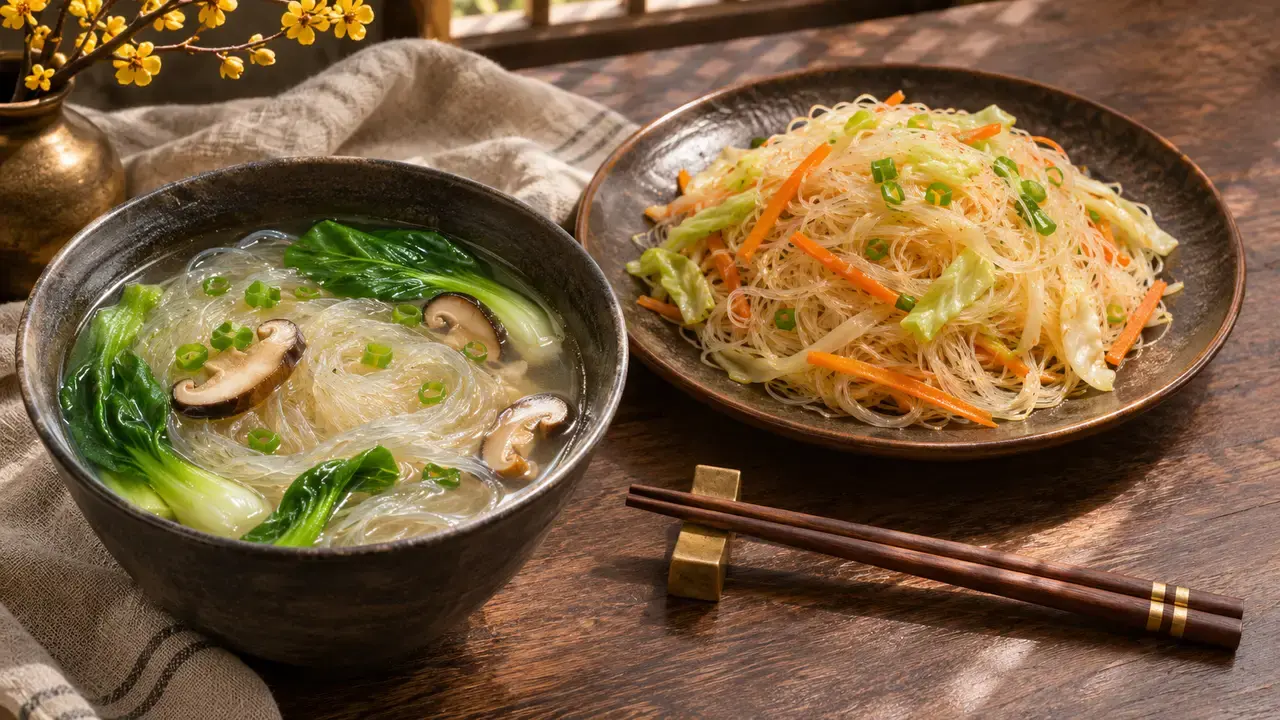
Ordering noodles and choosing a hot pot addition
At a restaurant, a useful question is: are these rice noodles, mung-bean glass noodles, or another kind? Follow with the detail that matters to you, such as the width, how the dish is served, or an ingredient you need to avoid. A server can answer a specific question more readily than a guess based on the word vermicelli.
For a hot pot meal, identify the noodle offered and follow the restaurant's cooking guidance. Our malatang vs hot pot comparison explains the meal formats. If you're choosing a different noodle dish entirely, dan dan noodles covers another menu decision. And if you're deciding what to add on top, chili crisp vs chili oil explains the difference between those condiments.
Allergens, gluten and leftovers
A noodle's main ingredient is not a complete dietary check. Both manufacturer examples above include statements about facilities handling wheat, despite their short ingredient lists. Read the actual product's full labeling and ask its maker if suitability is unclear. If you require gluten-free food, look for relevant gluten-free labeling and verify the other ingredients in the finished meal.
Sauces, broth and toppings need their own checks. A vegetable-looking noodle bowl isn't a vegetarian or allergy-suitable guarantee. Tell restaurant staff which ingredients you must avoid and ask about cross-contact. The FDA's food allergy guidance explains why the ingredient list and food handling both matter.
Once noodles become part of a cooked dish, handle the leftovers as perishable food. Follow FoodSafety.gov's four steps: use clean utensils, keep raw and cooked ingredients separate, cook appropriately, and chill leftovers promptly in shallow containers. Follow the packet's instructions for storing unused dry noodles; don't apply those directions to a cooked bowl.
The packet check before checkout
Find the ingredient line, confirm the noodle's width, read the preparation directions, and check any dietary information you need. For a specific recipe, match its named noodle. For a flexible dinner, choose a recipe for the packet you have. You can find more menu and ingredient explanations in the Chinese food guide.
Frequently asked questions
Are glass noodles and rice vermicelli the same?
No. Thin glass noodles are often made from mung bean starch, while rice vermicelli is rice-based. Their dry appearance can be similar, and both may be labeled vermicelli. Read the ingredient list to identify the packet rather than relying on that word alone.
Does vermicelli mean glass noodles?
It can refer to glass noodles in the Chinese noodle aisle, but it also appears on rice-noodle packaging. Look for a more specific name such as mung bean vermicelli or rice vermicelli, then confirm it against the ingredients.
Can I substitute rice noodles for glass noodles?
You can adapt a flexible dish, but expect a different result. To reproduce a recipe closely, use its specified noodle. If you choose a replacement, follow the directions appropriate to that product and consider whether the recipe depends on the original noodle's appearance or handling.
Are glass noodles made of rice?
Glass noodles are a starch-noodle category; familiar examples use mung bean starch or sweet potato starch. Rice noodles are a separate rice-based category. Because product names and formulas vary, check the actual ingredient list before buying.
Which noodles should I buy for hot pot?
Buy the noodle specified by your chosen hot pot recipe, or ask the restaurant to identify its options. Glass noodles and rice noodles are not preparation instructions by themselves. The product, its width and the way the meal is cooked all matter.
Are glass noodles and rice noodles gluten-free?
The category name alone doesn't establish that a particular product or finished dish meets your needs. Check its ingredients, relevant gluten-free labeling and manufacturer guidance. Also check the broth, sauces, toppings and preparation practices rather than judging the noodles in isolation.