Direct Answer
Direct Answer
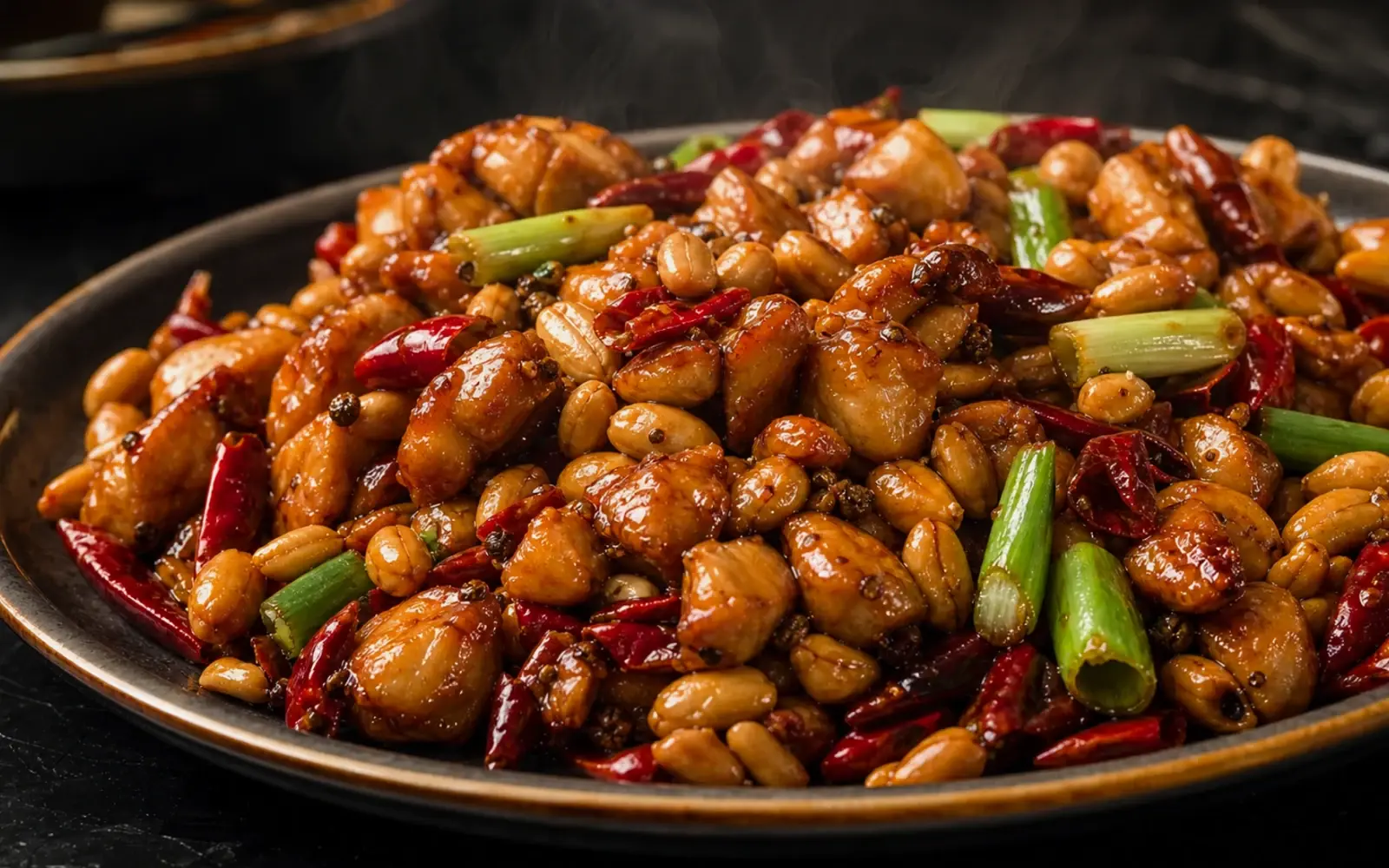
The base of Kung Pao sauce is soy sauce, vinegar, sugar and a starch slurry. Dried chiles and Sichuan peppercorn usually flavor the wok.
Chinkiang vinegar adds a round sour edge, soy brings salt and savor, and sugar softens the vinegar. Shaoxing wine is often used in the sauce or marinade. Cornstarch settles in the bowl, so stir the mixture again immediately before pouring.
Why It Matters
The sauce bowl and the wok
A recipe may list chiles, garlic and peppercorns under sauce ingredients even though they are fried separately. Let those aromatics perfume the oil, then add the mixed sauce near the end. The finished glaze should look glossy and leave little liquid behind on the plate.
Practical Test
What to check
- Read whether wine is assigned to the sauce or the marinade.
- Stir the slurry just before adding it.
- Adjust the next batch after tasting the cooked glaze with chicken, rather than judging cold concentrated sauce.
Common Mistakes
Where people get tripped up
Adding extra starch will not solve an overly salty sauce.
What each part of the sauce does
Soy sauce supplies salt and fermented savor. Light soy sauce is often the main seasoning. Dark soy can add color and some flavor at a small dose, though the two products vary enough that it helps to taste them separately on plain rice before planning a substitution. Adding extra light soy to chase the color you remember mainly changes the seasoning. If you have only one suitable bottle, a paler glaze with the right level of salt is a good outcome. Color alone does little to tell you how the sauce will taste.
Chinkiang vinegar gives the glaze acidity and a rounded, dark-vinegar character. Vinegar has more than one role here. It balances sugar, cuts through the roasted flavor of the peanuts and helps keep the chicken from tasting heavy. Open a new bottle away from the hot stove and smell it before measuring. If you have to use a lighter vinegar, add it in stages and judge a cooked sample. White vinegar can be quite direct and a seasoned rice vinegar may bring additional sweetness and salt. Keep those differences in mind before you compensate elsewhere.
Sugar softens the vinegar and contributes to the sweet-sour impression often called lychee flavor. That term describes a flavor balance in this dish. You can get it entirely from seasoning in the bowl, and pieces of lychee are generally absent. Sugar is easier to add than to remove, so if you are adapting a recipe to a sweeter bottled soy or vinegar, begin with less. Reducing all of the sugar while holding the vinegar constant can produce a sharply sour version. Adjust in small steps and taste with chicken or rice.
Starch and water let the finished sauce hold on to the food. Cornstarch is a common choice, though some recipes use a different starch and will thicken differently. Mix your measured starch into cool liquid and scrape the base of the bowl right before pouring. A bowl that sat untouched while the chicken browned can hide a layer of starch on the bottom. If you pour the clear liquid first, the pan can end up with both an unthickened sauce and a lump. A quick stir fixes that before it happens.
The ingredients that usually start in the wok
Dried chiles and Sichuan peppercorn are often fried briefly so their fragrance goes into the cooking oil. That is why a sauce recipe can refer to both even if the liquid in the bowl contains neither. A dried chile gives toast and pepper heat, while Sichuan peppercorn gives a citrus-like aroma and a prickling sensation. Change one at a time if you are adjusting a recipe. The same glaze can work for a mild plate with fragrant peppers or one with a livelier finish. A thick hot sauce from a jar will change the salt and sugar as well.
Ginger, garlic and scallion bring a fresher set of aromas. A cook will often cut them to sizes that suit the chicken. Scallion whites can stand up to a short fry and contribute a little bite, while sliced garlic quickly scents the oil. The exact order depends on the pan and the recipe. Give small pieces enough time to release their aroma, then move on before they scorch. Chiles and peppercorn can taste bitter if they sit in very hot oil for too long. Have the rest of the ingredients within reach.
Peanuts are part of the finished dish, though most scratch recipes add them separately as a topping or late toss. They go soft if they sit in the sauce too long. A traditional list of sauce components does not tell you whether a jar or restaurant preparation is suitable for anyone with an allergy. Refer to the specific product or kitchen ingredients and preparation. When cooking for flavor, hold the nuts until the glaze has formed so you can decide how much you want in each portion.
Wine, water and the ingredients you can vary
Shaoxing wine can be used in the marinade, around the hot pan or in the sauce bowl depending on the recipe. Its main contribution is aroma. It does not replace the acidity of vinegar, and replacing it spoon for spoon with vinegar changes more than the smell. If you are leaving it out, rely on the cooked aromatics and black vinegar for the character of the dish. When you want to reproduce a recipe the first time, note whether the wine is already allocated to another step before adding extra to the bowl.
The liquid that carries the starch can be plain water, stock or part of the measured sauce. Water is a neutral starting point because it lowers the concentration of the seasoning without adding salt. Stock can add another layer of flavor and may already be seasoned. When using it, account for that sodium before pouring in the full measure of soy. A large addition of stock can make the dish resemble a braise or a saucier takeaway plate. A splash may be enough to distribute the glaze through a wide pan.
Some recipes include sesame oil, peppercorn oil or a prepared seasoning to bring out a particular style. A small amount of sesame oil has a pronounced smell and can quickly compete with the peanut and chile aromas you are trying to preserve. A peppercorn oil can add the tingle after the dish cooks. Taste a tiny sample before adding more to the whole pan. The four-part bowl of soy, vinegar, sugar and starch works as a reference because it gives you room to tell what each extra ingredient contributes.
How to put the sauce together
Measure the bowl before you turn on the burner. Include the soy, vinegar and sugar called for by the recipe. Make sure the sugar is distributed and the starch is suspended in cool liquid. If you are learning the timing, put a small spoon next to the bowl so you can stir it without reaching over the pan. Set the peanuts separately, and lay out the dried chiles and aromatics within reach. The finished glaze comes together quickly, and the pause to find a missing ingredient can be long enough to scorch garlic.
Cook the chicken and aromatics according to the recipe, then stir the sauce until no starch remains stuck on the bowl. Pour enough for a thin coat and toss to distribute it. A moderate batch that can move around the pan is easier to glaze than a packed pan. If you are doubling a recipe for several people, cook in batches and divide the prepared sauce before each round. Doubling the amount in a small pan can cool it and leave liquid behind even when your ingredient measurements are correct.
Watch the surface as the liquid heats. When the sauce changes from loose to glossy and starts to follow the chicken around the pan, release the heat according to the recipe and add the peanuts. A line of liquid that runs to one side of the pan tells you there is excess, especially after the chicken is already coated. Holding the dish over heat just to eliminate a large puddle can concentrate sugar and salt. Scoop away the extra sauce or reserve it separately, then use less at the beginning of the next batch.
Why the glaze sometimes turns pasty, thin or harsh
A gluey glaze can come from too much starch, too much reduction or a large amount of sauce spread over too little food. Run a spatula through the sauce and observe what happens. If it piles up in a thick layer and leaves a wide track, stop cooking and test a small portion with a spoonful of hot water or some unseasoned food. Hot water can loosen the texture, but it also lowers every flavor at once. If the glaze tastes too salty as well, incorporating more plain food can improve the serving without making the coating watery.
A thin glaze can come from vegetables releasing water or the starch remaining at the bottom of the bowl. Steam and pooling can also be a clue that the pan was crowded. Give a freshly mixed sauce enough time to thicken according to the recipe and avoid pouring in additional starch right away. A new slurry may fix a true thickening problem, but it adds little if the pan contains twice the liquid you needed. On future batches, cook high-moisture vegetables separately and add the glaze once the rest of the ingredients are ready.
A harsh taste may come from burnt aromatics, vinegar used in too great a proportion or excessively salty seasoning. If you smell a burnt bitterness from the pan, extra sugar tends to obscure part of the problem while leaving that smell behind. For a glaze that is simply too sour, test a small pinch of sugar on a separate piece. For a glaze that is salty and sweet at the same time, first use less of it. These corrections address different problems. Taking a clean bite with rice can help you decide which one you have.
How packet sauces and substitutions change the result
Bottled Kung Pao sauce can include more ingredients than a home mixture. It may be intended as a stir-fry sauce, a marinade or a finishing dip. Read the suggested usage and the ingredient statement, then start with a modest amount and see how much flavor it gives to one serving. A pour designed for a large pan can dominate a small portion. If a bottled sauce turns glossy and sweet, add fried ginger or dried chile separately if you want more fragrance, and test acidity on the plate before adding a splash to the entire pan.
Hoisin, oyster sauce and sweet chili sauce appear in some adaptations. A small spoonful can bring body or a pronounced flavor of its own. That makes it harder to adjust sugar, savor and thickness independently, especially when the added product also supplies salt. If all you have is a sweet prepared sauce, serve it lightly and let the chicken, scallion and peanuts stand out. Use a plain soy-and-vinegar base next time as a reference point so you can judge whether the prepared sauce moves the flavor toward what you like.
If you want your second homemade batch to be closer to the first, write down the kind of soy, vinegar and starch as well as the measured quantities. Record how much of the cooked sauce actually went in and whether you used one pan or several batches. A suggestion to use less sugar is hard to reproduce if the sauce also cooked much longer the second time. Alter one of those factors and compare a piece of chicken under the same conditions. The main test is the sauce where you will eat it: an even coating, enough acidity to keep it lively and a finish that leaves room for the fried aromatics.
A useful divide between sauce recipe and dish recipe
When using a detailed recipe, read the marinade, sauce bowl and aromatics as three different lists. The marinade seasons the chicken before cooking. The bowl creates the distinct glaze. The aromatics start a short fry that perfumes the oil before both come together. A change in one list can change the amount needed in the others. For example, a heavily seasoned marinade may mean you need less soy in the finishing bowl. Make that judgment on the chicken after cooking. Use a separate utensil and keep anything that has touched raw ingredients away from samples you intend to taste.
Source Notes