Direct Answer
Direct Answer
In London, look for Kung Pao, Kung Po, or 宫保鸡丁. Ask what the kitchen puts in its version before you order.
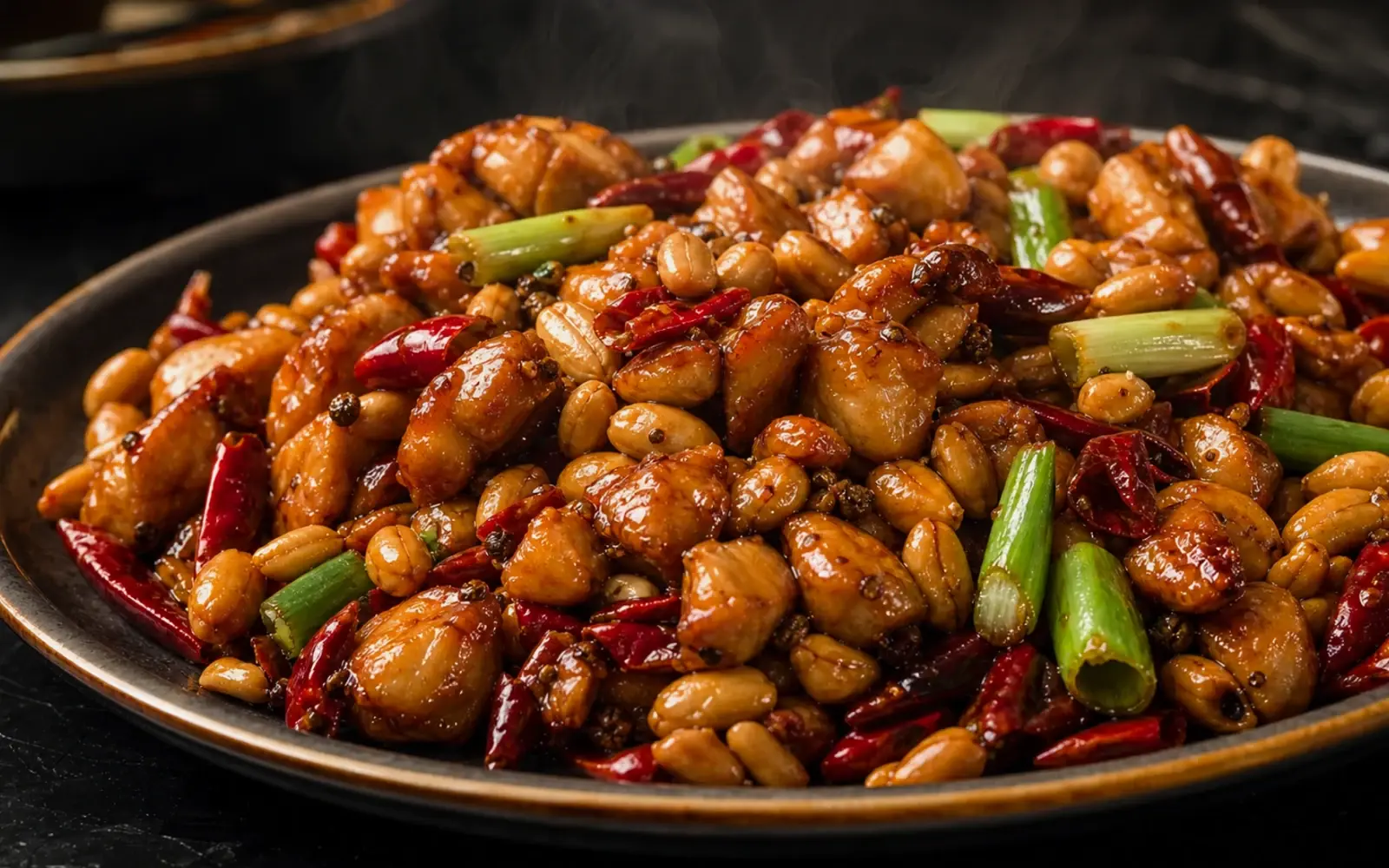
Kung Po is a useful search spelling on British takeaway menus. For a Sichuan-style plate, ask about diced chicken, roasted peanuts, dried chiles and Sichuan peppercorn. Menus change and the name alone cannot tell you how sweet, saucy or hot the current dish is.
Why It Matters
Use the menu, then ask one question
A useful question is whether the dish has Sichuan peppercorn and how the sauce tastes. If you prefer a sweeter takeaway style, ask about vegetables and sauce rather than assuming every restaurant cooks the same plate. Tell staff separately about an allergy and ask them to check their procedures.
Practical Test
What to check
- Search both Kung Pao and Kung Po, plus the Chinese name.
- Check the current menu or ask the kitchen before travelling.
- Use pictures to check the cut and sauce, then ask about ingredients you cannot see.
Common Mistakes
Where people get tripped up
A spelling can help you find a listing. It cannot guarantee a style.
Start with the British menu spelling
Search for Kung Po chicken as well as Kung Pao chicken. Add the name of the neighbourhood where you plan to eat and see whether the results lead to the restaurant's own menu or an active ordering page. A general search for the dish can turn up recipes, old photographs and reviews written for a different branch. The more useful result is a listing for a kitchen you can actually visit or order from. If the restaurant serves both lunch and dinner menus, check which one you are looking at before making the journey.
The Chinese name 宫保鸡丁, gōng bǎo jī dīng, also appears in traditional characters as 宮保雞丁. On menus you may see a different ending, such as 宮保雞球, alongside the English spelling. Imperial China in Teddington, for example, lists 宮保雞球 under Kung Po Chicken in Hot Sauce on its own menu. That is a useful example of how a British menu can name the dish, while the listing itself does not establish the kind of peppers used or how the sauce tastes. Check current availability and ask about the preparation directly.
Search results can also confuse the dish with other chicken dishes that use a hot or sweet sauce. If you find something described only as spicy diced chicken, look for the Chinese name or ask the restaurant whether it has a Gong Bao dish. A dish listed as chicken with dry chillies could use a different method and produce a drier finish with a much higher proportion of chillies. A generic hot chicken description tells you a category. The name and preparation together are better clues about what is likely to reach your table.
Choose the version that sounds good to you
If you want a Sichuan-style plate, look for small pieces of stir-fried chicken, roasted peanuts, dried chillies and a glaze with a noticeable vinegar edge. Sichuan peppercorn adds a citrusy aroma and a tingling sensation. The dish can still be moderately hot. Make two questions out of that if spice matters: ask how much chilli heat to expect and whether the cook uses Sichuan peppercorn. A dish that is mild in one respect can still make your lips tingle, which may be exactly what one diner wants and a surprise for another.
If your favourite version is a saucier British Chinese takeaway, say what you like about it. Perhaps you want crisp bell pepper, a sweeter glaze and rice to soak up the extra sauce. Find out whether the restaurant uses diced, sliced or battered chicken and which vegetables come in the dish. Photos may help answer the cut and coating questions, but the kitchen can tell you more about the sweetness. A menu can use the same name for a lightly glazed dish and a plate with enough sauce to spoon over everything else.
Ask the restaurant to describe its own version before telling it what you think it ought to be. A useful question is whether the sauce is quite sweet or has a sharper vinegar taste. If a kitchen offers a default style and cannot change it, you can make an informed choice between that dish and another one. If it does offer changes, choose the one that makes the biggest difference for you. A request for less sauce may be practical when a request to change the sugar in a prepared glaze is impossible.
How to narrow down the search in London
Start from the part of the city where you will be at dinner rather than choosing a restaurant first and planning transport later. A dinner near your hotel, a Friday collection on the way home and a delivery to a friend's flat each call for a different search area. In central London it can be easy to mistake a nearby pin for a convenient route on foot, and delivery boundaries can change at a postcode. Check the branch and ordering channel before trusting that a menu you can see is actually a menu you can order from.
For a sit-down meal, look at how the restaurant describes its cooking across the menu. Clear descriptions of the chicken options can matter more for your choice than a long headline about a regional cuisine. A kitchen that names several distinct preparations may give you an easier way to ask for one. A short takeaway menu can also do the dish well if the kitchen can explain what it cooks. If you are walking through Chinatown looking at menus in windows, take the Chinese characters with you on your phone and point to the dish.
For a takeaway, check the exact postcode and compare collection and delivery options in the restaurant's current ordering system. Menus sometimes have a limited lunch version, a dinner list or different combinations online. The dish may be listed without rice on one page and as part of a set on another. The right comparison is the amount of food you want at the time you want it. Look for the rice or side on the item description before adding it separately. If the listing is unclear, a quick call can prevent an unbalanced order.
Read photographs as clues to texture
Look for the size of the chicken pieces and whether there is a visible coating. Diced pieces with bare browned edges suggest a different bite from pieces under a craggy layer of batter. Check whether the peanuts appear throughout the serving or sit on top. Look at the sauce under the food rather than only at the shiny surface of the chicken. A photo can help you tell whether you are likely to get a thin glaze or a lot of sauce, although a takeaway photograph may be taken before the liquid collects at the bottom.
A red pepper in a photograph can be a dried chile, a fresh hot pepper or a sweet bell pepper. Color is a poor way to tell which sensation you will get. A spoonful of sauce can look dark because of soy without tasting very sweet, and a pale sauce can contain plenty of sugar. If the picture has no peanuts, that says little about allergy suitability. Use the photograph for what you can observe, then ask about the things that are important and still unknown. Try to match the photo to the exact branch and dish name before using it.
When there are several customer photos, look for repeated details rather than the nicest-looking plate. If different visits show the same diced meat, peanut garnish and small amount of sauce, that suggests a consistent presentation. If the photos vary widely, look for differences in time, ordering method or menu item. The restaurant may have changed the dish or the gallery may have mixed it up with another entrée. A recent photo attached to a matching item listing is generally more useful than a prominently featured picture with no description.
What to ask at the counter or on the phone
For flavour, start with one choice the kitchen can answer easily. Ask, “Is the Kung Po chicken quite sweet, or can you taste the vinegar in the sauce?” If you care about the Sichuan sensation, follow with, “Does it have Sichuan peppercorn as well as chilli?” For texture, ask whether the chicken is battered or stir-fried in small pieces. You can also ask how large an order is meant to be. The restaurant may give a different answer for an individual takeaway box and a table portion intended for sharing.
If you wish to avoid the tingling sensation, say so even if you are happy with chilli heat. Asking for mild may leave the peppercorn amount unchanged. Conversely, adding more chilli may do little for someone who specifically likes the peppercorn finish. The easiest shared order can be the usual dish with any extra chilli condiment kept separate, if available. If the kitchen cannot adjust a premixed base, check whether another dish is easier to tailor. Make sure everyone knows which portion they are expecting before you place the order.
For an allergy, explain the restriction before ordering and ask to speak with staff who can check. Peanuts are common in Kung Pao. Ask about peanuts or any other relevant allergen in the ingredients, including the finishing sauce and oils, then about shared equipment and preparation. Restaurants and takeaways in the United Kingdom have obligations to give information about the regulated allergens in their food. Government guidance explains when to expect that information for takeaway. A restaurant's ability to tell you the ingredients and its ability to handle your request safely are separate questions. If the preparation remains unclear, choose an alternative.
London pickup, delivery and group orders
When you collect an order, use the restaurant's name, branch and address when checking the receipt. In a group order, ask the restaurant to identify meals with special instructions. Recheck the labels before you hand them round. For an allergy request, confirm all changes with the restaurant when something looks different, such as an unmarked sauce or a surprise garnish. A familiar logo on a carton does not establish who prepared the dish or whether they had the same instructions as the person you spoke to.
If you are getting food delivered, the order note is useful for repeating a confirmed detail. It is a poor substitute for a conversation about an allergy. Speak with the kitchen first, ask which ordering channel it wants you to use and make sure your order reaches that branch. Government guidance says information about regulated allergens in takeaway food should be available before purchase and again when the food arrives. For taste preferences, you can use the note simply to repeat an agreed request, such as a separate portion of sauce, if the restaurant offers it.
On a shared menu, one Kung Po, a vegetable dish and plain rice give you different textures as well as a way to manage the strength of the glaze. If a second dish is also sweet and heavily sauced, consider a plainer side. When ordering multiple portions, specify whether everybody wants the same level of heat. If you are ordering for a visitor who has never had the dish, describe the taste you are choosing: roasted peanut, dried chilli and a tangy finish for a Sichuan-style option, or a more vegetable-heavy version with sweetness and extra sauce. That is more useful than promising the dish will taste just like one they know.
Two ways to choose when you are short on time
For a sit-down dinner with the Sichuan profile in mind, find a reachable place listing 宫保鸡丁 or a clear English equivalent, ask about peppercorn and vinegar, then check whether the portion comes with rice. If the waiter says the dish uses a sweeter base, decide whether you still want it or would prefer a different stir-fry. If the kitchen confirms it is a light glaze cooked to order, choose the sides around its heat rather than trying to make the dish itself do everything.
For a familiar takeaway version, search Kung Po chicken by postcode and check the item for vegetables, sauce and portion size. Confirm whether you need to add your own rice to the basket. If the description sounds good but you are new to the kitchen, order one portion first instead of ordering several identical meals for the group. Note the branch and the flavour you liked after eating. When you return, you will have a reliable starting point and only need to check whether the menu or preparation has changed.
Source Notes