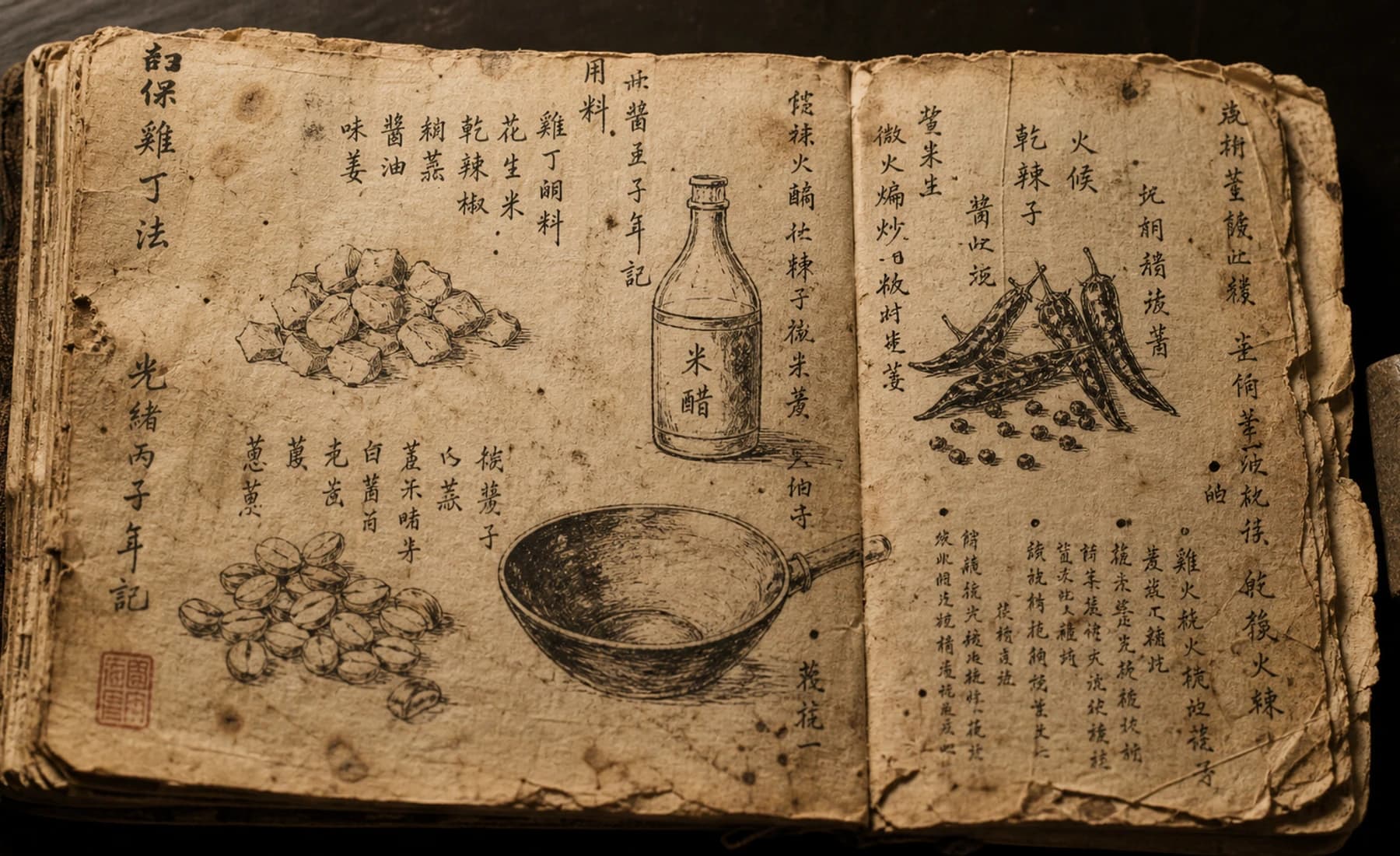
Direct Answer
What does Gong Bao Ji Ding mean?
Gong Bao refers to the official-title tradition attached to Ding Baozhen; ji means chicken; ding points to diced chicken or small cubes. Kung Pao Chicken is the familiar English restaurant spelling of the same dish family. For the dish-level explanation, the companion What Is Kung Pao Chicken guide connects the name back to the plate.
That short answer is useful, but it leaves out why the name is so sticky. "Spicy peanut chicken" tells you what might be on the plate. Gong Bao Ji Ding tells you how Chinese menu language can compress history, bureaucracy, cut size, and culinary expectation into four syllables. The WKPO respects this kind of efficiency. It is almost suspiciously elegant.
Chinese Name
The written name: simplified, traditional, and menu English.
Common in mainland Chinese contexts and modern pinyin materials.
Common in traditional-character contexts; the meaning is the same.
Tone marks matter for pronunciation, though menus often omit them.
The English label "Kung Pao Chicken" is not a literal translation. It is a surviving spelling tradition. It became the name most English-speaking diners recognize, while "Gong Bao Ji Ding" is better for explaining the Chinese structure. They point to the same court file, just with different uniforms.
Character Evidence
The four-character breakdown.
宫 / 宮
palace, court, or official sphereIn this dish name it belongs to the old title phrase, not to a literal palace kitchen guarantee.
保
to guard, protect, or preserveTogether, 宫保 / 宮保 points to Gong Bao, a title associated with Ding Baozhen.
鸡 / 雞
chickenIn plain kitchen English, ji means chicken. The court allows no further mystery here.
丁
small cube or diced pieceIn the dish name, ding points to diced chicken. It also echoes Ding Baozhen's family name in many explanations.
The most practical reading is: Gong Bao gives the title-linked identity, ji gives the protein, and ding gives the cut. The phrase does not merely say "chicken." It says chicken in small pieces. That is why a proper plate cares about diced chicken rather than long strips. The authenticity checklist treats that dice as visual evidence. The name has already filed its knife-work request.
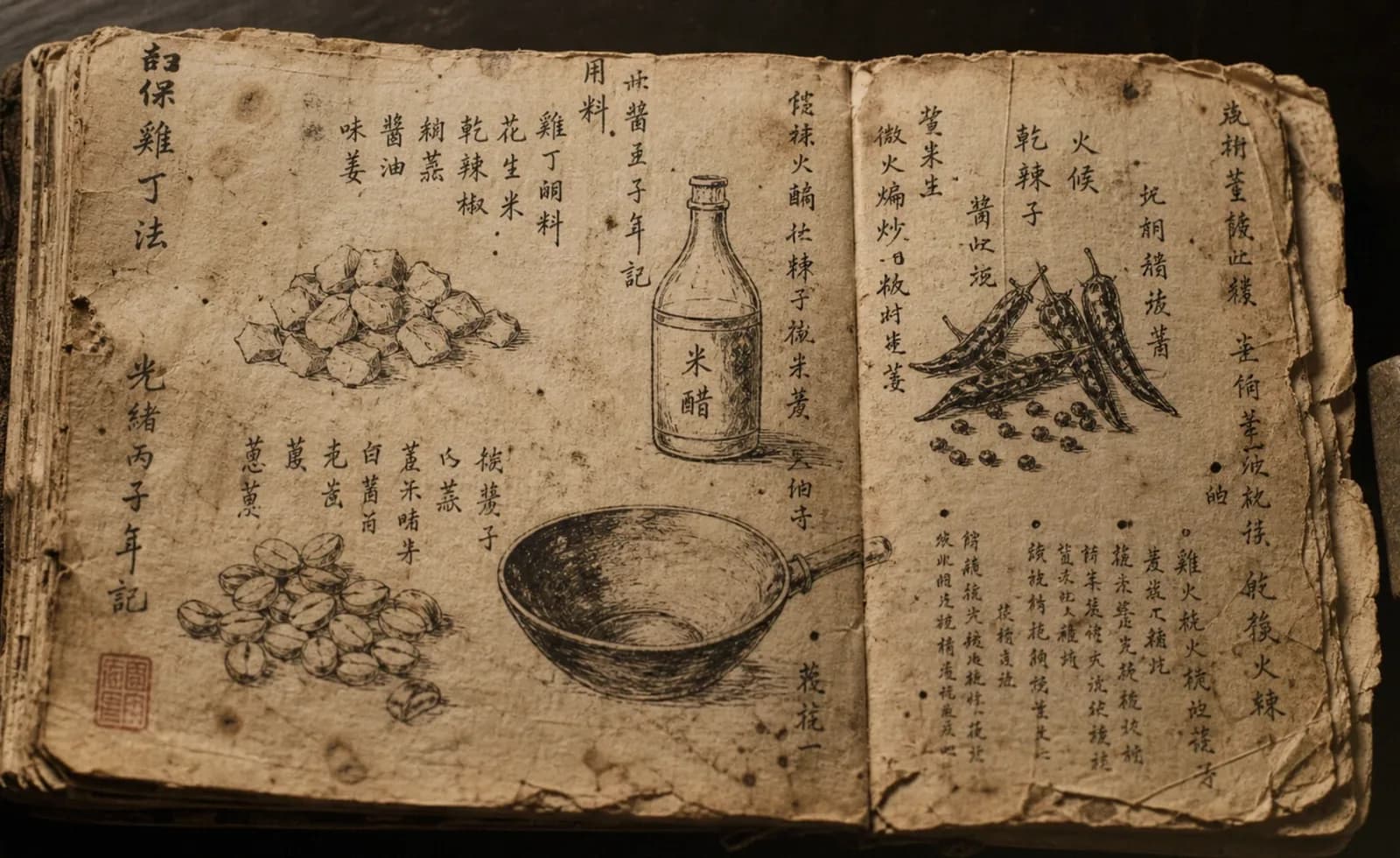
Pronunciation
How to say gōng bǎo jī dīng without turning it into a chant.
In pinyin, the tones are gōng bǎo jī dīng: first tone, third tone, first tone, first tone. In English speech, people usually flatten the tones, and the dish survives. If you are trying to be precise, say "gong" like a steady high note, let "bao" dip and rise, then keep "ji" and "ding" level.
- gōng: title side of the name, not "kung fu" by default.
- bǎo: the guarded/protective part of Gong Bao.
- jī: chicken. Yes, ji means chicken here.
- dīng: diced pieces. In this dish, ding points to diced chicken.
Tone perfection is not required to eat dinner. But knowing the syllables makes the dish less mysterious and more interesting. It turns a takeout phrase into a small language lesson with peanuts waiting nearby.
Spelling Court
Kung Pao, Gong Bao, and Kung Po are spelling relatives.
Searchers often ask whether Kung Pao and Gong Bao are different. Usually, no. "Gong Bao" is closer to modern pinyin for 宫保 / 宮保. "Kung Pao" is the older English restaurant spelling that became famous. "Kung Po" is another common menu variant. The spelling changed clothes; the dish did not necessarily change identity.
Gong Bao Ji Ding
Modern pinyin-style spelling. Best for explaining the Chinese name and for searchers who type the academic or menu-correct version.
Kung Pao Chicken
The dominant English restaurant spelling. It is older, familiar, and globally sticky, even when the pinyin form is more systematic.
Kung Po
A common alternate menu spelling, especially in English-language restaurant contexts. It usually points to the same dish family.
The WKPO standard is simple: if you are writing an explanatory page, use Gong Bao Ji Ding and show the Chinese. If you are meeting ordinary search behavior, also use Kung Pao Chicken. If a menu says Kung Po, do not panic. Inspect the plate before issuing paperwork.
Historical Anchor
Ding Baozhen and the Gong Bao title.
Ding Baozhen was a late Qing official whose life is associated with Guizhou, Shandong, and Sichuan. Food histories disagree over which local memory should receive the first ribbon, but the name link is the stable center: Ding was known by the Gong Bao title tradition, often explained through Taizi Shaobao, an honorary tutor-to-the-heir style title.
Name before recipe certainty
The precise origin story is contested, but the name's attachment to Ding Baozhen and his Gong Bao title is the durable center.
Ding Baozhen
Ding was a Qing official associated with Guizhou, Shandong, and Sichuan; food writers often treat those places as the dish's contested memory triangle.
Title becomes menu word
Gong Bao moved from honorific title into dish name, then into English as Kung Pao, a phrase that now survives even when diners know nothing of Qing bureaucracy.
This is where a careful page should resist fake certainty. It is easy to tell a clean legend: one official, one favorite dish, one moment of invention. The better archive says something more durable: Ding Baozhen is central to the name, the dish's regional origin story is contested, and the modern plate carries all that argument more gracefully than it has any right to.
Translation File
How to translate it without draining the name.
A literal helper translation might be "Gong Bao diced chicken." A reader-friendly translation is "Kung Pao Chicken." A teaching translation is "diced chicken named after Ding Baozhen's Gong Bao title." Each one does a different job. The wrong move is pretending one English phrase can carry every layer.
- Best search phrase: Gong Bao Ji Ding meaning.
- Best menu phrase: Kung Pao Chicken.
- Best language note: 宫保鸡丁 / 宮保雞丁, gōng bǎo jī dīng.
- Best quick gloss: Gong Bao diced chicken.
- Best culinary reminder: the name itself asks for dice.
FAQ / Name Debrief
The questions people ask after staring at the menu.
What does Gong Bao Ji Ding mean?
Gong Bao Ji Ding means 宫保鸡丁 / 宮保雞丁: Gong Bao refers to the official-title tradition associated with Ding Baozhen, ji means chicken, and ding points to diced or cubed pieces.
Is Gong Bao Ji Ding the same as Kung Pao Chicken?
Yes in normal food use. Gong Bao Ji Ding is the pinyin-style name; Kung Pao Chicken is the older and more familiar English restaurant spelling.
What is the pinyin for 宫保鸡丁?
The pinyin is gōng bǎo jī dīng. Without tone marks it is often written gong bao ji ding.
Who was Ding Baozhen?
Ding Baozhen was a late Qing official linked with Guizhou, Shandong, and Sichuan. Food histories connect the dish name to his Gong Bao title, while the exact recipe-origin story remains contested.
Why is Kung Pao spelled differently from Gong Bao?
Kung Pao is an older English spelling that became fixed on restaurant menus. Gong Bao follows modern pinyin more closely. Kung Po is another common menu variant.
Does Ding in Ji Ding mean Ding Baozhen?
In the dish name, ding points to diced chicken pieces. Some explanations also note the echo with Ding Baozhen's family name, but the practical menu meaning is the cube.