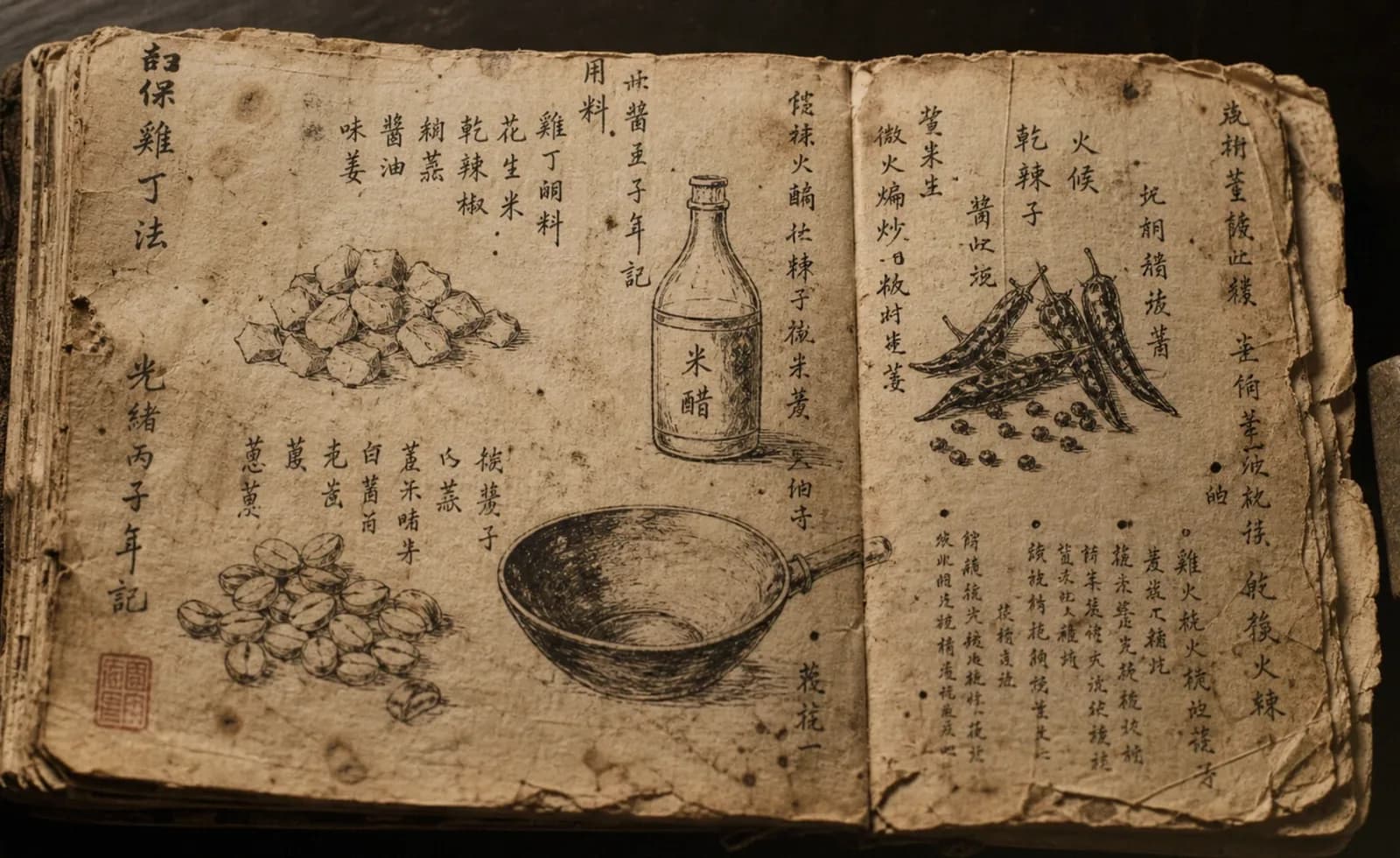
A title, not an ingredient
Gong Bao is commonly explained as a shortened reference to an honorary title associated with Ding Baozhen. That means the name of the dish is not an ingredient list. It is a social trace: rank, person, memory, and menu language collapsed into two compact syllables.
This is already theatrical before the Order enters. A plate called after a title behaves differently from a plate called after its sauce. It asks the eater to accept that dinner can arrive with a little paperwork attached.
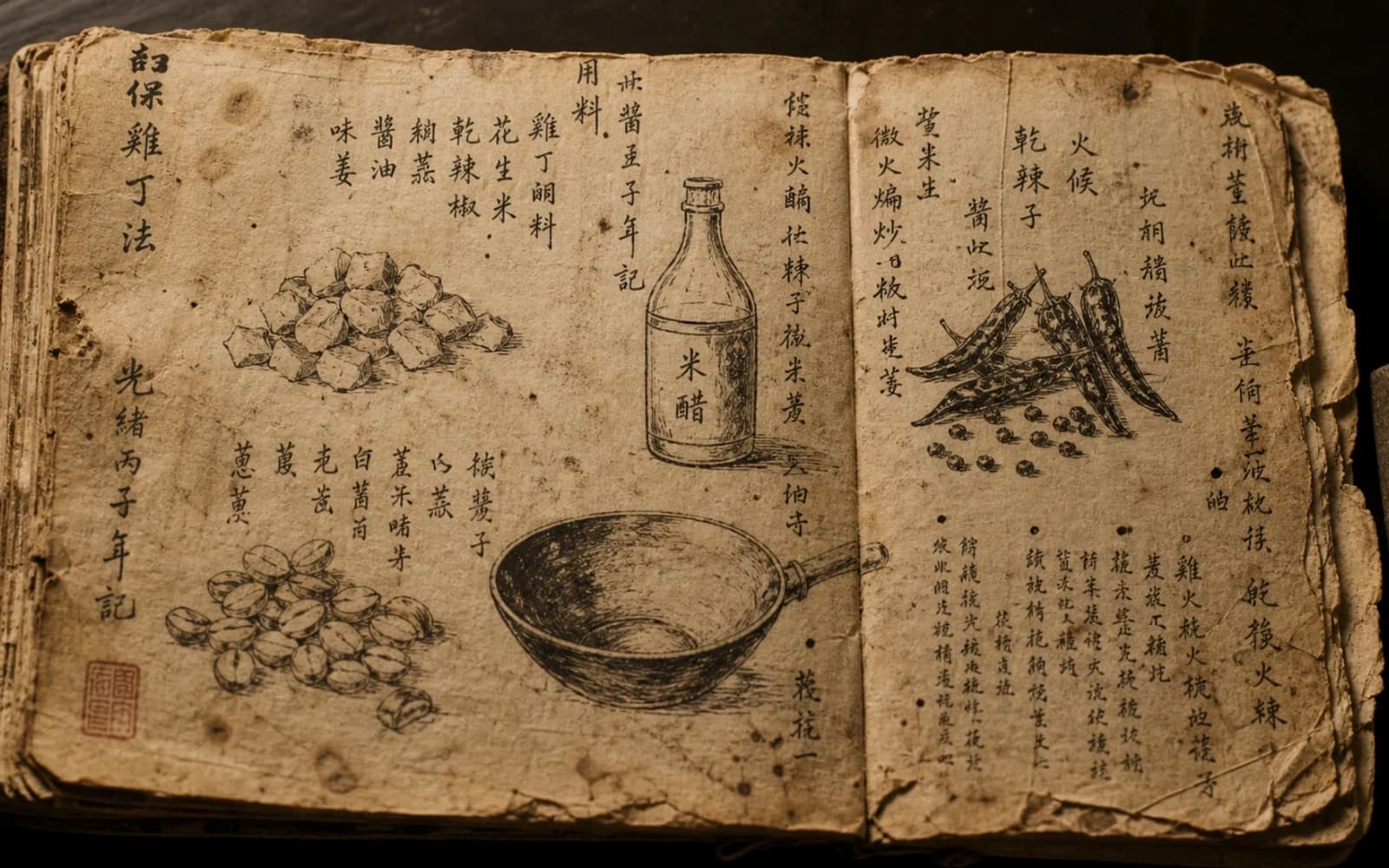
How Gong Bao became Kung Pao
The English form Kung Pao is a romanized survival, shaped by older transliteration habits and restaurant repetition. It is not a perfect linguistic museum label, but it is an astonishingly effective public sign. People who know nothing about Qing titles still recognize that it points to a specific sweet-sour-hot chicken-and-peanut system.
That is how food names travel: not by remaining pure glass, but by remaining recognizable under pressure. Kung Pao is easy to say, strange enough to remember, and flexible enough to survive fine-dining menus, frozen meals, delivery boxes, and recipe blogs.

The danger of translating the mystery away
It is tempting to explain the name once and drain it dry: Gong Bao equals Ding's title, case closed. The Archive resists that dead-end neatness. The explanation is necessary, but the aftertaste matters too. A title-name gives the dish a ceremonial charge that plain description cannot replace.
Call it spicy diced chicken with peanuts and the engineering is visible. Call it Kung Pao Chicken and the engineering gets a shadow. The Order lives in that shadow, wearing formal gloves and pretending the peanuts have sworn an oath.
What the name should not be forced to prove
The name cannot prove every origin detail. It cannot settle whether a household cook, a regional precedent, or a restaurant interpreter deserves the final bow. Names preserve powerfully, but they preserve unevenly. Gong Bao gives us a central clue, not a courtroom transcript.
This matters because confident bad history spreads faster than careful good history. The correct move is to let the name do the work it can do: connect the dish to Ding Baozhen's honorific memory and explain why the title still clings to the plate.
Why the password still works
A strong dish name is a password because it summons expectation. When a menu says Kung Pao, the eater expects diced chicken, peanuts, dried chilies, quick heat, and a sauce that speaks sweet, sour, savory, and hot without mumbling. The name is a contract.
When the plate honors that contract, Gong Bao still works. It opens a door between biography and appetite. When the plate breaks the contract, the name becomes costume jewelry: shiny, familiar, and faintly accused by the archive light.