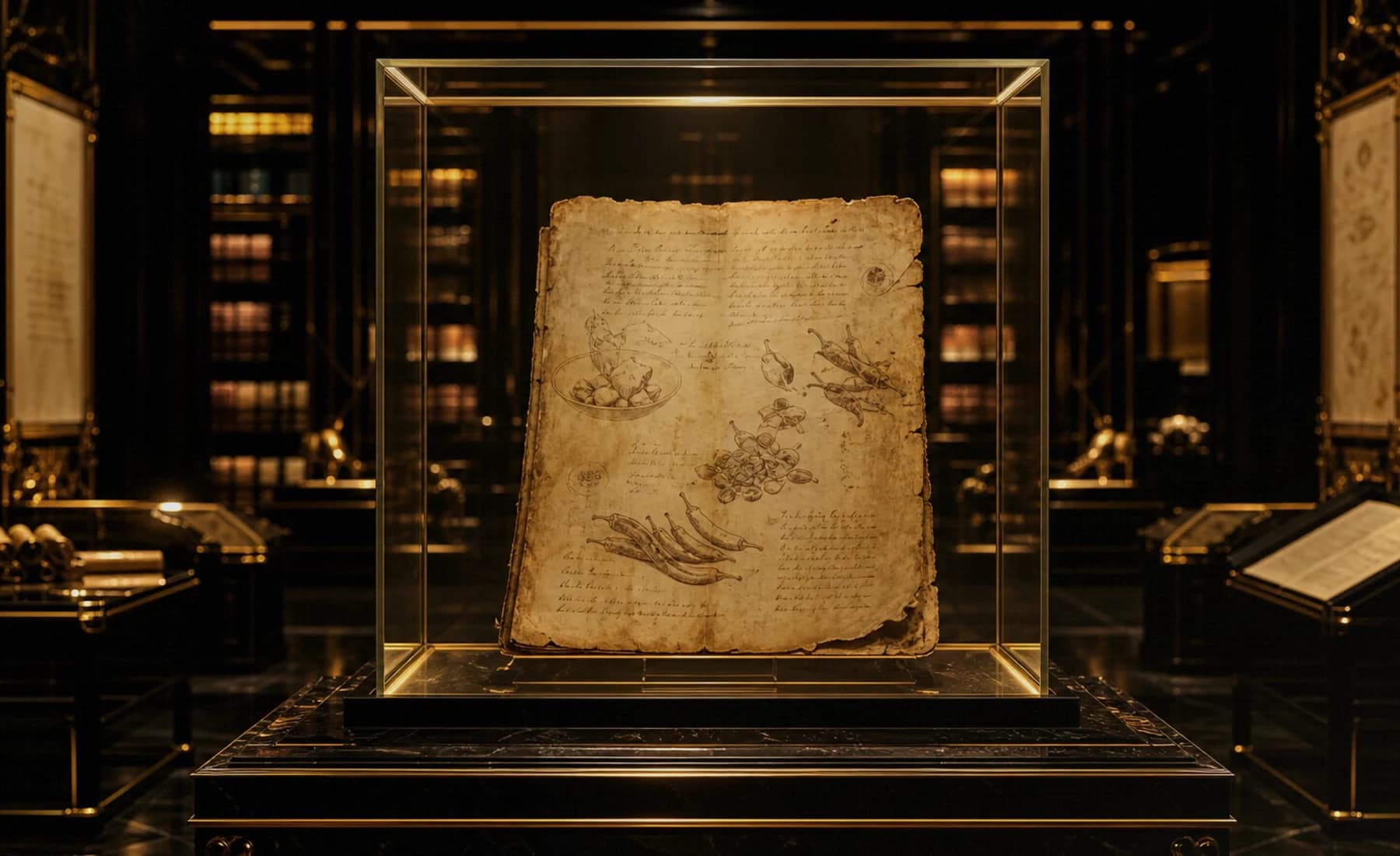
What 1876 can and cannot mean
The Order uses 1876 as a theatrical pin in the map, not as a forged birth certificate. Ding Baozhen was serving in Sichuan by the late Qing period, and the dish attached to his honorific title is usually described as taking its famous Sichuan shape during that chapter. That is the responsible historical floor. The black-and-gold file folder is ours.
A source-disciplined reading keeps two columns on the desk. One column holds the public claim: Gong Bao chicken is tied to Ding, to his title, and to a Sichuan version built around diced chicken, peanuts, dried chilies, vinegar, sugar, and savory depth. The other column holds the Order's performance: a protocol, a seal, a sense that the wok knew it was entering history.
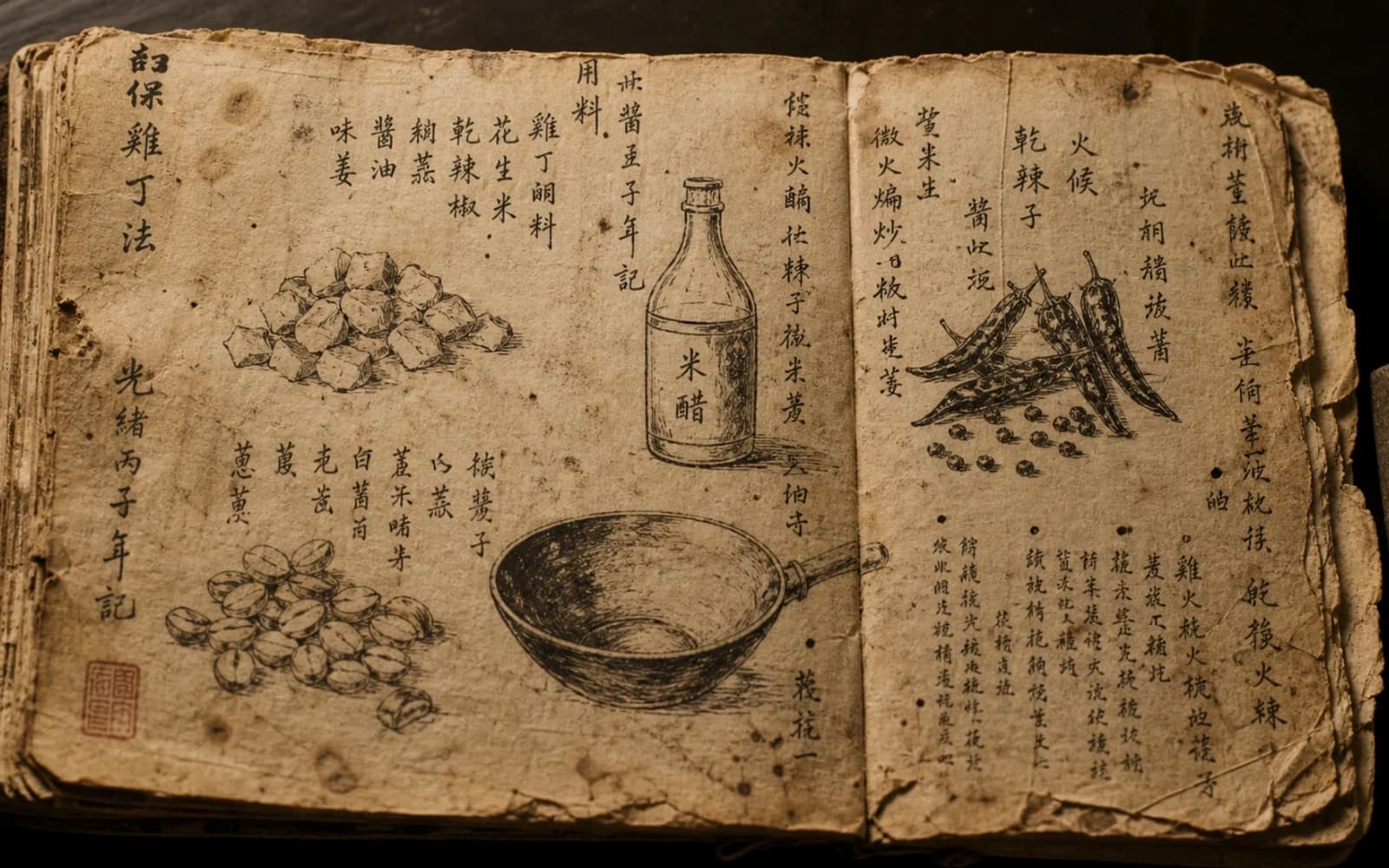
The man before the myth
Ding Baozhen matters here because a title makes food harder to flatten into mere ingredients. Gong Bao was not originally a flavor word. It points back toward office, rank, ceremony, and a person whose administrative life has been abbreviated by global appetite into the name of dinner.
That abbreviation is not an insult. Cuisine does this constantly. It takes biography, household habit, regional technique, and public memory, then compresses them into something that can be ordered on a Tuesday night. The Protocol begins when the name stops being trivia and starts controlling the dish's seriousness.
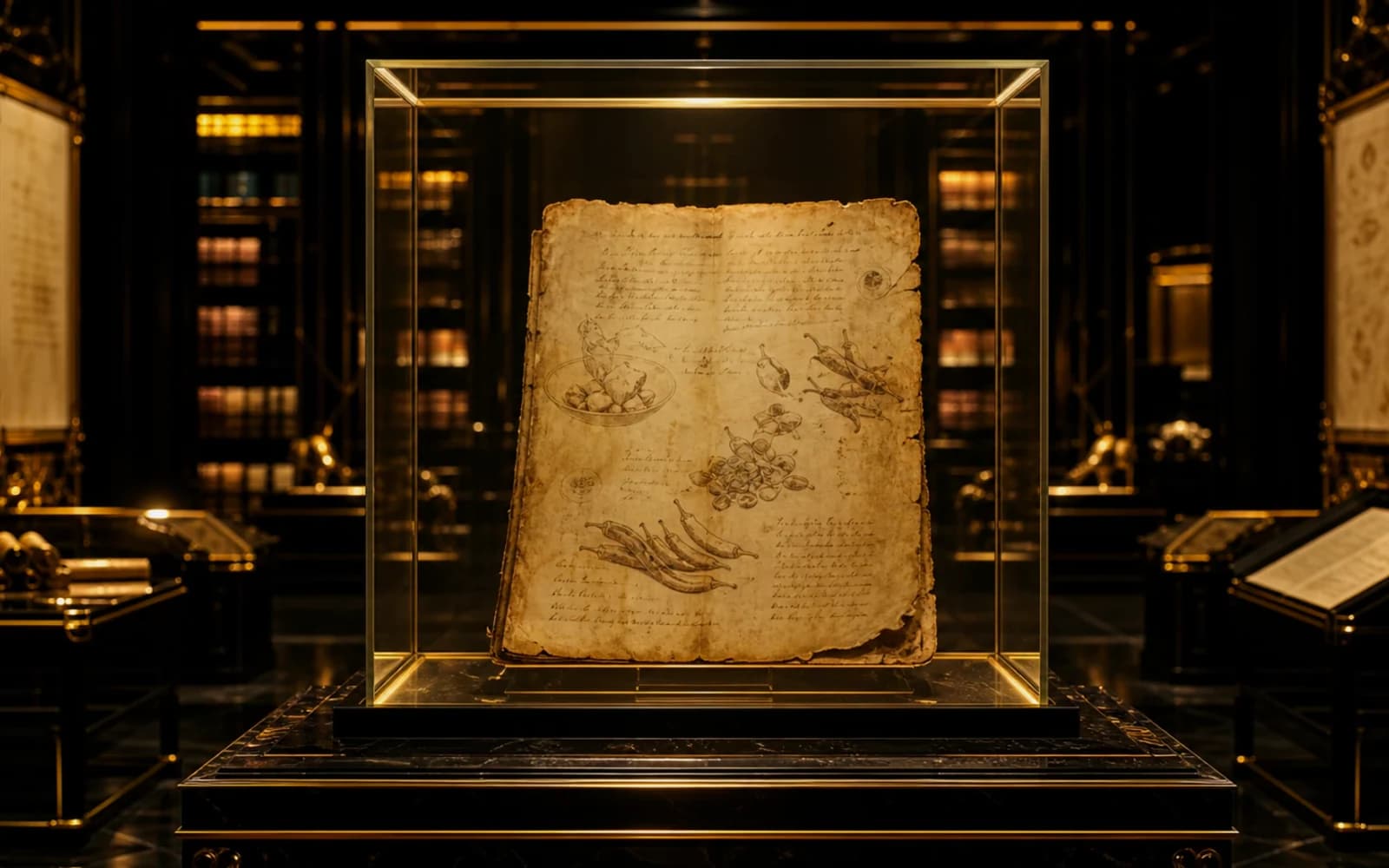
Why Sichuan changes the file
The Sichuan reading is not just hotter chicken. It is a different logic of balance. Dried chilies perfume the oil. Sichuan peppercorn adds a low electrical weather. Vinegar and sugar make the sauce flash bright instead of sitting heavily. The peanuts do not decorate the plate; they interrupt it at the exact right moments.
That is why the Order treats the Sichuan phase as the ignition point. A Shandong or household ancestor may explain movement, but the famous form depends on the region where heat, acid, aroma, and crunch learned to argue in public.
The recipe is evidence, not proof
No single recipe can prove an origin story. Recipes are late witnesses. They are edited by families, restaurants, translators, publishers, and the quiet panic of unavailable ingredients. But recipe structure can show why one story survived better than its rivals. Kung Pao Chicken has a structure that travels cleanly.
The evidence is in the repeatable pattern: small chicken pieces, quick heat, a glossy reduced sauce, chilies kept as aromatic warning lights, and peanuts held until they remain crisp. That pattern is memorable enough to carry a title across languages without needing every archive box to agree.
The protocol in plain words
Strip away the ceremony and the Protocol says this: a famous dish deserves precision, but precision should not pretend to be certainty. We can say Ding Baozhen and Gong Bao are central to the name. We can say Sichuan technique made the global signal sharper. We should not pretend a ceremonial date solves every regional dispute.
So the Order keeps the date as a lantern rather than a verdict. It lights the path from official title to household appetite to restaurant shorthand. The file closes with one practical instruction: when the chicken is diced, the peanuts still crack, and the sauce hits sweet, sour, savory, and hot in one sentence, the Protocol is active.