Precision as respect
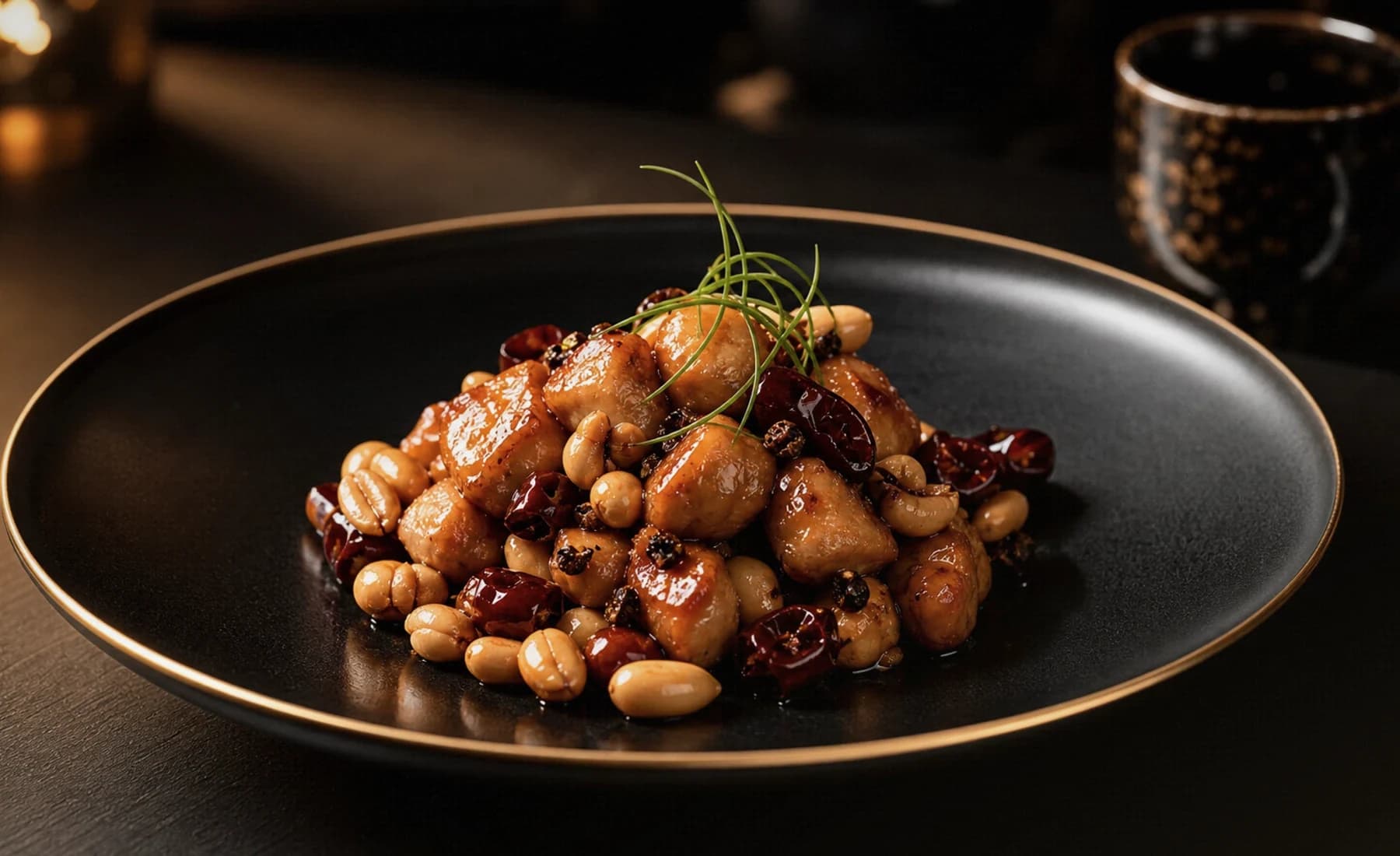
Tokyo offers a useful fantasy for Kung Pao Chicken: what if every cube, peanut, and chili segment behaved with total discipline? The dish would not become less lively. It would become more legible.
That is why the Archive treats Tokyo as a precision signal. Not an origin point, but a lens.
The plating question
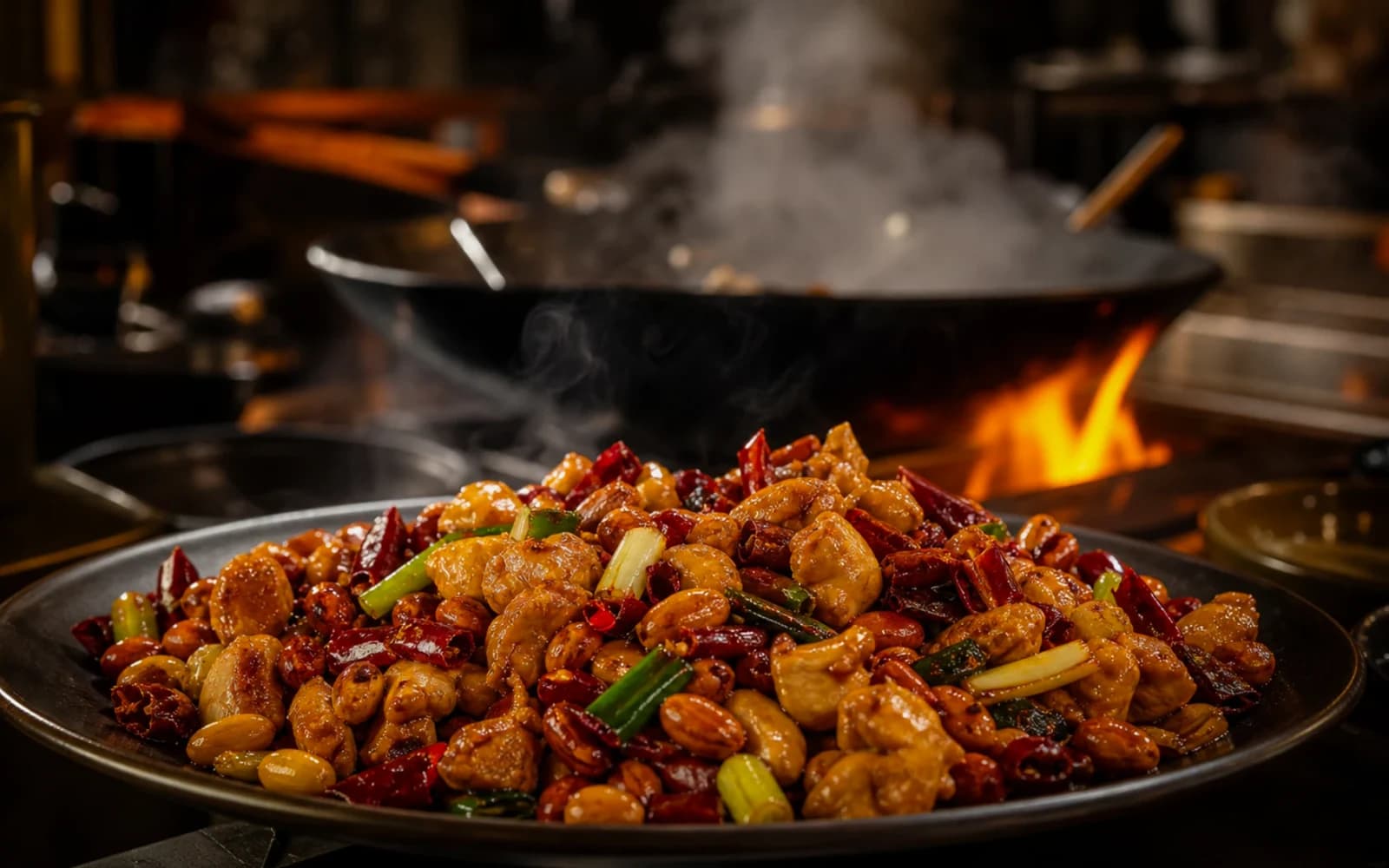
A luxury interpretation can work if it protects the dish's engine. Smaller portions, cleaner plating, and better lighting are allowed. Removing the peanuts, heat, or sweet-sour snap is not.
Fine dining should frame the protocol, not perform an exorcism on it.
Small errors become visible
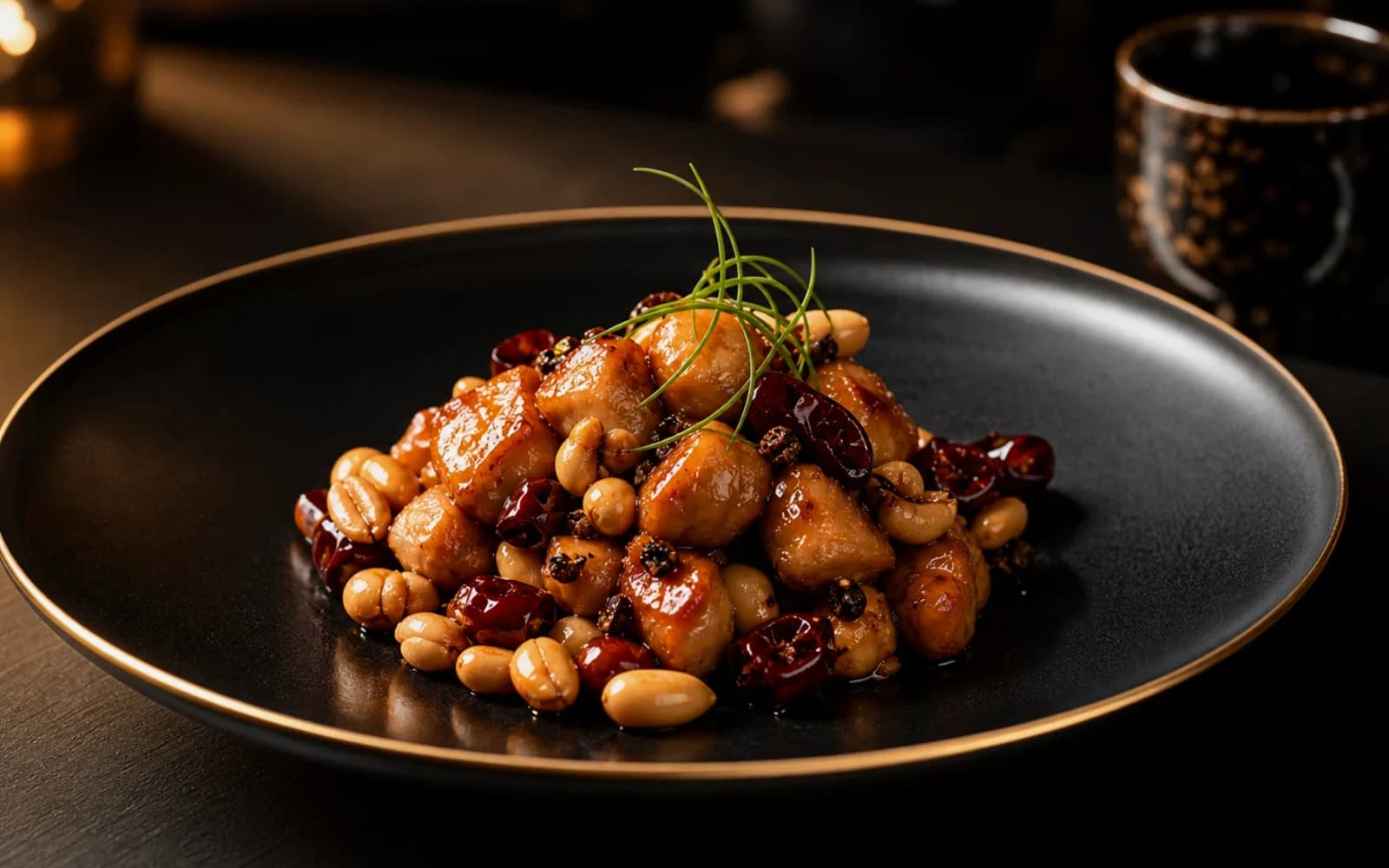
Precision is merciless in a useful way. When a plate is clean, every soft peanut, ragged cube, and heavy sauce trail becomes easier to see. Tokyo, as an Archive fantasy, is the room where Kung Pao cannot hide behind abundance.
That pressure helps the dish. It reminds the cook that the protocol is made of small decisions, not a heroic final pour of sauce.
Restraint can intensify flavor
A smaller portion does not have to mean a smaller experience. If the chicken is tender, the chilies fragrant, the vinegar bright, and the peanut crack exact, a few bites can carry the whole argument.
The risk is sterilization. Kung Pao Chicken should not become so precise that it forgets to be fun. The Order allows polish only when the bite still has electricity.
The signal is a lens, not a passport
Tokyo Precision Signal is not an origin claim. It is a lens for asking what happens when a famously lively dish meets a culture of detail. The answer should be curiosity, not ownership.
Under that lens, the central protocol becomes clearer: dice, heat, acid, sweetness, peanut, speed. Remove any one of those and the beautiful plate begins to look like an alibi.