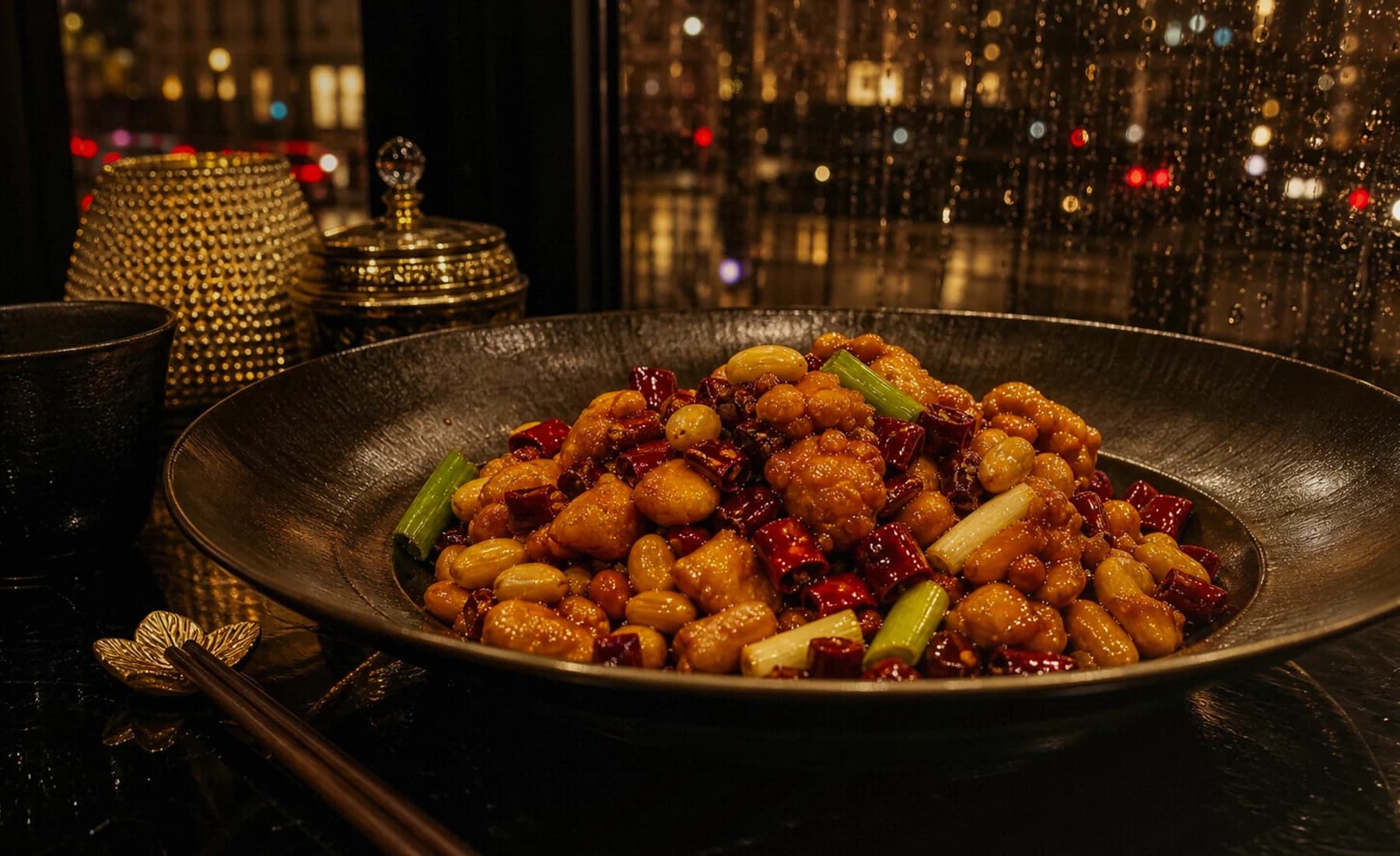
A city of translation
London's food scene is fluent in translation. Dishes arrive, adapt, sharpen, soften, and sometimes become strangely excellent in the process.
Kung Pao Chicken in London is interesting because the city rewards both tradition and precision. A disciplined kitchen can turn the dish into something that feels classic without becoming frozen in amber.
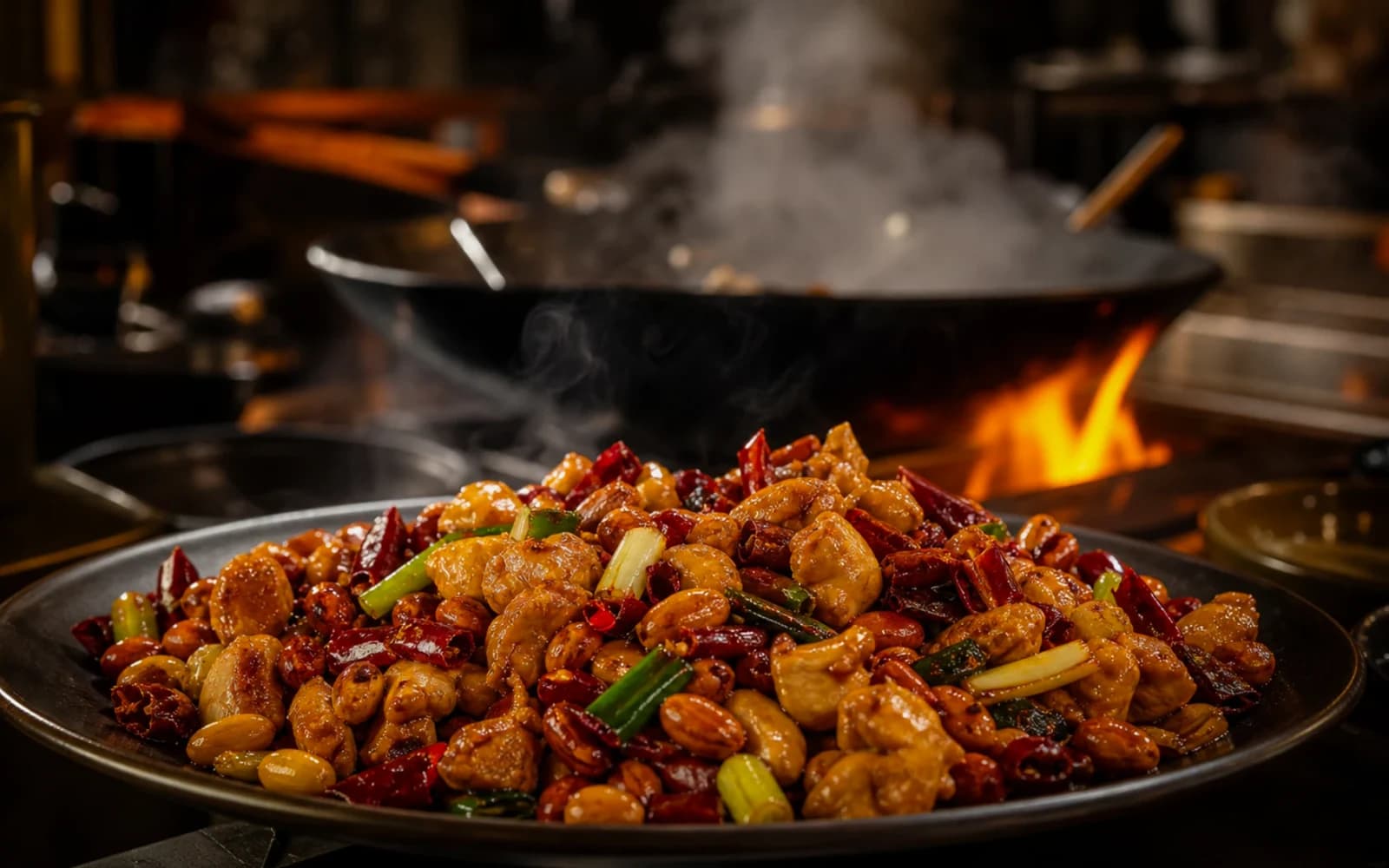
The fog test
The Foggy Outpost test is simple: can the dish cut through a grey evening? The vinegar should flash. The chilies should lift. The peanuts should make the plate feel awake.
If it tastes like sweet brown fog, the signal failed.
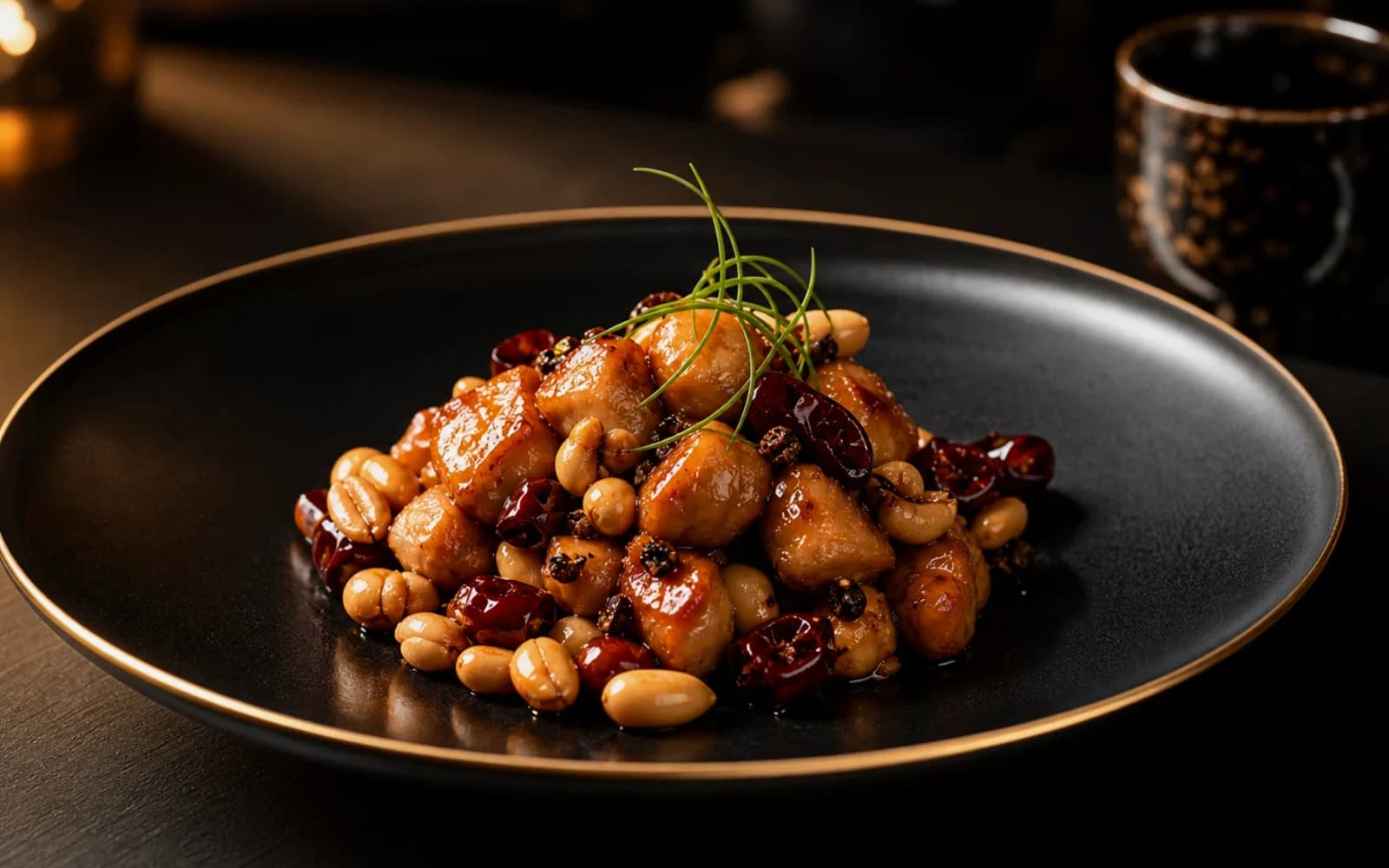
Precision suits bad weather
London gives the Archive a useful stage because rain makes warmth persuasive. A good Kung Pao plate can feel almost architectural in that setting: heat, acid, gloss, and crunch arranged against the grey.
The danger is comfort turning sleepy. The dish should not merely be warm. It should cut through the evening with vinegar brightness and chili aroma.
Translation needs edges
A city fluent in global food can make adaptation feel effortless, but effortless is not the same as precise. Kung Pao Chicken needs edges: diced pieces, toasted peanuts, aromatic heat, and a sauce that knows when to stop.
When those edges blur, the dish becomes anonymous. It may still be pleasant, but it no longer deserves a sector code in gold ink.
The outpost report
The Foggy Outpost is not a claim that London owns the dish. It is a report from the perimeter, where a global classic tests how much of itself can survive local weather, local appetite, and local elegance.
The best answer is quietly thrilling: enough survives. When the peanuts crack and the sauce flashes, the city outside can stay grey. The plate has filed its own light.