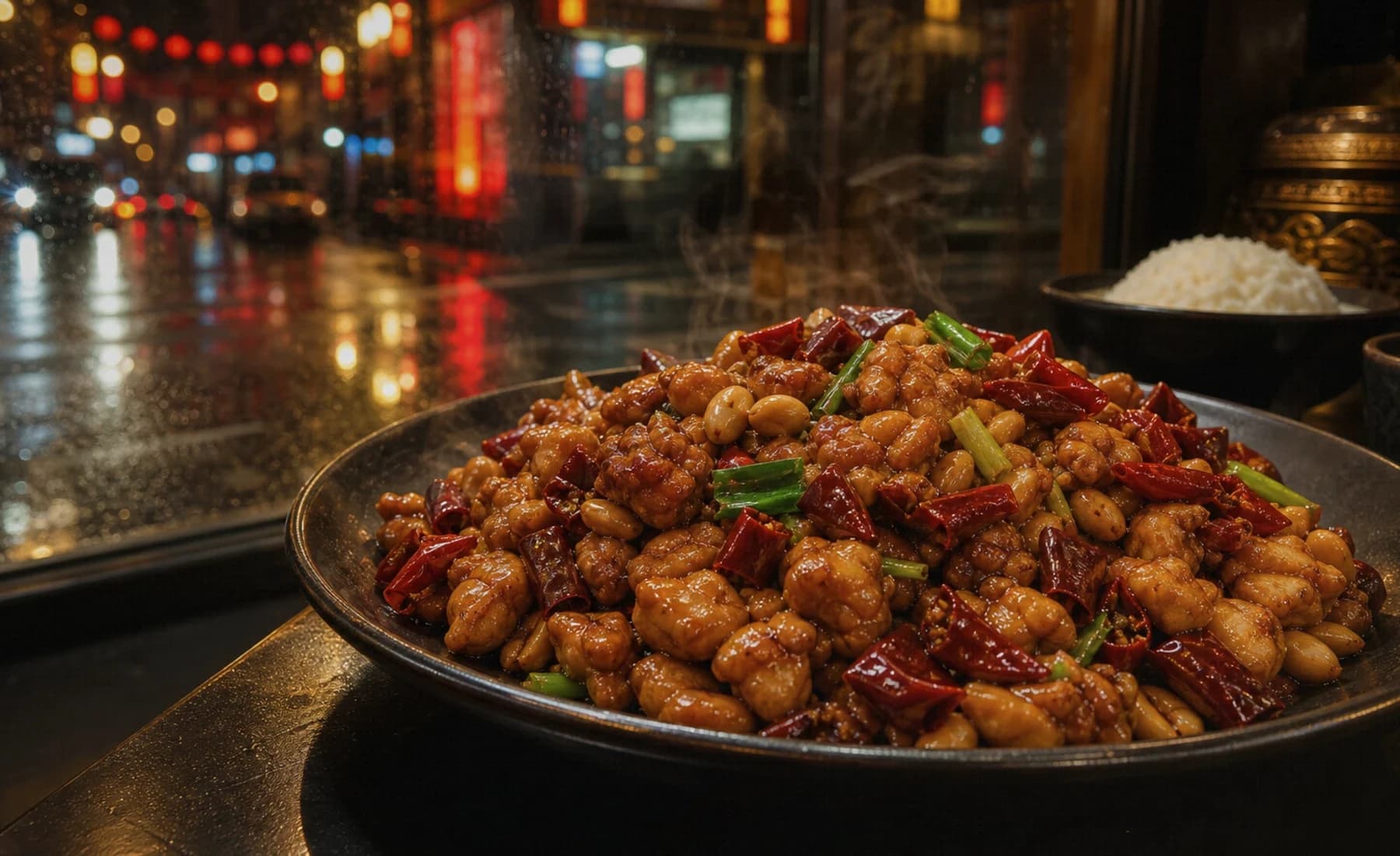
Discovery moved to the feed
Young diners increasingly discover food through short social videos, restaurant clips, and influencer recommendations. That changes what becomes memorable. Steam, crunch, color, and a strong opinion can travel faster than a traditional review.
Kung Pao Chicken is built for that world: red chilies, glossy sauce, peanuts, and a name people already half-recognize.
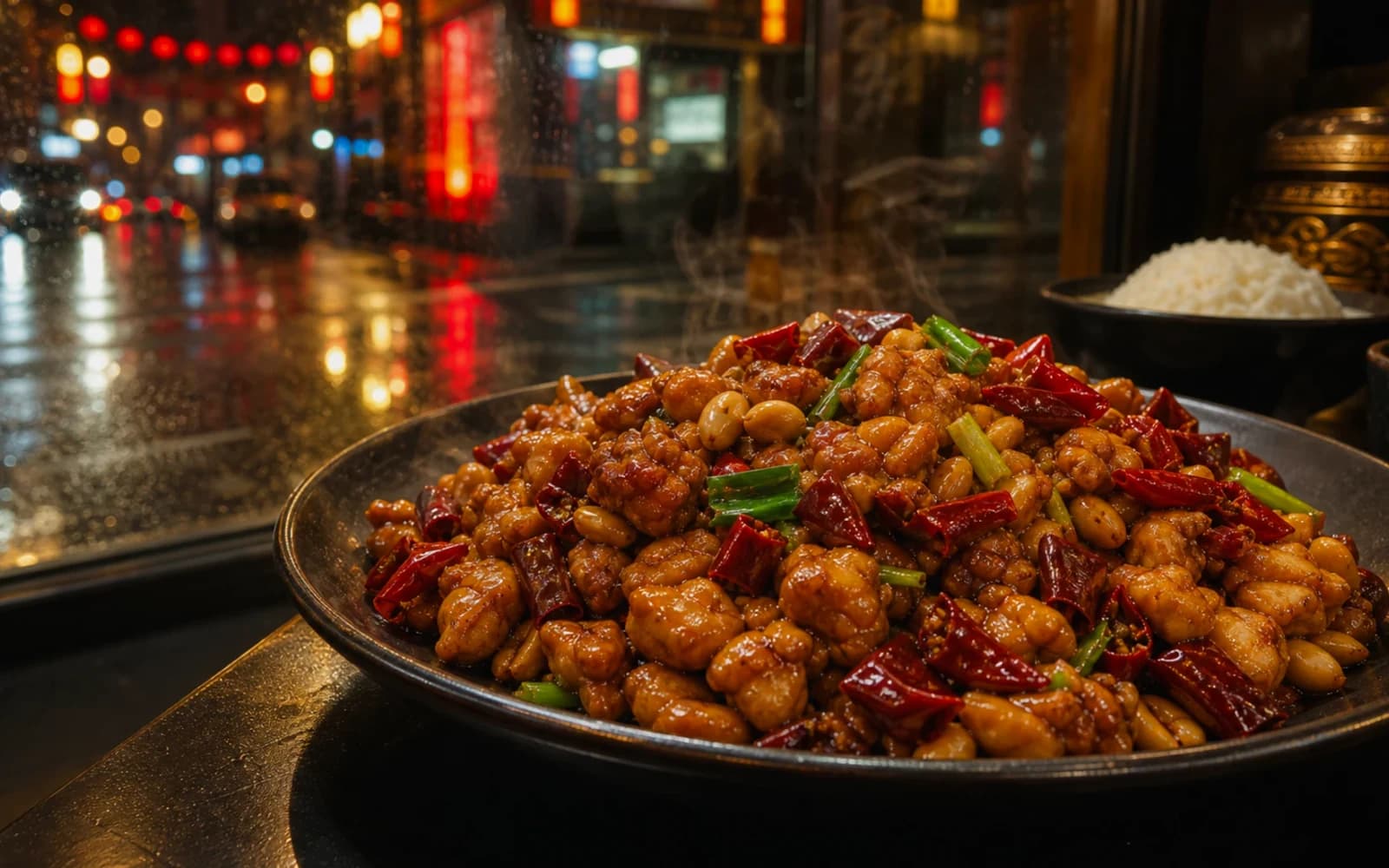
The site's role
The Order turns passive food scrolling into participation. Users do not just read about authenticity; they upload evidence, vote, accuse, defend, and share verdicts.
That is the modern hook: not a recipe page pretending to be neutral, but a playable archive pretending to be official.
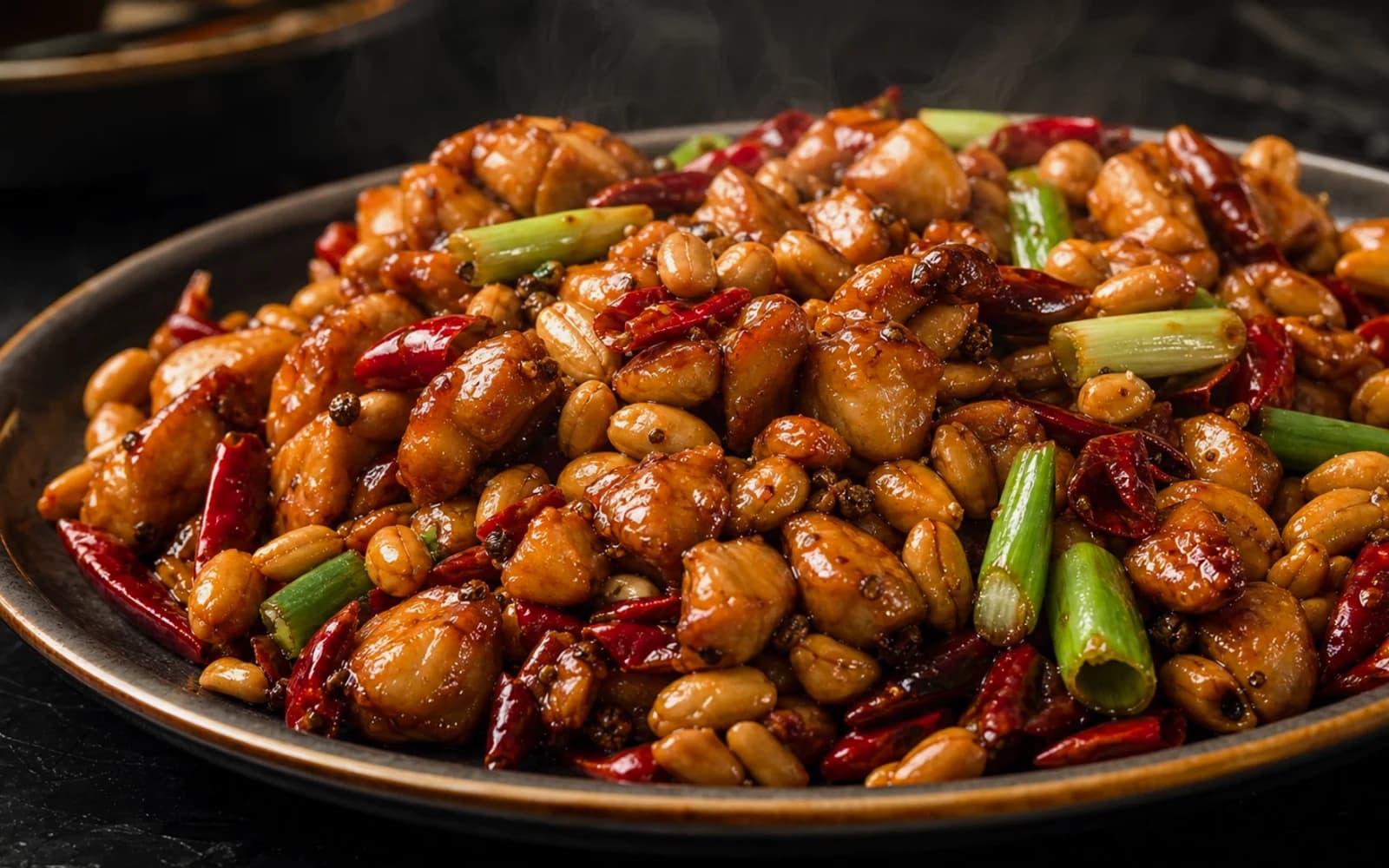
The plate became audition tape
Short-form food culture asks every dish to prove itself quickly. Color first, then movement, then texture, then the promise that a stranger will have an opinion. Chinese takeout, long treated as background comfort, suddenly performs under studio lights.
Kung Pao Chicken can handle that pressure better than many dishes. It has recognizable props: chilies, peanuts, cubes, shine. The feed understands props.
Virality favors clear conflict
A calm explanation rarely outruns a visible dispute. Is that carrot legal? Are those cashews? Why is the sauce neon? The dish becomes shareable when viewers can prosecute it in one sentence.
That does not mean the Archive should chase outrage for its own sake. The useful move is to let the joke open the door, then give the reader enough culinary logic to stay.
Takeout memory is still the anchor
The digital layer is new, but the emotional core is old: a container opened at night, a familiar smell, a favorite restaurant whose menu number someone knows by heart. The feed did not invent that attachment. It put a ring light on it.
The Order's best role is to honor both sides. It can laugh at the algorithm while admitting that Kung Pao Chicken travels because people already cared before the camera arrived.