Texture is content
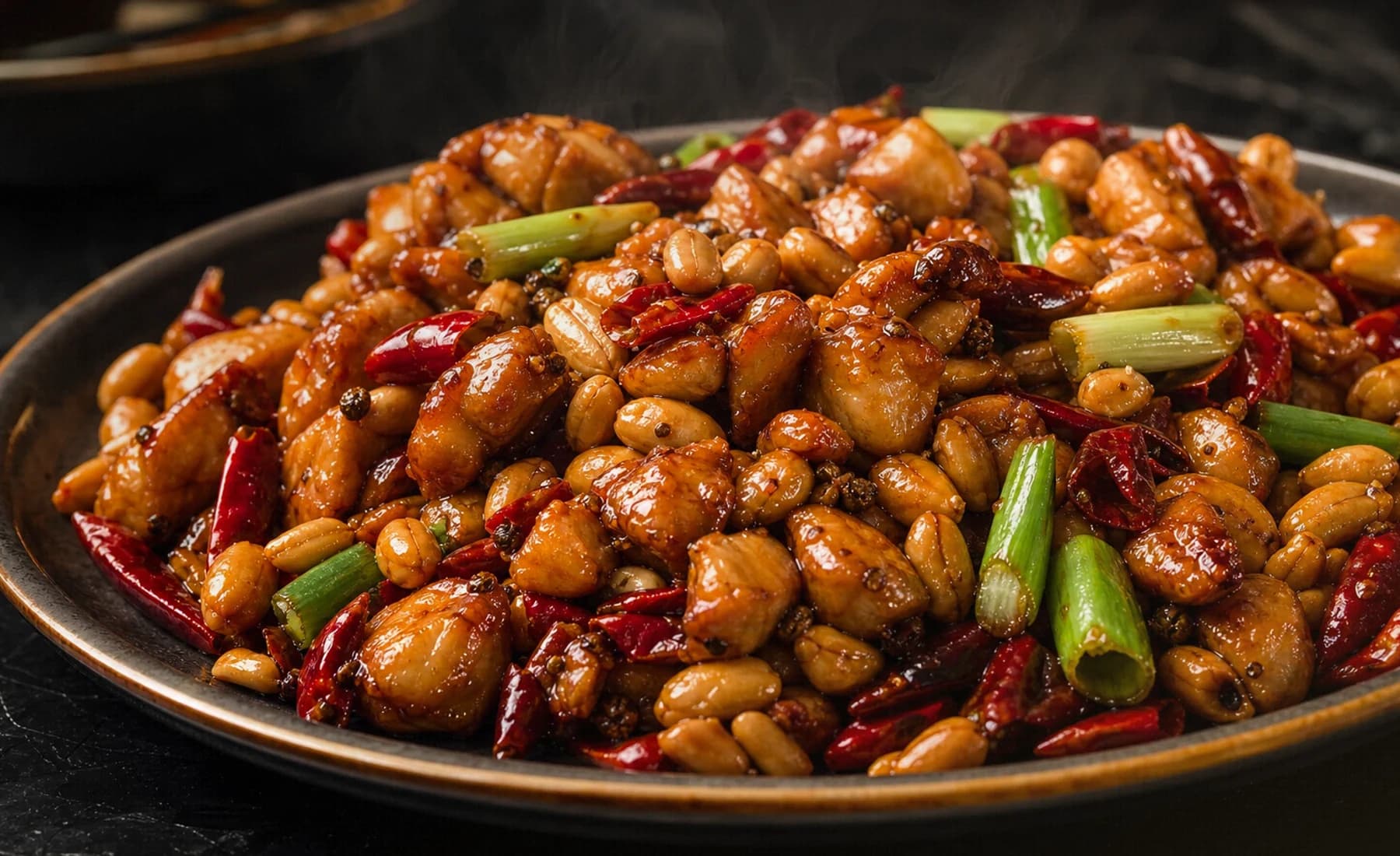
Crunch is visible before it is audible. A peanut glints. A chili snaps. A cube of chicken pushes back. That sensory promise is why texture-rich foods work online.
Kung Pao Chicken has a built-in rhythm: soft, crisp, hot, sweet, sour, repeat. The dish understands short-form video better than many marketing departments.
Why the crunch keeps returning
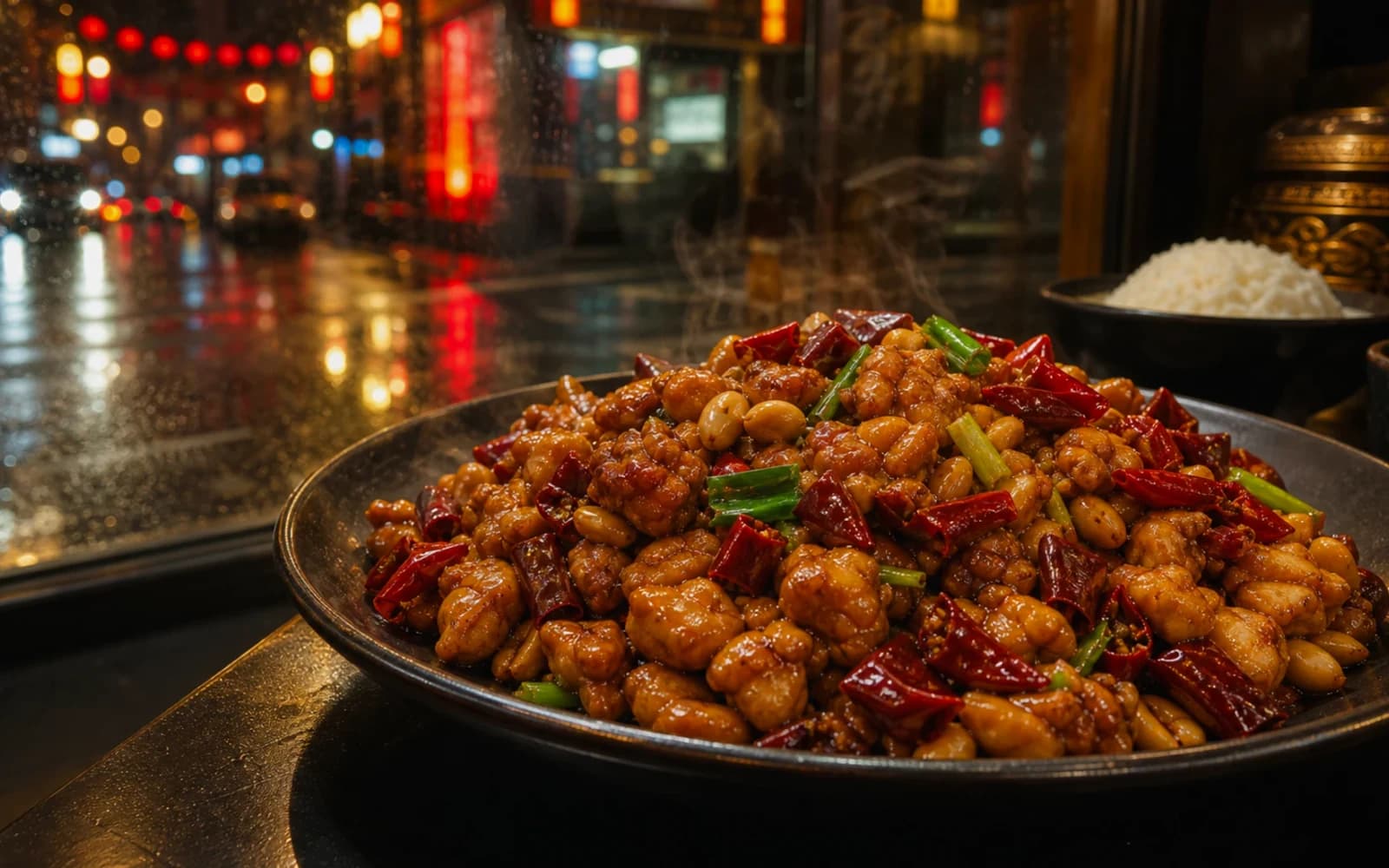
Searchers do not only ask for recipes. They ask why a dish works, what makes it authentic, and why their takeout version tastes flat. Texture answers those questions in human language.
The Archive should own that explanation with enough humor to be quoted and enough detail to be trusted.
The camera hears with its eyes
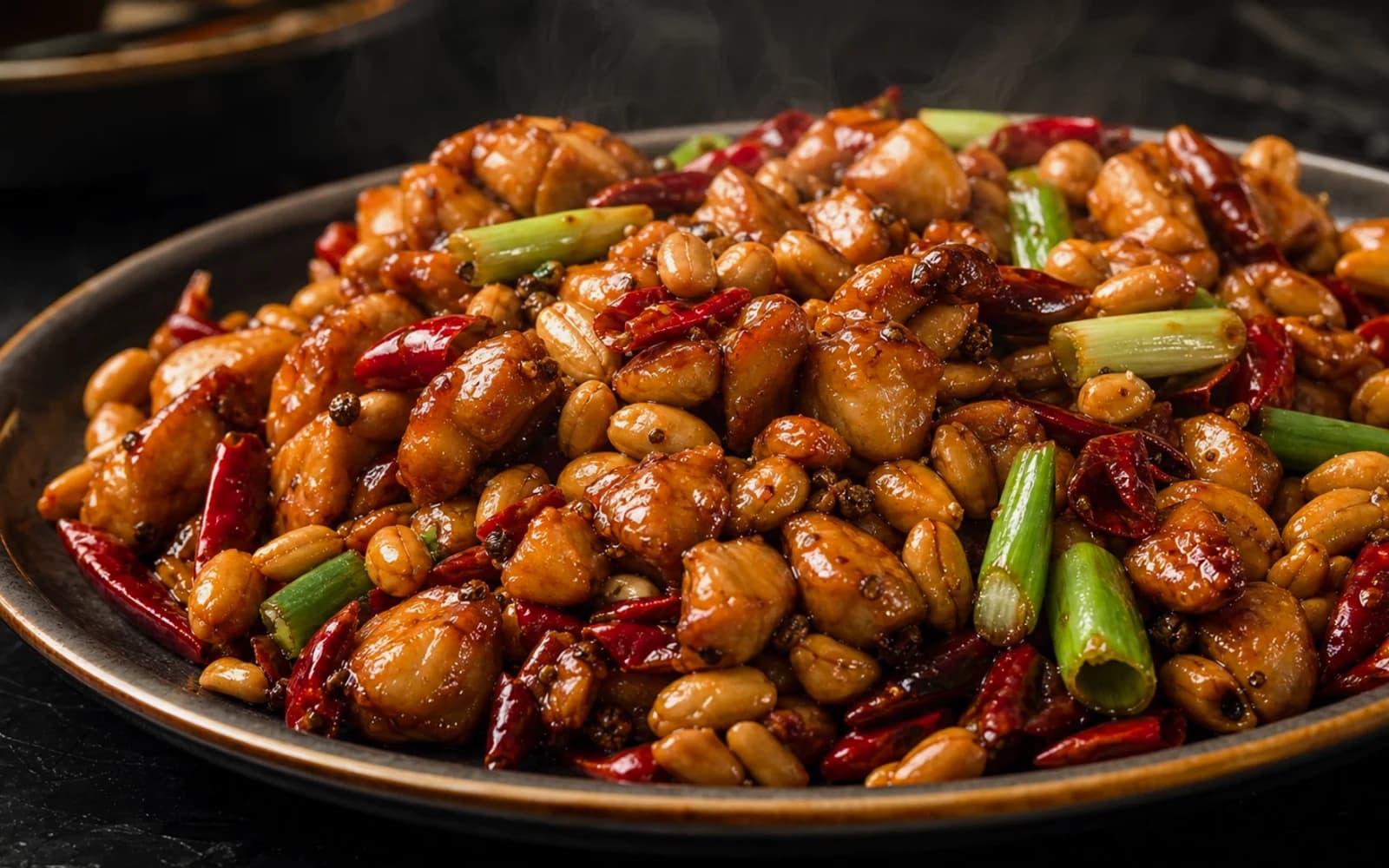
A still photo cannot play sound, but it can promise sound. Toasted peanuts, wrinkled chilies, and glossy chicken cubes give the viewer enough surface information to imagine the bite. That anticipation is the quiet economy under a thousand food posts.
Kung Pao Chicken is especially efficient because its texture is visible in separate parts. The viewer does not need a lecture. The peanut has already filed testimony.
Texture prevents monotony
A sauce-heavy dish risks becoming one long note. Crunch breaks that line into beats. It gives the eater a reason to continue after sweetness, acidity, and heat have made their introductions.
This is why the crunch economy is not just marketing language. It explains appetite. People return to foods that change in the mouth, and Kung Pao changes quickly enough to feel alive.
The Order measures the after-click
The Archive's imaginary instruments are aimed at the after-click: the tiny final sensation that makes a bite feel complete. Too soft, and the dish drifts. Too hard, and it becomes work.
A correct Kung Pao crunch is brief, roasted, and a little addictive. It closes the circuit without stealing the scene, which is more than can be said for many modern texture stunts wearing novelty shoes.