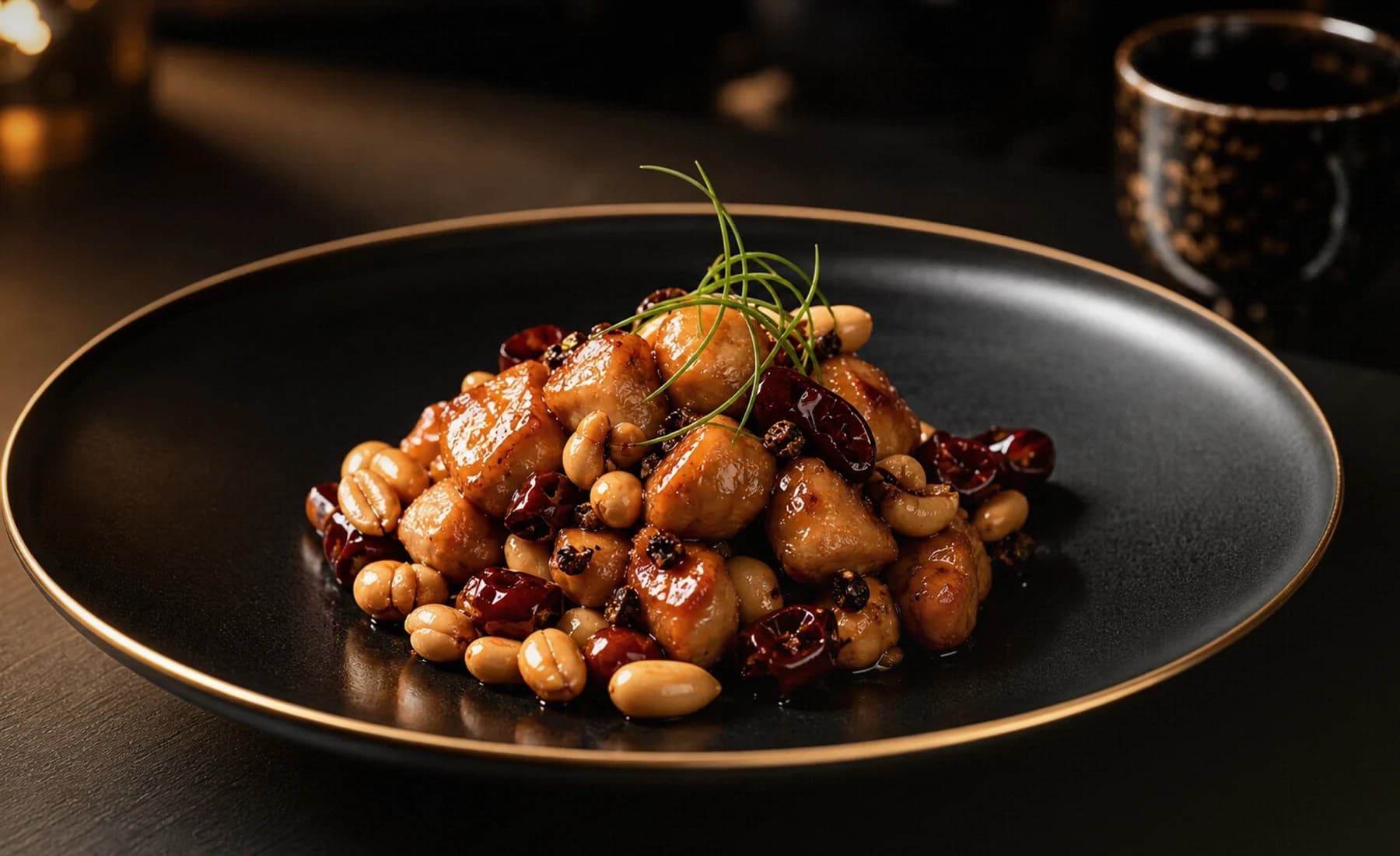
The hypothesis
Paris is useful to the Archive because it tests the boundary between reverence and vanity. A chef can elevate Kung Pao Chicken, but elevation is not the same as making it unrecognizable.
The hypothesis is simple: haute cuisine can compress the dish into a jewel if the jewel still bites back.
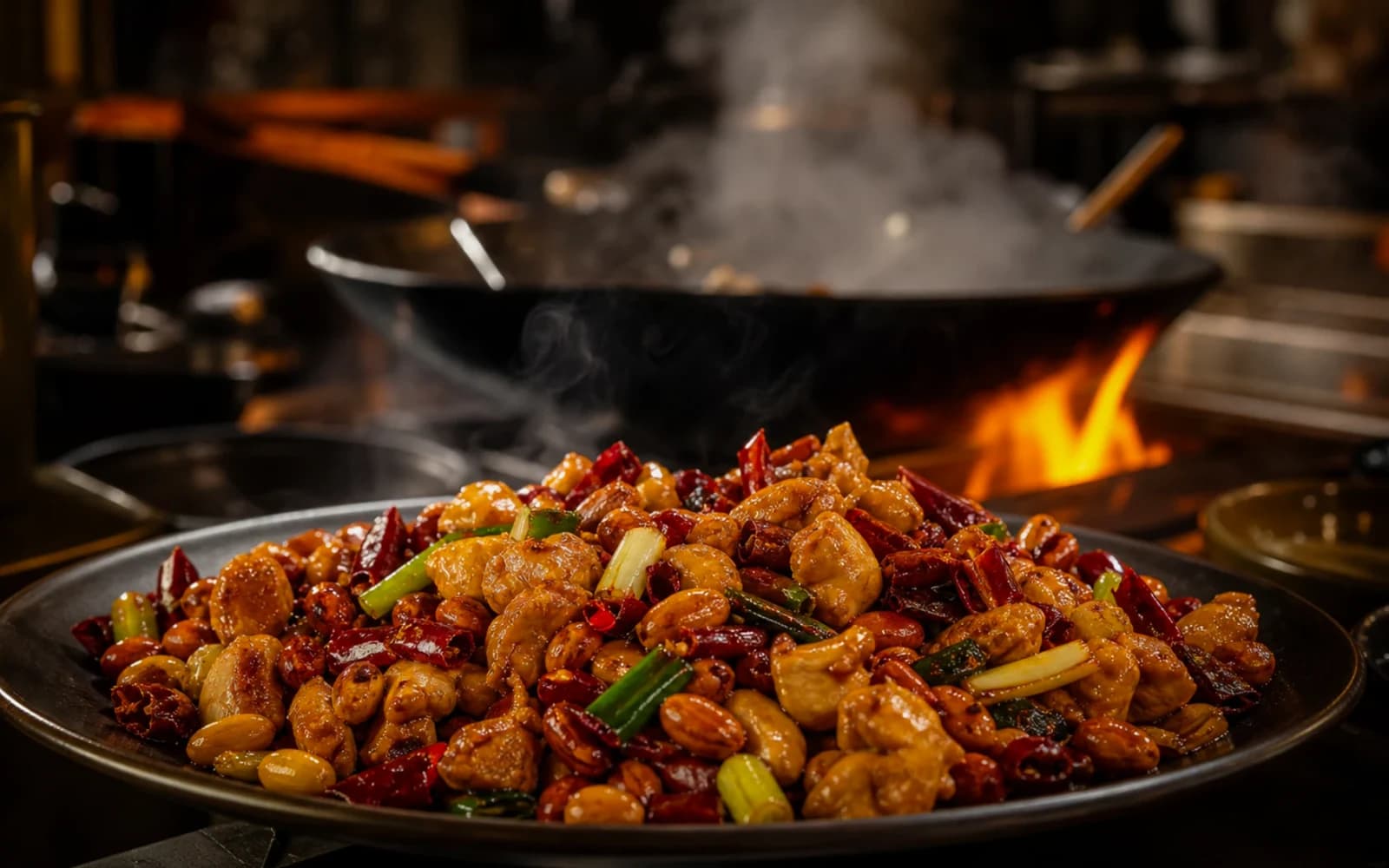
Failure modes
The common failure is removing the fun. A Kung Pao interpretation that cannot make someone grin has misunderstood the assignment.
The best version would be elegant, yes, but also slightly dangerous: a polite plate carrying a small chili alarm.
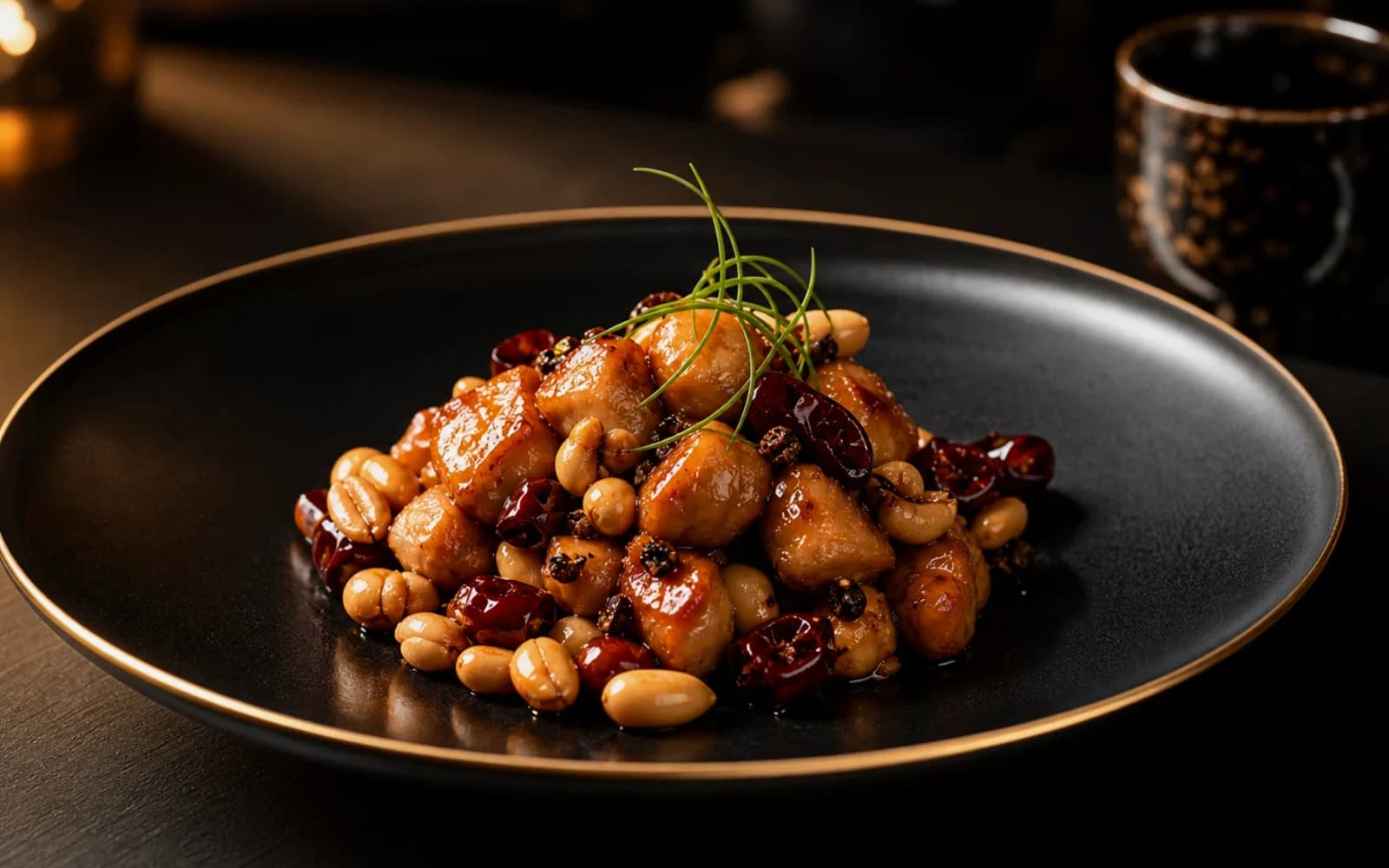
Luxury can become evasion
The tasting-menu stare is powerful because it can make almost anything look important. That is also the trap. A tiny cube under perfect light is not automatically a better Kung Pao Chicken. Sometimes it is just a smaller excuse.
The Archive judges luxury by retention. Does the dish still carry heat, vinegar, peanut, diced tenderness, and the quick pleasure of recognition? If not, the gold rim is decorative fog.
Compression is allowed
A chef may compress the idea. Peanut can become brittle, sauce can become a lacquer, chili can become a controlled spark, and chicken can arrive as a precise mouthful. The hypothesis allows translation.
But compression must not remove the punchline. Kung Pao Chicken is not solemn at heart. It is bright, social, and a little mischievous. Haute treatment works only if that mischief survives the tweezers.
The Paris verdict
The final Paris question is not whether the plate looks expensive. It is whether a person who loves Kung Pao Chicken would recognize the pulse under the tailoring.
If yes, the Order grants provisional elegance. If no, the dish enters the file as a beautiful disappearance: visually persuasive, spiritually absent, and probably very well photographed.