The Short Version
Quick Answer
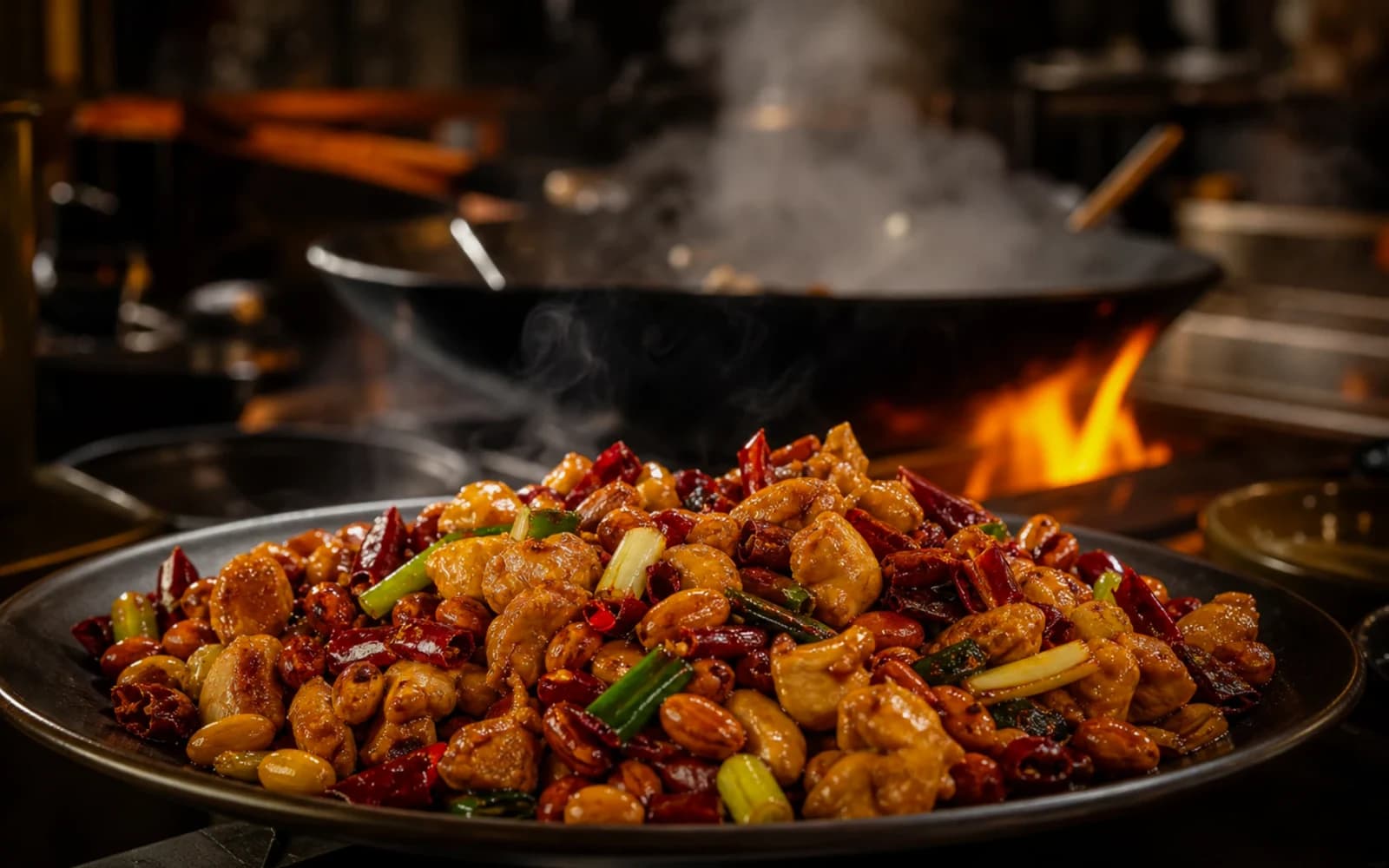
Kung Pao Chicken is a Sichuan dish: diced chicken stir-fried fast with dried red chiles, Sichuan peppercorn, peanuts, and a tangy vinegar-sugar-soy sauce. The heat is warm, aromatic, and numbing rather than aggressive. Chilli Chicken is an Indo-Chinese dish invented in Kolkata: battered and fried chicken tossed with fresh green chiles, garlic, ginger, soy sauce, and onions. The heat is direct and burning, not numbing. Kung Pao is about balance. Chilli Chicken is about impact.
Visual cheat sheet: if you see diced naked chicken with peanuts and dried red chiles, it's Kung Pao. If you see battered fried chicken pieces with slivers of fresh green chile and lots of garlic, it's Chilli Chicken.
Evidence Grid
Side-by-Side
Heat & Sauce
Sauce and Heat: Two Different Languages of Fire
The Kung Pao heat experience follows a curve. Dried chiles bloom in hot oil and release fragrance before the sauce enters. Sichuan peppercorn adds that buzzing, almost electric tingle — it's not burning, it's vibrating. The vinegar and sugar pull everything back before the heat overstays. It's a three-second arc: warm, bright, clean.
Chilli Chicken doesn't arc. It hits. Fresh green chiles and garlic blast into hot oil together, and the capsaicin releases immediately. There's no numbing agent, no sugar buffer, no vinegar brake. The sauce is usually soy-based with ginger and garlic, sometimes with a touch of tomato for acidity. In "dry" versions the sauce reduces completely so the chicken is coated but not swimming; in "gravy" versions there's enough sauce to soak rice. Both are fiercer than Kung Pao.
If you've never had Sichuan peppercorn before, Kung Pao will feel weird in a good way — your lips will tingle, your mouth will feel slightly electric. If you've never had Indo-Chinese food before, Chilli Chicken will feel familiar but hotter than you expected — it uses ingredients you recognize (soy, garlic, green chile) at volumes you might not.
The Origin Files
Origin: Sichuan vs Kolkata
Kung Pao's origin is well-established: Qing dynasty official Ding Baozhen, Sichuan province, 19th century. The dish moved with him from Shandong to Sichuan, picking up dried chiles and peppercorns, and eventually became a global icon.
Chilli Chicken's origin is more modern and more fascinating. In the early 20th century, Chinese immigrants settled in Kolkata (then Calcutta) and started cooking Chinese food with Indian ingredients. By the 1960s and 70s, a distinct Indo-Chinese cuisine had emerged — Chinese technique, Indian flavors. Chilli Chicken became its signature dish: batter-fried chicken tossed with soy sauce, garlic, and a forest of fresh green chiles. It's now one of India's most popular restaurant foods, from street stalls to five-star hotels. A Chinese person visiting Kolkata might not recognize it as Chinese. An Indian person visiting Chengdu would find Kung Pao almost mild by comparison. Both are right.
Practical Advice
How to Order
Order Kung Pao if: You want complexity — heat with nuance, sweet with sour, crunch with tenderness. You appreciate the electric tingle of Sichuan peppercorn. You want to taste the technique as much as the fire.
Order Chilli Chicken if: You want impact. You like crispy fried things. You prefer garlic-forward heat over numbing heat. You're eating with rice or noodles and want a sauce that soaks in.
Where to find Chilli Chicken: Any Indian Chinese restaurant (common in India, the UK, Canada, and increasingly the US). It's sometimes called "Chicken 65" or "Chili Chicken Dry." If you see a menu with both "Chinese" and "Indian Chinese" sections, Chilli Chicken lives in the latter.
Frequently Asked
FAQ
- Which is spicier, Kung Pao or Chilli Chicken?
- Chilli Chicken is usually hotter — and it's a different kind of heat. Kung Pao uses dried red chiles and Sichuan peppercorn for a warm, aromatic, numbing buzz. Chilli Chicken uses fresh green chiles, garlic, and soy sauce for a sharp, direct, burning heat that hits immediately. Chilli Chicken doesn't numb — it burns.
- Is Chilli Chicken the same as Kung Pao Chicken?
- No. Chilli Chicken is an Indo-Chinese dish — a fusion of Chinese stir-fry technique with Indian spices and fresh green chiles. It originated in Kolkata's Chinese community and has become one of India's most popular restaurant dishes. Kung Pao is from Sichuan, China. They share a love of heat but approach it from completely different angles.
- Does Chilli Chicken have peanuts?
- Usually no. Chilli Chicken is built on battered fried chicken, green chiles, garlic, soy sauce, and onions. Some modern versions add cashews or peanuts as garnish, but they are not traditional or structural. If you see battered chicken pieces and green chile slivers, you're looking at Chilli Chicken.
- Is Chilli Chicken Chinese food?
- It's Indo-Chinese — a distinct cuisine that developed in Kolkata's Chinese immigrant community and spread across India. It uses Chinese techniques (the wok, soy sauce, cornstarch batter) but incorporates Indian ingredients like fresh green chiles, ginger-garlic paste, and sometimes garam masala. It's its own thing, and it's wildly popular.
Evidence
Source Notes
- BBC Travel - The Secret History of Indo-Chinese FoodDeep dive into the Kolkata origins of chili chicken and other Indo-Chinese dishes.
- Serious Eats - Introduction to Indo-Chinese CuisineThe history and characteristics of Indo-Chinese food, including chili chicken.
- China Sichuan Food - Kung Pao ChickenSichuan baseline for comparison with the Sichuan-Indo-Chinese distinction.
Continue Reading