The Short Version
Quick Answer: Gong Bao = Kung Pao
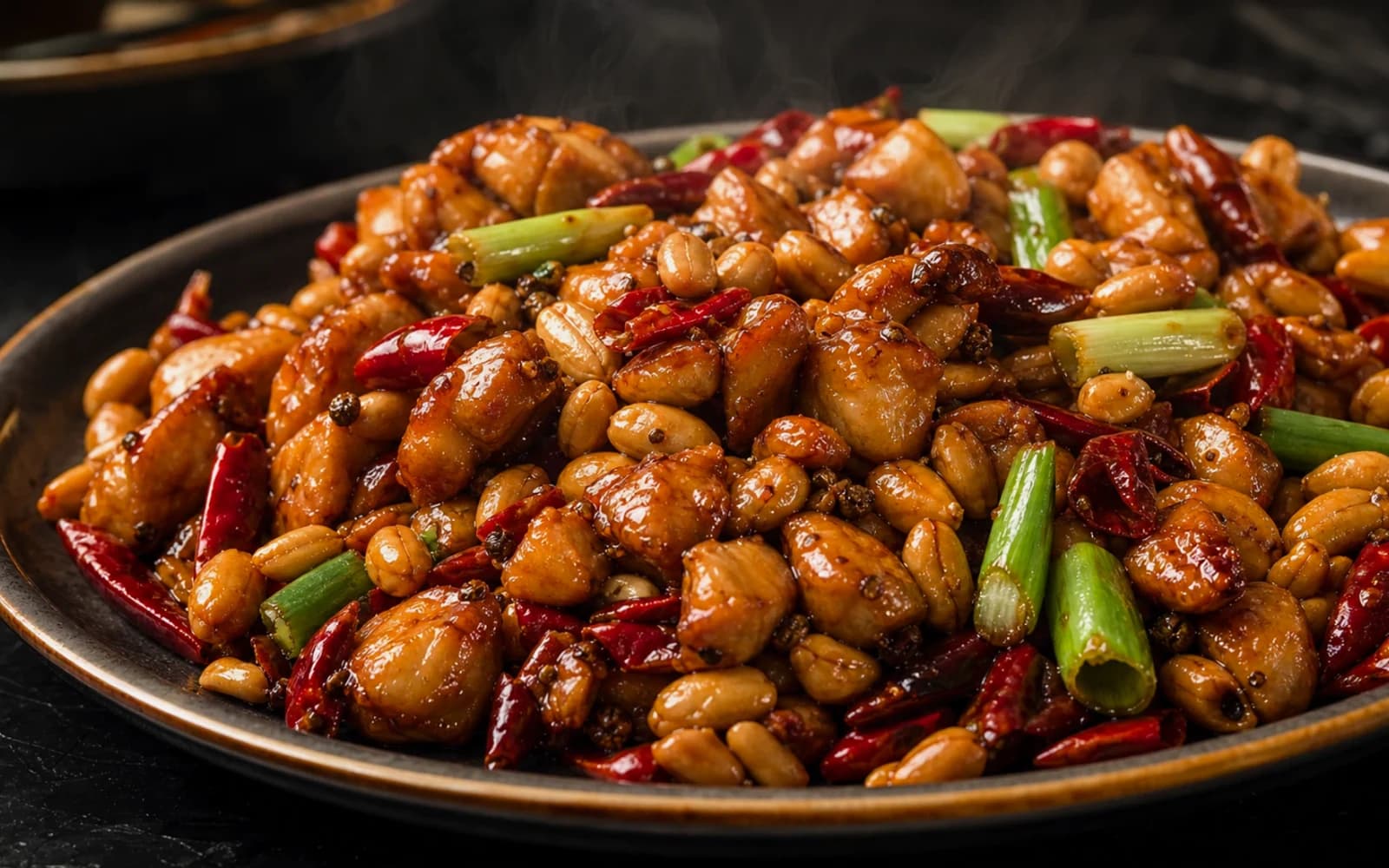
Gong Bao Chicken is Kung Pao Chicken. Gong Bao (宫保) is the modern Hanyu Pinyin romanization of the Chinese characters. Kung Pao is the older Wade-Giles romanization. Both refer to the same dish: diced chicken stir-fried with peanuts, dried red chiles, Sichuan peppercorn, scallions, ginger, garlic, and a tangy soy-vinegar-sugar sauce that clings to every cube. The dish itself hasn't changed. Only the spelling has.
If you're looking for the full recipe with ingredient lists, step-by-step instructions, cooking notes, substitutions, common failure fixes, and nutritional information, head to our main recipe page: Kung Pao Chicken Recipe. It's the same dish. We just maintain both URLs because search engines treat "Gong Bao chicken recipe" and "Kung Pao chicken recipe" as different queries — and we want you to find us no matter which spelling you use.
The Recipe
Get the Full Gong Bao / Kung Pao Chicken Recipe
The complete recipe — marinade, sauce, wok sequence, timing, peanut technique, and every common failure mode — lives on our main recipe page:
Get the Full Kung Pao Chicken Recipe →
The recipe is Sichuan-style: diced chicken thighs (not breast), a soy-Chinkiang-vinegar-sugar-starch sauce, dried chiles bloomed in hot oil, Sichuan peppercorns cracked and toasted, garlic-ginger-scallion aromatics, and roasted peanuts folded in at the last second so they stay crisp. Total time: 35 minutes from knife to plate. The sauce clings. The wok stays hot. The peanuts crack.
Etymology
Why Two Spellings for the Same Dish?
Chinese names written in the Latin alphabet go through a process called romanization. There are two major systems: Wade-Giles (developed in the 19th century by British diplomats) and Hanyu Pinyin (adopted by China in 1958 and now the international standard). Wade-Giles writes 宫保鸡丁 as "Kung Pao Chi Ting." Pinyin writes it as "Gong Bao Ji Ding." American Chinese restaurants adopted the Wade-Giles spelling in the early 20th century, so "Kung Pao" became the dominant form in English. But if you read a modern Chinese cookbook, a Wikipedia article, or an academic paper, you'll see "Gong Bao" instead. Neither is wrong. They're different lenses on the same name. For more on the meaning of the name and its historical roots, see our Gong Bao Ji Ding Meaning page.
FAQ
Frequently Asked
- Is Gong Bao Chicken the same as Kung Pao Chicken?
- Yes, exactly the same dish. Gong Bao (宫保) is the Hanyu Pinyin romanization — the standard way to write Chinese words in the Latin alphabet. Kung Pao is an older Wade-Giles romanization. Same Chinese characters, same dish. Whether you search for 'Gong Bao chicken recipe' or 'Kung Pao chicken recipe,' you're looking for the same thing: diced chicken, peanuts, dried chiles, Sichuan peppercorn, and a tangy vinegar-soy glaze.
- Why do recipe sites use different spellings?
- It's a romanization preference. Academic and newer sources tend to use 'Gong Bao' (Pinyin). Older cookbooks and American Chinese restaurants tend to use 'Kung Pao' (Wade-Giles). Both are correct. Food bloggers often choose one and stick with it. The WKPO uses 'Kung Pao' for its main pages (more search volume) and 'Gong Bao' for this variant page (to capture the academic/pinyin audience).
Evidence
Source Notes
- WKPO - Kung Pao Chicken RecipeOur main recipe page with the full ingredient list and method.
- WKPO - Gong Bao Ji Ding MeaningThe etymology and history behind the name.
Continue Reading