The Missing Ingredient
What disappeared from American Chinese kitchens in 1968.
If you've ever ordered Kung Pao Chicken from a standard American Chinese takeout joint and wondered why it tastes more like sweet bell pepper stir-fry than the complex, numbing dish people describe from Sichuan, you've stumbled into one of the more interesting chapters of American food regulation. The answer starts in 1968, when the United States Department of Agriculture decided that Sichuan peppercorns — the small, reddish-brown husks that give the dish its signature má, that electric tingling that makes your lips feel like they're gently vibrating — were too dangerous to allow into the country.
The problem wasn't spice. It was citrus canker. Sichuan peppercorns come from the prickly ash shrub, a plant in the citrus family, and the USDA was fighting a long war against a bacterial disease that threatened Florida and California's citrus industries. The peppercorn, despite not being a true peppercorn at all (it's the dried husk of a berry), got caught in the same quarantine as actual citrus fruit. Overnight, the ingredient that defines Sichuan cuisine's most distinctive sensation became contraband.
The ban wasn't a footnote. It lasted thirty-seven years. To put that in perspective: someone who was twenty years old when the ban started was fifty-seven when it ended. An entire career in the restaurant business. Two generations of Chinese immigrant cooks who opened restaurants in America during those decades never had legal access to one of the foundational ingredients of their home cuisine.
Adaptation Under Constraint
What happens when a cuisine loses its signature ingredient for two generations.
American Chinese restaurants didn't just stop making Kung Pao Chicken. They reinvented it. Without Sichuan peppercorn's numbing má, the dish lost its defining sensory trick. Cooks compensated the way any smart cook would: they leaned harder on the elements they could access. More sugar in the sauce, because sweetness is the easiest way to make something taste complete when you're missing a layer. More vegetables — bell peppers, celery, zucchini, sometimes carrots — to add bulk and color and the appearance of substance. The sauce got thicker, shinier, closer to the glossy lacquer that Americans had come to expect from General Tso's and orange chicken.
This wasn't laziness or ignorance. It was business. If your customers have never tasted the real thing — and by the 1980s, most Americans hadn't — then the version you're serving is the version they judge. A dish that's "too tingly" or "too numbing" gets sent back. A dish that's sweet and familiar gets reordered. The American palate, trained on sugar and fat, rewarded restaurants for drifting further from the source material.
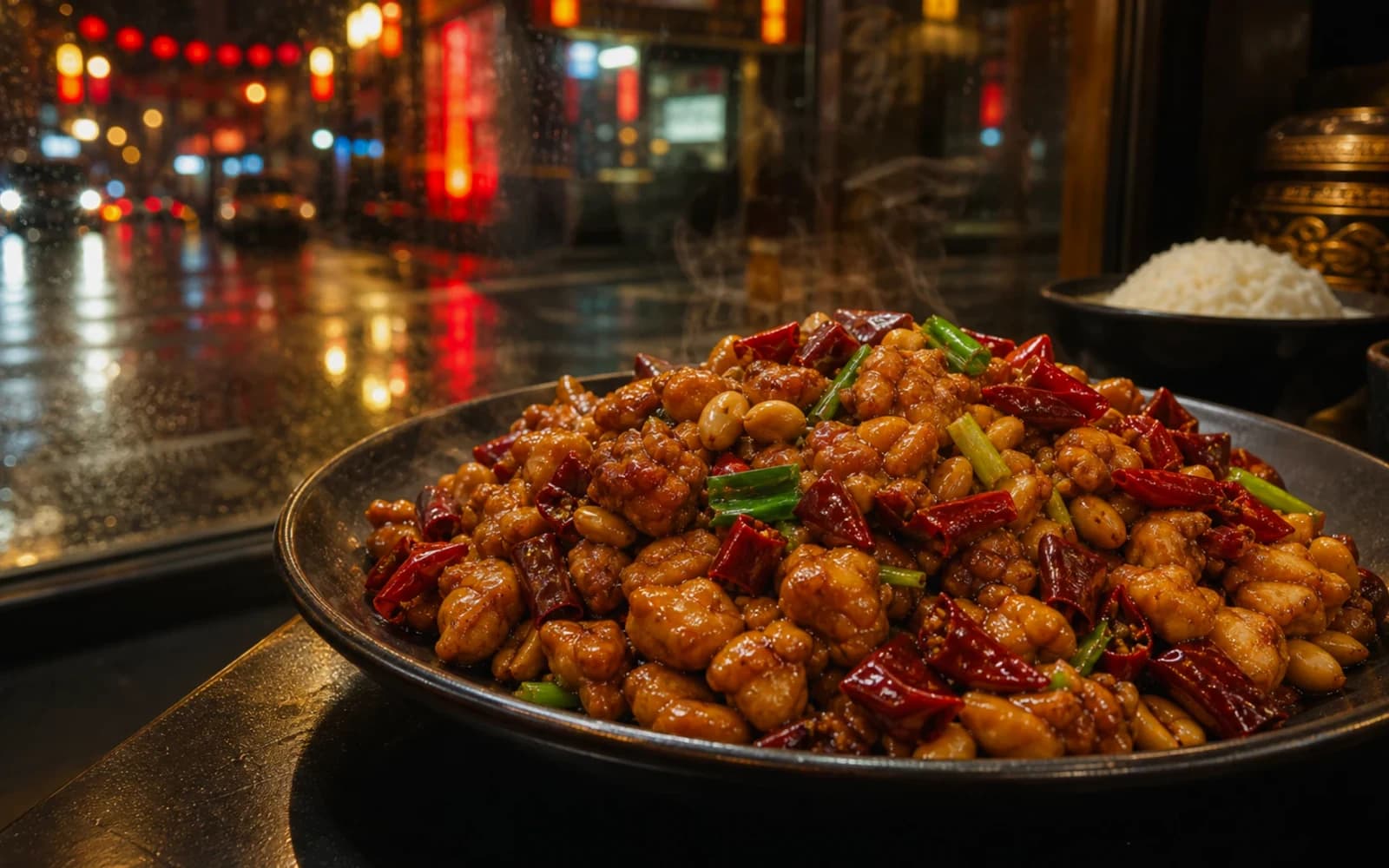
What's remarkable is how complete the transformation was. Walk into a random Chinese takeout in suburban Ohio or a strip mall in Texas and order Kung Pao Chicken. You'll almost certainly get chunks of chicken (often breast, not thigh) in a brown-sweet sauce, studded with bell peppers and celery and onions, topped with a scatter of peanuts that may or may not be crisp, and exactly zero Sichuan peppercorns. The dish bears a family resemblance to its Sichuan ancestor — peanuts, some form of chile — but it's closer to a cousin than a sibling.
2005 And After
The ban ends. Nothing goes back to normal.
In 2005, the USDA finally approved a heat-treatment protocol: Sichuan peppercorns heated to 70°C (158°F) were deemed safe, because the heat killed any lingering canker bacteria. Chefs and home cooks who had been smuggling peppercorns in suitcases or paying premium prices on the gray market could finally buy them legally.
But the ban's effects had already hardened into culinary habit. Most American Chinese restaurants didn't rush to re-reformulate a dish that had been selling fine for three decades. Why would they? Their customers didn't know they were missing anything. The sweeter, milder, vegetable-forward Kung Pao had become "Kung Pao Chicken" for millions of Americans. Changing it would mean explaining to regulars why their favorite dish suddenly made their mouth feel weird.
Some restaurants did change. A wave of more "authentic" Sichuan restaurants opened in the 2010s, particularly in cities with large Chinese populations — New York's Flushing, the San Gabriel Valley outside Los Angeles, Houston's Chinatown. These places advertise "Sichuan peppercorn" on the menu, use dried facing-heaven chiles, and don't apologize for the má. Their Kung Pao is recognizably connected to the Sichuan original. But these restaurants remain the exception, not the rule. Your average American strip-mall Chinese joint is still serving the 1974 version.
Why This Matters
The ban explains almost everything that confuses people about Kung Pao Chicken.
When someone from Chengdu visits the United States and tries American Kung Pao Chicken, their first reaction is usually confusion, followed by something between amusement and mild horror. The dish they're eating shares a name with one they grew up eating, but it's a different animal. The chicken is sliced instead of diced. The sauce is sweet instead of balanced. There are bell peppers. There is no numbing. The peanuts are soft.
The peppercorn ban is the root cause of this rift. It's not that American Chinese food "ruined" Kung Pao Chicken — it's that American Chinese food was forced to build a parallel tradition under ingredient constraints that the original tradition never faced. Calling one "authentic" and the other "fake" misses the point. There are now two distinct dishes that happen to share a name: Sichuan Kung Pao Chicken, a fast, dry, aromatic stir-fry with numbing spice, and American Chinese Kung Pao Chicken, a sweeter, saucier, vegetable-heavy dish that evolved in isolation from the original for nearly four decades.
Both are real. Both have histories. But they're not the same thing, and understanding why requires understanding a regulatory decision made in 1968 that nobody in the restaurant business had any control over.
Shopping Guide
How to buy Sichuan peppercorn today (and avoid getting ripped off).
These days, Sichuan peppercorns are easy to find if you know where to look. Any Asian grocery store with a decent spice section will carry them. Online, they're everywhere. The tricky part isn't finding them — it's finding ones that aren't stale.
Good peppercorns should smell bright and citrusy, almost floral. Pick up the bag and give it a squeeze; if nothing happens, move on. The seeds — the little black spheres inside the reddish husks — are worthless. They're gritty, flavorless, and in good peppercorns they should be minimal. You're paying for husk, not seed. If the bag is mostly black seeds, you're being ripped off.
Red Sichuan peppercorns are the standard for Kung Pao. Green ones are more intensely numbing and more floral — great for experimenting, but not traditional for this dish. Toast them in a dry pan for about thirty seconds before grinding. You'll know they're ready when the kitchen starts smelling like something interesting is about to happen.
FAQ
Questions people ask about the ban.
Why was Sichuan peppercorn banned in the United States?
In 1968, the USDA banned Sichuan peppercorn imports to prevent citrus canker — a bacterial disease that threatens citrus crops. The peppercorn is technically the dried husk of a berry from the prickly ash shrub, not a true peppercorn, but it fell under the same agricultural quarantine. The ban lasted 37 years, until 2005, when a heat-treatment protocol was approved: peppercorns heated to 70°C effectively kill the bacteria. By then, two generations of American Chinese cooking had learned to work without it.
Does the ban still affect American Kung Pao Chicken today?
Yes, in a lasting way. The American takeout version of Kung Pao — sweeter, heavier on vegetables like bell pepper and celery, with little to no numbing sensation — became the default during the ban years. Even after 2005, most American Chinese restaurants never restored Sichuan peppercorn to the recipe. The sweeter, vegetable-forward version had become what customers expected. Changing it back would mean re-educating an entire market.
Can you buy Sichuan peppercorn in the US now?
Yes, and they're widely available. Grocery stores with good Asian sections carry them, usually labeled as 'Sichuan peppercorn,' 'Szechuan pepper,' or 'prickly ash.' Online retailers stock multiple varieties — red, green, and even fresh. The key is buying from a source with decent turnover; old peppercorns lose their numbing power and taste dusty.
What's the difference between Sichuan peppercorn and black pepper?
They're botanically unrelated. Black pepper (Piper nigrum) provides heat through piperine. Sichuan peppercorn (Zanthoxylum) isn't spicy in the conventional sense — it produces a tingling, numbing sensation called má, caused by hydroxy-α-sanshool. The two can't substitute for each other. If a recipe calls for Sichuan peppercorn and you use black pepper, you'll get heat without the má, which is like making coffee without water.
How do you know if Sichuan peppercorns are fresh?
Smell them. Fresh peppercorns have a bright, citrusy, almost floral aroma. If they smell like a dusty cupboard or nothing at all, they're dead. The seeds (the little black bits inside the husks) are gritty and flavorless — good peppercorns should be mostly husk, not seed. Toast them in a dry pan for 30 seconds before using; if they don't release any fragrance, toss the batch.