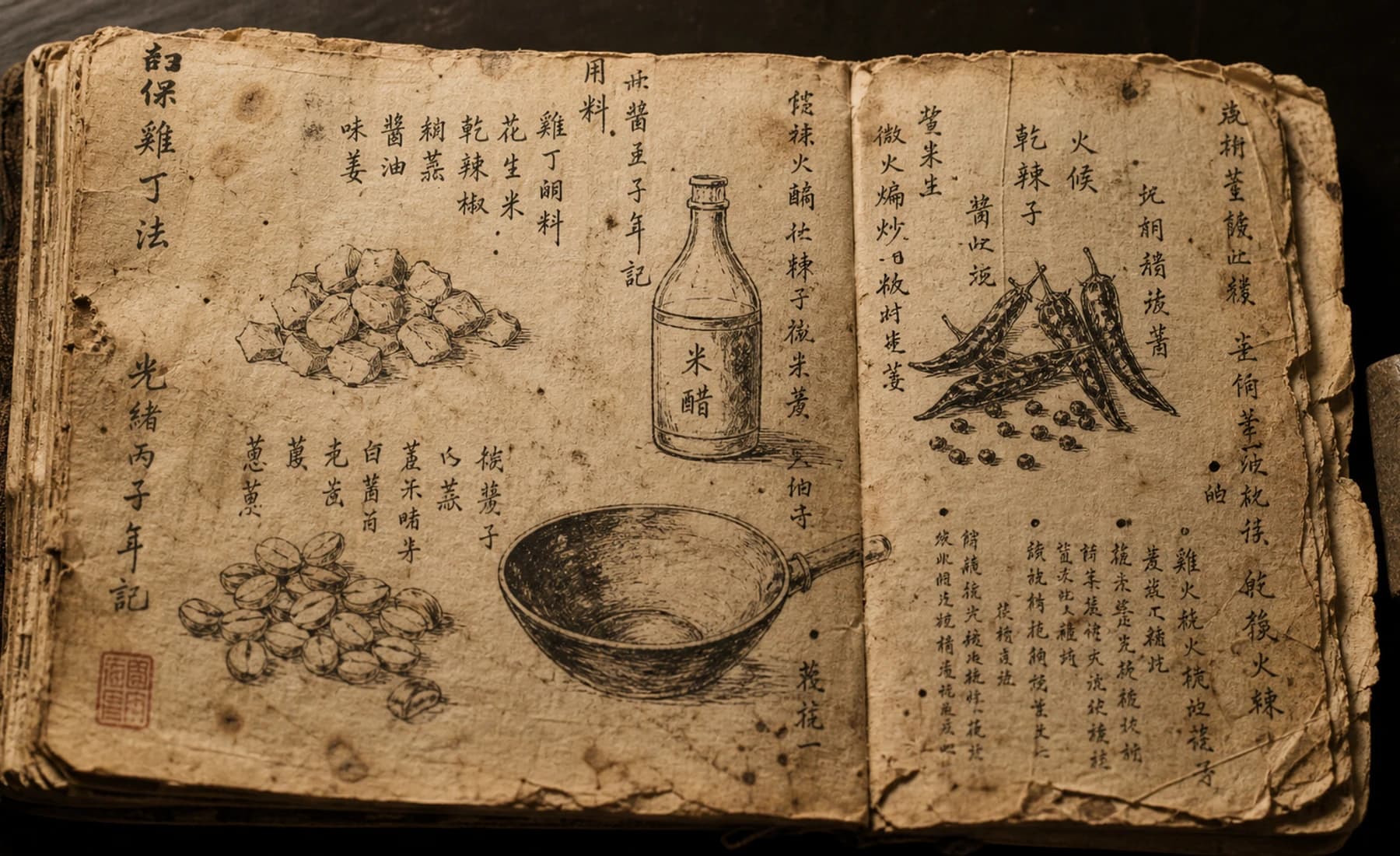
Two Provinces, One Dish
Sichuan owns the fame. Guizhou owns the man.
Every English-language article about Kung Pao Chicken begins the same way: it's a classic Sichuan dish. And that's true, in the way that pizza is a classic New York dish — it became famous there, it was perfected there, it's what the world pictures when they hear the name. But Ding Baozhen, the Qing Dynasty official whose title gave the dish its name, wasn't from Sichuan. He was born in what's now Guizhou Province, in the mountainous, rainy, chili-obsessed southwest of China. He governed Shandong. He governed Sichuan. He died in 1886 and was buried back home in Guizhou. The dish that carries his name exists in significantly different forms in both of the provinces he called home.
The Guizhou claim goes like this: Ding Baozhen's family cook in Guizhou made a dish of chicken with chiles that the governor loved. When he moved to Sichuan to take up his post, the dish traveled with him. Sichuan's chefs — working with different ingredients, different chiles, and a different culinary tradition — adapted it. They made the chicken pieces smaller and more uniform. They added peanuts, which were abundant in Sichuan. They refined the sauce. They turned a rustic household dish into a restaurant classic. And because Sichuan's culinary reputation was, and remains, far more prominent internationally than Guizhou's, the Sichuan version became the global standard.
The Guizhou Way
What Guizhou Kung Pao actually tastes like.
If you order 宫保鸡丁 in Guizhou — and not many tourists do; Guizhou doesn't get the culinary tourism traffic that Sichuan enjoys — you'll get a dish that looks related but feels different. The chicken pieces are larger, often with skin still attached. The sauce is darker, heavier, more deeply savory. And instead of whole dried red chiles scattered through the dish like punctuation marks, you'll find a chili paste that's been worked into the sauce itself — 糍粑辣椒, ciba chili, made by pounding fermented chiles with salt and oil until they form a thick, almost jammy paste. The heat builds slowly rather than hitting you upfront. It's less theatrical than the Sichuan version but arguably more integrated.
There are no peanuts in the Guizhou version. This is, for someone who grew up with the Sichuan or American version, the most disorienting difference. The textural contrast that peanuts provide in Sichuan Kung Pao — that crack of crunch between the soft chicken and glossy sauce — is absent. Instead, the chicken skin provides the necessary resistance. It's a different kind of crunch: less brittle, more substantial. The dish feels heavier, more rustic, more like something cooked in a farmhouse kitchen than a restaurant. Which, if the origin story holds, is exactly what it was.
The Sichuan Transformation
What happened when the dish crossed provincial lines.
Sichuan cuisine in the late Qing Dynasty was already sophisticated. Chengdu was a major city with a well-developed restaurant culture. Chefs competed. Techniques were codified. A rustic household preparation arriving from a less prominent province would have been treated as raw material — something to be improved, refined, elevated. Sichuan chefs standardized the chicken cut (small, uniform dices, easier to cook evenly in a fast wok), added peanuts for crunch, swapped ciba paste for whole dried chiles (more visual drama, more control over heat distribution), and developed the lychee-flavor sauce profile that balances sweet, sour, salty, and hot in a single mouthful. The result was a dish that kept the soul of the original — chicken and chiles, named for a beloved official — but rebuilt the architecture to Sichuan specifications.
This pattern — a dish originating in one province, refined in another, claimed by both — is common in Chinese cuisine. Mapo tofu has similar territorial disputes. So does hot pot. Food doesn't respect borders, and Chinese provincial borders have shifted repeatedly over centuries. The idea that any famous dish belongs to a single place is mostly marketing. The reality is usually migration, adaptation, and argument.
For the Eater
Which version is more authentic?
The answer you get depends on who you ask, where you're standing, and what you mean by "authentic." If authenticity means historical priority — which version came first — the Guizhou claim is credible. Ding Baozhen ate Guizhou-style chicken with chiles before he ever set foot in Sichuan. If authenticity means culinary recognition — which version the world knows and judges by — the Sichuan claim is unquestionable. The dish that conquered the planet is Sichuan Kung Pao Chicken. Guizhou's version is a historical footnote outside of China, and even within China it's obscure outside of the southwest.
My own view: the dish is Guizhou by birth and Sichuan by upbringing. The Guizhou version is the ancestor. The Sichuan version is the descendant that outgrew its origins and became something new. Both are real. Neither is fake. And people in both provinces will argue about this until the end of time, which is part of what makes the story worth telling.
Where to Find It
Can you try the Guizhou version outside of China?
Honestly, it's hard. Guizhou restaurants are rare outside of China, and even in major Western cities with large Chinese populations, the Guizhou section of the menu — if there is one — is usually small. Your best bet is cities with significant southwestern Chinese immigrant populations: Flushing in New York, the San Gabriel Valley outside Los Angeles, Richmond in the Vancouver area. Look for 贵州菜 (Guizhou cuisine) in the restaurant name or menu section. If you see 糍粑辣椒 (ciba chili) listed anywhere, you're in the right place. Ask the server if they make 宫保鸡丁 the Guizhou way. They might not. But asking is how you find out.
FAQ
Questions about the origin debate.
Who was Ding Baozhen?
Ding Baozhen (丁宝桢, 1820–1886) was a Qing Dynasty official born in what is now Guizhou Province. He served as governor of Shandong and later Sichuan. He was awarded the honorary title 太子太保 (Crown Prince's Guardian), shortened to 宫保. After his death, his favorite dish — diced chicken with chiles — was named in his honor. The name 宫保鸡丁 means 'Palace Guardian's Chicken Cubes.'
Is Kung Pao Chicken originally from Guizhou or Sichuan?
Both provinces have credible claims. The Sichuan version — which uses whole dried chiles, small diced chicken, and peanuts — is what the world knows as Kung Pao Chicken. But the Guizhou version, which predates it in some accounts, uses ciba chili paste (a fermented, pounded chili paste), larger, skin-on chicken pieces, and no peanuts. The most widely accepted theory: the dish originated as a Guizhou home-cooking preparation, traveled with Ding Baozhen to Sichuan, and was refined by Sichuan chefs into the version that became famous.
What's different about the Guizhou version?
Three key differences. First, the chili: Guizhou uses 糍粑辣椒 (ciba chili paste), made by pounding fermented chiles into a thick paste, giving the dish a deeper, rounder heat rather than the sharp, aromatic heat of whole dried chiles. Second, the chicken: Guizhou cuts are larger, often skin-on, more rustic. Third, the absence of peanuts — Guizhou Kung Pao doesn't use them, which means the textural contrast comes entirely from the chicken's crispy skin and the chili paste's body. It's a heavier, more rustic dish. If Sichuan Kung Pao is a sports car, Guizhou Kung Pao is a pickup truck. Both get you there. It's a different ride.
Why does the Sichuan version have peanuts?
No definitive historical source explains when peanuts entered the recipe, but the most plausible theory is that Sichuan chefs added them for texture. Diced chicken in a fast stir-fry has softness and seared edges but no crunch. Peanuts solve that problem elegantly. They also provide a visual cue — the golden brown of the peanuts against the red chiles and dark chicken makes the dish immediately recognizable. Guizhou's version gets crunch from the chicken skin; Sichuan's gets it from peanuts. Two different answers to the same culinary question.
Does it matter which origin story is true?
For eating, not really. Both versions are valid and delicious. For understanding the dish, yes — because knowing that Ding Baozhen brought a Guizhou sensibility to a Sichuan kitchen explains why Kung Pao Chicken sits at the intersection of two provincial cuisines rather than neatly inside one. It's a migrant dish. Like most of the best food, it comes from somewhere between places.