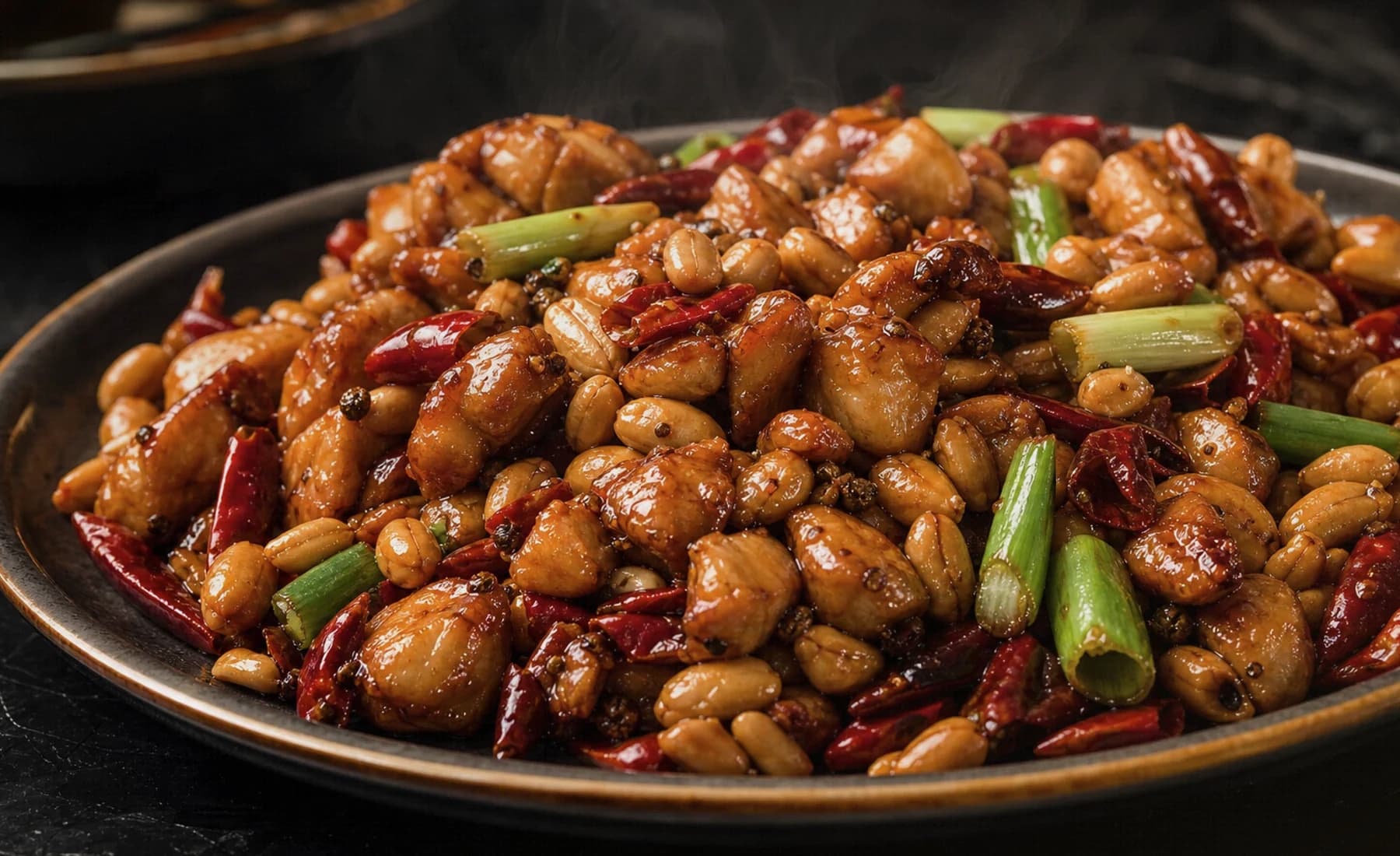
The substitution
Cashews are common in many stir-fries, but Kung Pao Chicken asks for peanuts because peanuts deliver a specific snap and roasted directness. Cashews soften the sentence.
The trial is not about whether cashews taste good. They do. That is what makes them dangerous. They can make the wrong version feel luxurious enough to avoid questioning.
Verdict
The Archive classifies cashews as a velvet anomaly: delicious, plausible, and structurally incorrect.
A cashew version may be dinner. It may even be excellent dinner. It is simply not the central protocol.
Creaminess changes the tempo
Cashews do not interrupt the bite the way peanuts do. They round it. They soften the ending, add buttery weight, and make the dish feel more luxurious but less percussive.
That tempo shift matters. Kung Pao Chicken depends on a quick finish: sauce, heat, chicken, crack. Cashews turn the crack into a courteous nod.
The plausible impostor
The cashew is more dangerous than the strawberry because it looks reasonable. Many diners will accept it without alarm. Some will even prefer it, which is how the Archive knows the trial must be public.
Plausibility is not innocence. A substitution can be delicious and still move the dish into a neighboring jurisdiction.
Mercy with labeling
The Order's final position is strict but not cruel. Call it cashew chicken in Kung Pao style, call it a house variation, call it a creamy anomaly with good manners. Just do not pretend nothing changed.
Peanuts are not sacred because the Archive likes rules. They are sacred because the mouth notices when the last click goes missing.